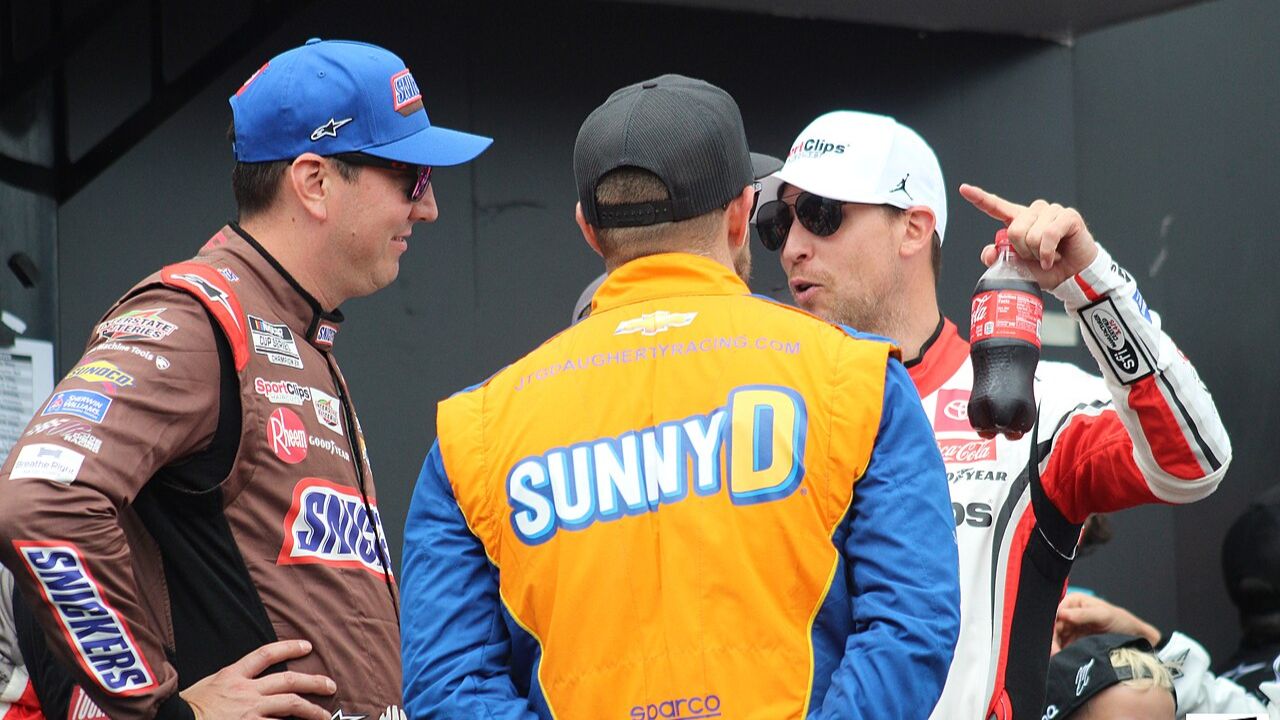
Denny Hamlin recently addressed the public frustration expressed by his fellow NASCAR driver, Kyle Busch, regarding Hamlin’s consistent praise for their competition. This exploration delves into the nuances of their relationship, the impact of public comments, and the underlying dynamics within the NASCAR community.
Understanding the Context of the Frustration
Kyle Busch is known for his fiercely competitive nature and high expectations for himself and his colleagues. As a two-time NASCAR Cup Series champion, he holds a reputation that demands respect and recognizes the hard work behind every victory. Recently, however, Busch expressed irritation over Hamlin’s repeated public commendations of other drivers, suggesting that such comments could undermine the competitive spirit of the sport and his standing within it.
This frustration stems from a few recent incidents where Hamlin’s public praise seemed to overshadow Busch’s achievements. In the highly competitive world of NASCAR, where every inch on the track counts, drivers are acutely aware of public perception. The significance of how they are viewed by fans and peers can impact their confidence and, ultimately, their performance on the track. For Busch, feeling like he is not receiving the recognition he deserves while Hamlin praises others may create a sense of discord between them.
Denny Hamlin’s Perspective on Public Praise
Denny Hamlin argues that his public praise for competitors, including Busch, is rooted in sportsmanship and respect for the skill and dedication required to compete at a high level. In his view, acknowledging the talent of fellow drivers serves not only to elevate the sport but also to promote a positive atmosphere among competitors. Hamlin believes that when drivers appreciate each other’s achievements, it fosters a sense of community and camaraderie within the NASCAR family.
Hamlin also highlights how public comments can positively influence team morale and engage fans. He argues that when fans see drivers supporting one another, it enhances their connection to the sport. This connection can be crucial in attracting new fans and keeping current ones engaged. Hamlin’s approach seems to be about creating an inclusive narrative in a sport that thrives on competition, ultimately hoping to uplift the entire NASCAR community, including his own team and Busch.
The Impact of Public Comments in NASCAR
Public statements made by drivers can significantly impact their relationships with one another. In a sport where rivalries are commonplace, comments can either fuel tensions or foster goodwill. For instance, past controversies, such as the public spat between former teammates Kevin Harvick and Kurt Busch, demonstrate how remarks can lead to long-lasting rifts. Similarly, Hamlin’s praise of competitors could either be seen as a gesture of goodwill or as a slight against Busch, depending on the interpretation.
The media plays a crucial role in shaping these narratives. They often amplify tensions between drivers through sensational headlines and analyses. This amplification can distort the original intention behind comments, leading to misunderstandings. For example, when Hamlin commended drivers like Chase Elliott, it may have been seen as an acknowledgment of skill, but it also risked making Busch feel sidelined. The media’s interpretation can thus create a narrative that may not reflect the true dynamics of driver relationships.
Hamlin’s Response to Busch’s Criticism
In response to Busch’s criticisms, Hamlin emphasized that his intentions behind public praise are not meant to undermine his fellow driver but rather to promote the sport and recognize talent. He acknowledged that, in the heat of competition, emotions can run high, and misunderstandings can arise. Hamlin expressed that he values their friendship and respects Busch’s competitive spirit, understanding that every driver has their unique pressures and expectations.
Hamlin’s remarks suggest that he is aware of the competitive environment and its inherent challenges. He recognizes that public comments can be interpreted in various ways, but he remains steadfast in his belief that promoting a spirit of sportsmanship is vital for the health of NASCAR. By fostering this environment, he hopes to cultivate a culture where drivers can thrive both on and off the track, ultimately benefiting the sport as a whole.
The Role of Media in Shaping Driver Narratives
The media’s portrayal of driver relationships can significantly impact public perception and the dynamics between competitors. Headlines often focus on conflicts or rivalries, which can overshadow the collaborative aspects of the sport. This focus on drama sometimes leads to a skewed narrative that prioritizes sensationalism over the realities of driver interactions. As a result, fans may perceive tensions that are not as pronounced in reality.
Social media has further complicated this landscape. Platforms like Twitter and Instagram allow drivers to express their sentiments directly to fans, sometimes leading to instant reactions that can spiral out of control. When Busch voiced his frustration, it quickly became a trending topic, with fans weighing in on the situation. This instantaneous feedback loop can amplify misunderstandings and create a narrative that may not accurately reflect the true feelings between drivers.
Exploring the Dynamics of Team Rivalries
The historical context of rivalry in NASCAR is rich and varied, often characterized by fierce competition, particularly among teammates. While rivalries can ignite passion and drive performance, they can also lead to friction. Drivers like Dale Earnhardt and Jeff Gordon showcased that rivalry can coexist with respect and friendship, illustrating that competition does not have to come at the expense of camaraderie.
In the case of Hamlin and Busch, their relationship exemplifies this balance. Despite their competitive nature, they have shared moments of camaraderie that highlight mutual respect. Navigating the fine line between fierce competition and maintaining a positive relationship is essential for both drivers, as it can directly influence their performance and the overall atmosphere within their team.
Fan Reactions to the Hamlin-Busch Dynamic
Fan reactions to the Hamlin-Busch dynamic have been mixed, with many taking to social media to express their opinions. Some fans sympathize with Busch, feeling that he is justified in his frustration, while others argue that Hamlin’s praise is simply part of promoting a healthy competitive environment. The implications of public opinion can weigh heavily on drivers, as they often feel pressure to cater to their fan base while maintaining their competitive edge.
As fans engage with the situation on social media platforms, their reactions can influence how drivers approach future interactions. For example, if Busch continues to feel sidelined, he may be less inclined to engage positively with Hamlin, potentially escalating the situation. Conversely, if fans rally behind the idea of mutual respect, it could encourage both drivers to communicate more openly and resolve their differences.
The Importance of Communication in Racing Teams
Effective communication is fundamental for success in racing teams. Strategies for maintaining open dialogue among team members can help to address frustrations before they escalate. Drivers must be able to express their feelings constructively, whether it is about race strategies, personal concerns, or public comments made by teammates. Hamlin and Busch could benefit from a candid discussion to clarify their intentions and clear the air.
Team management also plays a critical role in mediating conflicts. By providing a platform for drivers to voice their concerns and ensuring that all voices are heard, management can help prevent misunderstandings from festering. Ultimately, fostering a culture of open communication can lead to stronger relationships among team members and enhance overall team performance.
Looking Ahead: Future Interactions Between Hamlin and Busch
As the NASCAR season progresses, the interactions between Hamlin and Busch will be closely monitored. Fans and analysts alike will be watching to see if this situation evolves into a more profound conflict or if the two drivers can find common ground. Given the competitive nature of NASCAR, it is likely that both drivers will continue to push each other to excel, but how they manage their relationship will be pivotal.
There is potential for reconciliation and mutual understanding if both drivers can navigate this dynamic constructively. By acknowledging each other’s perspectives and working towards a common goal, they can bolster their team’s performance and contribute to a more positive narrative within the NASCAR community. The outcome of their relationship will inevitably impact not only their own careers but also the broader dynamics within the sport.
More from Fast Lane Only