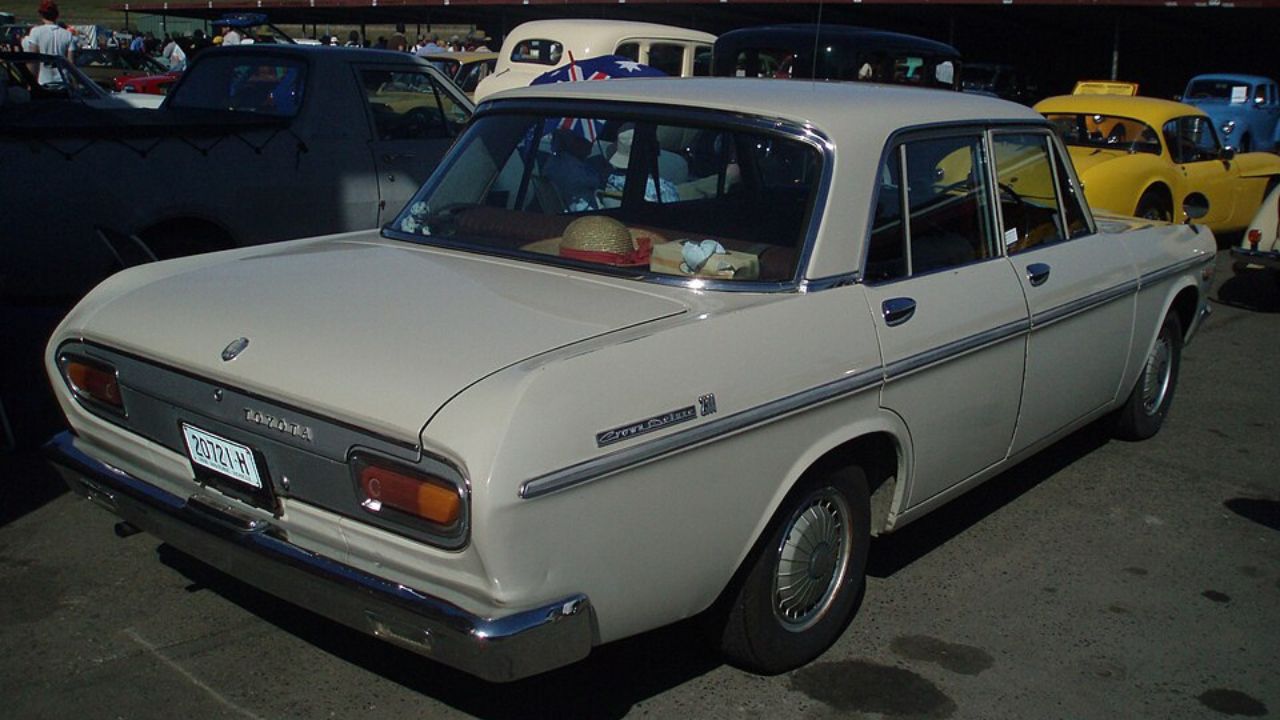
The third-generation Toyopet Crown arrived in 1967 with a clear mission: stop being a polite domestic sedan and start turning heads on the world stage. With a sharp new body, a broader model range and a marketing push that targeted private buyers rather than corporate fleets, it was designed to stand apart from both its Japanese rivals and the European and American cars it wanted to sit beside.
That ambition turned the 1967 Crown into a quiet milestone. It marked the moment Toyota treated its long-running luxury sedan not just as reliable transport for Japan, but as a statement of design, comfort and engineering aimed at global attention.
The Crown before 1967
The story of the 1967 Toyopet Crown makes sense only against the weight of its own nameplate. Toyota launched the original Crown in the mid 1950s, and over time the Toyota Crown became the company’s longest-running passenger car line, a model that would eventually span more than fifteen generations and evolve into sedans, crossovers and a sports sedan with hybrid powertrains, as described in a later anniversary feature that looked back on sixty years of the Toyota Crown.
During its first two generations, the Crown was primarily a domestic product, although exports did start early. The name Toyopet Crown was used on many export models, and the car served as a dependable sedan and taxi rather than a style leader. According to long-form histories of the Toyota Crown, the early cars were conservative three-box saloons that helped Toyota move from postwar recovery into serious volume production.
By the mid 1960s, that formula was under pressure. Domestic rivals were becoming more stylish, and European imports offered a different kind of prestige. Toyota needed the next Crown to be more than a workhorse. It needed to be aspirational.
A clean-sheet third generation
The third-generation Toyopet Crown, internally coded S50, arrived in late 1967 as a clean break from its predecessor. Reference tables on the Toyota Crown show the S50 as the third generation in the line, positioned after the S40 and before the S60/S70 family.
Toyota’s own corporate history describes how the third-generation Crown was “vigorously marketed to individuals interested in owning a car,” a marked shift from earlier emphasis on taxis and corporate fleets. The company notes that, reflecting this strategy, the advertising highlighted personal ownership and modern styling, something captured in period material archived on the Toyopet Crown 3rd page.
Contemporary retrospectives from Toyota’s UK arm describe the third-generation Crown, introduced in September 1967 and built until February 1971, as an answer to “the challenge of Japanese and foreign luxury cars” by raising comfort, performance and equipment. That framing appears in a narrative that walks through the history of the and treats the S50 as a turning point.
Design that wanted to be seen
Visually, the 1967 Crown moved away from the softer, more upright look of its predecessors and toward a crisper, more international style. Period footage and modern commentary in a video overview of the third-generation Crown highlight the car’s long hood, strong shoulder line and squared-off roof, elements that aligned more closely with contemporary European and American sedans.
Official Toyota material describes the third-generation Crown as having a “formal” yet modern appearance, with a wide grille and stacked lamps on some versions. The body sides were flatter and cleaner than before, which helped the car look lower and more planted, even when overall height was similar to the S40. Chrome detailing along the window line and bumpers reinforced its luxury positioning, while the proportions signaled that this was not just another domestic taxi.
Inside, Toyota aimed for an atmosphere closer to a luxury saloon than a utilitarian sedan. Later promotional material for the Crown line would describe the interior as spacious and luxurious, with an atmosphere inside the Crown that felt like “fine weather on the road,” supported by reliable Toyota mechanicals, a phrase echoed in a video that calls the Crown a lesson. The S50 generation helped establish that template with wide seats, generous legroom and a dashboard that balanced chrome, wood-look trim and clear instrumentation.
From taxis to private driveways
The strategic shift behind the 1967 Crown was as significant as its styling. Toyota’s own history of the model states that the third generation was “vigorously marketed to individuals interested in owning a car,” which represented a deliberate tilt toward private buyers who wanted comfort and status, not just durability. This is repeated in the corporate description of the Crown, where the company links the new advertising tone to a broader push for personal car ownership in Japan.
In practical terms, that meant more features that appealed to families and executives. Equipment lists expanded to include automatic transmissions, air conditioning on higher trims and more elaborate interior trims. The shift in focus also influenced the body styles Toyota chose to offer, widening the range beyond the traditional four-door sedan.
A family of Crowns: sedan, wagon, pickup and coupe
One of the most striking aspects of the S50 generation is how many different roles it tried to fill. Enthusiast guides to the Crown line note that the 1967 to 1971 Toyota Crown S50 introduced a new 2-door hardtop coupe alongside the sedan, wagon and pickup, an expansion summarized in a model overview of the Toyota Crown.
The coupe, with its pillarless profile and lower roofline, was aimed squarely at style-conscious buyers who might otherwise look at European imports. It shared much of its front-end design with the sedan but carried a sportier image that helped broaden the Crown’s appeal.
The wagon took the opposite approach, maximizing practicality. A detailed entry on a classic car reference site lists notable features on the wagon, including 7 or 8 passenger seating (2 on front buckets or 3 on a bench seat, 3 on a rear bench seat and 2 on a fold-down rear-facing third-row seat), a power rear window and a side swing tailgate, all described as Notable features that made the Crown wagon unusually versatile.
The pickup variant, sometimes referred to as a utility or truck, extended the platform into light commercial use, particularly in markets where a robust chassis and rear-wheel drive layout were valued. Together, these variants turned the Crown into a family of vehicles that could serve as a luxury sedan, family hauler or workhorse, all sharing the same basic engineering and styling language.
Powertrains and the push for refinement
Under the hood, the S50 Crown continued Toyota’s practice of offering a range of engines to match different markets and price points. A video history of the model notes that the base engine was “up to a 2 L 4 with 94 horsepower while the 2 and 2.3 L 6s carried over and a 3-speed automatic became available,” a specification quoted in a model history of the Crown that emphasizes the figures “94” and “2.3” as key metrics.
The four-cylinder option helped keep the Crown accessible in markets where taxation or fuel costs favored smaller engines, while the 2 and 2.3 liter six-cylinder units delivered smoother performance that better matched the car’s luxury image. The availability of a 3-speed automatic transmission signaled Toyota’s intent to compete with European and American sedans that already offered self-shifting gearboxes as a comfort feature.
This layering of powertrains also foreshadowed the Crown’s later role as a technology showcase. Decades later, the Crown would be associated with advanced hybrid systems and, in some markets, with one of Toyota’s most powerful four-cylinder engines, a link made in a report that describes how the luxury Crown boasts Toyota’s most powerful 4-cylinder engine and compares it with the exclusive Toyota Century nameplate, an extremely exclusive luxury sedan that carries its own insignia as a flagship for Toyota and the.
Export ambitions and European exposure
The 1967 Crown was not the first of its line to venture beyond Japan, but it played a significant role in building Toyota’s reputation overseas. A detailed historiography of the model notes that this was the first generation of the Toyota Crown that was exported to Europe, describing it as a significant move for Toyota to present a more upscale model to European buyers and to prove that Japanese manufacturers could compete in comfort and quality, as discussed in a piece on the Toyota Crown in.
Those early European exports were modest in volume, but they helped establish a pattern. The Crown showed that Toyota could build a large, comfortable sedan capable of long-distance touring on European roads, not just compact cars for urban use. This experience fed back into Toyota’s broader export strategy and helped the company refine what features and tuning European customers expected from a premium sedan.
Later reporting on the model’s global footprint notes that The Toyota Crown lived nearly its entire life mostly within the confines of its home country of Japan, but that current iterations are now sold in over 40 countries, according to a summary that describes how The Toyota Crown has expanded beyond Japan and The. The S50 generation sits near the start of that long process of internationalization.
Marketing a Japanese luxury car
The Crown’s repositioning in 1967 was supported by a more aspirational marketing tone. Toyota’s corporate history notes that, reflecting the new strategy, the advertising for the third-generation Crown targeted individuals and emphasized the pleasure of ownership. That shift aligns with a broader move in Japan during the late 1960s, when rising incomes and improving infrastructure made private car ownership a realistic goal for more households.
Promotional films of the period, echoed in modern retrospectives like the video that portrays the Crown as a, framed the car as a serene, reliable companion for long journeys, with slogans that linked comfort, safety and status. The idea was not just to sell a vehicle, but to sell a lifestyle in which the Crown represented success and good taste.
That message extended to export markets as well. In Europe, the Crown’s advertising leaned on its reliability and equipment levels, positioning it as a rational alternative to established brands. Toyota’s growing presence on platforms such as Toyota UK social, pinned Crown imagery and corporate profiles continues to draw on that heritage when presenting the Crown story to modern audiences.
Inside the cabin: fine weather on the road
While the S50’s exterior signaled a new seriousness, the interior aimed to deliver on the promise. Later descriptions of the Crown’s cabin repeatedly use language about spaciousness and luxury, with the atmosphere inside the Crown described as always “fine weather on the road,” supported by reliable Toyota mechanics, a phrase heard in a video that presents the Crown interior as an oasis.
In practical terms, that meant generous seat padding, wide door openings and thoughtful touches such as well-placed switchgear and clear instrumentation. Higher trims received more elaborate upholstery and trim, while the wagon’s 7 or 8 passenger seating layout turned it into a genuine people mover for extended families or corporate shuttle use.
More from Fast Lane Only