In 1946, the Dodge Power Wagon gave American buyers a four-wheel-drive pickup straight from the factory. It grew out of the trucks Dodge built for World War II. The name has meant big, capable off-road hardware ever since, from flathead sixes to modern Hemi V8s.
Plenty of old trucks fade into the background. Power Wagons rarely do. The early ones look like they drove off a newsreel. Later, the 1970s trucks wore loud paint and chrome, while the modern versions sit tall on winch bumpers and 33-inch tires. Park any of them at a gas station, and soon somebody walks over.
These are our picks, the eight Power Wagons we think draw the most attention wherever they show up. Of course, the verdict is our opinion. The years, engines and figures come from the sources we read for this story.
1. 1953 Dodge Power Wagon
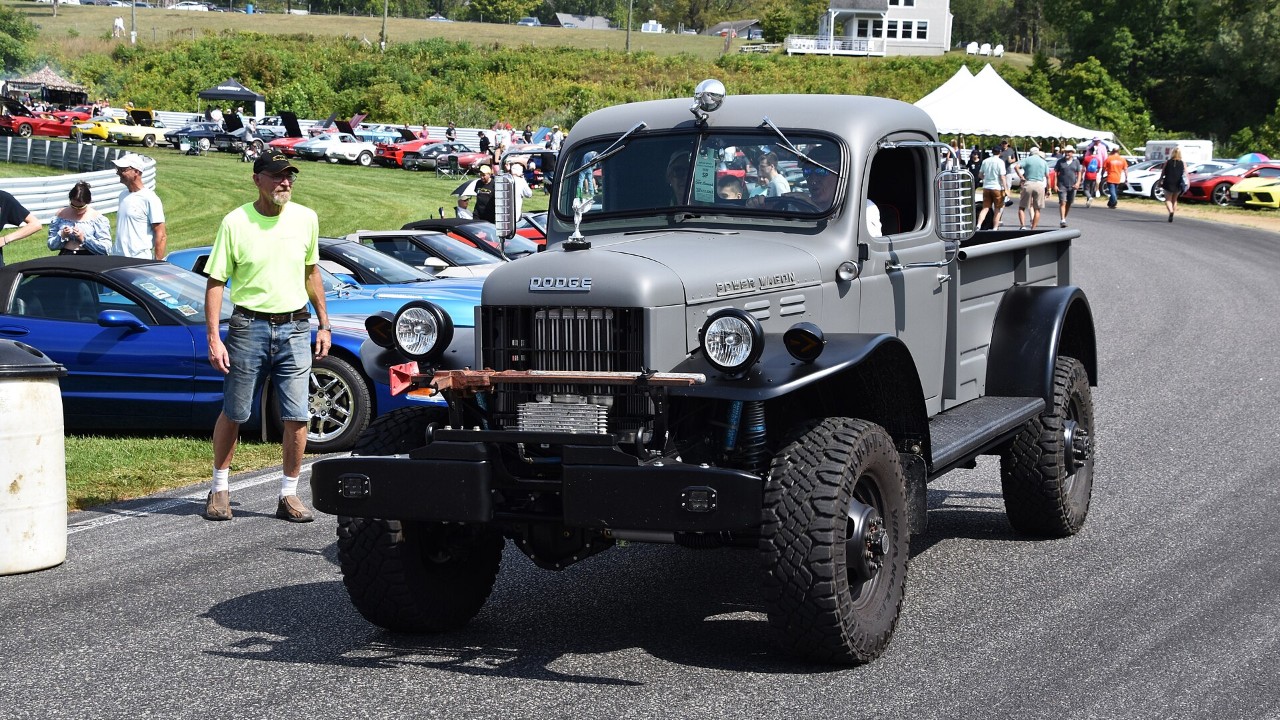
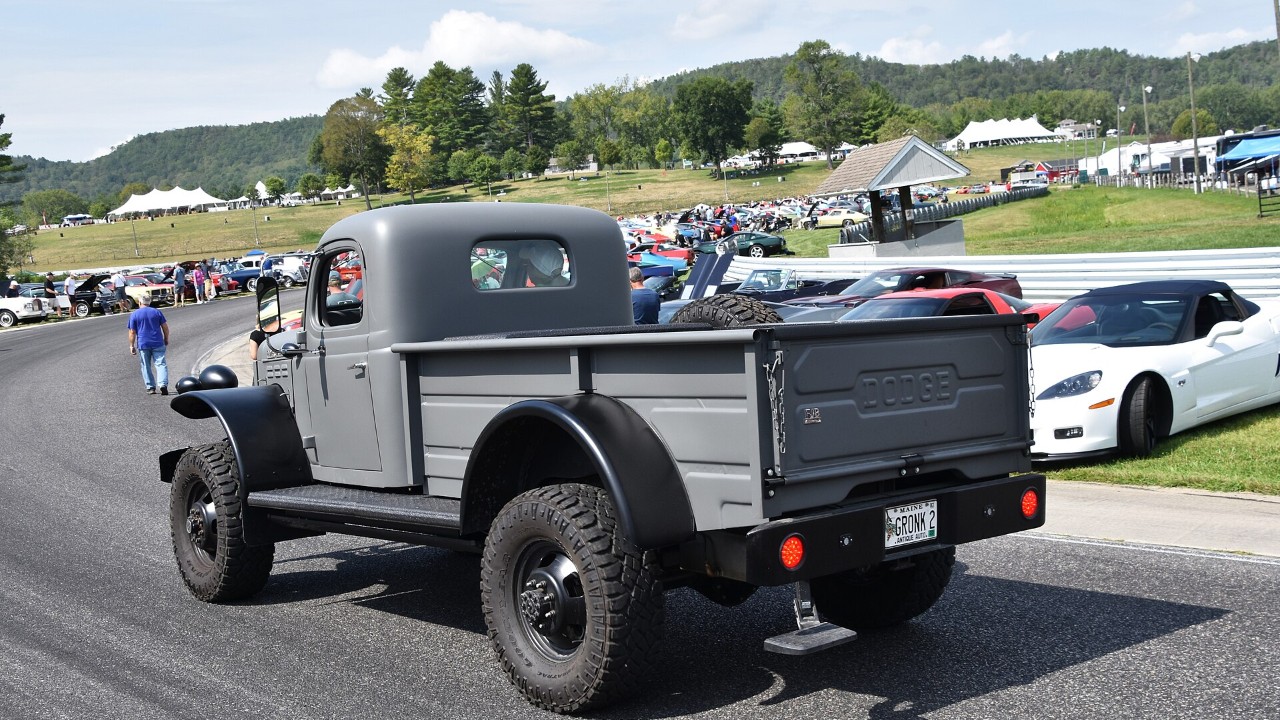
Dodge’s early civilian Power Wagon barely changed for years, and that is a big part of its charm. It began as a civilian version of Dodge’s WC series of military 4x4s, according to Silodrome’s history of the Power Wagon. Power came from a 230-cubic-inch flathead inline-six. A four-speed manual and a two-speed transfer case put it to all four wheels.
In fact, the truck worked as much as it drove. Front and rear power take-offs let owners run equipment, and an optional front winch ran off the PTO system. Dodge even marketed it as a “self-propelled power plant.” Meanwhile, its styling carried over from a 1939 prewar design, Cars.com reports. Even the hood top and radiator surround came from a three-ton cargo truck.
In our view, that utility look is why an early-1950s Dodge Power Wagon stops people cold today. The flat fenders, upright cab and huge grille look nothing like a modern pickup. Better yet, the one-ton truck carried a GVWR of 8,700 pounds and a payload of up to 3,000 pounds. If you buy one, check the PTO and winch drive, because a working setup is what makes these trucks complete.
2. Fargo Power-Wagon WM300 (export model)
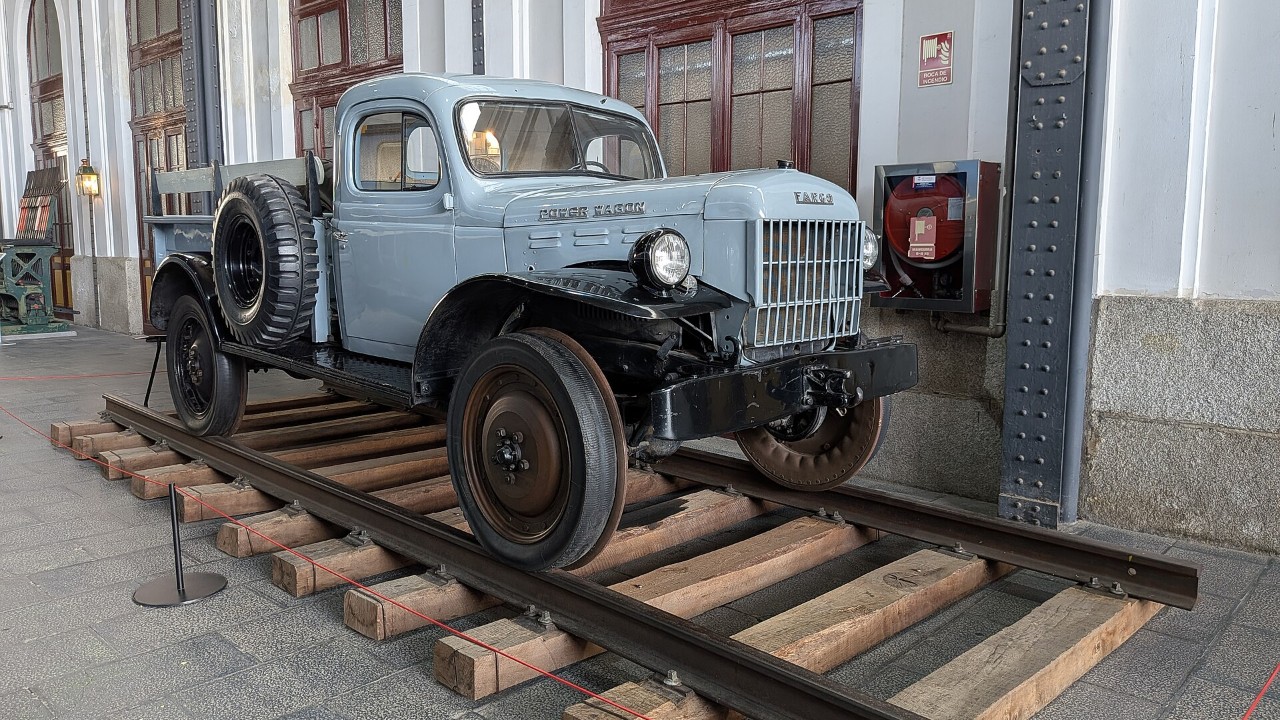
Chrysler sold the Power Wagon overseas under other names, and the Fargo badge is one of the most interesting. Badge engineering let Chrysler use more sales outlets abroad. As a result, the same rugged truck wore Fargo and De Soto names in different markets. The WM300 was the later designation for the military-style one-ton.
The export story outlived the American one. At home, Dodge sold 95,145 WDX and WM300 Power Wagons from 1946 to 1968, according to Cars.com’s history of the truck. After domestic sales ended in 1968, export production carried on. That’s because owners in places with poor roads valued the truck’s toughness. In 1961, a 251-cubic-inch flathead also replaced the older 230.
We think a Fargo-badged truck turns heads twice. First, people recognize the shape. Then they spot the unfamiliar name on the hood and start asking questions. That makes a Fargo WM300 a great conversation piece at any truck show. For a buyer, the key is paperwork and parts. Confirm the truck’s history first. Then check that its Fargo badging is present, since that detail is what makes it special.
3. 1971 Dodge Power Wagon W300
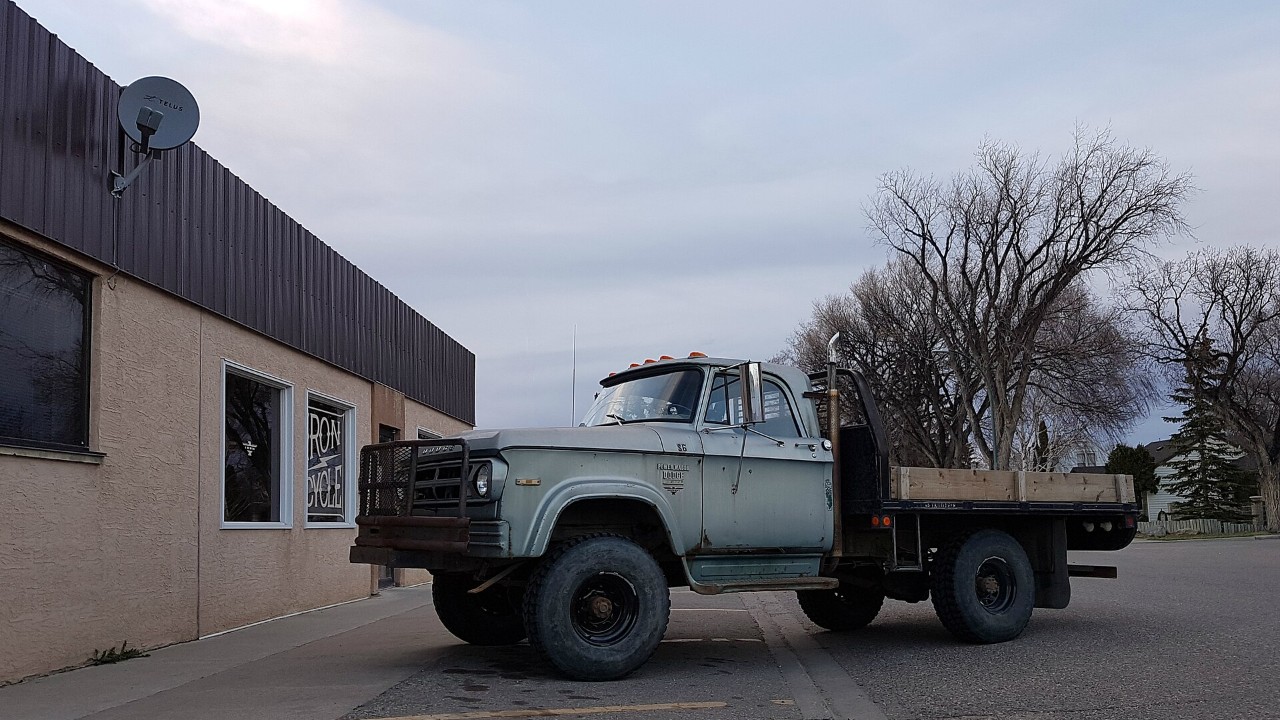
By the 1970s, the Power Wagon name had spread beyond the old military-style truck. Starting in 1957, Dodge sold its 4×4 conventional trucks as the W-100, W-200, W-300 and W-500. Each wore a Power Wagon fender badge. The W300 one-ton joined that range for 1958. The 1971 truck belonged to the generation that began production in October 1960.
That generation also brought some big ideas. For example, Dodge introduced a four-door crew-cab version for 1963, long before crew cabs became common. The four-wheel-drive models carried the W prefix, which separated them from the two-wheel-drive D trucks. A one-ton W300 sat at the heavy-duty end of that lineup, built for plows, flatbeds and serious work.
In our opinion, a 1971 W300 turns heads because few people realize Dodge put the Power Wagon badge on conventional pickups. It looks like a working truck from the farm, yet the fender script connects it to the famous postwar original. For buyers, the one-ton chassis means heavy components and a stiff ride. Check the frame and spring hangers closely, since many of these trucks spent decades under heavy loads.
4. 1976 Dodge Power Wagon W200
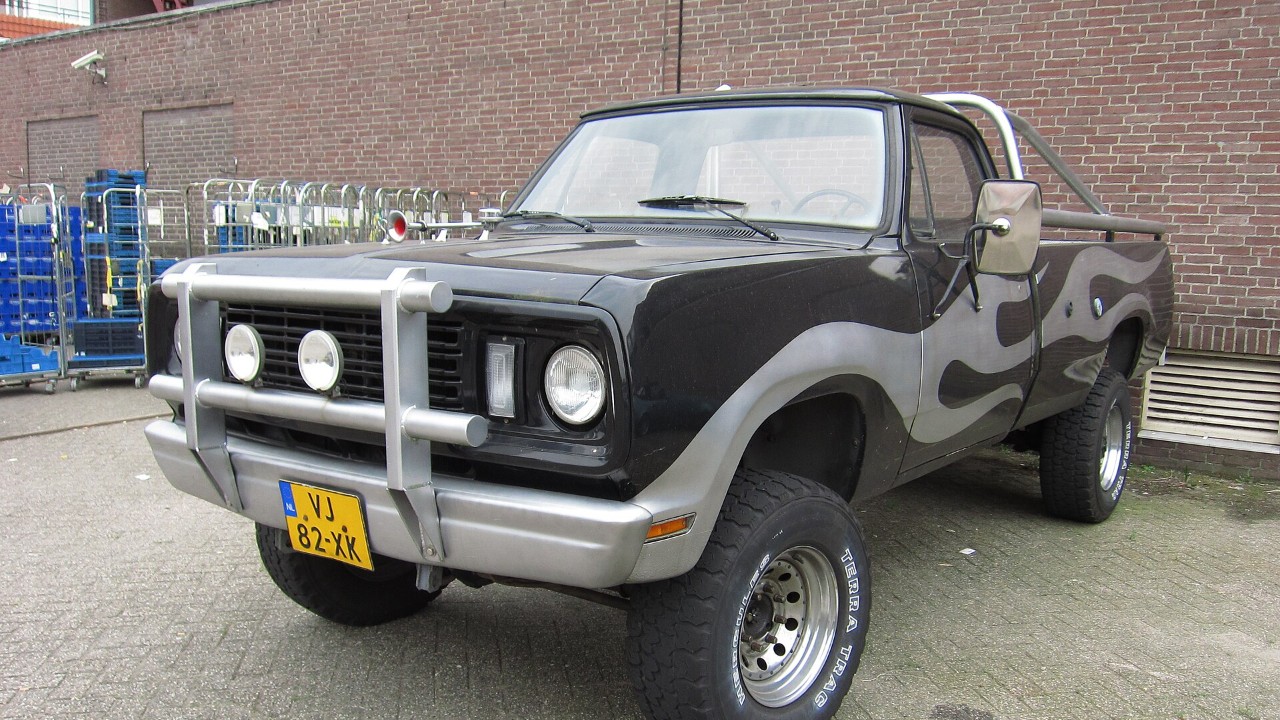
Dodge redesigned its pickups for 1972, and the new trucks aimed at “more passenger car-like comfort and convenience.” The cab used double-wall construction for less noise and more strength. The track grew wider for better stability. Buyers could choose a 225 slant six or V8s of 318, 360 and 400 cubic inches.
The W200 was the three-quarter-ton four-wheel-drive model. In 1972, the generation’s first year, Dodge built 7,886 W200s on the 131-inch wheelbase. It built another 1,067 on the 149-inch chassis. Dodge also pioneered the extended-cab pickup with its Club Cab for 1973. Later, for 1975, a full-time transfer case became standard. So a 1976 W200 drove all four wheels all the time.
We think the mid-1970s W200 is the best everyday Power Wagon of its era. It has room, a strong V8 and a look that has aged well. Today, a clean one with original paint draws as much attention as many muscle cars. If you shop for one, have the full-time transfer case inspected before you buy, because a rebuild is not cheap.
5. 1977 Dodge Macho Power Wagon
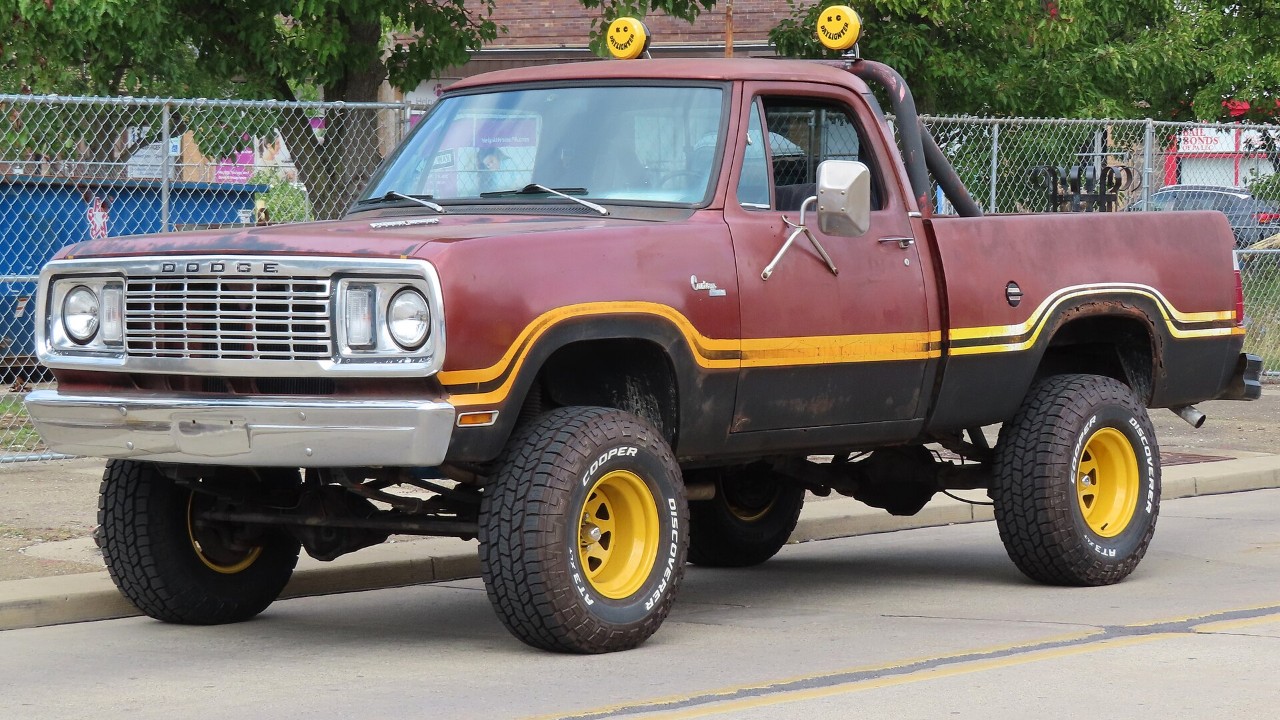
Dodge leaned into personality with the Macho Power Wagon. It arrived in 1977 and stayed until 1981, according to SlashGear’s look at the Macho truck. Buyers could pick a 318 or a 440 V8. Dodge also offered eight special paint schemes. Most often, buyers saw bright red or orange with a black lower stripe.
Above all, the details made the truck. A factory roll bar sat behind the cab. Inside, black-accented trim, special bench seats and a four-spoke sport steering wheel set the mood. Outside, 10-15 LT-B off-road tires rode on chrome or bright yellow wheels. In addition, locking front hubs let the driver switch between four-wheel and two-wheel drive. Dodge offered 115-inch and 131-inch wheelbases.
The name on early trucks can confuse people. In mid-1977, Dodge renamed its W100 models above 6,000 pounds GVWR as the W150. That’s why early Machos can wear either badge. Our take: no Power Wagon draws a crowd faster than an orange Macho with yellow wheels. Buyers should confirm the paint scheme matches the truck’s original documentation, because tribute builds are common.
6. 1979 Dodge W150 Power Wagon
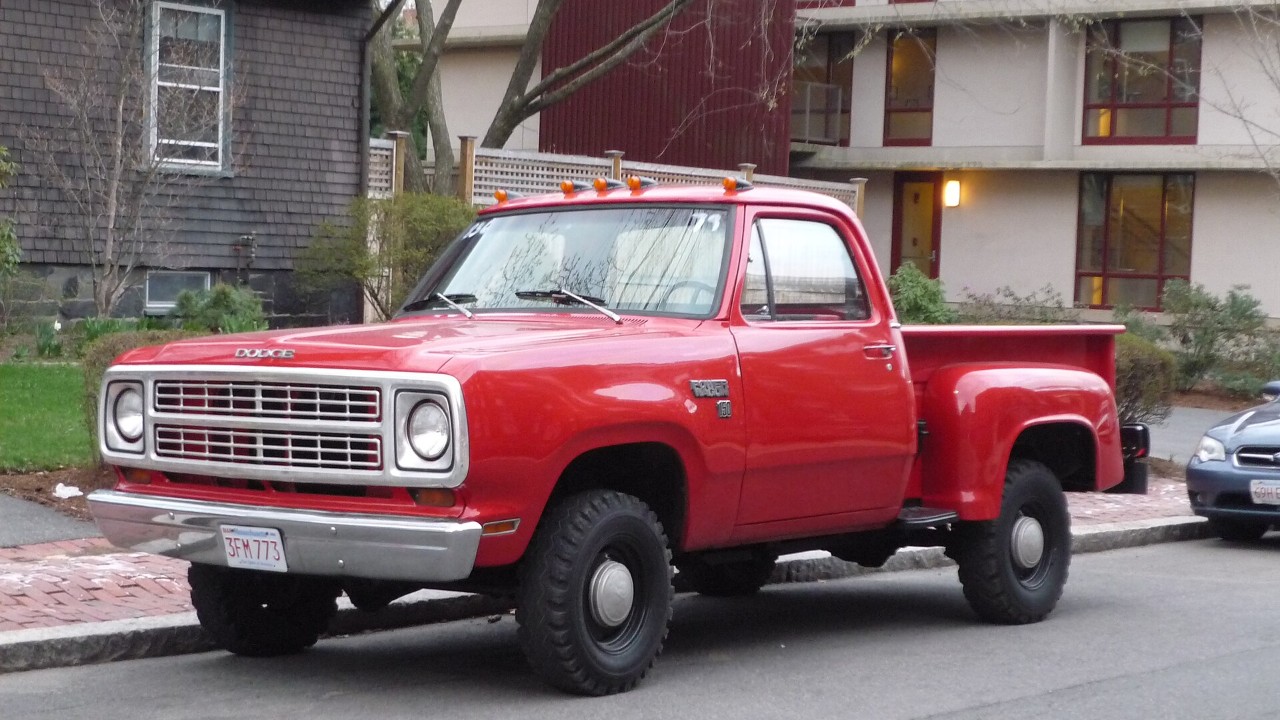
The late-1970s trucks marked the end of an era for the Power Wagon badge. Dodge offered some of its most colorful pickups in these years. For example, the Warlock ran in regular production from 1977 to 1979. The Li’l Red Express also belonged to the 1978–1979 period. Next to them, the W150 Power Wagon was the four-wheel-drive half-ton most buyers took home.
Change came quickly after 1979. For 1980, a part-time transfer case replaced the full-time unit Dodge had used since 1975. Power Wagon options continued through 1980. Then, in October 1980, Dodge rebadged its pickups under the Ram name. The Power Wagon name would not return until 2005. That makes a 1979 W150 one of the last full-time-drive trucks to carry the script.
In our view, the 1979 W150 turns heads because it looks like the 1970s in one package. The squared-off body, wide grille and chrome trim say “classic truck” from across a parking lot. Prospective owners should check the full-time transfer case and the cab corners, which often rust. Also, original equipment adds real appeal, since many trucks got swapped parts over the years.
7. 2015 Ram 2500 Power Wagon Laramie
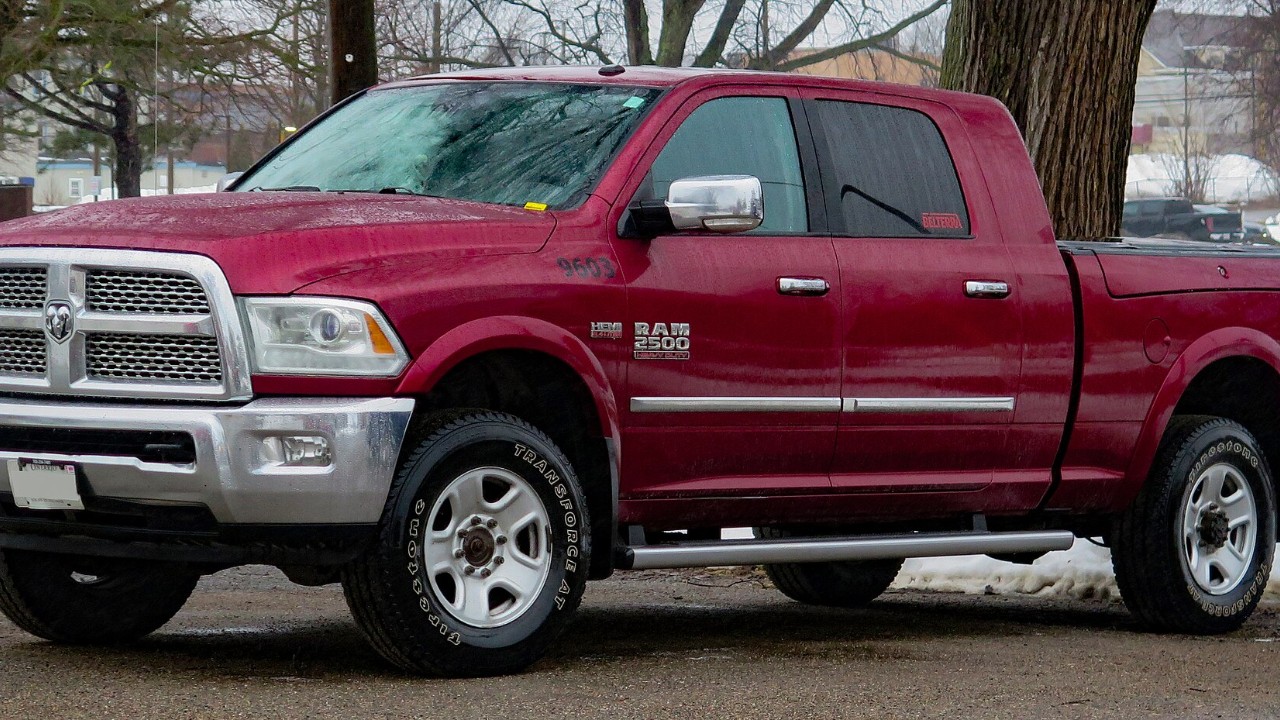
The Power Wagon name returned for 2005 on a four-wheel-drive Ram 2500, after production had ceased for 25 years. Even so, the modern truck kept the original idea of factory off-road hardware. Standard equipment included a 12,000-pound Warn winch, 33-inch tires and electronic locking differentials. For 2014, the truck moved to a 6.4-liter Hemi V8 rated at 410 hp.
The Laramie trim gave the Power Wagon a more upscale cabin. For 2014, Ram offered the Power Wagon in Tradesman, SLT and Laramie trims, and it dropped the Laramie after 2018. That window makes a 2015 Power Wagon Laramie a short-run combination of luxury and trail gear. In other words, an upscale cabin sits on top of a truck built to crawl over rocks.
We think the Laramie version turns heads because it looks dressed for dinner and ready for the trail at once. Most heavy-duty trucks pick one job. This one does both. For buyers, the winch, lockers and suspension deserve a full check, since some owners use these trucks hard off-road. A clean, unmodified Laramie is worth a premium in our view.
8. 2021 Ram 2500 Power Wagon 75th Anniversary Edition
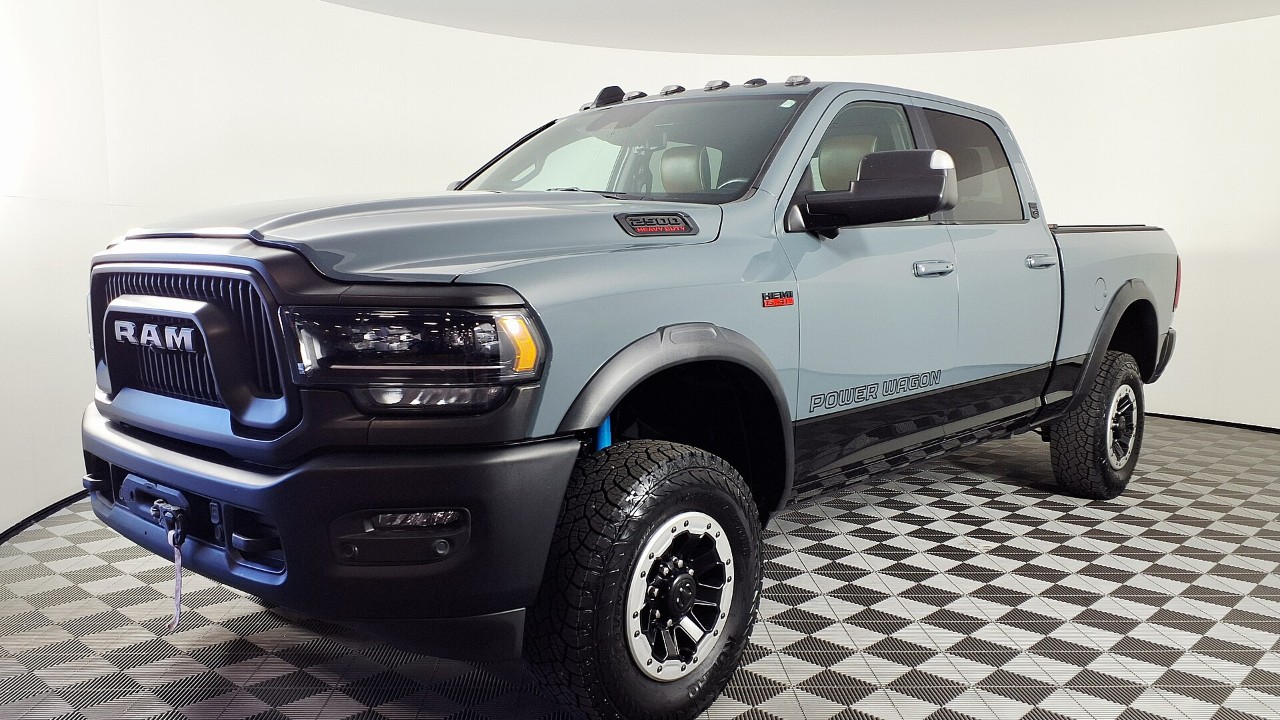
Ram marked 75 years of the name with a special package for 2021. The 75th Anniversary option cost $11,715, according to Hagerty’s first look at the truck. It added Mountain Brown leather, gloss black interior inserts and 17-inch beadlock-ready wheels. The package also brought a “jail bar” grille and a numbered dash plate.
The hardware matched the badge. Under the hood sat a 6.4-liter Hemi V8 rated at 410 hp and 429 lb-ft of torque. It worked with a ZF eight-speed automatic and a low-range transfer case. Up front sat a Warn Zeon-12 winch rated at 12,000 pounds, with synthetic rope. Interestingly, Hagerty notes the Cummins diesel was not offered, because it did not fit with the winch. Electronic lockers at both ends and 33-inch Goodyear Wranglers completed the package.
In our opinion, this is the modern Power Wagon that best connects to its roots. The grille and badging nod to the 1946 truck, while the chassis is fully current. If you want a Power Wagon with collector appeal and a modern drivetrain, this is the one. For more history, see our list of Power Wagon versions from the 1946 WDX to today’s Ram 2500. We also told the story of the 1955 Dodge Power Wagon airport rescue trucks.
More from Fast Lane Only