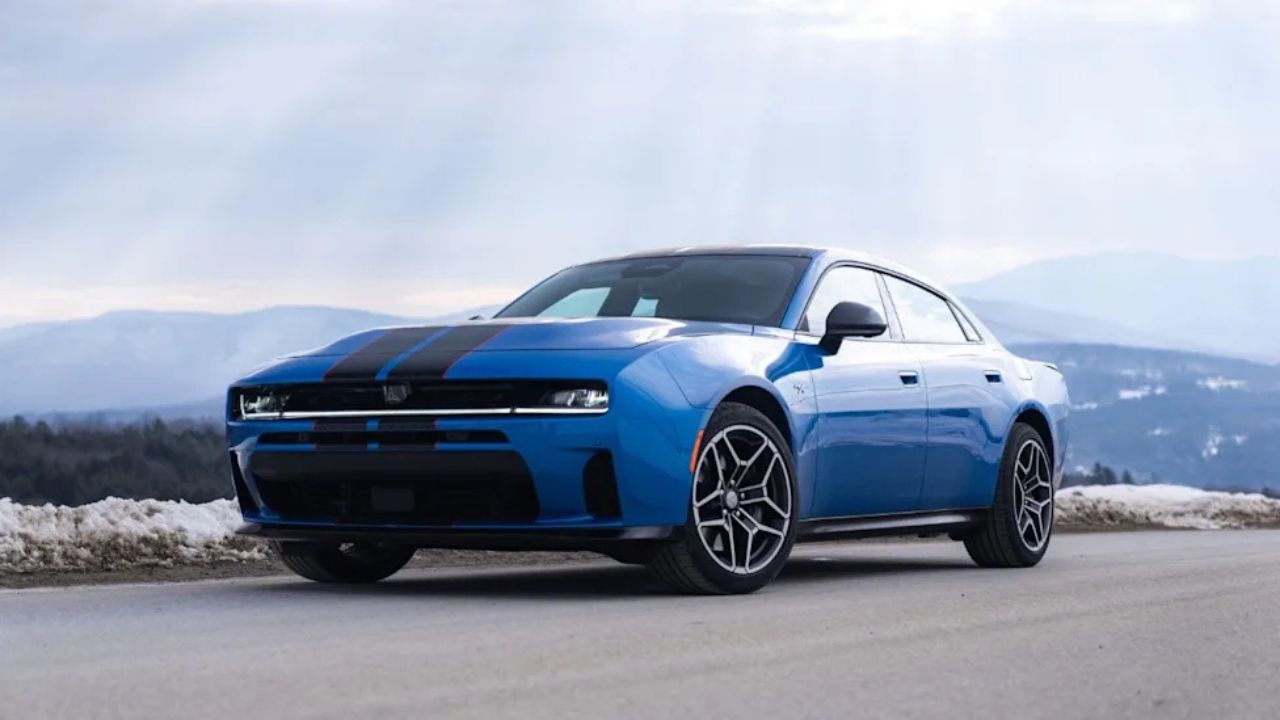
Dodge spent the last few years telling fans the supercharged Hellcat V8 era was over, only to spark fresh speculation that a 700 horsepower throwback could be waiting in the wings. With a new Charger platform on the way and muscle rivals pivoting to downsized engines and electrification, even the hint of a revived Hellcat-level model suggests a very different rulebook for the next generation of performance cars.
The rumor mill now circles around a possible high-output V8 for the upcoming Charger family, one that could match the old Hellcat’s headline numbers while operating in a far tighter regulatory and competitive environment. If Dodge finds a way to pull that off, it would not just bring back a nameplate, it would redefine how an American brand balances nostalgia, emissions rules, and the shift toward electric power.
How Dodge’s next Charger set the stage for a rumored Hellcat return
The current wave of speculation starts with the next-generation Charger, which Dodge has positioned as the brand’s core performance platform for the second half of the decade. Reporting on the company’s product roadmap describes a 2027 Charger that will anchor Dodge’s lineup and carry multiple powertrain options, including high-performance variants aimed at the same buyers who once flocked to Hellcat Challengers and Chargers. That long lead time, combined with Dodge’s history of late-cycle special editions, is what fuels talk of a future model that could once again crest the 700 horsepower mark.
The outgoing Hellcat cars relied on a 6.2 liter supercharged V8 that turned the Charger and Challenger into straight-line legends and helped Dodge carve out a clear identity in an era when many brands were chasing efficiency. The engine became shorthand for unfiltered American power, with widebody packages, Redeye editions, and Jailbreak trims pushing output and price higher while still selling in meaningful numbers. When Dodge announced that the current Charger and Challenger would end production, it framed the decision as the close of a chapter, not the end of performance, which left space for future reinterpretations of the Hellcat formula.
At the same time, the company committed publicly to electrified performance, including battery-electric versions of the next Charger. Dodge executives have repeatedly described electric models as an opportunity to enhance acceleration and responsiveness rather than a retreat from muscle car values. That message matters because it suggests the brand sees power as non-negotiable, whether the source is gasoline, electrons, or some combination of both. The rumored 700 horsepower revival fits that pattern, even if the precise engineering solution remains unverified based on available sources.
Platform flexibility is another factor. The architecture underpinning the new Charger is designed to accommodate different drivetrains, from internal combustion to fully electric. A flexible platform gives Dodge the ability to respond to demand and regulation, and it creates a realistic path for a late-arriving flagship that uses a high-output V8 or a hybridized setup to reach Hellcat-level performance. That sort of modular engineering is exactly what allows a manufacturer to tease future variants without locking in specifics years ahead of launch.
Why a 700 hp-style comeback would hit differently in the current market
If Dodge does reintroduce a Hellcat-grade model around the 2027 Charger, it will arrive in a muscle car segment that looks very different from the one the original Hellcat dominated. Ford has kept the Mustang alive with a mix of turbocharged four-cylinder and V8 options, but it also launched the electric Mustang Mach-E to broaden the badge’s reach. Chevrolet ended Camaro production and shifted attention to SUVs and trucks, while also promoting the Corvette’s evolution into a mid-engine sports car and, in the E-Ray, a hybrid with electric front-axle assist.
In that context, a fresh 700 horsepower Dodge would stand almost alone as a full-size, four-door-capable muscle car that prioritizes raw output over downsizing. It would signal that Dodge still sees value in catering to enthusiasts who want a big, loud, internal combustion centerpiece, even as the rest of the industry leans into silent speed. That positioning could strengthen brand loyalty among existing owners and give Stellantis a distinctive halo product at a time when many performance lineups are converging on similar electric formulas.
Regulation is the other reason a revival would feel more disruptive now. Emissions and fuel economy rules have only tightened since the first Hellcat arrived. Automakers face fleet-wide targets that push them toward smaller engines, hybridization, or full electrification, especially in markets like Europe. Crafting a 700 horsepower internal combustion car that complies with those constraints demands far more sophisticated engineering and careful production planning than it did a decade ago. If Dodge manages it, the car would serve as a proof of concept that high-output V8s can coexist with stricter standards, at least in limited volumes.
There is also the question of how such a car would relate to Dodge’s electric performance push. An all-electric Charger with instant torque and all-wheel drive could match or exceed traditional Hellcat acceleration benchmarks. That raises the possibility that a future gas-powered flagship would be positioned less as the ultimate performance option and more as an emotional, heritage-focused alternative, similar to how some brands sell manual-transmission sports cars alongside quicker automatic or electric models. In that scenario, the 700 horsepower figure becomes a symbolic bridge between eras rather than a simple bragging right.
From a business perspective, high-output special editions can be powerful tools for pricing and margins. Limited-run or late-cycle performance variants often command significant premiums, which help offset development costs and support broader electrification investments. A revived Hellcat-style Charger could follow that template, using exclusivity and nostalgia to justify a higher sticker while keeping overall production low enough to protect corporate emissions averages.
How Dodge could shape the next chapter of muscle performance
Looking ahead, the key question is not just whether Dodge will build another 700 horsepower car, but how it will frame that car within its wider strategy. One path is a straightforward internal combustion flagship that leans into the familiar Hellcat identity, with a supercharged V8, rear-wheel drive, and an attitude that mirrors the outgoing Charger and Challenger. That approach would satisfy purists and cement Dodge’s image as the last holdout for traditional muscle, but it may limit the model’s longevity if regulations tighten further.
Another path is a more complex hybrid or plug-in hybrid system that pairs a downsized V8 with electric assistance to reach Hellcat-level output. Such a setup could deliver the sound and character buyers expect while also improving low-end torque and efficiency. It would align more closely with global trends, where performance hybrids are becoming common at the high end, and it could serve as a technical showcase for Stellantis as it rolls out electrified platforms across multiple brands. Whether Dodge chooses this route remains unverified based on available sources, but the underlying technology already exists within the wider industry.
The electric Charger variants will also shape expectations. If battery-powered models debut first and establish new benchmarks for quarter-mile times or track performance, any later gas-powered flagship will need a clear narrative about what makes it special. That story could revolve around sound, mechanical involvement, and long-distance refueling convenience, all areas where internal combustion still resonates with a core audience. Dodge has historically excelled at this kind of storytelling, turning raw numbers into personality through design, marketing, and special trims.
Consumer economics will play a role as well. As insurance and fuel costs rise for high-horsepower cars, a 700 horsepower sedan or coupe becomes a more deliberate purchase, aimed at buyers who treat it as a hobby object rather than a daily driver. Dodge will need to balance that reality with the desire to keep the brand accessible. One likely outcome is a tiered performance ladder, with more attainable turbocharged or naturally aspirated models at the base, mid-level electrified performance variants in the middle, and a halo car at the top that carries the spiritual weight of the Hellcat name, even if the badge or exact output changes.
More from Fast Lane Only
- Unboxing the WWII Jeep in a Crate
- 15 rare Chevys collectors are quietly buying
- 10 underrated V8s still worth hunting down
- Police notice this before you even roll window down
*Research for this article included AI assistance, with all final content reviewed by human editors.