When the Citroën DS first appeared in 1955, it did not just look different from the family saloons parked around it. It behaved differently, from the way it rose gently on its suspension to the way a light touch on a mushroom-shaped pedal summoned fierce braking power. The car’s early innovation made it feel less like a product of the mid‑1950s and more like a visiting prototype from decades ahead.
Seven decades later, engineers, designers and owners still point to the DS as a rare case where radical ideas reached mass production. Its story is not simply about a striking silhouette, but about a company willing to rebuild a car around hydraulics, aerodynamics and comfort at a time when most rivals were still refining leaf springs and drum brakes.
A radical shape that signaled a different era
Before anyone experienced the technology hidden under its bodywork, the DS stunned on looks alone. Contemporary accounts describe how, once it was unveiled, attention at the show shifted to this one car and stayed there. One report notes that, from the moment it appeared, other models were effectively ignored, since the DS was everything the public had not realized it wanted until that point. The same source recalls people reacting as if a concept car had somehow escaped the design studio and reached the showroom, capturing the sense of shock that surrounded the first production examples of the DS when Enter the Citro is mentioned.
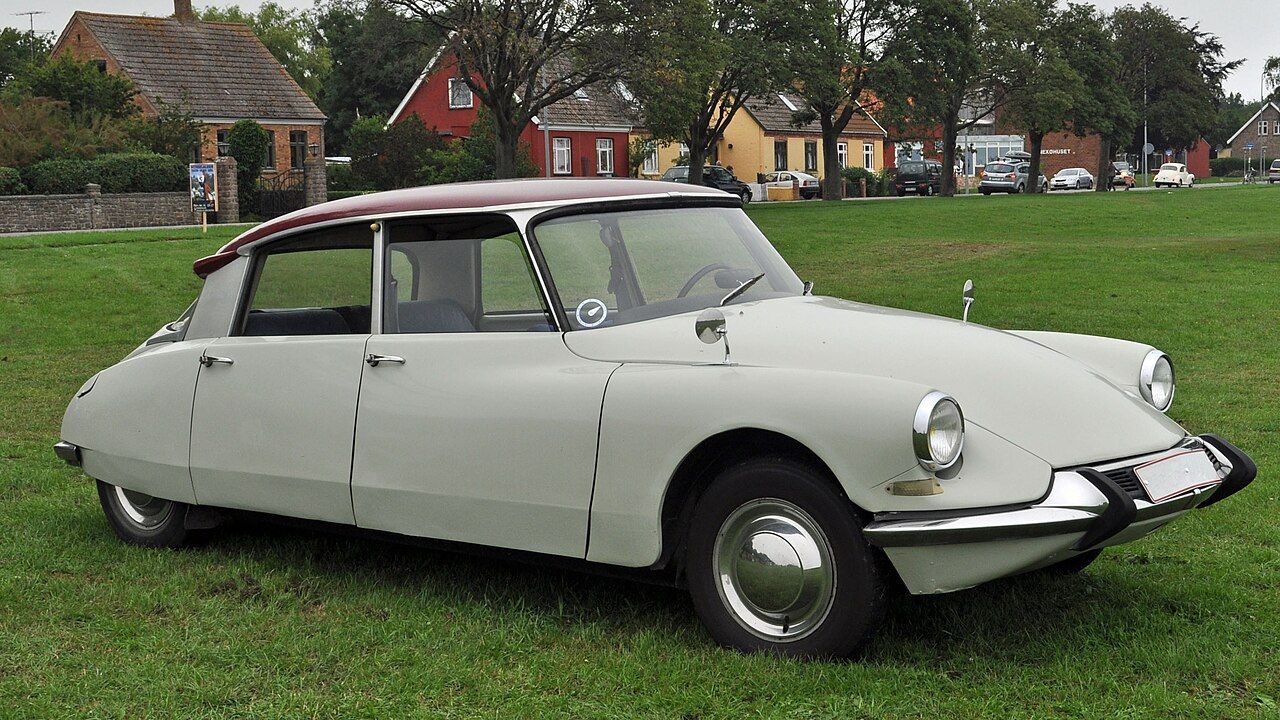
The body, shaped with a focus on airflow and interior space, looked like nothing else on the road. Long, tapering lines, a low roof and smooth surfaces gave the DS an aerodynamic profile that contrasted sharply with the upright, chrome-laden sedans that dominated streets at the time. Later commentary has stressed that these cars were unlike anything else on the market and that they combined strong character with practicality and a sense of being ahead of their time, an assessment that helps explain why the DS still draws attention in modern traffic.
The nickname that followed, a French play on words that likened the DS to a goddess, captured the mixture of elegance and otherworldliness that defined the design. Yet the styling was only the outer signal of a deeper engineering experiment.
The hydropneumatic leap that changed how cars moved
The most famous innovation in the DS sat hidden under its flowing panels. Citroën had already experimented with a new type of suspension on the rear of the Traction Avant in 1954, using a system that replaced traditional steel springs with a mix of hydraulic fluid and compressed gas. According to technical histories of hydropneumatic suspension, the DS became the first car where this approach was applied to all four wheels.
On the DS, this hydropneumatic layout connected to a central high‑pressure hydraulic circuit. Spheres filled with nitrogen acted as springs, while hydraulic fluid handled damping and ride height control. As one later explanation puts it, instead of creating many separate organs, Citroen built a body in which every important movement depended on a stream of pressurized fluid. That phrase captures how deeply the company embedded hydraulics into the car’s architecture.
Modern demonstrations of surviving cars underline how unusual the system still feels. In one video, the presenter, identified as Nov, admits to being completely and utterly overwhelmed after sitting down in a DS and experiencing how the suspension soaks up rough surfaces. The clip of Nov reacting to the way the car rises at start‑up and glides over bumps illustrates why so many owners describe the ride as almost uncanny, and it is linked under Nov.
Short social clips have helped reintroduce this technology to new audiences. One widely shared reel describes how the Citroën DS was famous for an ingenious hydraulic system that controlled not just the suspension but also steering and braking, emphasizing how integrated the design was. The post, which highlights the DS as a benchmark for ride comfort, is tagged with Dec.
A car built around hydraulics, not just equipped with them
The DS did not simply add a novel suspension to an otherwise conventional platform. Citroen used the central high‑pressure circuit to power multiple core functions. Steering assistance, brake actuation and even the gearshift on some versions all drew from the same hydraulic source. One detailed breakdown explains that, in other words, instead of creating many separate organs Citroen built a body in which every important movement depended on a stream of pressurized fluid, a line that appears in a video linked under Citroen.
This approach allowed features that would have been difficult or impossible with separate mechanical subsystems. The DS could automatically level itself regardless of load, keeping the body at a constant height whether the trunk was empty or filled. Drivers could raise the car to clear rough roads or lower it for easier entry and loading. The same pressure that supported the car also gave the steering a light, precise feel and provided fierce braking with minimal pedal travel.
Later enthusiasts have highlighted how rare it was for a family car to handle so well while also riding so smoothly. One video credits a single Belgian engineer with inventing a suspension system so advanced that it allowed a French family car to combine comfort and control in a way that surprised even sports car drivers, and it is referenced through the terms Belgian and French in the clip linked at Dec.
Hydropneumatic suspension as a defining feature
Modern summaries of the DS often focus on the hydropneumatic suspension as its signature feature. One enthusiast group describes how the Citroën DS, introduced in 1955, was renowned for its futuristic design and advanced technology, then calls out a rare and fascinating fact about the way its suspension worked. The discussion, which appears in a post tagged Aug and refers to The Citro as a landmark design, is accessible at The Citro.
Another video clip explains that the Citroën DS featured a revolutionary hydropneumatic suspension system that combined hydraulic fluid and compressed nitrogen to deliver a smooth and adjustable ride. The reel, labeled Oct and again referring to The Citro, underlines how the combination of fluid and gas gave the DS a character that still feels unusual compared with modern steel springs and electronic dampers. That description is linked through The Citro.
Technical references on hydropneumatic systems confirm that Citro first introduced this setup on the rear of the Traction Avant, then expanded it to a full four‑wheel implementation on the DS. The evolution from a partial test on the Traction Avant to a complete system on the DS shows how the company used one model as a laboratory before committing to a full redesign. These accounts, which describe how Citro refined the idea into a defining feature of later models, are summarized under Citro.
Brakes, steering and other firsts that backed up the styling
Beyond its suspension, the DS introduced braking and steering features that were far from common in mid‑1950s family cars. Period technical write‑ups describe a fully hydraulic brake system that was a production‑car first, coupled with front inboard disc brakes. One retrospective notes that The DS combined these discs with a unique floor‑mounted button instead of a conventional pedal, giving the driver powerful stopping force with only a short movement. That assessment appears in a feature linked under The DS.
Steering assistance tied into the same hydraulic network, which meant that the wheel felt light at low speeds and more stable at higher speeds. Contemporary drivers found the combination of sharp braking, precise steering and soft ride disorienting at first, since it broke so many expectations about how a large car should behave. Once they adapted, though, many reported that long journeys felt far less tiring.
Later commentary has emphasized that the DS was designed to make driving less draining at a time when road surfaces were rough and power assistance was rare. One analysis states that the goal was to make the experience less tiring, because driving then was not the relaxed experience people expect now. That line appears in a discussion of how the suspension and controls reduced fatigue, which is linked under Less.
Engineering ambition on an 18‑year timeline
The DS did not emerge overnight. A detailed retrospective explains that it took them no less than 18 years to complete the project that would become the Citroen DS, a car described there as Arguably the Most Innovative Car Ever Built. That long gestation period, which is highlighted in a feature labeled Jan and titled Look Back, shows how deeply Citroen rethought the conventional car layout before committing to production. The article, which uses the full phrase Citroen DS: Arguably the Most Innovative Car Ever Built, can be found at Look Back.
Such a prolonged development cycle allowed engineers to integrate hydraulics into the structure rather than add them late in the process. It also created pressure to ensure that the finished car justified the investment. That pressure helps explain why the DS launched with a combination of features that, taken together, had no direct rival at the time.
Marketing around the DS leaned heavily on this idea of a car of the future born in 1955. One branded piece describes it exactly that way, stating that the car of the future was born in 1955 and that, when it debuted, the Citro was so far ahead of its time that it remains a reference point for innovation. That claim, which appears in a reel tagged BRANDED and CONTENT and introduced with the line When it debuted, is accessible through When.
Cost, accessibility and why the DS did not conquer the market
Despite the excitement around its launch, the DS faced practical challenges. One analysis of its commercial performance argues that the same radical design that shocked the world also limited its success. The complexity of the hydraulic systems and the cost of production kept prices high and made maintenance more specialized, which discouraged some potential buyers.
Financial context from the era helps explain this gap. A detailed video on the DS cites a price measured in old French Franks equivalent to about 1,400 in today’s currency, then notes that the minimum monthly wage at the time made that figure significant. The clip, which repeats the phrase old French Franks equivalent to about 1,400 and compares it with income levels, appears twice in the source list and is accessible at French Franks.
Another breakdown of the DS story argues that, although the car shocked the world, it still failed to dominate sales because its technology required a level of dealer training and customer education that many markets were not ready to provide. That same source uses the phrase in other words instead of creating many separate organs Citroen built a body in which every important movement depended on a stream of pressurized fluid, suggesting that the very integration that made the DS special also made it hard to service. The argument appears in a video linked under Mar.
More from Fast Lane Only