A sleeper sedan looks like ordinary transport and drives like something else. Each car here left the factory with a big or highly tuned engine under a body most people would not look at twice. Also, the list runs from a 1957 Rambler to a 1994 Chevrolet police car, on both sides of the Atlantic.
Every engine and horsepower figure belongs to the model year in its heading. When a car came in two tunes, both are named.
1. 1990 Lotus Carlton, the 176-mph sleeper sedan
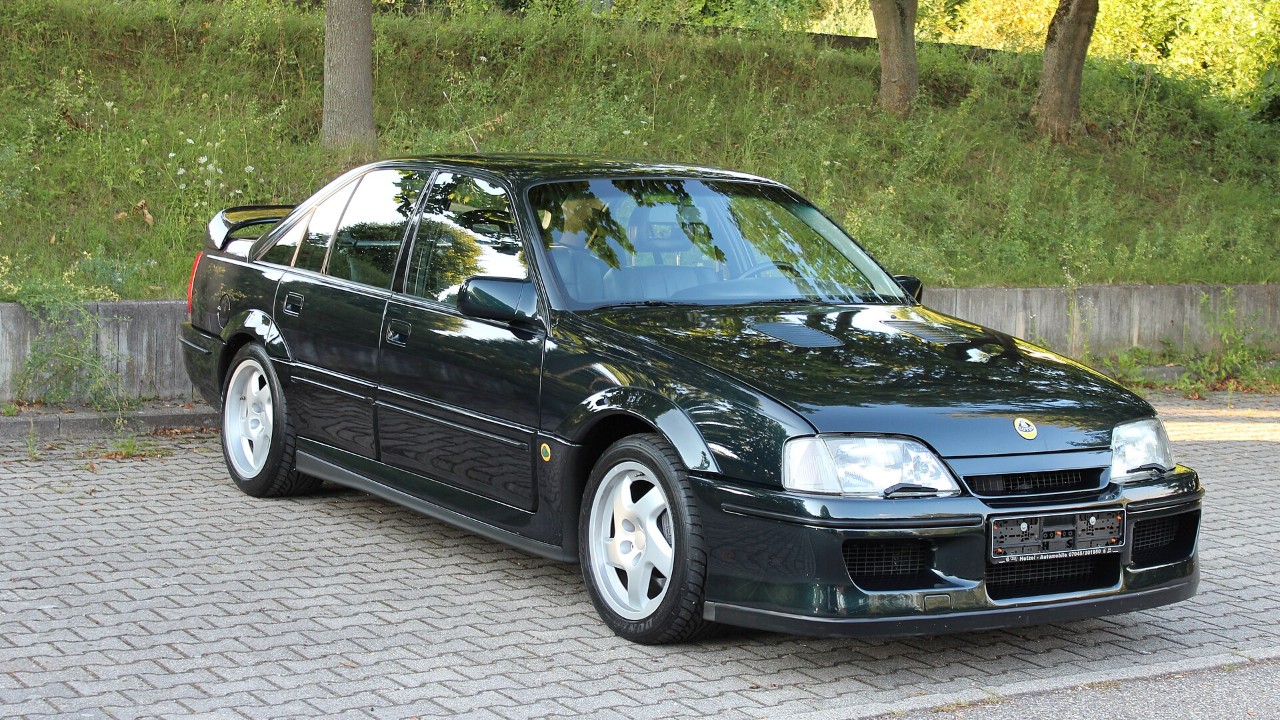
Opel built the bodies in Rüsselsheim, Germany, and shipped them to Lotus in Hethel, England, for conversion. At first glance, the car was a four-door commuter with wood trim and air conditioning. Lotus, however, enlarged its straight six from 3.0 to 3.6 liters and added two Garrett T25 turbochargers.
For 1990, the result was 377 horsepower and 419 lb-ft of torque, sent through a six-speed manual from the Corvette ZR-1. According to Hagerty, Lotus quoted a 176-mph top speed, and the House of Commons briefly debated the car in 1990. Even so, it cost £48,000 new. In total, Lotus completed 950 examples, the same figure Conceptcarz gives.
2. 1968 Mercedes-Benz 300 SEL 6.3
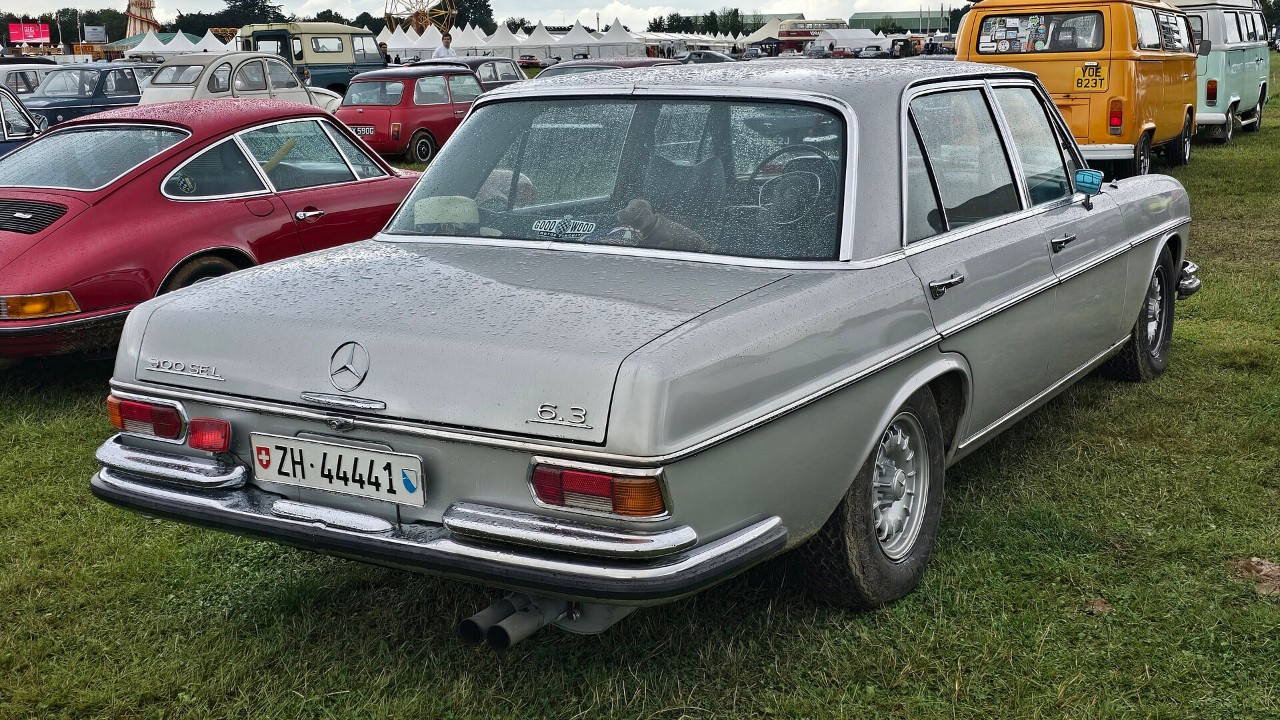
In March 1968, Mercedes took the V8 and automatic from its 600 limousine and fitted them to the smaller 300 SEL body. As a result, the sedan carried a 6,332cc engine. Supercars.net rates the 1968 car at 250 hp (184 kW). It also rode on air suspension front and rear.
Still, performance did not match the formal styling. The 6.3 reached 100 km/h in 8 seconds and topped out near 137 mph. However, it cost more than DM 10,000 over a regular 300 SEL. In all, Mercedes built 6,526.
3. 1991 Mercedes-Benz 500E
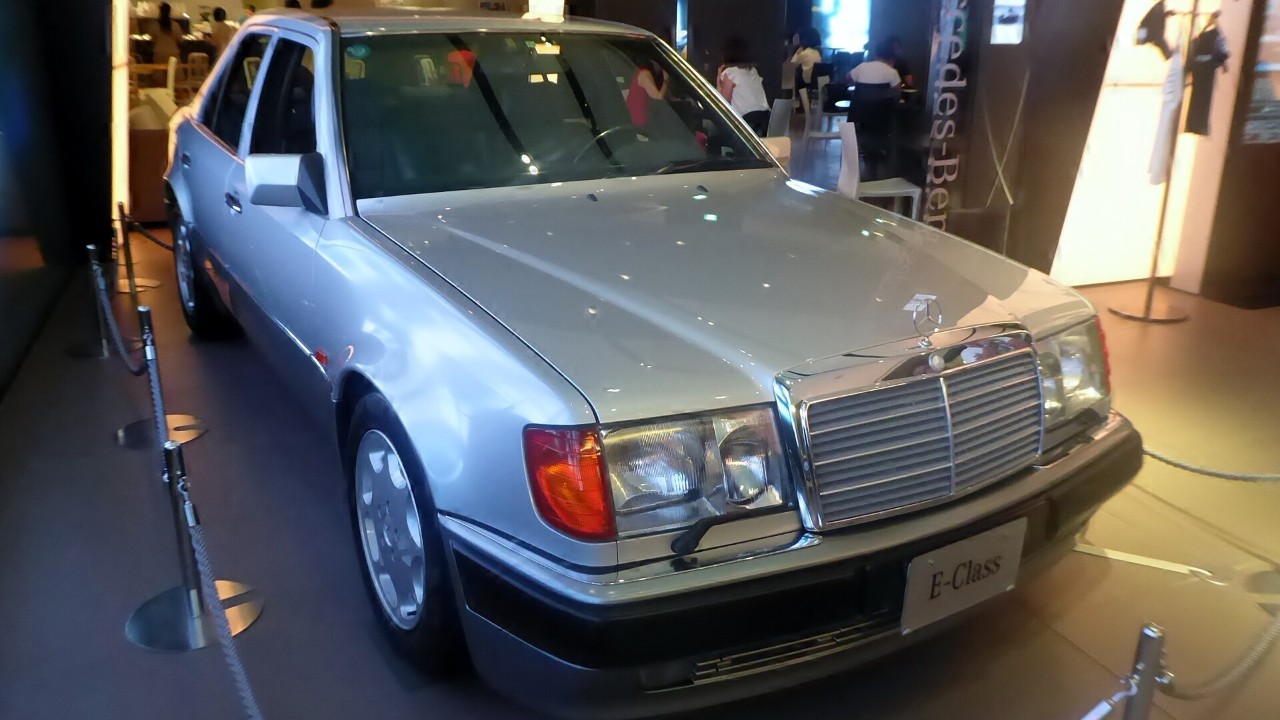
Mercedes hired Porsche in 1988 to engineer a high-performance version of its W124 sedan. Porsche widened the front and rear fenders by about 56 millimeters, and that was close to the only visual tell. Meanwhile, Sindelfingen built the parts, while Porsche’s Zuffenhausen plant handled assembly.
The car debuted in Paris in October 1990, and sales began in spring 1991. Its 4,973cc M119 V8 made 326 PS, or 322 horsepower, in original 1991 500E form. By contrast, the 1993 facelifted E 500 made 320 PS. According to Supercars.net, about 10,479 were built from 1991 through 1995, counting the E 500 and E 60 AMG.
4. 1985 BMW M5
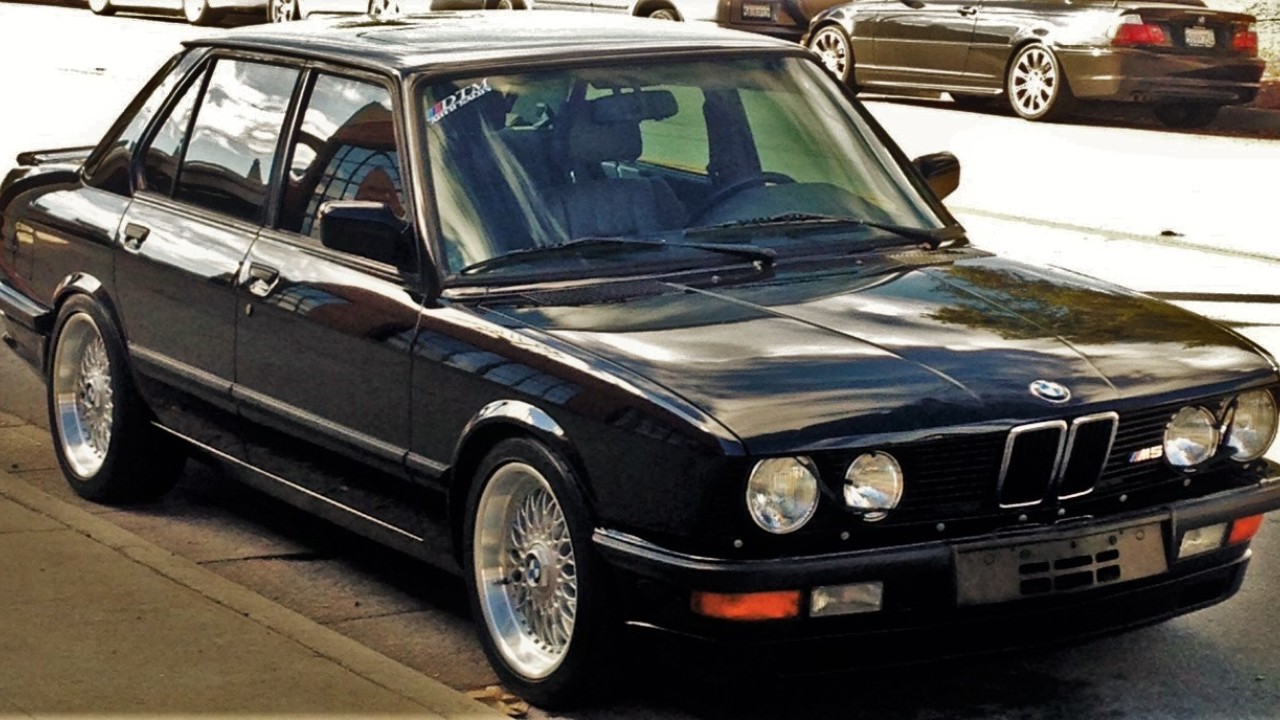
BMW gave the E28 M5 a black grille, a small M5 badge and a hood with no ducts or scoops. Beneath that plain hood sat the M88/S38 inline six, derived from the M1 supercar’s engine. In fact, it displaced 3,453cc, which made this E28 a true sleeper sedan.
Production began in October 1984, and customer deliveries started in 1985. European cars made 282 horsepower, while North American cars with catalytic converters made 256, Supercars.net says. As for top speed, it reached 152 mph. In all, Dingolfing built about 2,241 through June 1988.
5. 1994 Chevrolet Caprice 9C1
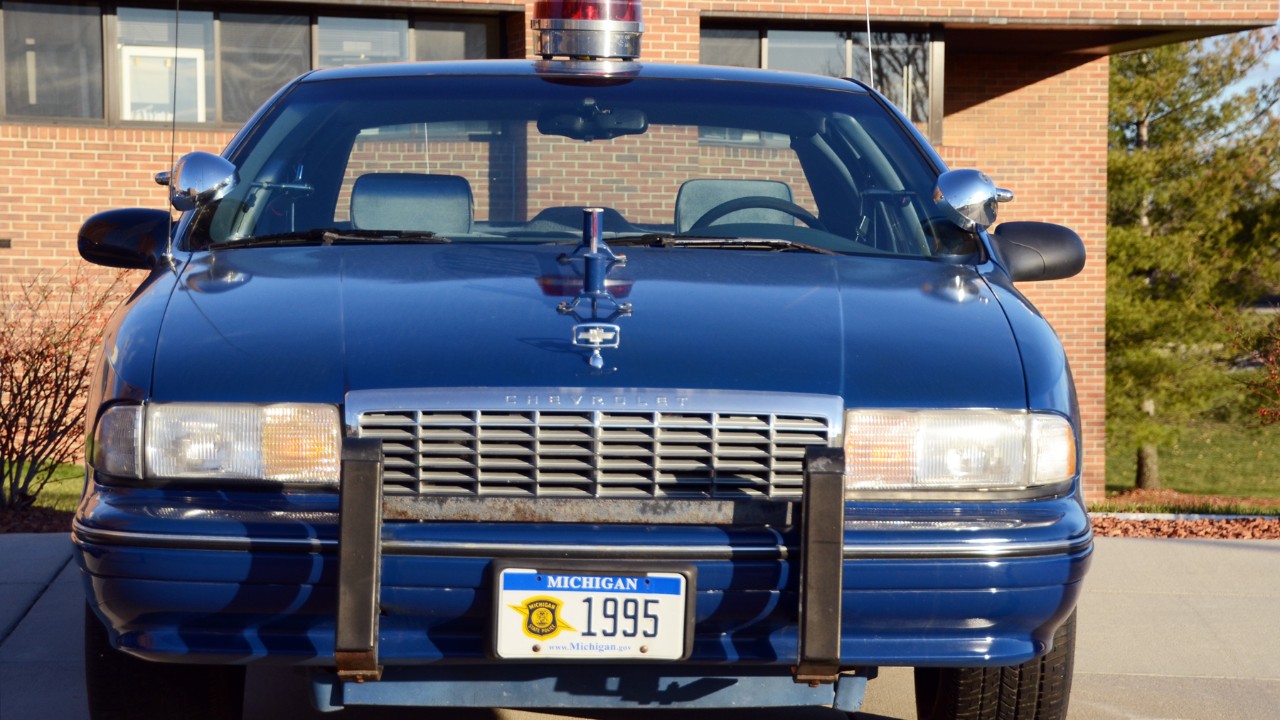
9C1 was a Chevrolet option code for a police package, not a model. Over the years Chevrolet offered it on the Nova, Malibu, Celebrity, Caprice, Impala and Tahoe. Specifically, the package added oversized sway bars, a high-output alternator, quick-ratio power steering and oil coolers for the transmission and steering.
For 1994 through 1996, the Caprice 9C1 used the LT1 V8 from the Camaro and Corvette of the day, according to Drivingline. In those cars, the 5.7-liter LT1 made 260 horsepower and 300 lb-ft of torque. Conceptcarz gives the same 260-horsepower rating for 1994–96 LT1 Caprices. In addition, many police cars got a digital speedometer, true dual exhaust and steel anti-stab plates in the front seatbacks.
6. 1962 Chevrolet Biscayne 409
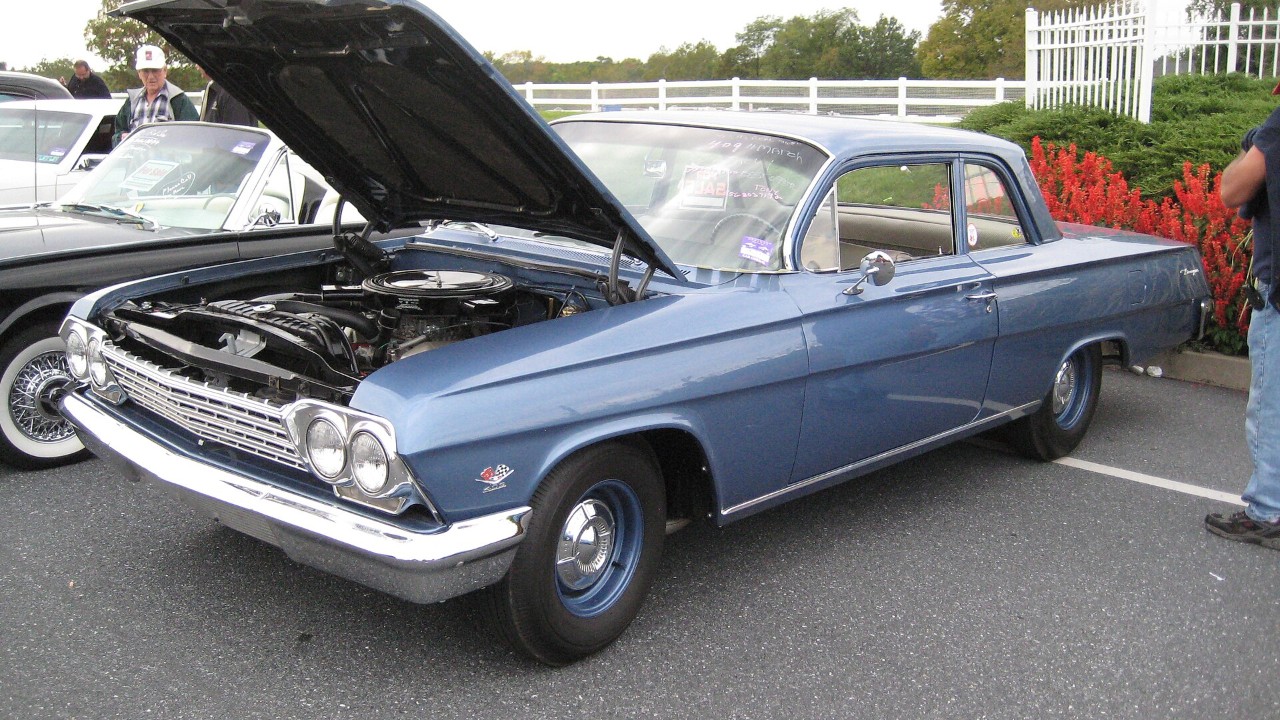
The 1962 Biscayne two-door post was a base-level car. Because of that, it wore none of the badges or ornaments of higher-optioned Chevrolets. Ordered with the 409, though, it became a very different machine.
Under the hood of one surviving example, Chevy Hardcore found the 409-cubic-inch V8 rated at 409 horsepower for 1962. On top of that, it breathes through two four-barrel carburetors and drives a four-speed manual and 4.56 rear gears. The magazine calls the result a “super-stock, dealership floor race car.” Later, that example carried an $89,900 asking price, and it has since sold.
7. 1988 Ford Sierra Sapphire RS Cosworth
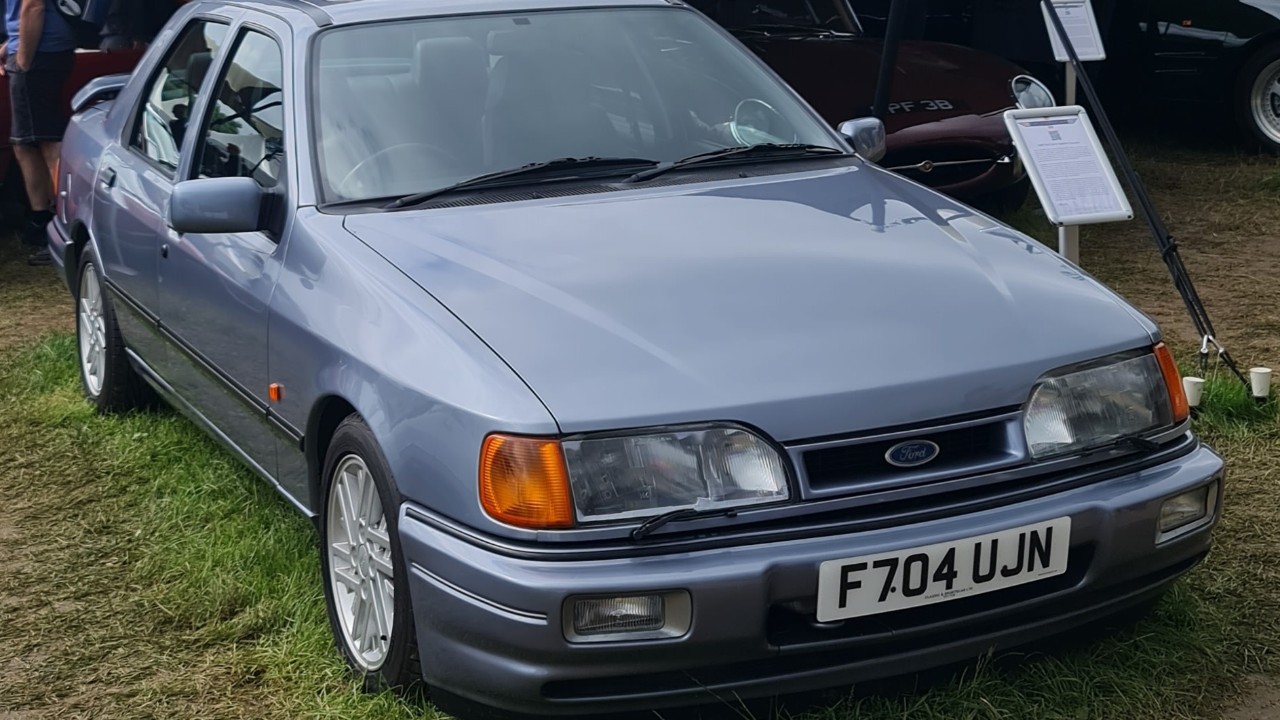
The Sapphire RS Cosworth put a turbocharged Cosworth engine into a four-door Sierra saloon in Ghia trim. However, its body kit stayed modest, so it looked like a plain sleeper sedan. It had a color-matched grille, bumper and air dam, side sill extensions and a small rear spoiler.
According to the RS Owners Club, the 1988 car’s 1,993cc Cosworth YBB four made 204 bhp (DIN) at 6,000 rpm. Then Ford assembled the cars in Genk, Belgium, with UK-built engines. Autocar measured 143 mph in February 1988, against Ford’s claim of 151.4 mph. About 13,140 two-wheel-drive cars came out of Genk in 1988 and 1989.
8. 1957 Rambler Rebel
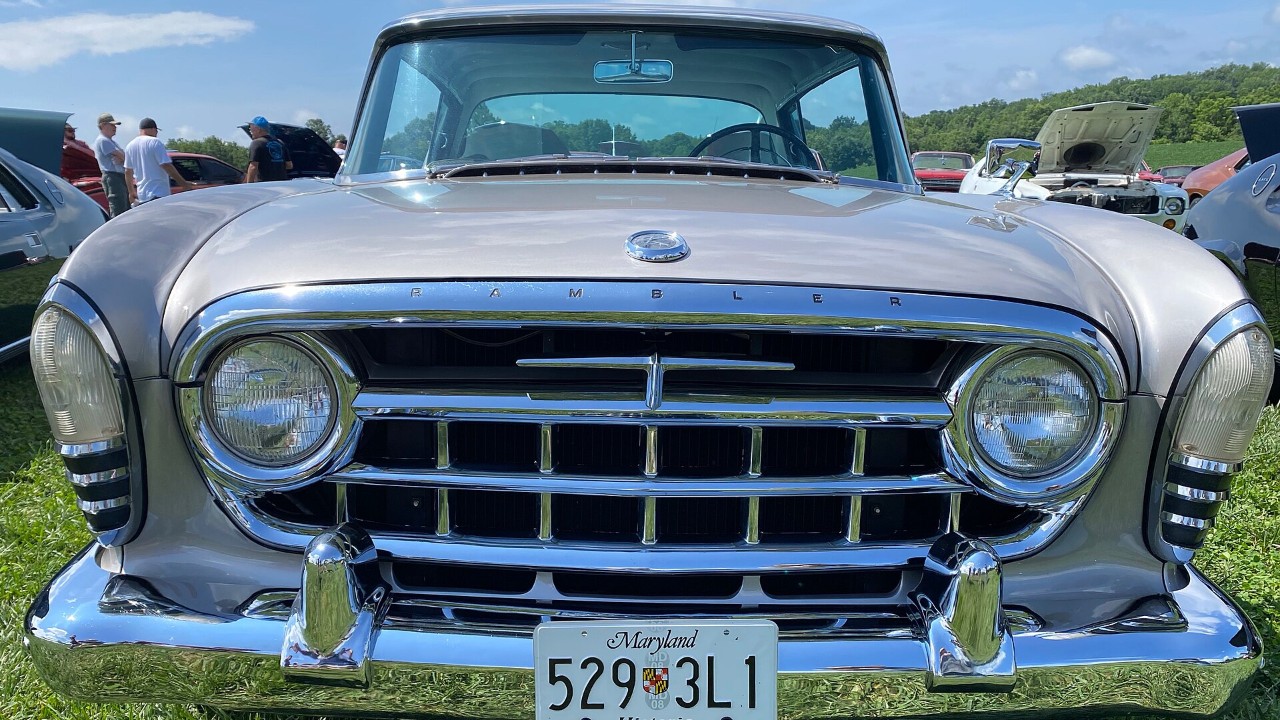
At $2,786 with standard equipment, the 1957 Rebel weighed about 3,350 pounds at the curb. Even so, it carried a big-car engine. Its 327-cubic-inch V8 normally powered the Nash Ambassador, and in 1957 form it made 255 horsepower on 9.5:1 compression with a Carter four-barrel.
Rambler sold it only as a Custom four-door hardtop, so its shape matched the family cars on the same showroom floor. Originally, the plan called for Bendix’s new Electrojector injection and 288 horsepower; however, that setup never went on sale. Instead, Motor Trend got a production car to 60 mph in 7.5 seconds, Mac’s Motor City Garage reports. Total output stopped at exactly 1,500.
More from Fast Lane Only