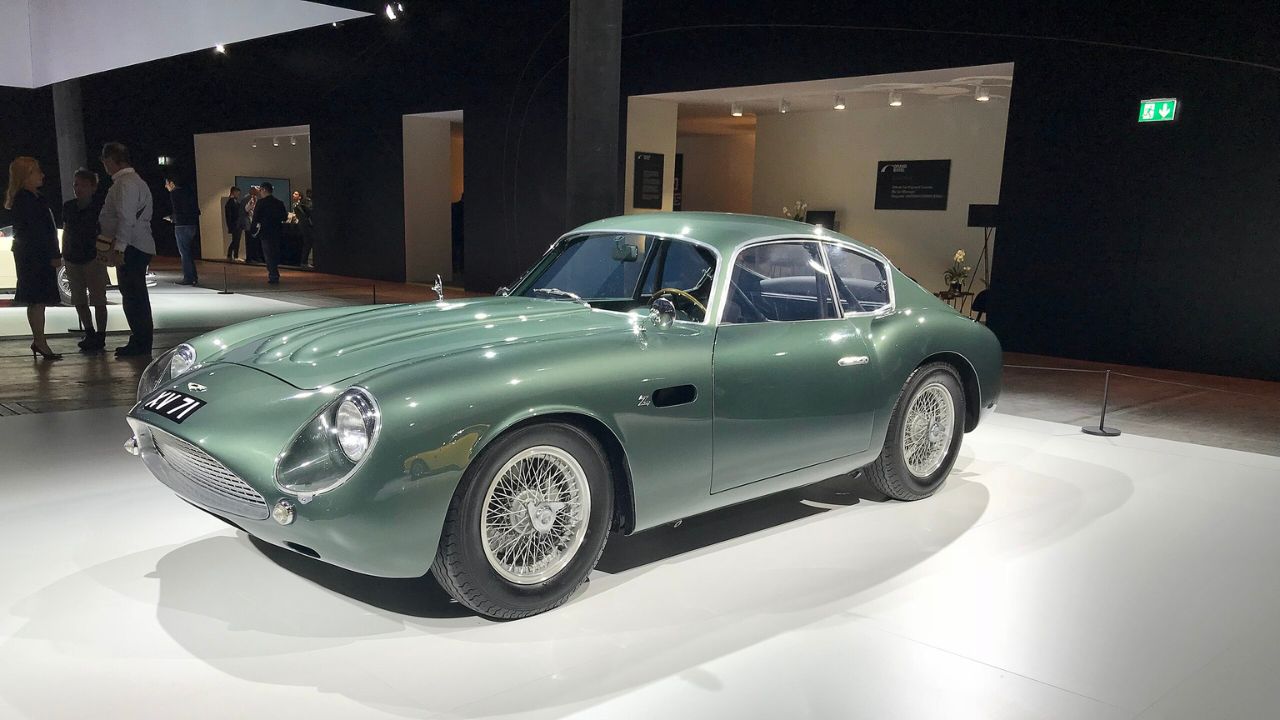
Ercole Spada was 23 years old and new at Zagato when he drew the body of the Aston Martin DB4 GT Zagato. Under that body sat a 314-hp six. Aston Martin and Zagato then built just 19 of the cars, mostly for privateer racers chasing Ferrari.
The car combined British running gear with an Italian shape. A young stylist gave it lines that collectors still chase today.
Yet the story is less tidy than the legend. Demand was weak, the factory planned more cars than it sold, and its racing record was mixed.
A young stylist and a lighter DB4 GT Zagato
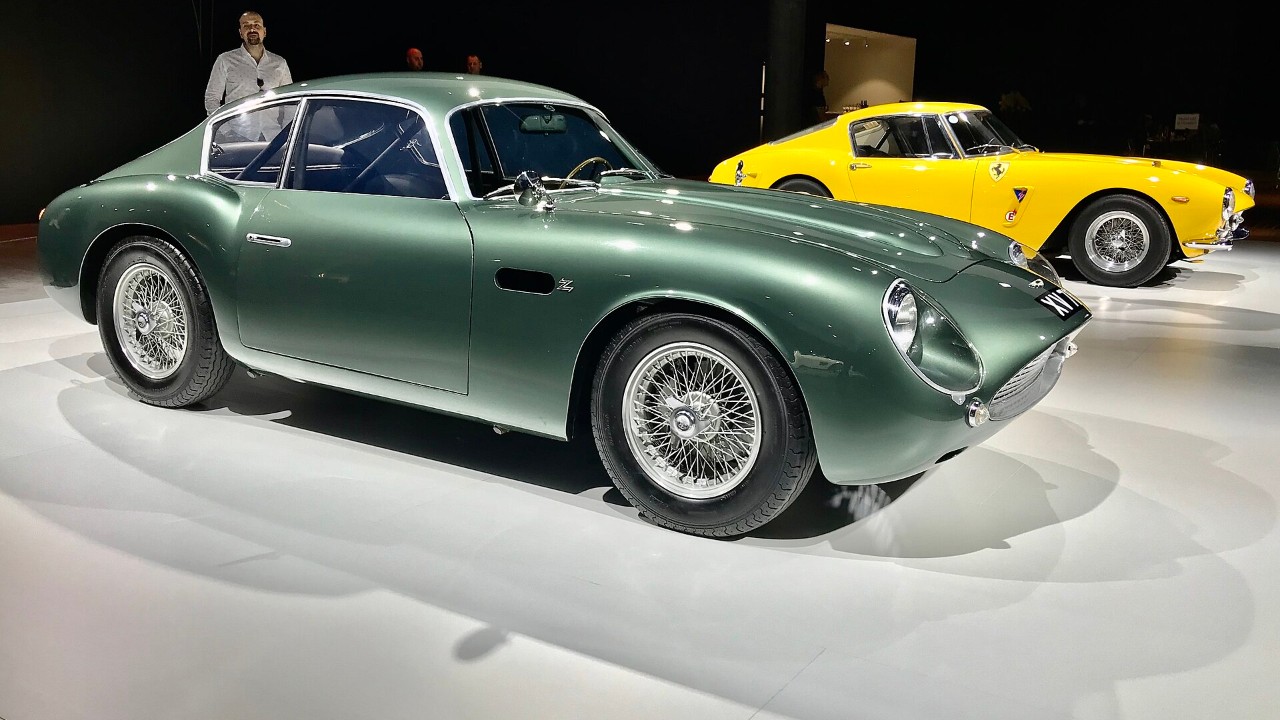
Aston Martin had a fast car already. The DB4 GT arrived in September 1959 with a shorter wheelbase and lighter body, according to Supercars.net. Still, the company wanted something lighter again to take on Ferrari’s 250 GT in sports car racing.
So Aston Martin reached a deal with Zagato in early 1960, the site says, and shipped the first chassis to Italy. There the job went to Spada, a newcomer to the Milan coachbuilder. Supercars.net puts his age at 23 and says he finished the design in about a week.
Zagato swapped many steel parts for aluminum and Perspex. As a result, the body shed more than 100 lb, and nonessential items such as bumpers came off. Meanwhile, RM Sotheby’s says the cars also carried the drilled chassis and aluminum floor panels of the DB4GT Lightweights, saving nearly 50 kg.
The 314-hp Tadek Marek six
Power came from Aston Martin’s twin-cam inline six, designed by Tadek Marek. Supercars.net lists it at 3,670 cc with twin-spark ignition. It also gives 314 bhp at 6,000 rpm and a curb weight of 1,225 kg.
The registry-style site AstonMartins.com credits that output to a higher 9.7:1 compression ratio than the standard GT. It also quotes a top speed of 153 mph and 0–60 mph in 6.1 seconds.
However, 314 bhp is a claimed figure. Supercars.net reports that the Essex Racing Stable’s mechanic said the team car 1VEV never topped 270 bhp. In his view, 314 bhp was only possible with the later 3.9-liter engine.
Shown at Earls Court in 1960
The public first saw the car at the 1960 London Motor Show at Earls Court, according to AstonMartins.com. Supercars.net also dates the debut to that show.
Zagato then built the bodies in Milan. Each rolling chassis arrived from Britain and left with Spada’s lightweight shell, AstonMartins.com explains. In addition, RM Sotheby’s notes that six of the cars had left-hand drive.
Built just 19 times, or 20
The plan called for more. According to AstonMartins.com, the factory intended to build 25 cars and started at the top of its number range, with chassis DB4GT/0200/R. Demand stayed weak, though. In the end, the factory sold the last two cheaply to the Aston Martin dealer HWM.
The final count needs one footnote. Supercars.net and RM Sotheby’s both say 19 were built. By contrast, AstonMartins.com says 20 were completed, with two sharing one chassis number, and it refers to 19 surviving cars.
Later recreations add to the confusion. In 1991, Aston Martin used unused chassis numbers for the Sanction II cars, Supercars.net says. Those are later cars, not part of the original run.
Racing against Ferrari
Most of the original cars went to private teams. The best known belonged to John Ogier’s Essex Racing Stable, which ran the registrations 1VEV and 2VEV. AstonMartins.com says it was not a works team as such, but it had strong factory support. Roy Salvadori and Jim Clark both drove the cars.
Results were mixed. Supercars.net reports that 1VEV retired from Le Mans in 1961 with head gasket trouble. Ferraris often beat the Zagatos, the site says, partly because of low rigidity and oversteer.
Le Mans in 1962 went no better. According to AstonMartins.com, DB4GT/0200/R ran with Salmon and Baillie. Then it retired after 9.5 hours with a blown piston.
Later, Ferrari’s own answer came. Supercars.net notes that the 250 GTO received similar bodywork two years after the Zagato’s debut.
What a DB4 GT Zagato brings now
Values climbed long after the racing ended. Supercars.net says 1VEV sold at auction in 1990 for £1.54 million, with its original engine, gearbox and transaxle.
The prices have kept rising since then. At its Monterey sale in 2021, RM Sotheby’s sold a 1962 DB4GT Zagato, one of the 19 it counts, for $9,520,000.
More from Fast Lane Only