There was a time when American streets shook under the sound of big blocks and straight pipes. But not every fast car stuck around. Some of the quickest, sharpest muscle machines came and went before most people ever got the chance to spot one at a red light. Blame insurance rates, the EPA, or just bad timing—but these cars weren’t built to last, even if they had the numbers to back it up. Here are 10 muscle cars that ran hard, disappeared fast, and left behind more questions than answers.
1. 1970 Buick GSX Stage 1
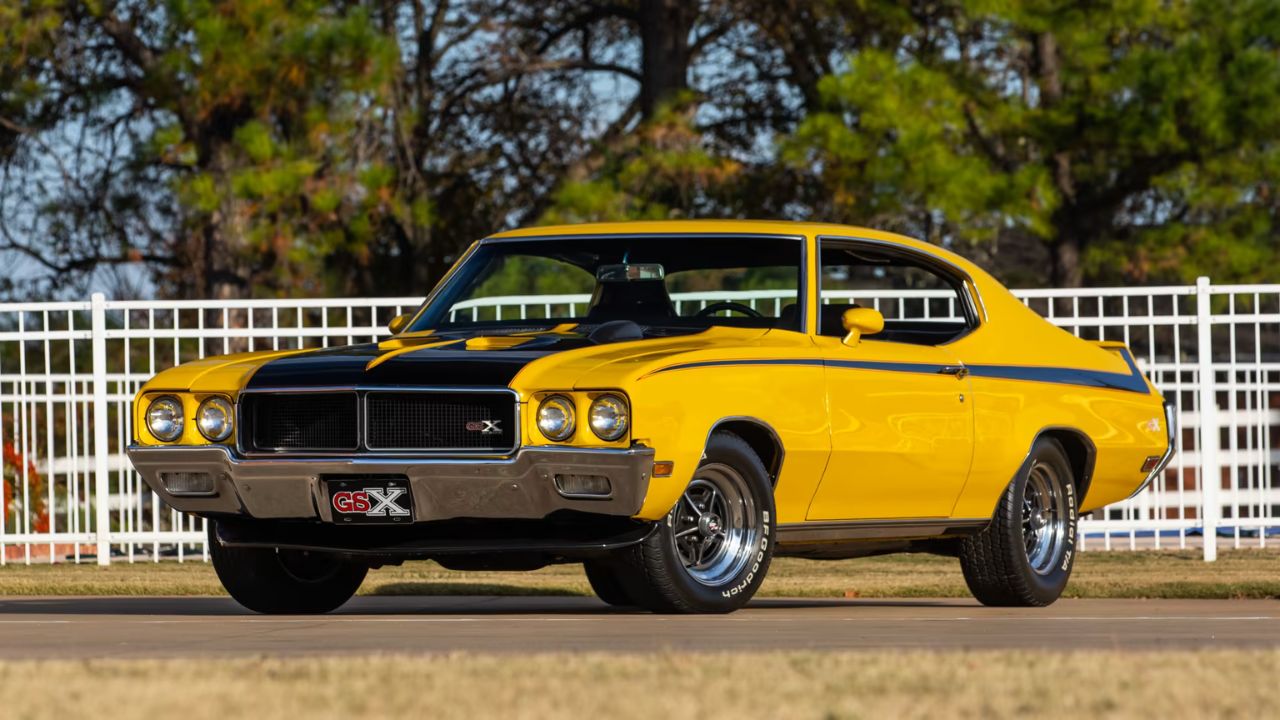
The GSX Stage 1 packed a 455 with 510 lb-ft of torque—more twist than any big block that year. Buick claimed 360 hp, but real output was higher. With a 3.64 posi, it launched harder than it looked.
Underneath, it got heavy-duty suspension, front and rear sway bars, and boxed control arms. Inside, you had buckets, a console shifter, and a clean dash with a tach. Built to challenge the GTO Judge and Road Runner, the GSX was fast, refined, and rare—only 678 were made before Buick stepped out of the street-race game.
2. 1971 Plymouth GTX 440+6
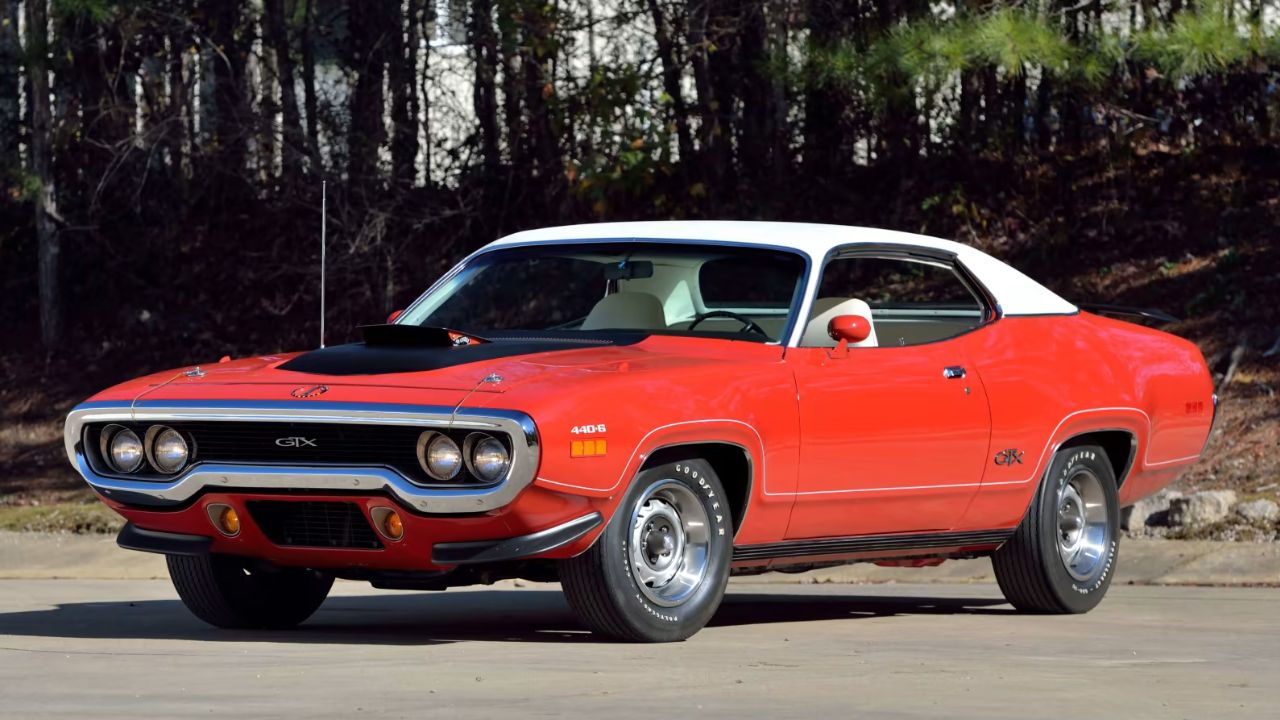
In ’71, the GTX still carried serious heat. The 440 Six Barrel made 390 hp and shoved this B-body down the quarter in the low 13s. Torque was everywhere, and the standard heavy-duty suspension kept it stable at speed.
It came with high-back buckets, Rallye dash, and a signature Air Grabber hood. The new “fuselage” body looked sleek, but sales dropped hard. Only 2,942 were built before the GTX nameplate vanished as a standalone the next year, swallowed up by the Road Runner line.
3. 1970 AMC Rebel Machine
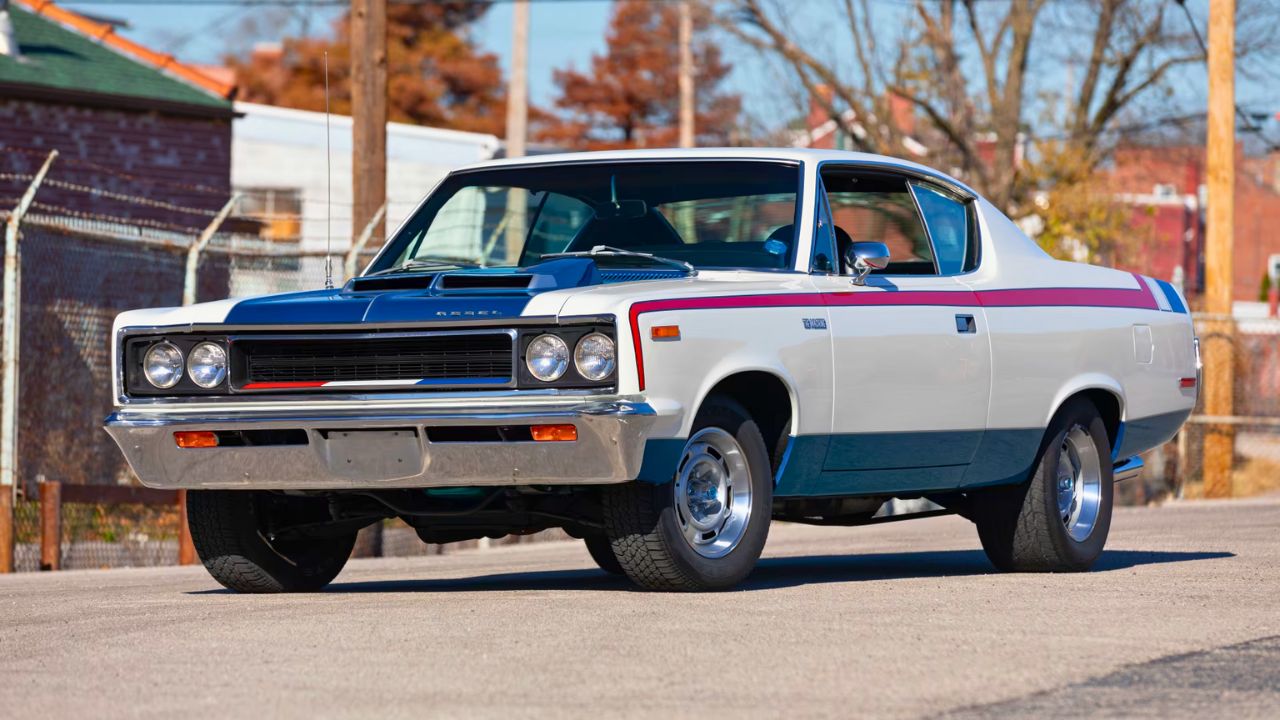
AMC only made the Rebel Machine for one year, and it hit harder than most expected. The 390 V8 was rated at 340 hp, paired with a 4-speed and a 3.54 rear. It could break into the 14s all day and looked nothing like your average family car.
The Machine came with stiffer springs, upgraded shocks, and front discs. Inside, it was simple—vinyl seats, a floor shifter, and a 140-mph speedo. Only about 2,300 were sold. It was quick, loud, and gone before AMC could follow it up.
4. 1966 Oldsmobile 442 W30

Before badges got flashy, the W30 was already sneaky fast. It used a 400 with forced-air induction, rated at 360 hp, though it ran like more. Factory 4.11 gears and weight savings from no A/C helped it run low 13s.
You had to check boxes carefully—most were dealer-installed kits early on. Suspension upgrades were mild, but the car’s balance made it predictable. Inside, it was typical Cutlass—bench seats and minimal flash. Just 54 W30s were built in ’66, making them nearly impossible to find today.
5. 1970 Ford Torino Cobra 429 SCJ Drag Pack
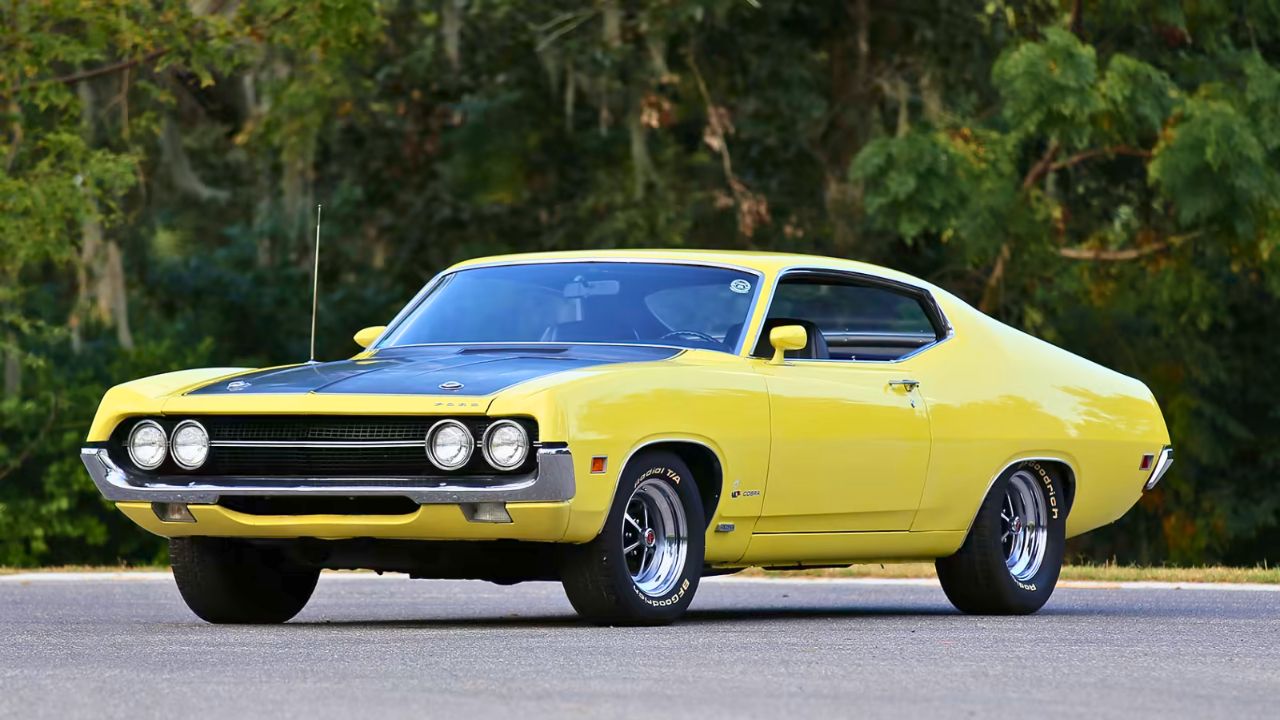
With the Drag Pack option, this Cobra got the 429 Super Cobra Jet rated at 375 hp and a massive 450+ lb-ft. It came with 4.30 gears, an oil cooler, and a reputation for eating quarter miles.
Underneath, it used staggered shocks, heavy-duty leafs, and a front sway bar. The interior was all business—plain seats, column or floor shifter, and a tight gauge cluster. The car was overshadowed by Mustangs and Bosses, but the SCJ Cobras were serious machines. Very few were built with Drag Pack specs.
6. 1965 Pontiac Catalina 2+2 421 HO

Often overshadowed by the GTO, the 2+2 packed a 421 HO V8 with 376 hp and a healthy 462 lb-ft. Paired with a 4-speed and 3.42 gears, it could surprise lighter cars on a roll.
It came with heavy-duty springs, upgraded shocks, and wider wheels. The interior leaned full-size comfort—bucket seats, wood trim, and a floor console. At over 4,000 pounds, it wasn’t light, but it moved with purpose. Pontiac didn’t keep the 2+2 in the lineup long, and few people talk about them now.
7. 1970 Mercury Cyclone Spoiler 429 SCJ
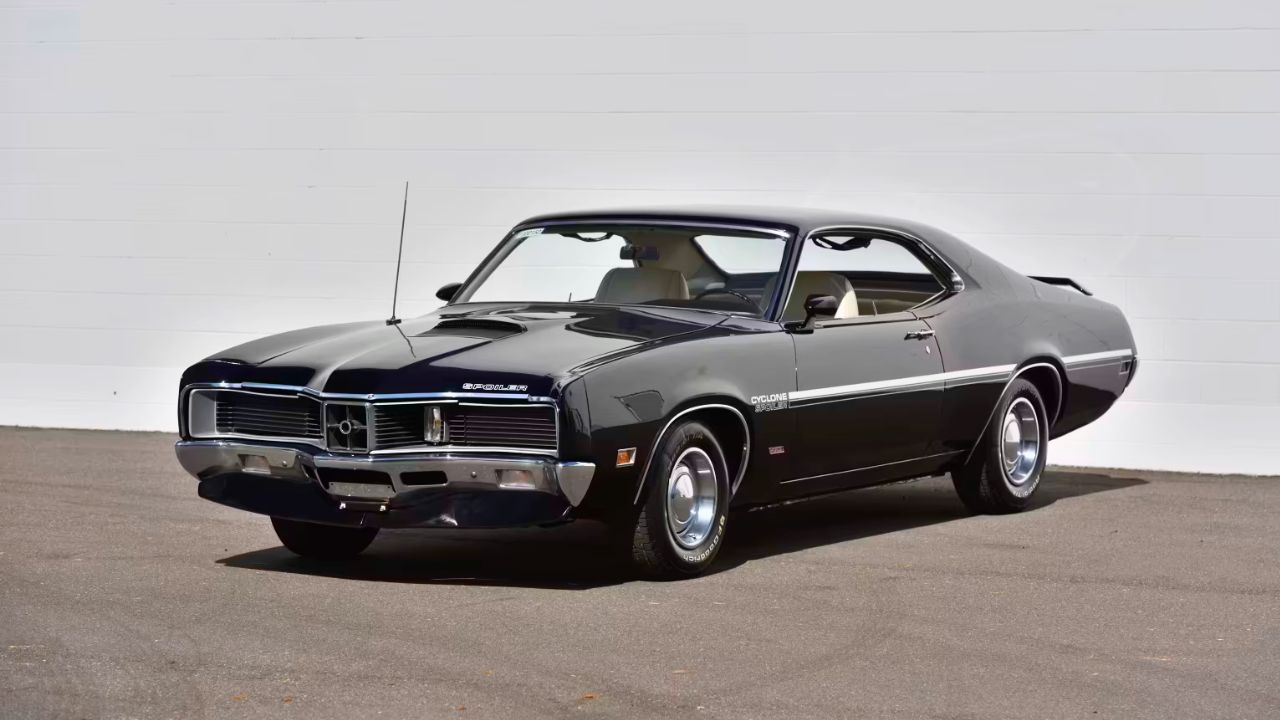
This one was built for speed, not exposure. The 429 SCJ with the Drag Pack came with a solid 375 hp rating, but real-world runs proved it could muscle past many smaller cars.
The Cyclone had aggressive aero touches, hidden headlights, and a functional scoop. Suspension wasn’t anything fancy—heavy springs and bars—but it worked. Only a few hundred were optioned with the SCJ and Drag Pack. They faded out quietly as Mercury shifted away from muscle altogether.
8. 1969 Dodge Coronet R/T HEMI

People remember the Charger, but the Coronet R/T with a 426 HEMI was just as lethal. It carried the same 425 hp, a 4-speed or Torqueflite, and heavy-duty everything underneath.
Torsion bars up front, leafs out back, and a Dana 60 with 4.10s if you wanted the drag setup. Inside, it had power options, bucket seats, and a clean dash with gauges where they mattered. Fewer than 100 were built with the HEMI in ’69, and they disappeared into garages or got raced into the ground.
9. 1971 Chevrolet Baldwin-Motion Phase III Camaro

Joel Rosen’s Baldwin-Motion Camaros were built-to-order monsters. The Phase III cars could come with 454s pushing over 500 hp, tuned to customer spec with dyno sheets included.
These weren’t off-the-lot specials—Motion modified the suspension, added traction bars, swapped gears, and upgraded cooling. Interiors stayed close to stock but usually included a Hurst shifter, Stewart-Warner gauges, and custom touches. They were fast, expensive, and rare. Once the government started watching modified street cars, the whole program disappeared.
10. 1972 Dodge Demon 340 GSS by Grand Spaulding Dodge

Norm Kraus at Grand Spaulding built the GSS (Grand Spaulding Special) Demon 340s to go quicker than the factory allowed. Upgraded cams, headers, intake work—nothing wild but enough to cut real time off stock ETs.
The Demon’s lightweight body and factory suspension geometry helped it handle decently, and Kraus added bigger tires and better gears. Interiors were all Mopar compact—basic buckets, slapstick shifter, and minimal trim. These were limited-run dealer specials, and they’re nearly impossible to trace today.
Like what you read? Here’s more by us:
*Created with AI assistance and editor review.