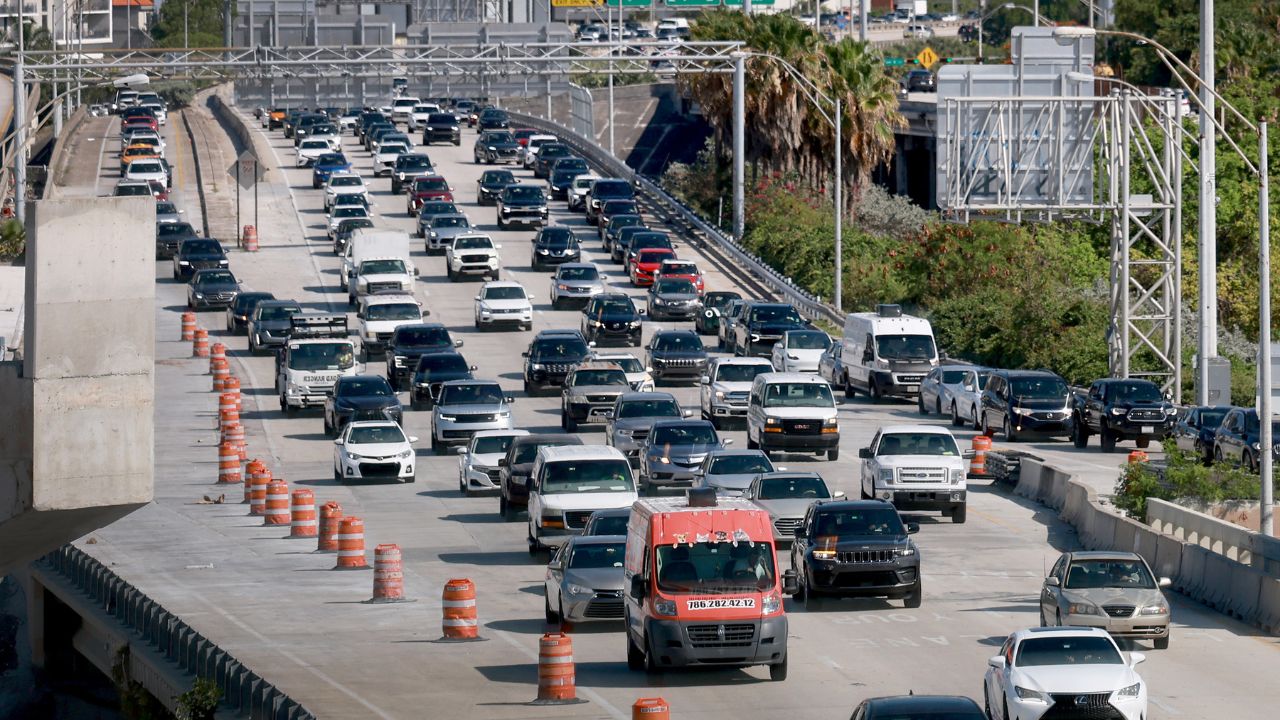
Florida is on the verge of reshaping how you drive its interstates and how you prove your car is legal to be on the road. The Florida House of Representatives has backed higher highway speed limits and a plan to end the familiar yellow registration stickers on license plates, moves that would change both your daily commute and your annual dealings with the Department of Highway Safety.
If you drive long stretches of interstate or juggle multiple vehicle renewals each year, you now face a future with potential 80 mile per hour limits and a fully digital registration system, once the Senate and governor decide whether to sign off.
What the Florida House just passed
On Wednesday, the Florida House of Representatives approved Senate Bill 1220 with an attached amendment that lets state transportation officials raise limits on some highways to 80 miles per hour. The same package also folds in changes to how your vehicle registration is handled, including the removal of physical validation stickers. The House backed the measure with an 87 to 23 vote, according to Senate Bill 1220, and sent it back across the Capitol.
New signs will not appear overnight. The bill gives the Florida Department of Transportation authority to raise limits where engineers decide it is safe, rather than ordering an immediate statewide change. That means you should expect a patchwork of higher speeds only on selected stretches, if the bill becomes law.
How 80 mile per hour limits would work
The amendment attached to Senate Bill 1220 would allow certain highway segments to be posted at 80 miles per hour, above the current top limit of 70. House debate focused on interstates and high speed corridors where traffic already moves fast and where design standards, such as long sightlines and wide shoulders, can support higher speeds under federal guidelines.
For you as a driver, the practical effect would be most visible on long hauls such as Interstate 10 across the Panhandle or Interstate 95 along the Atlantic coast. An Action News Jax clip shared that on Wednesday, the House passed Senate Bill 1220 with an amendment that could let limits rise higher than the current speed limit on Interstate 95, a change you would feel on any trip between Jacksonville and the Georgia line, as referenced in On Wednesday.
Supporters argue that your daily reality already looks like an 80 mile per hour highway. One delivery driver, Roger, told reporters that “Everybody already drives about 75/80 miles anyway, and I drive all the time as a delivery driver, so it helps us out,” according to Roger. If you already set your cruise control in that range, the law would legalize what has become common behavior.
Why supporters say higher limits help you
Backers in the Florida House frame the 80 mile per hour provision as a matter of realism and efficiency. If you spend hours on the interstate for work, they argue that a higher legal limit can cut your travel time and reduce the constant risk of minor speeding tickets for driving with the flow. They also suggest that when most traffic moves at similar speeds, you get fewer abrupt lane changes and less frustration.
From your perspective, that could mean shorter delivery routes if you drive for services like Amazon Flex, UPS, or regional carriers that crisscross the state. Long distance commuters between suburbs and metro centers could shave minutes off each leg of the trip, which adds up over a year. Lawmakers also hint that clearer rules about where 80 miles per hour is allowed may be easier for you to follow than a system where everyone quietly ignores 70 mile per hour signs.
The safety concerns you will hear
Opponents warn that higher posted speeds can increase both the likelihood and the severity of crashes. If you drive a compact car or an older vehicle without advanced safety systems, you may feel more vulnerable in traffic moving at 80 miles per hour. Critics also point out that Florida already struggles with high crash rates on busy routes, and they question whether raising limits will make your daily drive more dangerous.
These concerns are likely to surface again as the Senate weighs the bill. You may hear arguments that enforcement will become harder, since drivers who already push 10 miles per hour above the limit could now be traveling near 90. Others will worry that tourists unused to Florida’s roads may misjudge lane changes at those speeds. For you, the debate comes down to whether the time savings and legal clarity outweigh the added risk of high speed collisions.
End of the road for yellow registration stickers
Separate from the speed debate, the Florida House has also moved to eliminate the physical yellow registration sticker on your license plate. Earlier this year, The Florida House approved a bill that would end the requirement to place a printed decal on the back of your car, a change that now heads to the Senate as reported from The Florida House.
You would still have to renew your registration every year or every two years, and your license plate number would remain the same. The change lies in how your compliance is shown. Instead of a peel and stick decal, law enforcement would rely entirely on digital records tied to your plate number and vehicle identification number, which they can already access during a traffic stop.
What the digital shift means for you
The push to kill the sticker requirement has been building. In a social media explainer, supporters described the Status of the Change and The Proposal as a move to remove the physical “peel and stick” sticker while keeping annual renewals intact, as outlined in Status of the. For you, that means no more scraping off old decals with a razor blade or worrying that a stolen sticker could leave your car appearing unregistered.
Instead, you would handle renewals through existing channels such as the state’s GoRenew website, county tax collector offices, or mobile apps that already let you pay registration fees and download digital proof. If you manage a fleet for a small business, you would no longer need to coordinate physical stickers for each truck or van. The state estimates that eliminating printing and mailing costs could save millions of dollars, which supporters say reflects a shift toward what they call smarter government.
Why lawmakers want to end stickers
Supporters cast the sticker change as part of a broader effort to streamline how you interact with state agencies. One backer, Fernandez, described the goal as “cutting red tape, reducing unnecessary bureaucracy, and delivering smarter government for our residents,” according to remarks cited in Fernandez. If you have ever stood in line just to fix a damaged decal, that message probably resonates.
There is also a security angle. Yellow stickers are easy to peel off and reuse, which can leave you dealing with tickets tied to a plate you have never seen. A fully digital system makes it harder for someone to fake compliance, since officers can instantly check your status against the state database. For you, that means fewer headaches if your plate is cloned or misused.
How enforcement might change on the road
Once stickers disappear, officers will have to rely entirely on electronic checks to confirm that your registration is current. In practice, many already run plates through onboard computers, but the visual cue of a missing or expired sticker has been a quick way to spot potential violations. You may see fewer stops based solely on a faded decal, and more focus on direct database hits.
What happens next and how you can prepare
More from Fast Lane Only