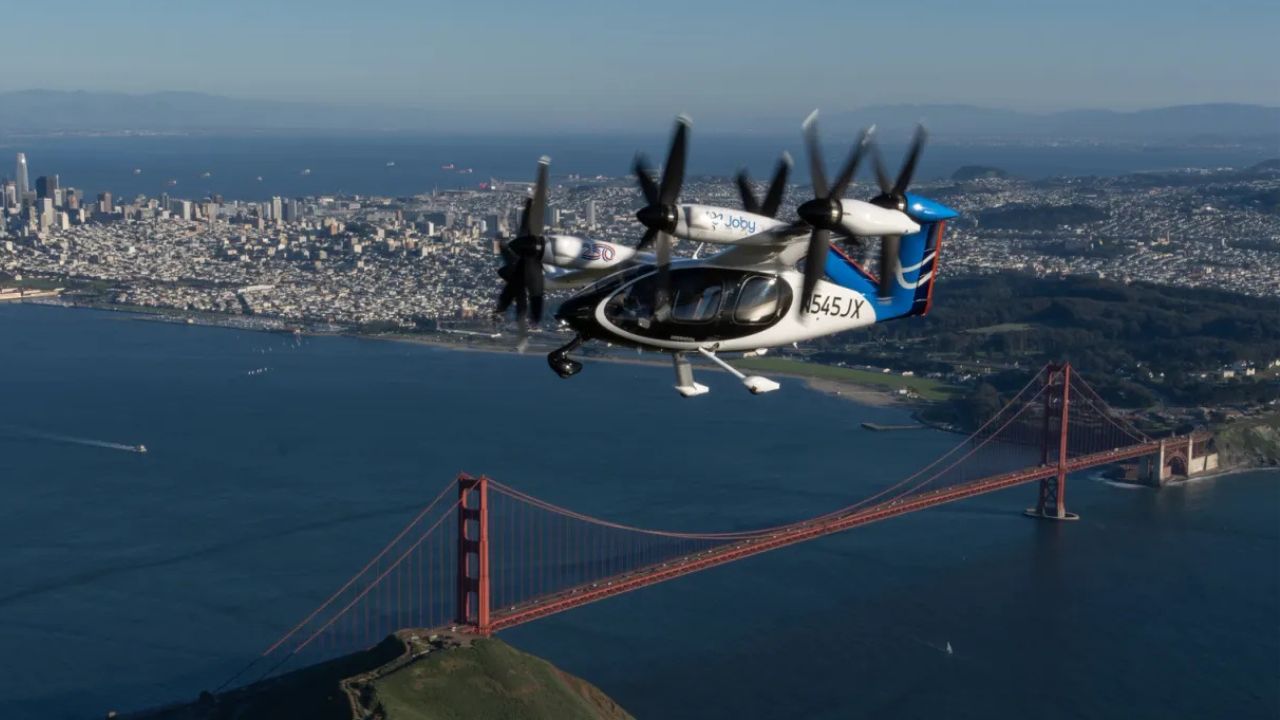
You are watching a long-promised idea harden into regulated hardware. Joby Aviation, Inc has now flown a fully FAA conforming electric air taxi, the exact type of aircraft that regulators will use to judge whether flying cars can safely carry paying passengers over your city. For you, that first FAA approved flight marks a shift from futuristic renderings to a test program that has to satisfy real rules, real pilots, and real passengers.
What “FAA conforming” really means for you
When you hear that Joby has flown its first FAA conforming aircraft, you are not just hearing about another prototype. A conforming aircraft is built to match the detailed design that the Federal Aviation Administratio will evaluate for certification, part by part and process by process. Instead of a one-off demonstrator, you are looking at the template that must prove it can operate safely in the same national airspace that handles your commercial flights.
This is why the involvement of the FAA matters so much to you as a future passenger. The agency’s type certification process forces Joby to show that everything from its electric propulsion system to its flight controls can meet the same kind of performance and reliability standards that traditional Aircraft and Engines already face. You are not being asked to trust a startup’s word. You are being asked to trust a regulated machine that has to earn its paperwork.
Inside Joby’s first conforming air taxi
At Joby’s test facility in Marina, the Company has now taken this conforming aircraft into the air under its own power. You are looking at an electric vertical takeoff and landing design that can lift off like a helicopter and then transition to efficient forward flight, a configuration that Joby has refined through years of prototype work. The aircraft is being prepared for the FAA’s type inspection authorization, or TIA, which is the formal stage where regulators ride along in the data.
From Joby’s perspective, this is the machine that has to do everything the eventual fleet will do, only under a microscope. According to the company’s Newsroom, the aircraft is tied directly to the type design that the FAA is already reviewing, and its performance will shape how quickly Joby can move toward commercial service. For you, that means every test flight in Marina is one step closer to booking a short hop across a congested metro area instead of a long ride in ground traffic.
Why this marks the “last phase” of certification
On March 11, Joby Aviation announced that it has started flying this conforming aircraft, a milestone that signals what ByMiquel Ros has described as the last phase of the FAA approval process. You are entering the part of the journey where the focus shifts from design paperwork to real world performance, with FAA pilots expected to join the campaign once the agency is satisfied with early data.
In practical terms, the aircraft will now be used to validate every key assumption that Joby Aviation made about handling qualities, noise, emergency procedures, and maintainability. The company’s progress from prototype to conforming hardware has been linked to a vertically integrated approach that keeps design, manufacturing, and testing tightly connected, a strategy that, according to Aviation Technology and, has allowed it to move quickly without losing traceability. For you, that integration matters because it reduces the risk of surprises when the aircraft transitions from test article to fleet workhorse.
From Santa Cruz vision to real test flights
Joby Aviation, Inc, headquartered in Santa Cruz, has spent years pitching a future where you can call an electric air taxi the way you now summon a rideshare. The company, listed as NYSE:JOBY, has now backed that vision with a conforming aircraft that has left the factory and entered the sky. In its own description of the milestone, Santa Cruz Joby framed the event as a validation of its long term engineering and manufacturing plan.
You can also see this moment as the payoff from earlier public demonstrations. Joby has already shown piloted eVTOL flights between two public airports and has flown in complex environments such as Dubai, where its aircraft systems, pilot certification, and training were tested under standard air traffic control protocols. Those demonstrations gave you a preview of what an air taxi network might feel like. The conforming aircraft brings that experience under the scrutiny of regulators who will decide whether it can scale.
How regulators will test the aircraft you might ride
Now that Joby begins testing FAA conforming hardware, the focus shifts to how the FAA and its partners will scrutinize the design. Joby has indicated that FAA Designated Engineering Representatives will be closely involved in the TIA campaign, reviewing data from every phase of flight. According to MRO and Production, these representatives will help ensure that each test aligns with the detailed certification plan that Joby and the FAA have already agreed on.
You should expect this phase to include repeated takeoffs and landings, transition segments, and simulated failures, all designed to probe how the aircraft behaves in edge cases. The figure 43 appears in the context of this test campaign, signaling the level of granularity with which performance data is captured and reviewed. For you, the benefit is that the aircraft will have faced a wide range of scripted challenges long before you step on board.
What changes for you as a traveler
Once you have an FAA certified eVTOL like Joby’s in regular service, your relationship with urban distance changes. A trip that might take an hour or more in rush hour traffic could compress into minutes, with an electric aircraft lifting you from a rooftop or dedicated vertiport to another node across the metro area. The early test flights in Marina are a preview of a network that could eventually tie into services you already know, such as premium helicopter transfers that companies like Blade offer today. Joby has already signaled partnerships in that direction, and links from its investor site at ir.jobyaviation.com point to a strategy that connects air taxis with existing mobility platforms.
At the same time, you should remember that Joby’s own forward looking statements, described under the safe harbor provisions of the Private Securities Li, caution that timelines and capacities can change. The company has discussed potential production rates of up to 500 aircraft per year, supported by a vertically integrated business model, in materials linked through prototype development. For you, that means the promise of widespread service is real but still subject to regulatory, technical, and market hurdles.
How you can track what happens next
If you want to follow the next steps closely, you can watch for updates as Joby begins flight testing its first FAA conforming air taxi and as FAA pilots start their own evaluation flights later in 2026. Local coverage from Santa Cruz has already highlighted that this aircraft is the first of its kind to enter such a test phase, and sources such as Joby begins testing have emphasized that regulator flown sorties will follow the company’s own flights.
You can also see how Joby presents its progress directly through its social and partner channels. The company maintains a presence on platforms such as x.com/jobyaviation, where you can see short clips and commentary on test flights, and it uses business networks like LinkedIn to share hiring and manufacturing updates. For a broader sense of how investors view the milestone, you can look at coverage aggregated through First FAA and related links that track how Joby’s First FAA Conforming Aircraft Takes Flight is being received in financial circles.
More from Fast Lane Only