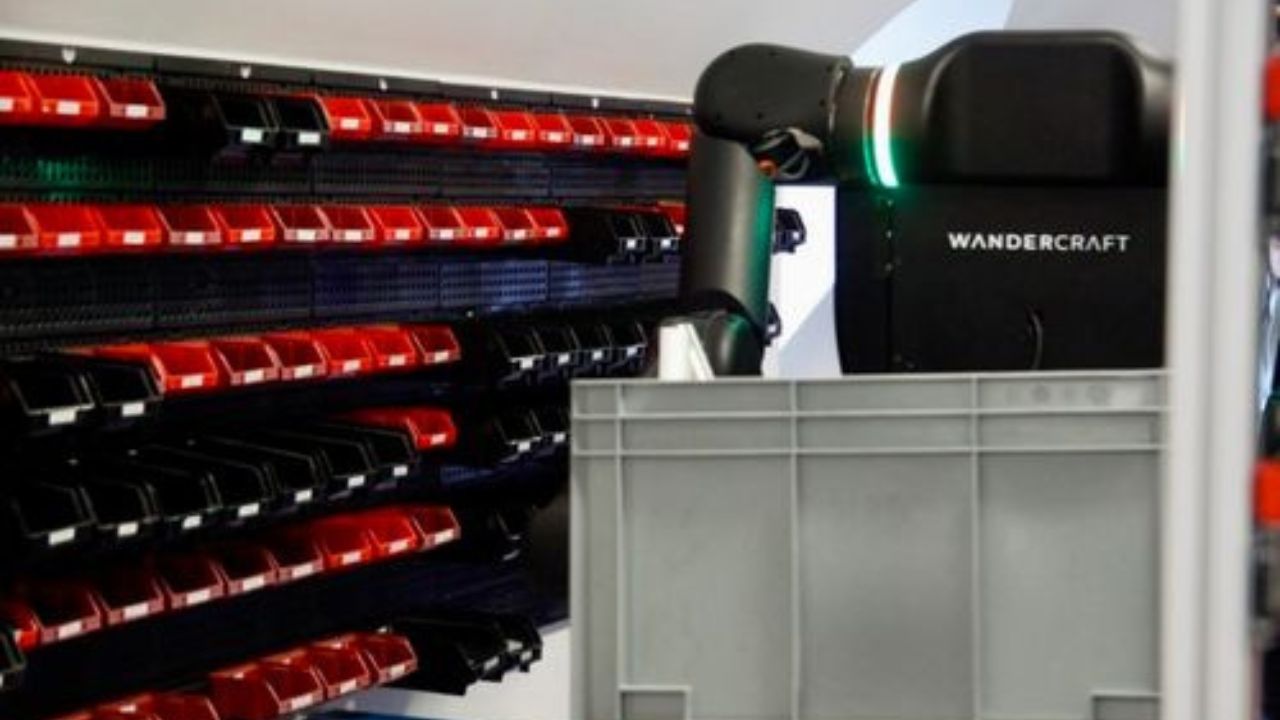
You are watching a new kind of factory worker arrive on the line. Renault Calvin, a headless humanoid robot built in just 40 days, is already taking on physically punishing tasks inside car plants and reshaping how you think about automation in vehicle production. Instead of cages and fixed arms, you now have a mobile, voice-controlled machine that moves like a person and is designed to work alongside you.
From medical exoskeletons to factory humanoids
Your view of Renault Calvin starts with Wandercraft, the French robotics company that spent years perfecting self-balancing exoskeletons for people with mobility impairments. In its own description, About Wandercraft deploys advanced robotics to help humans, and that same balancing and gait technology now underpins the new industrial robot.
Earlier this year, Renault Group deepened that connection and became a strategic partner and investor in Wandercraft. The group announced that it had finalised a minority stake alongside existing shareholders and new investors, positioning itself not just as a customer but as a co-builder of the next generation of humanoid machines. That positioning is clear in the way Renault Group finalises the partnership and ties it directly to its industrial strategy.
For Wandercraft, the collaboration is framed as a way to move from medical devices into broader industrial use. In its own communication, the company talks about Introducing Calvin as part of this strategic shift, with Renault Group providing both capital and a demanding real-world test bed on the assembly line.
Inside Calvin‑40, Renault’s humanoid co-worker
When you meet Calvin-40 on the factory floor, you encounter a machine engineered specifically for heavy, repetitive work. Wandercraft describes Calvin-40 as an autonomous humanoid designed for physically demanding tasks, with a structure that borrows heavily from human proportions so it can navigate existing workstations, stairs and narrow aisles without you having to redesign the plant around it.
The robot stands on two powered legs that inherit Wandercraft’s exoskeleton expertise, giving it dynamic balance so it can move over uneven industrial surfaces and keep working even when the environment is cluttered. Its torso and arms are built to handle substantial payloads, which lets you assign it to jobs such as lifting heavy components, positioning parts with millimetre precision or holding tools in awkward positions for long periods.
Crucially for your production teams, Calvin-40 is designed to be Strong, Reliable, Built for industry rather than a lab prototype. The system integrates computer vision, on-board computing and a modular hardware layout so you can swap end effectors or sensor packs depending on the process. Wandercraft’s own technical description of Strong, Reliable, Built industry highlights that the robot is meant to run in real factories, not demonstration booths.
Use‑case driven design on the line
If you manage an automotive plant, you know that a humanoid robot only makes sense when it fits into specific tasks. Wandercraft’s leadership has been explicit about this point. In an interview about the industrial deployment, the company said, “Our strategy is deliberately use-case driven, meaning Calvin-40 is modular by design and will build towards that generalizable future by solving specific problems in real factories, right here in Italy.” That statement, shared in a report on humanoid robot deployment, captures how you are expected to think about Calvin today.
Rather than promising an all-purpose worker, Wandercraft and Renault Group are targeting specific pain points such as handling large plastic components, loading and unloading heavy molds, or performing ergonomic high-risk tasks on underbody assemblies. By focusing Calvin-40 on concrete operations, you can quantify cycle times, defect rates and ergonomic gains, which makes it easier to build a business case for each additional unit.
The modular design also means you can reconfigure the robot as your product mix evolves. If your plant shifts from internal-combustion powertrains to electric vehicles, for example, you can adapt Calvin-40’s grippers, tools and software flows to handle battery packs or new structural components without scrapping your existing investment.
From Renault lines to Italy’s Tier 1 suppliers
Renault Group has already placed Calvin on its own lines. One widely shared report described a headless humanoid robot controlled by voice, built in 40 days, that performs manufacturing tasks for the carmaker and is intended to relieve workers from the most physically taxing jobs. That same report, which referred to Headless Calvin, underlined Renault Group’s intent to roll out more humanoid robots firstly for industrial uses.
The strategy is not confined to Renault’s own plants. Wandercraft and SAPA have announced a deployment partnership that brings Calvin-40 into the facilities of SAPA, an Italy-based One Shot Company and Tier 1 supplier known for advanced plastic automotive parts. Through this collaboration, Wandercraft and SAPA are scaling deployments across Italy, giving you a glimpse of how quickly such robots can propagate through the supply chain once they prove themselves at an OEM.
For you as an automotive executive or engineer, this matters because Tier 1 adoption tends to ripple back into your own production planning. If suppliers can automate heavy and complex tasks with humanoids, you can redesign interfaces, logistics flows and quality checks to take advantage of more flexible, human-scale automation on both sides of the partnership.
AI, computer vision and voice control
Calvin-40 is not just a mechanical body. It relies on AI, computer vision and intuitive controls so you and your teams can integrate it into daily operations without specialist coding skills. In its description of the joint product, Wandercraft explains that Calvin-40 uses AI-powered perception and planning to carry out advanced factory and manufacturing tasks, with Renault contributing its industrial requirements and testing environment. This combination is highlighted in coverage of how Wandercraft partners with Renault on AI-powered humanoids.
On the shop floor, that translates into robots that can identify parts, adapt to slight variations in position and collaborate with human workers in semi-structured environments. Instead of rigidly scripted motions, Calvin-40 can respond to high-level commands, adjust its grip when a component is misaligned or slow its movements when a person steps into its workspace.
The headless design might look unusual at first, but it aligns with your safety and practicality needs. Sensors and cameras are embedded in the torso and limbs rather than a fragile head, and voice control lets you issue commands without complex interfaces. Reports on the initial Renault deployment describe operators guiding the robot through spoken instructions so it can switch tasks quickly without lengthy reprogramming.
Strategic stakes for Renault Group and for you
For Renault Group, the partnership with Wandercraft is not a side project. It fits into a broader strategy to modernise factories, reduce ergonomic risks and maintain competitiveness in a sector where labour shortages and skills gaps are growing. In a detailed analysis of the deal, one business report titled Renault Is Now a Strategic Partner And Investor In Wandercraft noted that the goal is to cut wear and tear on workers’ bodies while sustaining high productivity. That same report on Renault Is Now a Strategic Partner And Investor In Wandercraft framed Calvin-40 as a way to protect people while keeping lines running at full speed.
If you are planning your own automation roadmap, Calvin-40 offers a template. Instead of replacing entire lines with fixed robots, you can introduce humanoids into the most physically demanding stations, measure the impact on quality and safety, then scale up. Because the robot is designed to fit into human environments, you avoid the cost and disruption of large structural changes.
Renault Group also presents the partnership as part of a wider innovation ecosystem that spans its main brand, Alpine and Dacia. Corporate communication channels from the group, such as the main site at Renault Group and media platforms like media.renault.com, position robotics, AI and electrification as interconnected levers. For you, that means any decision about humanoid robots sits alongside decisions about software-defined vehicles, battery plants and digital twins.
More from Fast Lane Only