Before World War II, a truck was a tool first and a style statement second, and that shows in how simply these machines were built. The Ford Model TT, for example, carried a full ton on a beefed-up Model T chassis. Later trucks from Chevrolet, Dodge, GMC and others added six-cylinder power and steel cabs. These nine are our picks, and the “impossible to kill” verdict is our take on their tough, simple engineering.
1. 1925 Ford Model TT tow truck

The Ford Model TT carried a rated one short ton on a longer, heavier frame than the Model T car. Instead of the car’s crown wheel and pinion, it used a worm-drive rear axle. With standard gearing, top speed was only about 15 mph. Ford first sold the TT as a bare chassis, so buyers added their own bodies, such as the wrecker body on this 1925 truck. In 1925, Model T truck output peaked at 306,434. Slow, simple and everywhere, it seems built to outlast its owners.
2. 1929 Ford Model AA truck

Ford’s Model AA used the Model A’s 201-cubic-inch four, rated at up to 40 hp. Its four-speed gearbox had a low “creeper” first gear for loaded trucks, and reverse had a thumb-operated lockout. Four oversized drum brakes did the stopping, with the bias toward the rear. Later trucks swapped the early worm-gear rear end for a ring-and-pinion differential. The design also lived on in the Soviet Union, where GAZ built more than 985,000 AAs from 1932 to 1950. That long second life is our kind of toughness.
3. 1936 Dodge pickup

Dodge’s 1936 half-ton, the LC, used a 201.3-cubic-inch L-head six rated at 70 hp. It cost $500 new, and Dodge built 57,226 LC and D2 models combined. Top speed was about 60 to 65 mph, on a 116-inch wheelbase. The Savoy Automobile Museum owns an LC that has covered 46,000 miles since new, with no rust, and it runs and drives well. That cast-iron flathead six is why we think these trucks keep going.
4. 1937 Chevrolet pickup

For 1937, Chevrolet gave its half-ton a new 216.5-cubic-inch six, rated at 78 bhp in trucks. To prove the truck, Chevy then sent a 1937 half-ton 10,245 miles around the United States under American Automobile Association observation. It carried a 1,060-lb load and averaged 20.74 mpg. Many fans think of it as the first modern Chevy truck. In our view, a truck that shrugged off a loaded 10,000-mile run makes an easy case for this list.
5. 1937 REO Speed Wagon

Ransom E. Olds’s REO introduced the Speed Wagon in 1915 as a light truck and an early ancestor of the pickup. By 1925, REO had built 125,000 of them, and the truck earned a reputation for power, durability and quality. In 1936, REO stopped making cars to focus fully on trucks, so a 1937 Speed Wagon came from a company that had gone all-in on trucks. We trace the truck’s roots in the REO Speed Wagon’s 1915 beginnings. A rock band even borrowed its name.
6. 1938 Studebaker Coupe Express
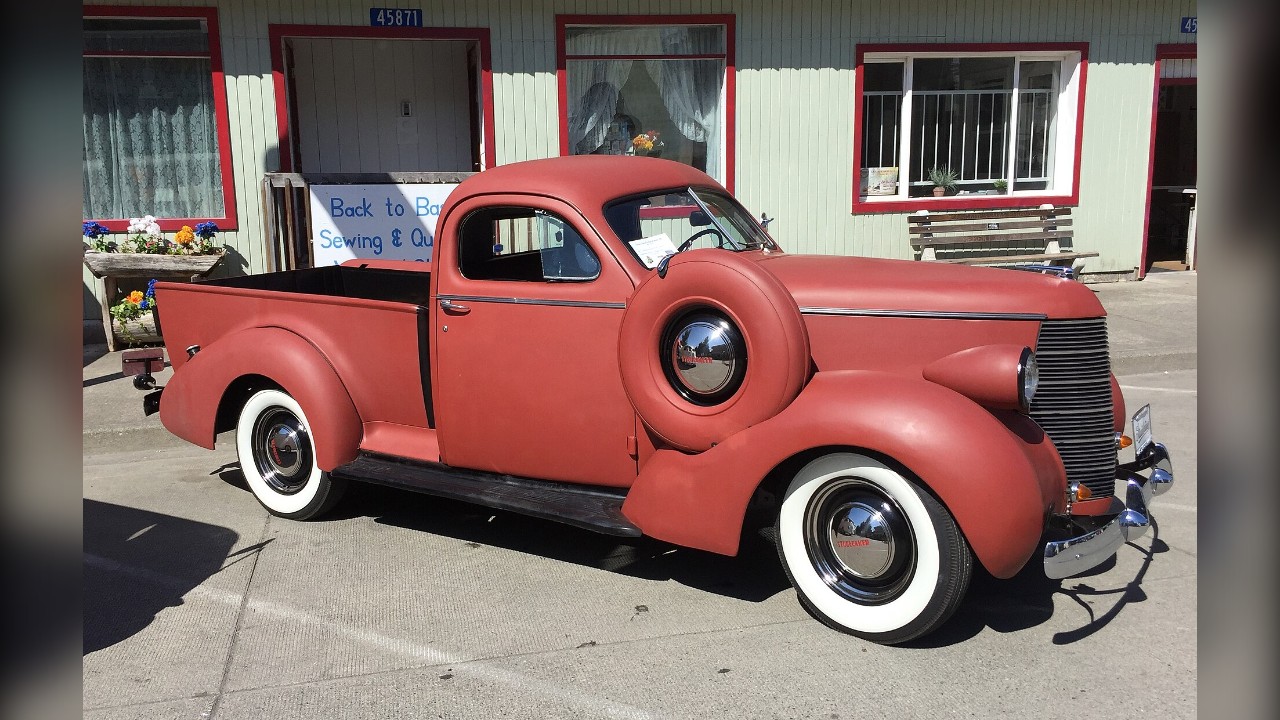
Studebaker built the Coupe Express in South Bend from 1937 to 1939, using the Dictator car’s frame, running gear and front sheet metal. Power came from the larger of Studebaker’s L-head sixes, with a three-speed manual. For 1938, Studebaker gave it a slightly longer pickup bed, and production dropped to about 1,200 trucks. You can see where it fits in our look at Studebaker trucks from the 1937 Coupe Express to the 1964 Champ. Passenger-car parts built for heavy use make it a survivor in our book.
7. 1940 Ford pickup

Ford’s 1940 half-ton borrowed its hood, fenders and grille from the Standard passenger cars. Buyers could pick the 221-cubic-inch, 85-hp flathead V8 or the smaller 136-cubic-inch V8-60, named for its 60-hp rating. It also had sealed-beam headlights, which nearly the whole industry adopted. Collectors value these trucks highly, and RM Sotheby’s sold a 1940 Ford half-ton from the Dingman Collection for $80,640. We think the flathead V8’s simple design is a big reason so many of these trucks keep running.
8. 1940 GMC AC-Series pickup

GMC’s light trucks shared a Chevrolet half-ton frame, modified to take a different engine. In 1939, GMC introduced synchromesh transmissions and a new overhead-valve six for its light trucks. That six was related to Chevrolet’s engine, but not identical, and hot rodders later nicknamed it the “Jimmy.” A 1940 AC-101 offered by Bonhams in 2022 carried a 228-cubic-inch version rated at 93 bhp. The listing called it a rare unmodified truck from the era. To us, an engine that hot rodders bothered to nickname is a sign of serious toughness.
9. 1941 Willys Americar pickup

The Americar pickup used Willys’s 134-cubic-inch Go-Devil four. Before chief engineer Barney Roos reworked it, the engine lasted only 22 hours at 3,400 rpm in testing. After his changes, which included new bearings, pressurized oiling and a counterbalanced crankshaft, it made 60 hp and ran more than 100 hours at 4,400 rpm. Willys then put the same engine in military Jeeps from 1941 through 1952. In 1941, an Americar cost about $630. Since its engine went on to war, this small pickup earns its spot.
More from Fast Lane Only