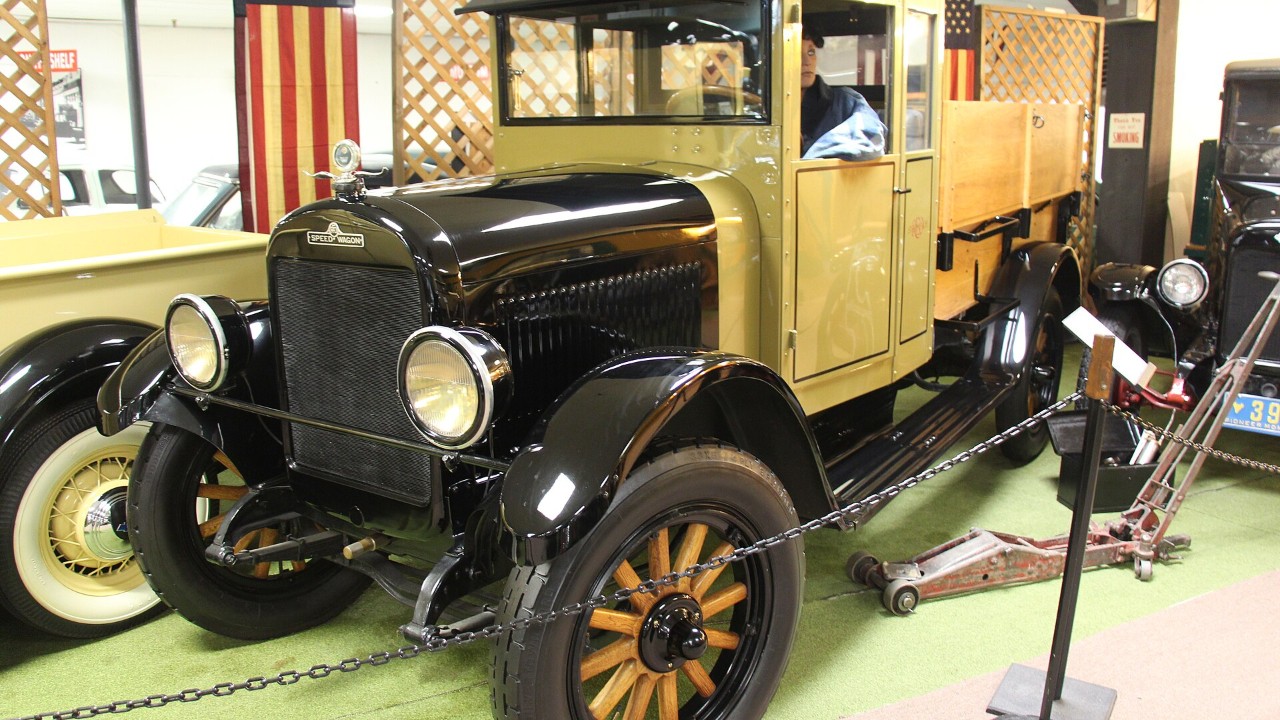
Long before it was a rock band, the REO Speed Wagon was a truck. Ransom E. Olds’s company in Lansing, Michigan, launched it in 1915. It then stayed in production there until 1953.
The name was no accident. REO geared the Speed Wagon to beat the industry’s standard truck speed, and its ads sold it to farmers as a quicker link to market.
Here is the story of the truck, the man behind the initials, and the college class that turned it into a band name.
The company behind the REO Speed Wagon
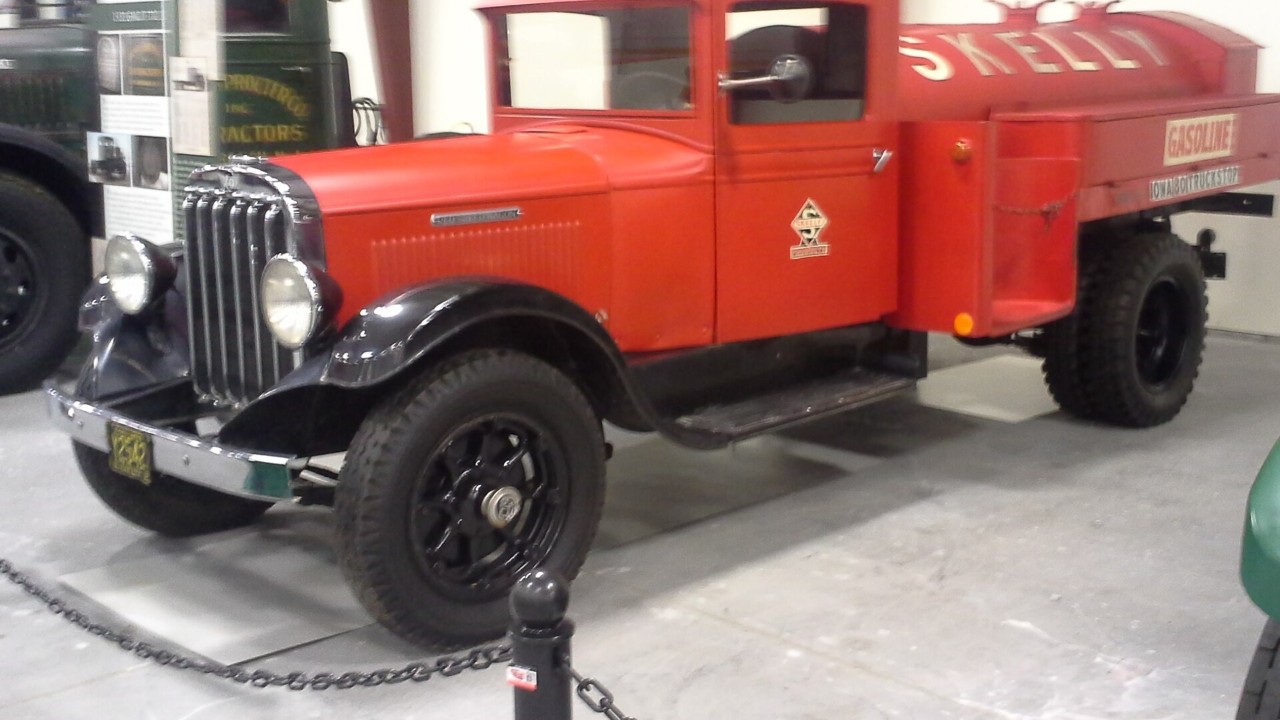
REO took its name from the initials of its founder, Ransom E. Olds. He is also the namesake of Oldsmobile. According to History Nebraska, the company name is “always pronounced ‘Rio’.”
Olds started REO after disagreements with his partners at Olds. The new Lansing firm was “finally dubbed REO on August 16, 1904,” according to Diesel World’s history of the company. In other words, Olds’s name ended up on two brands, Oldsmobile and REO.
What the 1915 truck was
REO launched its Speed Wagon platform in 1915. Diesel World says it used the firm’s new cast-iron, inline four-cylinder engine. A floor-mounted manual transmission sat behind it. Most importantly, REO geared the truck to exceed the 15 mph industry standard of the day.
Sources differ on the power. History Nebraska rates the Speed Wagon at 35 hp. By comparison, it says a Nebraska-built Patriot truck of the same era made 22.5 hp. History Nebraska owns a rare 1919 Patriot, displayed at Neligh Mill State Historic Site.
However, Conceptcarz lists the 1915 Speed Wagon with a 27-horsepower four-cylinder engine. That engine had external valves, and it drove through a three-speed transmission.
The early truck was a light hauler. A 1915 ad in the Capital Area District Library’s Wanger REO Collection reads “Here’s the New 3/4- Ton REO Speed Wagon.” Diesel World also shows a 1916 Model F as “the ¾-ton version.” Then, in 1917, REO added a 3-ton version.
One chassis, many jobs
Buyers did not have to settle for a plain pickup. According to Conceptcarz, the Speed Wagon could be bought as a panel truck, passenger bus, pickup, fire truck or tow truck. Some even became ambulances and hearses.
Meanwhile, REO kept building cars alongside the trucks. Conceptcarz says 1916 saw the first six-cylinder REO motorcar, a year after the Speed Wagon arrived.
Selling it to farm country
REO aimed the truck squarely at rural buyers. For example, one ad in the Red Cloud Chief of April 1, 1920, promised it was “Bridging the Last Gap Between the Farm and the Market.” Another REO Speed Wagon ad ran in the Omaha Bee in 1921, History Nebraska notes.
History Nebraska also pairs those ads with a 1914 highway map of the state, a reminder of the roads these trucks ran on. Diesel World says REO Speed Wagons “had sold more than 125,000 units” by 1925, within a decade of launch.
Bigger engines in the 1920s and beyond
REO kept improving the truck. In 1929, it launched its Gold Crown 268-cid inline six, which Diesel World says delivered 67 horsepower. That was nearly double History Nebraska’s 35-hp figure for the early Speed Wagon, and well over twice the Conceptcarz figure.
After World War II, REO followed with the Gold Comet overhead-valve six. Diesel World puts its output at 93 hp. Meanwhile, the Speed Wagon name stayed in production in Lansing until 1953, according to History Nebraska.
How a truck named a rock band
The band link came through a classroom. In the 1960s, Neal Doughty was an engineering student at the University of Illinois. He learned about the old truck in a transportation history class, History Nebraska says.
Doughty thought the name would suit his new rock band. That is how REO Speedwagon got its name, with “Speedwagon” written as one word. Unlike the company, though, the band pronounces it R-E-O, letter by letter.
What happened to REO
Eventually, the company changed hands. White Motors of Cleveland purchased REO’s assets in 1957, Diesel World reports. Later, White merged REO with another of its divisions in 1967, and the Diamond REO name followed.
Finally, the company that Ransom E. Olds started in 1904 closed its Lansing doors forever in December 1974, according to Diesel World.
More from Fast Lane Only
- Unboxing the WWII Jeep in a Crate
- 15 rare Chevys collectors are quietly buying
- 10 underrated V8s still worth hunting down
- Police notice this before you even roll window down
This article was created with the help of AI and was reviewed and edited by Fast Lane Only editors before publication.