Studebaker built a pickup from a passenger car in 1937 and ended its civilian truck line with another car-based cab in 1964. In between, the South Bend company built half-tons, a budget special and a wartime Studebaker truck that Soviet troops nicknamed the “Studer.”
These seven trucks follow that story in order, from one car-based pickup to another. Each entry uses the figures its own source gives, with no totals added up along the way.
1. 1937–1939 Studebaker Coupe Express
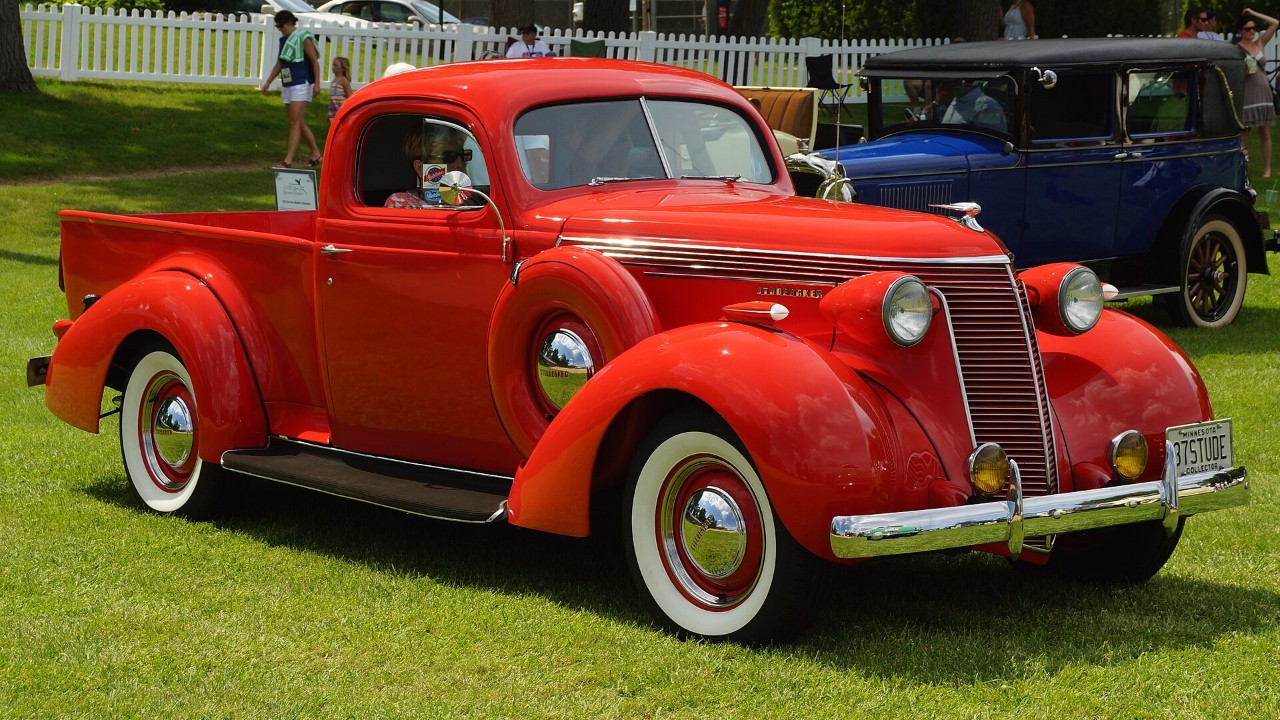
The Coupe Express was half car and half pickup. Its front end, doors and rear fenders came from the Dictator, Studebaker’s lowest-priced passenger car, while new stampings closed off the back of the cab. Under the hood sat a 218-cubic-inch L-head six with 90 hp, driving through a three-speed Warner gearbox.
For 1937, it cost $595 with a standard pickup box, according to Mac’s Motor City Garage. Studebaker built about 3,000 that year. However, output fell to about 1,200 for 1938 and about 1,000 for 1939, and the Coupe Express was gone for 1940.
2. 1941–1948 Studebaker M-5 half-ton
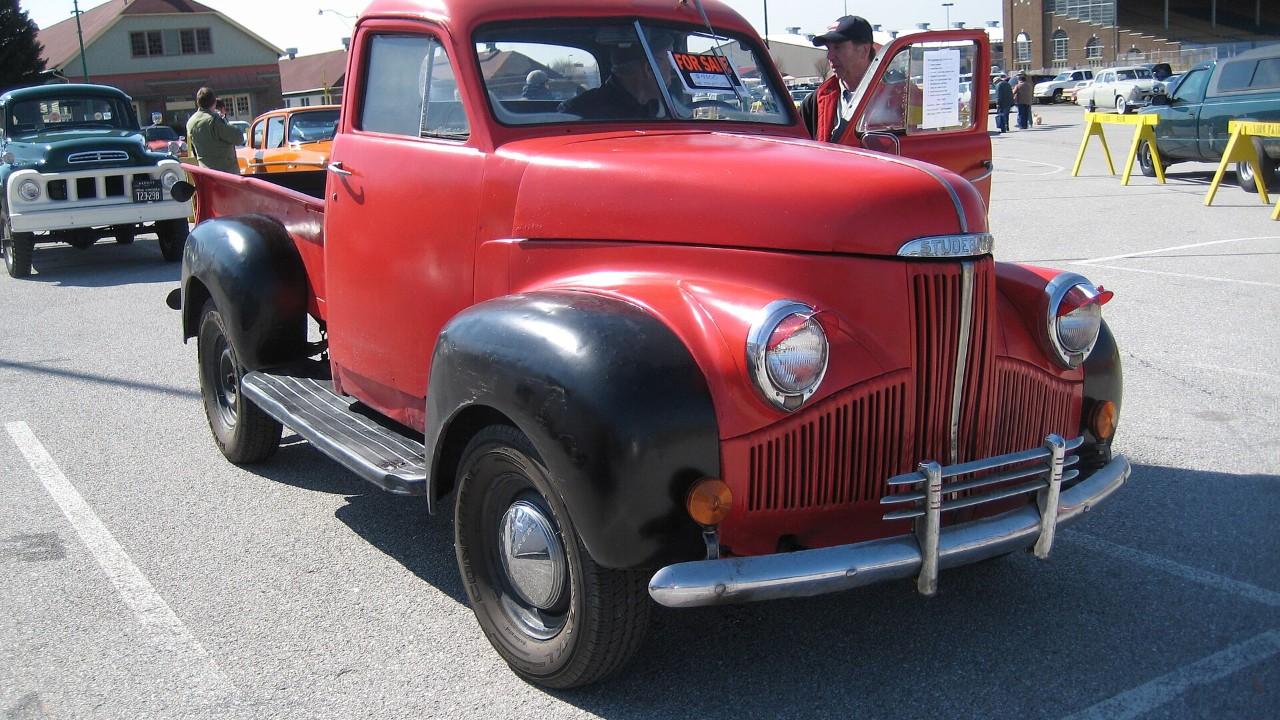
Studebaker launched the M-5 half-ton in 1941 with a 170-cubic-inch, 80-hp L-head six, the same engine as the Champion car. It had an all-steel cab, a body-color grille and headlights set into the fenders. About 4,685 left the plant in 1941 before war work stopped production, Old Cars Weekly reports.
After the war, the truck came back strong. Studebaker assembled 14,052 in 1946, then more than 23,000 in 1947, the model’s high-water mark. That year, it listed at $1,082 without options. Finally, roughly 10,200 followed in 1948, the M-5’s last year.
3. Studebaker US6 military truck, 1941–1945
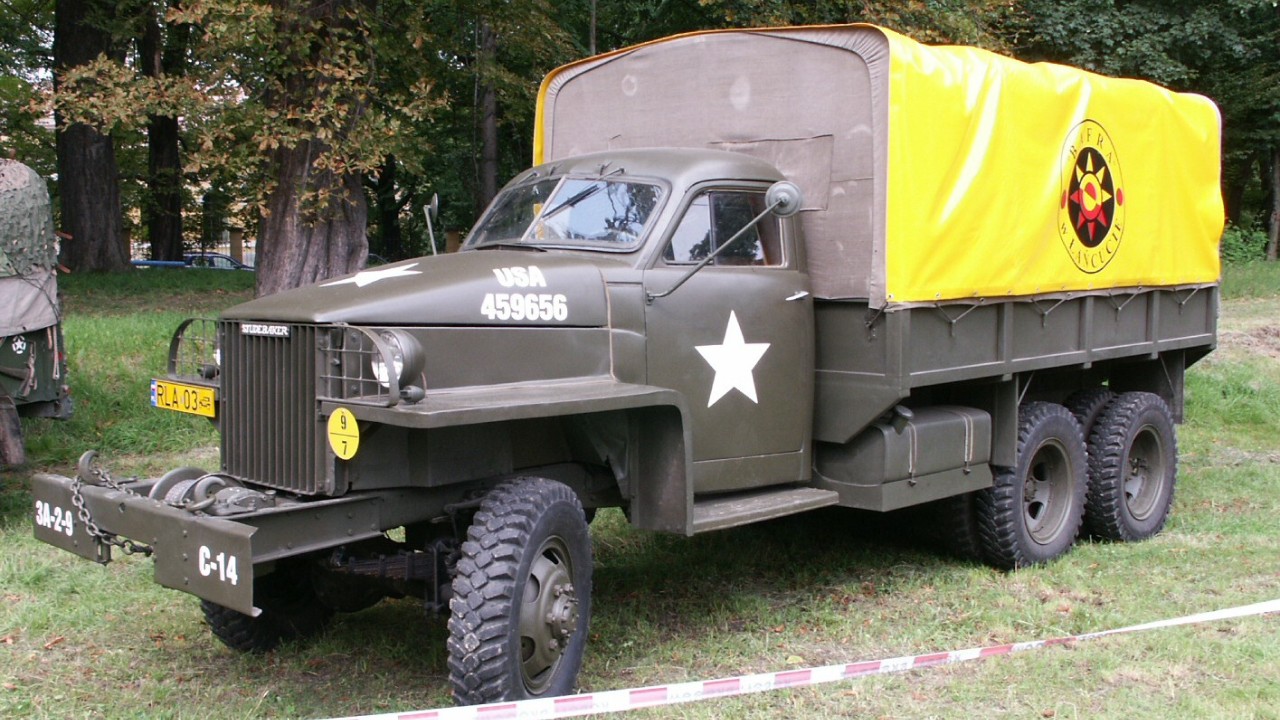
The war truck was a different machine. Studebaker built the US6 from 1941 to 1945 in 13 variations, according to HistoryNet. Its count splits two ways: 105,917 six-wheel-drive trucks and 87,742 four-wheel-drive trucks.
Many of them went abroad. About 152,000 reached the Soviet Union, mainly through the Persian Corridor, and Soviet troops nicknamed them the “Studer.” Meanwhile, others served on the Burma Road and the Alcan Highway. Reo Motors also built 22,204 more 6×6 trucks under the U3 name, HistoryNet adds.
4. 1949 Studebaker 2R series
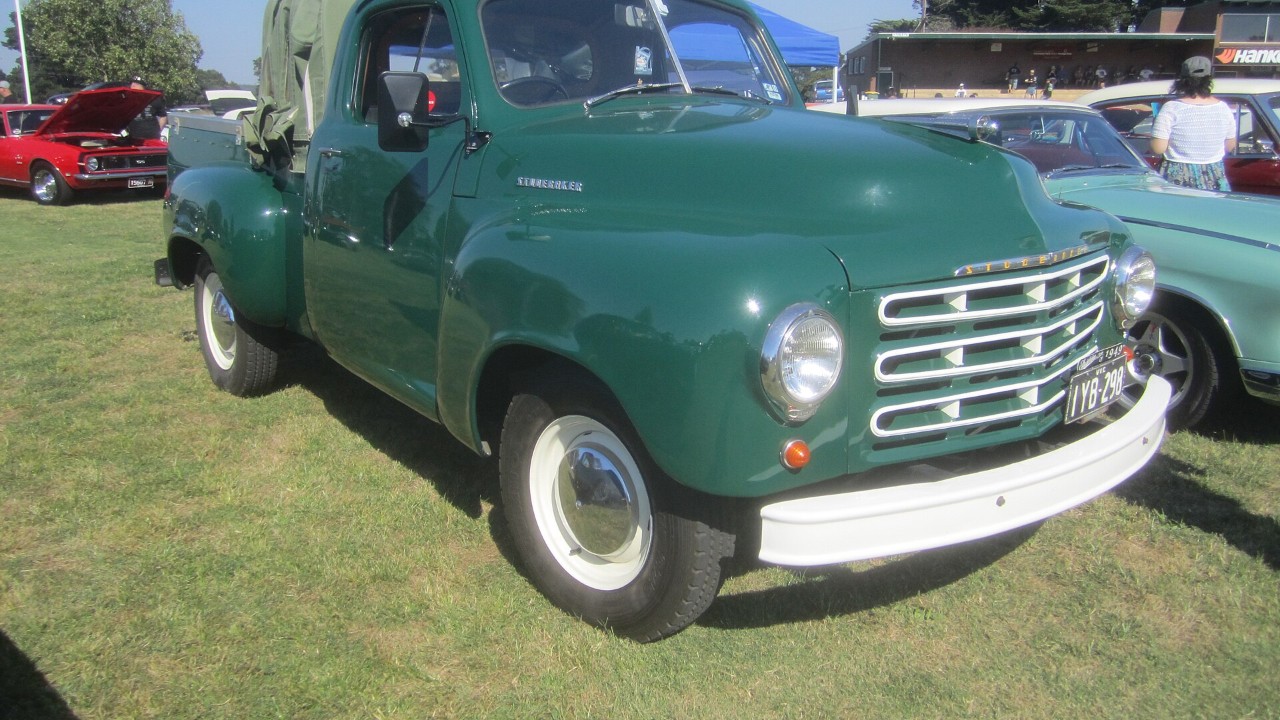
Studebaker introduced its new 2R truck line in mid-1948, according to the Studebaker National Museum. Robert Bourke styled it, and he later designed the 1953 Starliner hardtop. The trucks had concealed running boards and double-wall pickup beds.
The museum’s own 1949 2R-5 half-ton uses a 170-cubic-inch L-head six rated at 85 hp. In fact, the 2R stayed in production through 1953 and became Studebaker’s best-selling truck series, the museum says. Studebaker built them at its Chippewa Avenue plant in South Bend, which still stands.
5. 1955 Studebaker E-series with the 224 V8
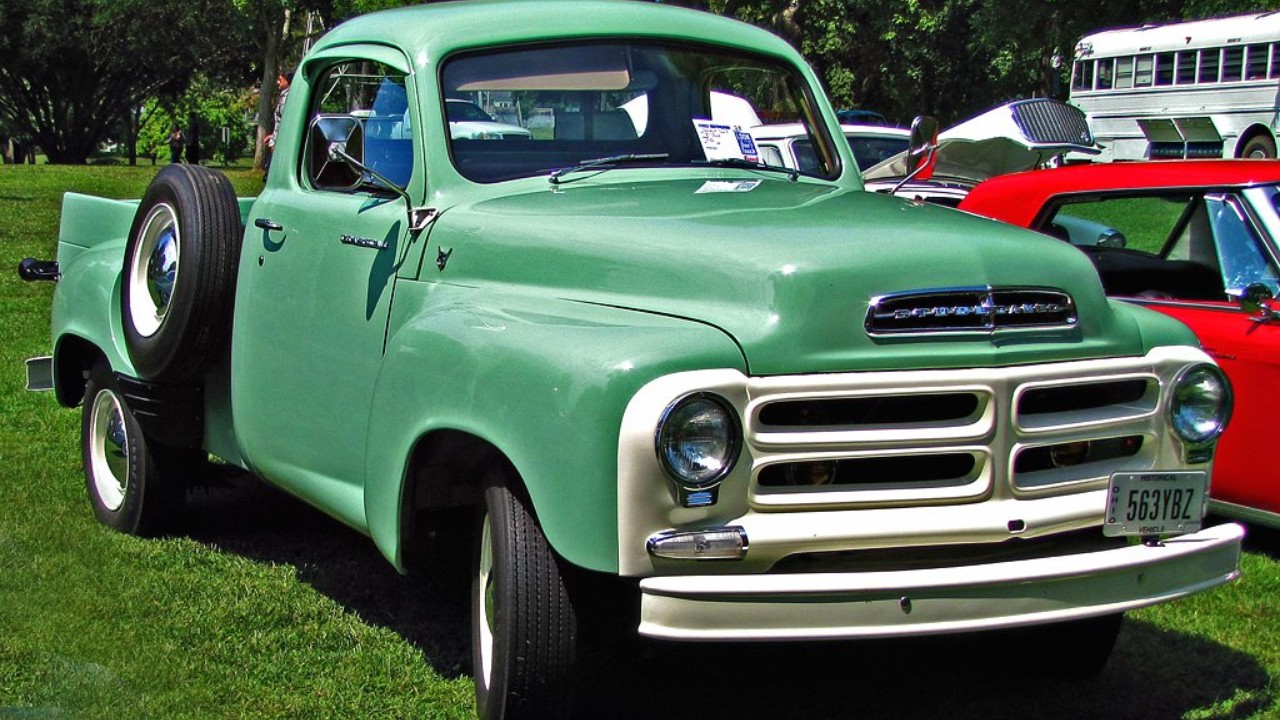
For 1955, the trucks became the E-series, and a V8 joined the list. Half-tons with the V8 wore E7 badges, while E5s had the 92-hp six and E6s had a 102-hp six. An automatic transmission also became a new option with the V8.
In trucks, the 224-cubic-inch V8 made 140 hp with a two-barrel carburetor or 160 hp with a four-barrel, Consumer Guide reports. As a result of these and other updates, sales rose from 4,320 units in the short 1954 model year to 10,365 for 1955. The rear window also grew by about 40 percent.
6. 1958 Studebaker Scotsman pickup
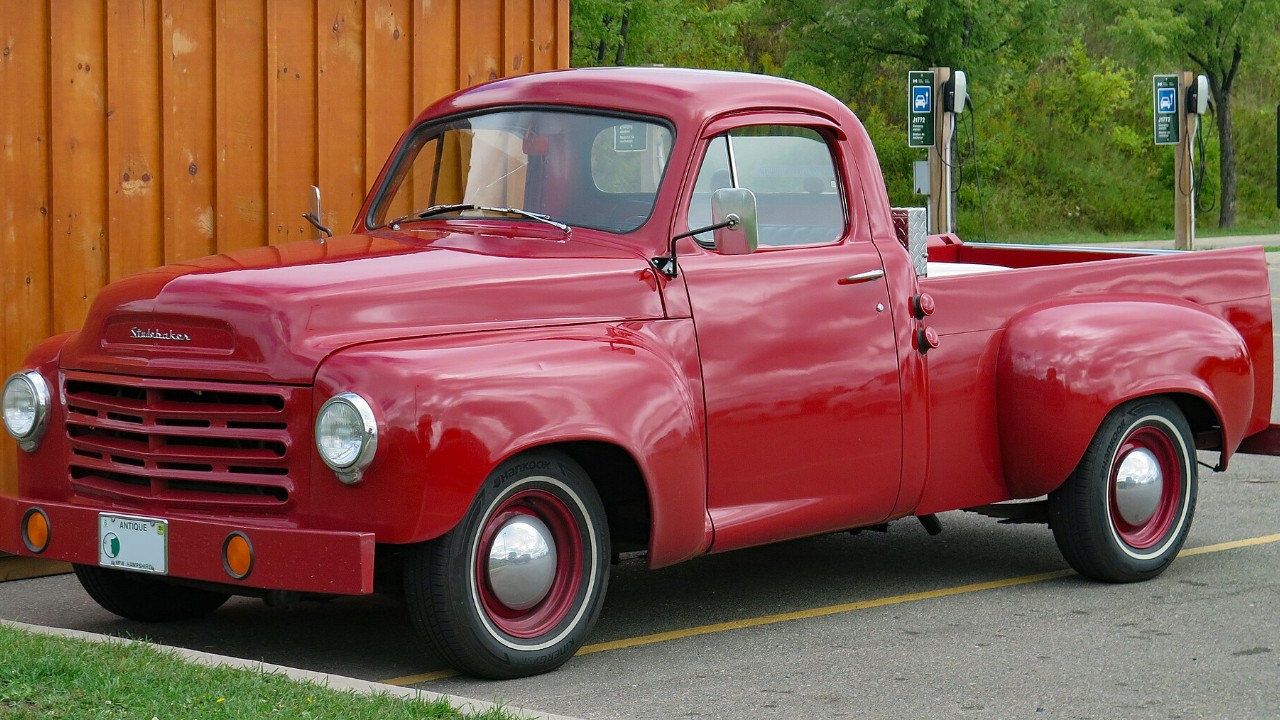
The Scotsman went the other direction. Studebaker stripped the truck to the basics and advertised it at $1,595, one of the lowest prices of the time. Power came from a 185-cubic-inch, 92-hp flathead six with a three-speed manual.
It had painted hubcaps, no chrome badging, no glove box door, no spare tire, no side mirror and one taillight, Old Cars Weekly notes. Production began in March 1958 at South Bend and ended after 1959. Still, nearly a quarter of Studebaker’s non-military truck sales went to the stripped pickup.
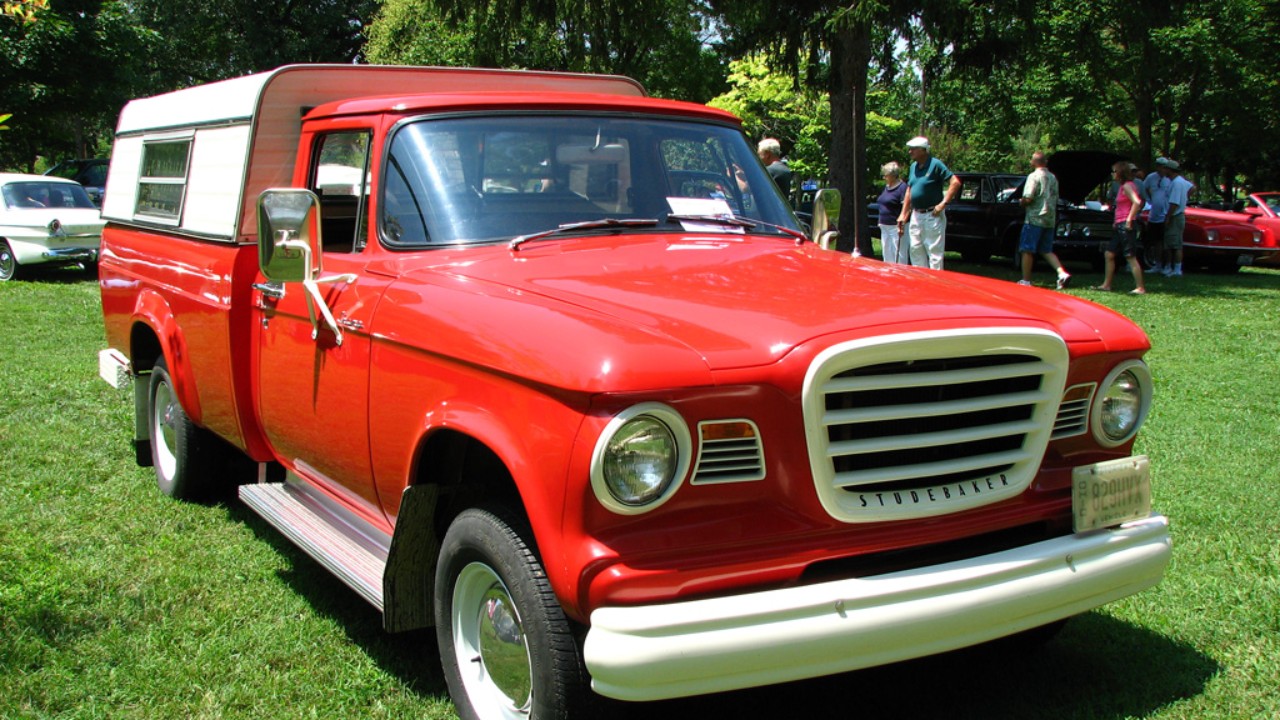
7. 1960–1964 Studebaker Champ
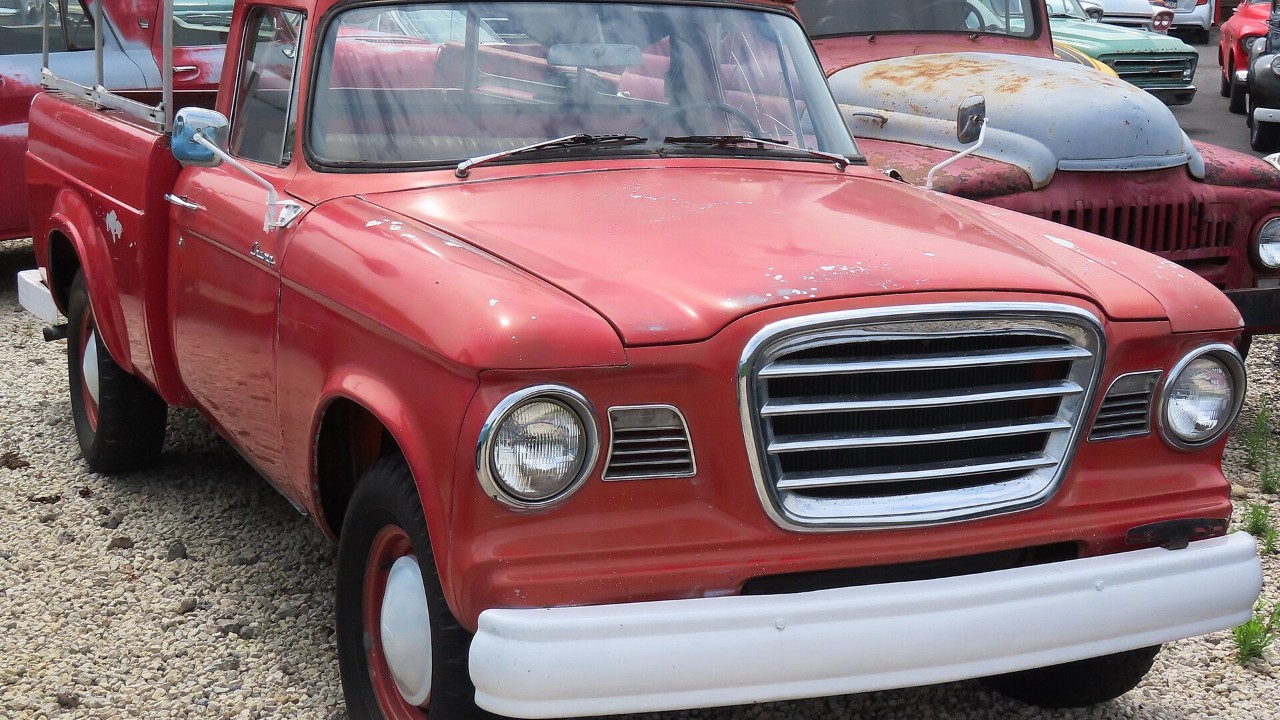
The Champ brought the car-based idea back. It used the front half of the Lark compact body, including the doors, cowl, dash and front clip, with a closeout panel behind the cab. Then for 1961, Studebaker adopted Dodge’s 1959–1960 Sweptline bed and called it the Spaceside, according to Mac’s Motor City Garage.
Output typically ran above 5,000 a year and peaked at 7,325 in 1962. However, the South Bend plant shut down in December 1963, partway through the model run. Studebaker built 2,509 Champs for the 1964 model year and then left the truck business for good, Mac’s reports.
More from Fast Lane Only
- Unboxing the WWII Jeep in a Crate
- 15 rare Chevys collectors are quietly buying
- 10 underrated V8s still worth hunting down
- Police notice this before you even roll window down
This article was created with the help of AI and was reviewed and edited by Fast Lane Only editors before publication.