Ford is taking one of the largest financial hits in its history to unwind a once bold electric-vehicle strategy, booking an EV-related charge that approaches $19.5 billion and resetting expectations for what the next decade of carmaking will look like. Instead of racing Tesla and Chinese rivals on fully electric models, the company is pivoting back toward the segments that have long paid its bills, from full-size pickups to hybrids and extended-range designs. The result is a dramatic course correction that raises hard questions about how legacy automakers can afford the EV transition at all.
I see Ford’s move as more than a single company’s stumble. It is a stress test of the entire EV playbook that dominated boardrooms only a few years ago, when executives promised rapid mass adoption and generous margins on battery-powered vehicles. With this writedown, Ford is effectively admitting that its first wave of EV bets was mispriced, mistimed, or both, and that the path to profitable electrification will be slower, more incremental, and far more dependent on trucks, Gas, Hybrids and Low, Cost Electric Vehicle Platform products than Wall Street once assumed.
The $19.5 billion reckoning
The headline number is stark. Ford has disclosed that it will take EV-related charges of roughly $19.5 billion, a figure that reflects both the direct losses from its electric vehicle business and the cost of abandoning or reworking several high-profile programs. That sum, described as a charge of $19.5 billion US on its electric vehicle business, is not just an accounting footnote, it is a public acknowledgment that the economics of Ford’s early EV push never matched the optimism of its marketing. The company’s own breakdown points to Model e asset impairment and program write-downs, with Model e asset impairment and program write-downs set at $8.5 billion in 2025 alone, underscoring how much capital was tied up in platforms and plants that will not be used as originally planned.
Analysts have seized on the scale of the hit as a warning sign for the broader industry. One detailed assessment framed Ford’s $19.5 billion EV writedown as a signal of a tough road ahead for legacy carmakers, arguing that the traditional players underestimated both the cost of building competitive EVs and the intensity of price pressure from newer entrants. The fact that Ford is also unwinding a joint venture, with the joint venture disposition included in the overall charge, reinforces the sense that entire strategic pillars are being dismantled, not just a few slow-selling models. When a company of Ford’s size has to reset its books by $19.5 billion to reflect reality, it suggests that the first phase of the EV gold rush is over.
From all-in on EVs to “Expanding Customer Choice”
Only a short time ago, Ford was talking about aggressive EV volume targets and a rapid shift away from internal combustion engines. It was only three years ago that Ford was targeting two million EV sales, a figure that symbolized its ambition to be a top-tier electric player. That narrative has now been replaced by a more cautious, customer-driven framing that the company describes as Expanding Customer Choice with Gas, Hybrids and Low, Cost Electric Vehicle Platform. Instead of betting that drivers would quickly abandon gasoline, Ford is now promising a mix of gas, hybrid, plug-in, and affordable EV options, with the company expecting approximately half of its global sales to be hybrids and EVs by 2030 rather than a near-total shift to battery power.
In practical terms, that means Ford is reallocating investment away from certain large electric vehicles toward trucks, hybrids, and more affordable EVs that can be built and sold at a profit. Internal planning documents and public statements describe New EV Targets Significantly Scaled Back, with the company focusing its North American EV development on a low-cost platform and a smaller set of models instead of a sprawling lineup. The new strategy also emphasizes battery storage and commercial vehicles, areas where Ford believes it can leverage existing strengths. By recasting its pivot as a response to customer demand rather than a retreat, Ford is trying to preserve credibility while acknowledging that its earlier EV roadmap was too aggressive.
What happens to the F-150 Lightning and other flagship EVs
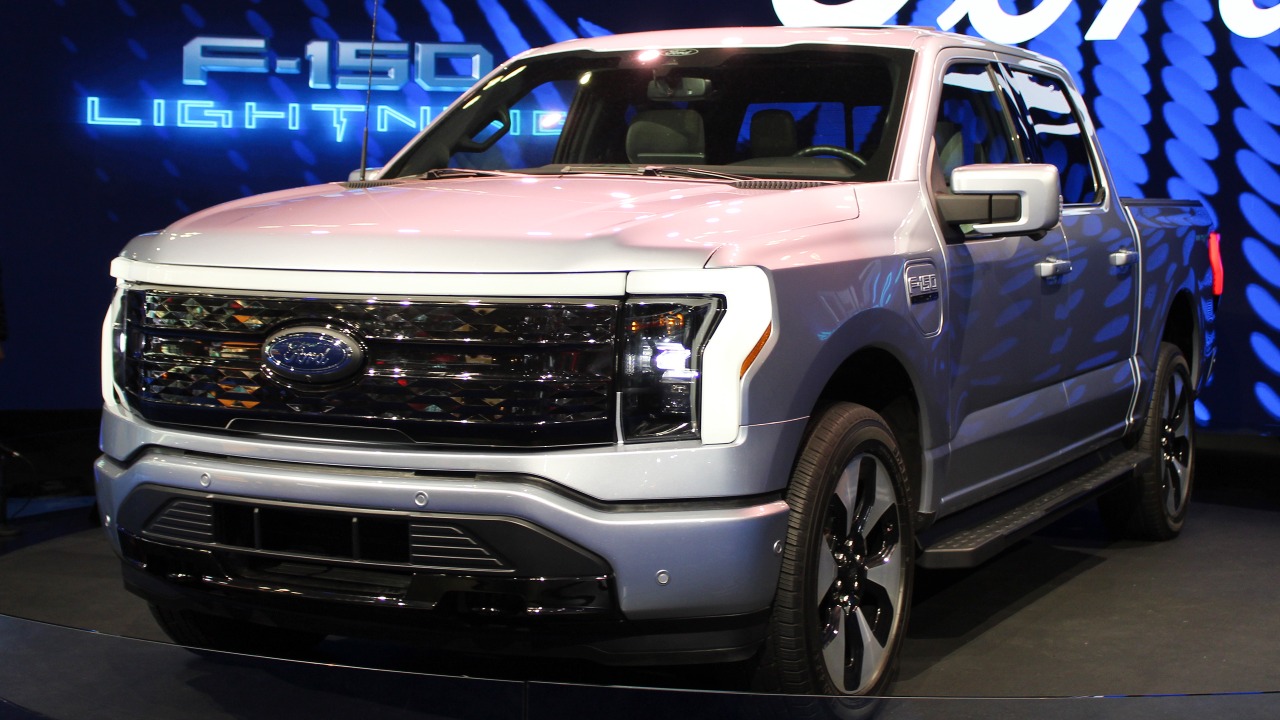
No vehicle better captures the tension in Ford’s strategy than the Lightning, the electric version of its flagship pickup. The company is not scrapping the nameplate, but it is fundamentally changing what the product will be. The F-150 Lightning, the electric version of Ford’s flagship pickup, will be reconfigured as a plug-in-style vehicle with an internal combustion engine that can charge the battery and extend range, effectively turning it into an extended-range electric truck rather than a pure battery-electric model. Production of the original configuration has already been halted, with Ford having halted Lightning production in October as it reevaluated demand, costs, and the competitive landscape.
Several other EV programs are being cut outright. Reporting on the restructuring notes that Ford is killing off several EV models as part of the $19.5 billion reset, a move that frees up capital but also concedes that some of the company’s early designs missed the mark on price, range, or customer appeal. At the same time, Ford is keeping a planned EV Platform-based midsize truck on the roadmap, suggesting that it still sees room for profitable electric pickups if they are sized and priced correctly. The shift toward plug-in-style trucks and extended-range designs reflects a hard lesson: for many truck buyers, charging infrastructure and towing performance remain barriers, and a hybridized or EREV layout can ease those concerns without abandoning electrification altogether.
Redeploying plants and capital to trucks, hybrids, and storage
Behind the product headlines is a sweeping reconfiguration of Ford’s industrial footprint. The company has outlined plans to redeploy EV unit plants for gas, hybrid and energy products, effectively turning facilities that were once dedicated to battery-electric vehicles into flexible hubs for a broader mix of powertrains. The Model e asset impairment and program write-downs that total $8.5 billion in 2025 are tied directly to this shift, as Ford writes down the value of EV-specific tooling and retools plants for new uses. Management has been explicit that future investment will concentrate on trucks, vans, and commercial vehicles, segments where Ford excels and where hybrid and extended-range solutions can deliver strong margins.
Part of the new capital plan involves a heavier focus on battery storage and grid-related products, which Ford now groups alongside its vehicle strategy. Company statements describe a push to reinvest in trucks, hybrids, affordable EVs, and battery storage, positioning the automaker not only as a seller of vehicles but also as a provider of energy solutions that can smooth demand and create new revenue streams. In North America, Ford is narrowing its EV development to a low-cost platform and a handful of key models, while using hybrids and EREVs to keep its truck and SUV lineup compliant with tightening regulations. The result is a portfolio that looks less like a clean break with the past and more like a layered transition, with combustion engines, hybrid systems, and batteries coexisting for years.
What Ford’s reversal means for the EV transition
Ford’s decision to scrap parts of its EV plans and absorb a $19.5 billion hit is already reshaping expectations for how quickly the market can shift to full electrification. Investors who once rewarded bold EV volume targets are now scrutinizing profitability and capital discipline, and Ford’s move gives cover to other legacy automakers that may be reconsidering their own timelines. Detailed analysis of the writedown has framed it as evidence that the first wave of EV investments, particularly in large, expensive models, was misaligned with actual demand and price sensitivity. When a company has to mark down $19.5 billion to reflect the true value of its EV bets, it suggests that the industry’s early cost assumptions were far too optimistic.
At the same time, Ford is not walking away from electrification altogether. The company still expects a significant share of its sales to come from hybrids and EVs by 2030, and it is investing in a low-cost electric platform that could support smaller, more affordable models. Its updated plan to focus on hybrids, EREVs, and low-cost EVs in North America reflects a belief that the transition will be stepwise rather than abrupt, with customers moving first into hybrid trucks and plug-in pickups before embracing fully electric versions at scale. For policymakers and competitors, the message is clear: the EV transition is still underway, but it will be shaped as much by balance sheets and plant utilization as by climate targets and technology roadmaps.