Ford Motor Co Chief Executive Officer Jim Farley has turned a political broadside into a public relations counterpunch, answering Senator Ted Cruz’s charge that he was “terrified to testify” with a pointed defense of his priorities and his company’s record. The clash, centered on a postponed Senate hearing on vehicle affordability and electric vehicles, has become a revealing test of how a legacy automaker navigates partisan scrutiny while trying to convince customers it is focused on building better cars, not playing Washington games.
As I see it, Farley’s response is less about personal pride and more about drawing a line on how and when corporate leaders engage with Congress, especially when they believe the terms are stacked against them. The result is a rare, public tug-of-war between a powerful senator and a high-profile CEO over who sets the rules of engagement in the debate about the future of the auto industry.
Cruz’s hearing, and a CEO who said no
The immediate flashpoint was a Senate hearing on new car affordability that Senator Ted Cruz wanted to turn into a high-visibility grilling of Detroit’s top executives. Farley, invited alongside leaders from Stellantis and General Motors, balked at appearing under the conditions laid out by the Senate committee, which was also seeking testimony related to electric vehicle policy and the competitive landscape with Tesla. According to reporting on the planning, Ford CEO Jim Farley objected that the invitation treated Ford differently from Tesla, with the Senate asking Ford to send its top executive while not extending the same requirement to Tesla’s CEO, Elon Musk, a disparity that he viewed as fundamentally unfair.
That pushback set off a chain reaction. As Farley resisted, the Senate, facing the prospect of a marquee hearing without one of its central witnesses, ultimately delayed the session on vehicle affordability. Accounts of the internal discussions describe Farley as unwilling to accept a setup in which Ford would be placed under the spotlight while Tesla was represented at a lower level, a stance that underscored his concern about what he saw as an “unequal invitation” from the Senate. The decision to postpone the hearing, after Ford made clear it would not send Farley under those terms, signaled that the committee’s leverage was not as absolute as Cruz might have hoped.
From “terrified to testify” to a public counterattack
Cruz did not take the rebuff quietly. After the hearing was pushed back, he accused the Ford CEO of being “terrified of testifying,” framing Farley’s refusal as an attempt to dodge accountability on issues ranging from vehicle prices to electric vehicle strategy. The Senate Commerce leadership, according to detailed accounts, even floated the possibility of a subpoena, with Cruz suggesting that if Farley would not appear voluntarily, the committee could compel him to do so. That rhetoric was designed to paint the CEO as evasive, and to cast Ford as reluctant to answer for its decisions in front of lawmakers.
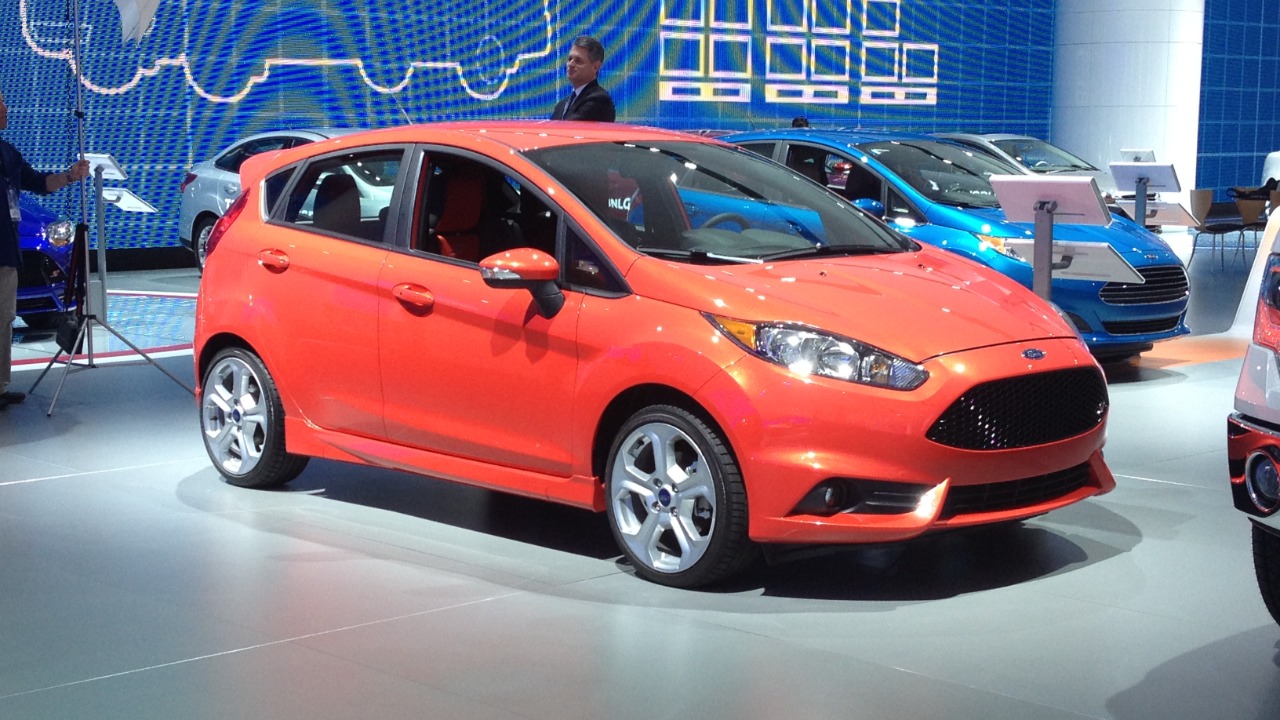
Farley’s answer, however, was not the posture of someone cowed by Washington. In subsequent comments, he dismissed the idea that he was afraid to appear, stressing that he had a scheduling conflict tied to the Detroit Auto Show and that his focus was on Ford’s customers and products rather than political theater. He emphasized that he was in Detroit for the opening of the show, highlighting the company’s presence at a major industry event instead of a Senate hearing that he viewed as structured on Cruz’s terms. Farley’s public remarks, captured in multiple reports, made clear that he saw the senator’s attack as more about scoring points than about serious oversight, and he was willing to say so.
Detroit Auto Show versus Washington stagecraft
Farley’s decision to prioritize the Detroit Auto Show over the Senate hearing was not just a matter of calendar management, it was a deliberate signal about where he believes Ford’s energy should be directed. By underscoring that he was in Detroit for the show’s opening, he cast himself as a CEO rooted in the business of unveiling vehicles, meeting suppliers, and engaging with customers, rather than flying to Washington to participate in what he implied would be a partisan spectacle. Reports on his comments describe him as measured but firm, noting that he was not going to abandon a major industry event to accommodate a hearing that, in his view, had been framed unfairly from the start.
That choice also gave Farley a platform to contrast the tangible work of the auto show with the more symbolic theater of a Senate hearing. While Cruz portrayed the postponed testimony as a sign that Ford was avoiding tough questions, Farley pointed to the company’s active role in Detroit as evidence that he was not hiding from scrutiny, but instead was engaging in the kind of public, product-focused work that directly affects consumers. By leaning into the Detroit Auto Show narrative, he effectively argued that his presence there was a better use of his time than participating in a hearing whose structure he did not accept, even if that meant absorbing a round of political attacks.
The Tesla factor and claims of unequal treatment
Beneath the personal sparring lies a deeper dispute over how Washington treats different players in the electric vehicle space. Farley’s camp has been explicit that one of the main reasons he resisted testifying was the perceived imbalance between how Ford and Tesla were being handled. The Senate, according to detailed accounts, asked Ford CEO Jim Farley to appear in person while not extending the same requirement to Tesla’s Elon Musk, instead allowing Tesla to send a different representative. For Farley, that asymmetry was not a minor detail but a central objection, suggesting that Ford would be placed in a more exposed position than its key rival.
That complaint resonates with a broader frustration inside traditional automakers, who often feel they are held to one standard while newer entrants are treated differently. By pushing back on the invitation, Farley effectively challenged the committee to explain why Ford should send its top executive if Tesla did not have to do the same. The Senate Commerce staff, including spokesperson Phoebe Keller, acknowledged that the hearing’s status was in flux as these objections were raised, and the eventual postponement underscored how central the Tesla question had become. In that sense, Farley’s refusal was not only a personal stand against Cruz’s framing, but also a tactical move in the ongoing rivalry between Ford and Tesla over who defines the future of the EV market.
Political theater, corporate strategy, and what comes next
From my vantage point, the Farley–Cruz confrontation illustrates how quickly a policy hearing can morph into a stage for political branding on one side and corporate positioning on the other. Cruz, as a senior figure in The Senate Commerce leadership, seized on Farley’s resistance to cast himself as a watchdog willing to call out a major automaker, even hinting at subpoenas to reinforce that image. Farley, for his part, used the moment to project independence from Washington, insisting that he would not be dragged into a forum he considered stacked, especially when he believed Ford was being treated differently from Tesla. The result is a standoff in which both men appear to be speaking as much to their own constituencies as to each other.
More from Fast Lane Only