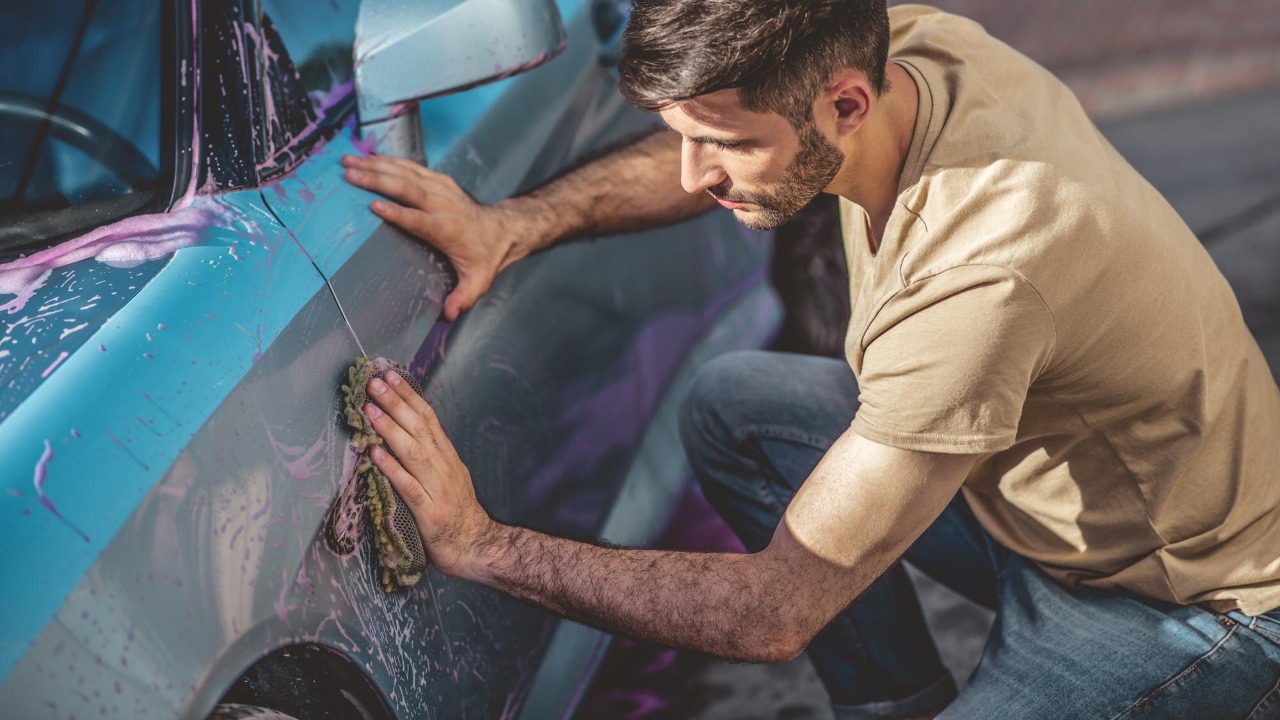
It started the way a lot of well-meaning favors start: casual, confident, and delivered with a grin. A friend noticed how dusty the car looked and offered to “detail it real quick,” the kind of promise that sounds like a win for everybody. A few hours later, the car was technically clean, but the paint looked… different.
Not “new-car shiny” different. More like “did someone frost the clear coat?” different, with hazy patches that caught the sunlight in all the wrong ways. The owner didn’t notice at first, but once the light hit it just right, it was impossible to unsee.
A favor that sounded harmless
The car wasn’t a showpiece, just a daily driver that had collected the usual road film, pollen, and a few stubborn water spots. When the friend offered to handle it, it felt like a nice break from errands and weekend chores. Plus, the friend seemed enthusiastic, talking about “making it pop” like it was a quick Saturday project.
There was no written plan, no checklist, no talk about paint condition or products. That’s pretty normal between friends, and that’s also how small misunderstandings become big ones. Detailing can mean anything from a simple wash to a full-on paint correction, and people often don’t realize how different those are.
When “detailing” turns into sanding—without anyone saying it
The first clue something went sideways was the texture. The paint felt oddly grabby in some spots and slick in others, like it had been scrubbed unevenly. Under a streetlight that night, the panels showed cloudy areas and fine scratches that weren’t there before.
What likely happened is a classic DIY chain reaction: a dirty surface, an aggressive tool, and the belief that more pressure equals better results. Add a gritty sponge or a towel that’s seen one too many garage floors, and the paint becomes a canvas for micro-scratches. It doesn’t take vandal-level force—just the wrong method repeated over an entire car.
The usual suspects: common mistakes that wreck paint fast
Detailing pros hear these stories all the time, and they tend to follow familiar patterns. The biggest culprit is contamination: tiny particles of dirt or brake dust getting trapped in a mitt, sponge, or towel. Once that happens, every wipe is basically a gentle sanding pass.
Another frequent issue is using harsh household cleaners or the wrong “all-purpose” product. Some degreasers and strong soaps can strip protection, dull the finish, or leave the clear coat more vulnerable. Even if the bottle says it’s tough on grime, that doesn’t mean it’s safe on automotive paint.
Then there’s the machine polisher problem, which sounds fancy but can go wrong quickly. A heavy-cut compound paired with an aggressive pad can haze the clear coat if it isn’t followed by refining steps. The paint might look better in shade and worse in sun, which is exactly the kind of confusing result that makes people think they’re imagining it.
Why the damage shows up in sunlight and streetlights
Paint defects love bright, direct light. In shade, a hazy finish can look “fine,” because diffuse light hides swirls and micro-marring. The moment the sun hits it—or a strong LED or streetlamp—the scratches scatter the light and show up as spiderwebs, cloudy patches, or dull streaks.
That’s why the owner’s first reaction is often denial. It’s not dramatic like a dent; it’s more like the paint lost its depth. And once you’ve seen it, you start catching it in every parking lot.
The awkward conversation nobody wants to have
Bringing it up is the hardest part, because the friend was trying to help. Nobody wants to sound ungrateful or turn a simple favor into a friendship audit. But the owner also didn’t sign up for an accidental paint experiment.
People who handle it best keep it specific and calm. Point to the hazing or swirls under good lighting and ask what products or tools were used, not as an interrogation but as a way to figure out the next step. It’s a lot easier to solve when everyone treats it like a “how do we fix this?” moment instead of a “who’s guilty?” moment.
What can actually be fixed—and what might not
The good news is that most swirl marks and light hazing live in the clear coat and can often be corrected. A professional detailer can measure paint thickness, choose the least aggressive method, and polish the surface back to clarity. In many cases, a one- or two-step polish restores gloss and removes the washed-out look.
The not-so-fun news is that some damage goes deeper. If the clear coat is heavily marred, overheated, or thinned out from aggressive compounding, correction becomes riskier. And if there are spots where the clear coat has failed or been burned through, no amount of polishing will bring it back—those areas typically need repainting.
How to tell if you’re looking at haze, swirls, or leftover residue
There’s a simple test that can help narrow it down: wipe a small section with a clean microfiber and a proper panel wipe or diluted isopropyl alcohol mix. If the cloudiness improves right away, some of what you’re seeing might be leftover polish oils, wax smearing, or product that wasn’t fully removed. If it doesn’t change, it’s more likely actual marring in the clear coat.
Another clue is uniformity. Residue tends to look patchy and smear when wiped, while swirls and haze stay put and move only with the angle of light. Either way, resist the urge to “scrub it out,” because that’s how the problem usually gets worse.
What a pro would do next
A reputable detail shop typically starts with a careful wash, decontamination, and inspection under strong lights. They’ll do a test spot to see what level of polish is needed, because every car’s paint behaves a little differently. The goal is always minimal aggression: remove as little clear coat as possible to get the finish back.
After correction, they’ll usually apply protection—sealant, wax, or a ceramic coating—so the paint stays glossy and easier to wash. That protection matters, because freshly corrected paint can look amazing but won’t stay that way if it’s washed with rough tools or harsh chemicals.
How this happens so often (and how to prevent it next time)
This story keeps repeating because car care looks deceptively simple from the outside. People see foam, shiny paint, and a few satisfying wipe-down videos, and it feels like any motivated person can do it. The tricky part is that paint is soft, dirt is abrasive, and the line between “cleaning” and “scratching” is thinner than most expect.
If a friend offers again, it doesn’t have to be a hard no. It can be a quick agreement on boundaries: wash only, no clay bar, no compound, no machine polishing, and only clean microfiber towels. And if anyone really wants to learn, a single test panel on an older vehicle beats learning on someone else’s hood.
For the owner in this case, the next move is pretty clear: document the condition in good light, get an estimate from a trusted detailer, and decide how far to take the fix. The paint may not look the same right now, but with the right hands and a little patience, it can usually look like itself again—just with a better story attached.
More from Fast Lane Only
- Unboxing the WWII Jeep in a Crate
- 15 rare Chevys collectors are quietly buying
- 10 underrated V8s still worth hunting down
- Police notice this before you even roll window down
*Research for this article included AI assistance, with all final content reviewed by human editors.