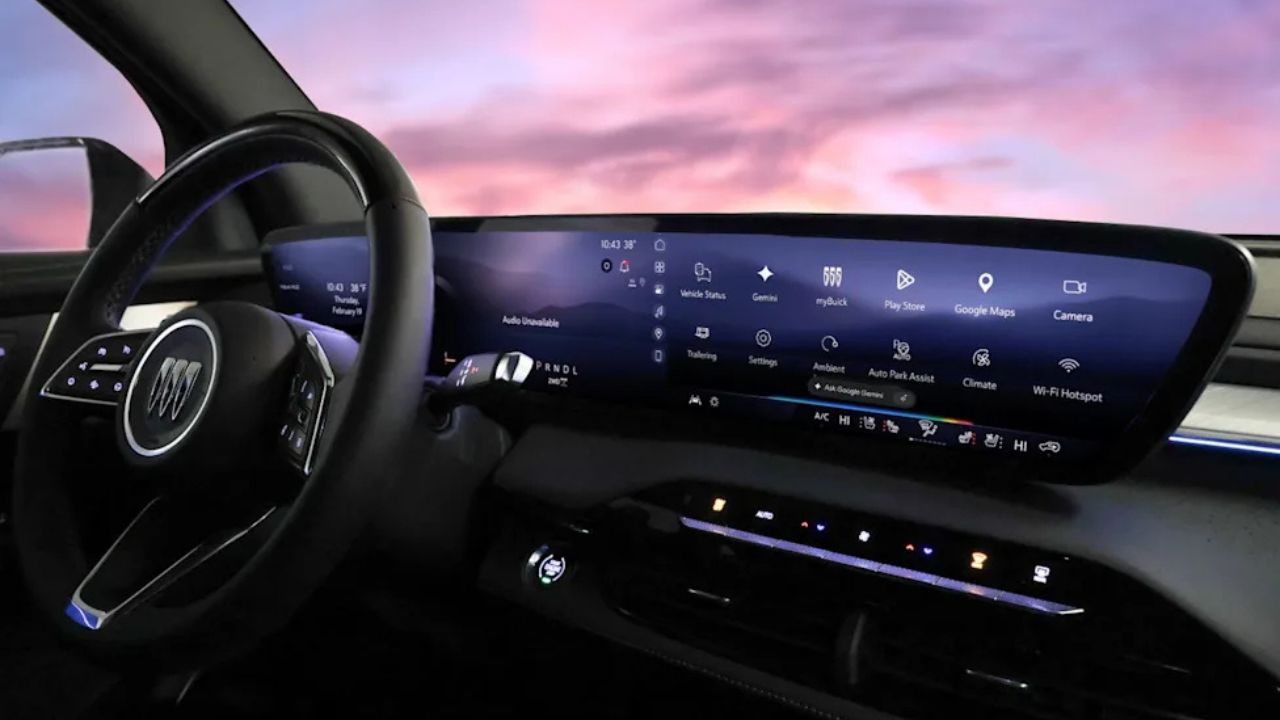
General Motors is moving to embed artificial intelligence into millions of its vehicles, treating the car not just as transportation but as a rolling digital assistant. The company is betting that drivers will want smarter voice control, predictive features, and more personalized services woven directly into the dashboard rather than living on a separate phone screen.
That shift places GM in the middle of a broader race to define how AI shapes driving, long before fully self-driving cars become mainstream.
What happened
GM has begun rolling out AI-driven software across its portfolio, focusing first on vehicles equipped with its latest infotainment platforms and over-the-air update capability. The strategy leans on cloud connectivity and in-car computing so that models can be updated, refined, and expanded without a trip to the dealer.
The most visible piece of this strategy is a new generation of voice interaction. Rather than rigid command trees, GM is deploying conversational assistants that can interpret natural speech, manage navigation, control climate settings, and handle messaging. These systems are designed to learn from repeated use, so the car can anticipate frequent destinations, preferred routes, and media habits.
Behind the scenes, GM is also integrating AI into driver-assistance stacks that support adaptive cruise control, lane centering, and automated lane changes. These features fall well short of full autonomy but rely on machine-learning models to interpret sensor data, classify objects, and predict the behavior of nearby vehicles and pedestrians. The company is tuning those models to run efficiently on automotive-grade chips and to coordinate with map data streamed over the air.
GM’s move fits into a wider trend in the mobility sector. Automakers and suppliers are investing in AI across perception, decision-making, and connectivity to prepare for higher levels of automation. Industry trackers that monitor the future of autonomous describe a pipeline that runs from today’s driver-assistance features to fully self-driving systems, with incremental software upgrades bridging the gap.
AI is also appearing in less glamorous but commercially important corners of GM’s business. Predictive maintenance models analyze vehicle telemetry to flag components that may fail before they strand drivers. Customer-service bots and dealer tools use AI to triage issues, recommend repair paths, and streamline scheduling. These systems are not as visible as a talking dashboard but shape the ownership experience and GM’s cost structure.
Why it matters
GM’s AI push matters first because of scale. The company sells millions of vehicles globally each year, and many of its recent models are already equipped with connected-car hardware. When AI features arrive through over-the-air updates, they do not just appear in a niche luxury sedan; they land in family SUVs, pickups, and fleet vehicles that rack up heavy daily use. That reach can normalize AI-assisted driving for a broad slice of the public.
For drivers, the most immediate impact is convenience. Natural-language assistants reduce the friction of interacting with complex infotainment systems, which have grown cluttered with apps and menus. Instead of tapping through screens, a driver can ask the car to find a coffee shop along the route, read incoming messages aloud, or adjust the temperature for the rear seats. If the assistant performs reliably, it can keep eyes on the road and hands on the wheel longer, which is a safety win.
Safety is also at stake in the way GM uses AI for perception and control. Machine-learning models can detect subtle patterns in sensor data that rule-based systems might miss, such as the intent of a merging driver or the likelihood that a pedestrian will step off the curb. When tuned correctly, those models can smooth braking, avoid abrupt maneuvers, and reduce minor collisions. Over time, data from millions of vehicles can be fed back into training loops, improving performance in varied weather, lighting, and traffic conditions.
At the same time, the growing reliance on AI raises questions about accountability. If a driver-assistance system misclassifies an object and a crash follows, regulators and courts must untangle responsibility among the driver, the automaker, and the software stack. As GM markets more capable features, it will need to communicate clearly where human supervision is required and what the system can and cannot do. Past controversies around automated driving in the wider industry show how confusing branding and vague promises can erode trust.
Data privacy and security form another fault line. AI features thrive on data: voice recordings, driving patterns, location histories, and vehicle diagnostics. GM must decide how much of that data stays on the vehicle, how long it is stored in the cloud, and which partners can access it. Any perception that the car is listening too closely or sharing information too widely could trigger regulatory scrutiny and consumer pushback. Strong encryption, transparent consent flows, and options to limit data sharing will be central to public acceptance.
Economically, AI-enabled services open new revenue streams. GM can sell subscription tiers that unlock advanced driver-assistance, premium connectivity, or enhanced voice features. Fleet operators might pay for predictive maintenance dashboards that reduce downtime. Insurance partners could offer usage-based policies that draw on vehicle telemetry. For a company facing cyclical hardware margins, these software and services lines are strategically attractive.
Yet the subscription model carries its own risk. If core safety or convenience features sit behind recurring fees, drivers may feel nickel-and-dimed, especially when they have already paid for the hardware. GM will have to balance investor pressure for high-margin software revenue with the need to keep essential functionality accessible and to avoid fragmenting the user base between those who pay and those who do not.
There is also a competitive dimension. Tech companies are pushing to own the in-car experience through smartphone projection, voice assistants, and connected platforms. By embedding its own AI stack deeply into the vehicle, GM is trying to keep control of the dashboard and the data it generates. Success would give the automaker more leverage against external platforms and more freedom to design experiences tailored to its brands.
What to watch next
The next phase will be shaped by how quickly GM can scale its AI features across model lines and geographies. Early deployments often target higher-end trims with the latest electronics. The real test will be bringing similar capabilities to mass-market vehicles without overwhelming less powerful hardware or driving up costs. Investors and competitors will watch how GM manages that trade-off.
Regulation will play a large role. As driver-assistance systems grow more capable, transportation authorities are refining rules around hands-free operation, data retention, and cybersecurity. GM will need to align its AI roadmap with evolving standards for automated driving, including how it reports performance, handles software recalls, and communicates limitations to drivers. Any high-profile incident involving AI-assisted features could accelerate new rules or prompt investigations.
On the technology front, integration between in-car AI and external ecosystems will be a key storyline. Drivers increasingly expect their digital lives to move seamlessly between phone, home, and vehicle. GM’s strategy for linking its assistants with third-party apps, smart-home platforms, and workplace tools will influence how sticky its services become. If the car can coordinate calendars, charging sessions, and home climate settings, it becomes a more central node in daily routines.
Another area to watch is how GM uses fleet and commercial data to refine its models. Vehicles used for delivery, ride-hailing, or logistics accumulate dense driving histories in varied conditions. Feeding that data into training pipelines can accelerate improvements in perception and planning. It can also support specialized features, such as routing that accounts for loading zones, low bridges, or local delivery regulations.
Public perception will evolve as drivers spend more time with AI-enabled systems. Early adopters may embrace hands-free voice control and advanced assistance, while others remain wary of automation. GM’s user education, dealership training, and interface design will shape that response. Clear, consistent behavior from the systems will matter more than flashy marketing language.
More From Fast Lane Only: