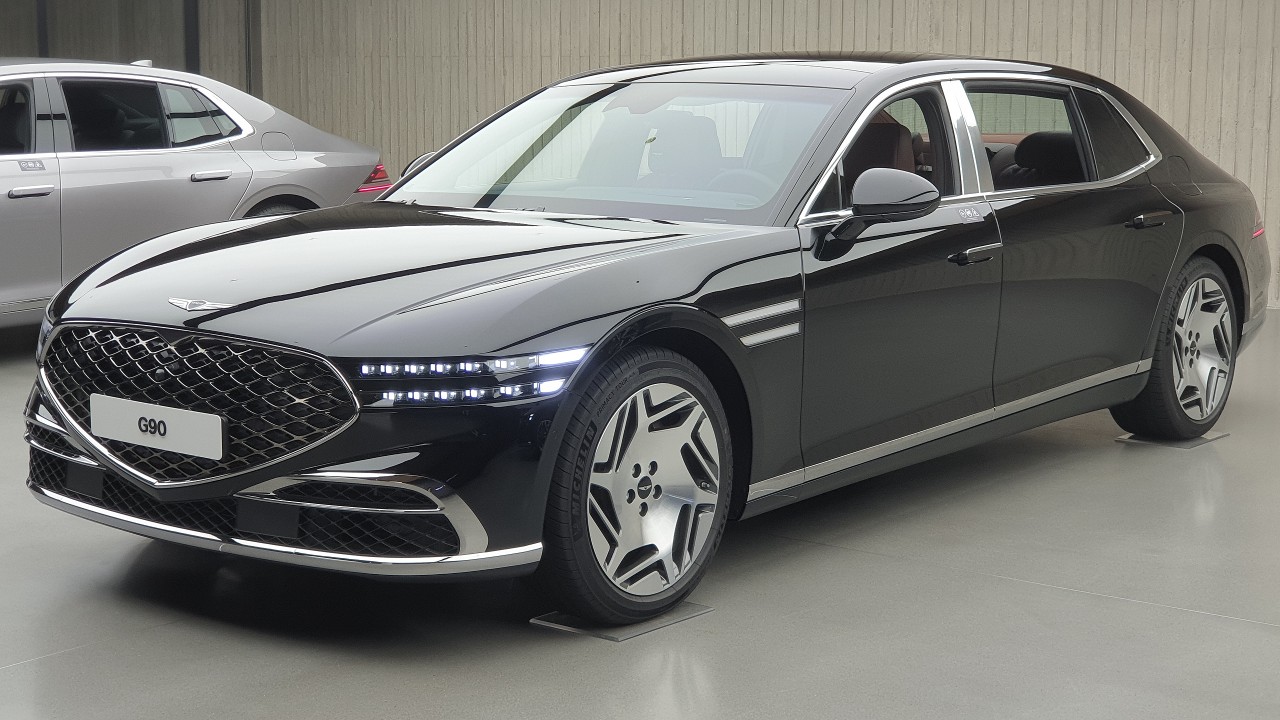
Genesis is recalling its flagship G90 sedan after discovering that one of its own paint colors can confuse the car’s radar and trigger sudden, unnecessary braking. The fix is straightforward, but the episode exposes how even a seemingly cosmetic choice like exterior paint can ripple through the complex stack of sensors that now govern modern driver assistance.
Instead of a mechanical defect or a software typo, the culprit is a shade called Savile Silver, which has been linked to false collision warnings and abrupt stops in a limited batch of cars. I see this as a revealing case study in how tightly intertwined design, materials, and safety technology have become in the luxury segment.
What Genesis found in the G90’s radar and paint interaction
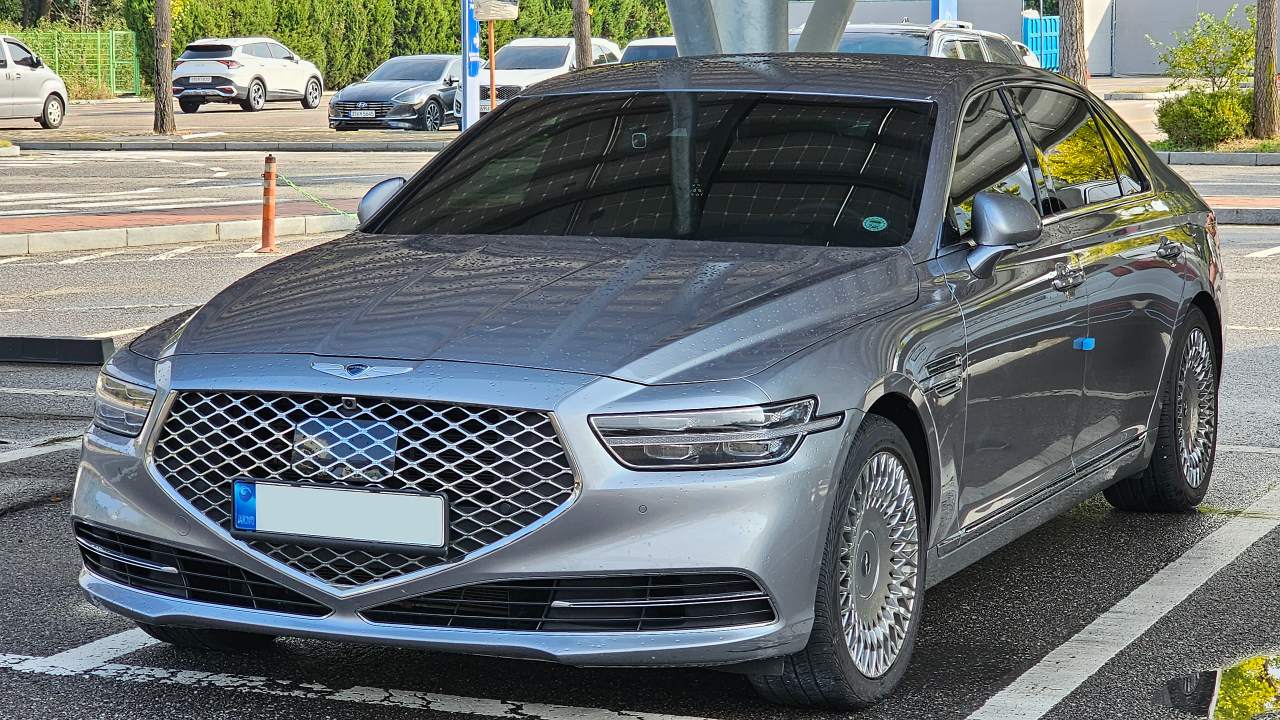
At the heart of the recall is a surprising interaction between the G90’s forward radar and the structure of the car when it is finished in Savile Silver. According to recall documents cited in multiple reports, the specific paint formulation can interfere with radar transmission through parts of the vehicle, which in turn can cause the system to misread its surroundings and believe there is an obstacle ahead when the road is actually clear. One account describes how the driver assistance hardware, summarized as a Driver, Assist System Meets Paint scenario, ends up treating reflections and signal loss as a potential collision risk.
To get ahead of the problem, Genesis is recalling all affected G90 sedans painted in Savile Silver, a group that totals 483 vehicles spanning several model years. Reporting indicates that these cars, built between 2023 and 2026, share the same paint code and radar configuration, which is why the recall is tightly focused on that color rather than the entire G90 lineup. Another detailed breakdown notes that the exterior shade’s reflective properties can trigger false radar alerts and cause the sedan to brake suddenly even when there is no real hazard.
How the recall works and what owners can expect
Genesis is treating the issue as a formal safety recall, which means owners of Savile Silver G90s should be contacted and offered a remedy at no cost. While the company’s global recall portal lists active campaigns and allows drivers to check their vehicles, the specific G90 paint-related action is part of the broader set of notices that appear on the official Genesis recall page. In practice, that usually means owners receive a letter or digital notification explaining the risk of unintended braking and inviting them to schedule a service appointment.
Based on how similar campaigns have been handled in the industry, I expect the fix to focus on recalibrating or updating the radar and related driver assistance software rather than repainting cars. One analysis of the G90 situation describes it as a glitch in how the collision avoidance system interprets radar data, which suggests that engineers can adjust thresholds or filtering logic so the system no longer misreads the Savile Silver finish as a threat. Another overview of the recall frames it as a dangerous glitch in which the G90’s safety technology can unexpectedly apply the brakes to avoid a collision that does not exist, a pattern consistent with the description of a paint color that triggers dangerous glitch behavior.
Why a paint color can confuse advanced driver assistance
On the surface, it sounds absurd that a luxury sedan’s paint could cause its safety systems to slam on the brakes, but the physics behind radar and materials makes the problem more understandable. Automotive radar works by sending radio waves forward and then interpreting the reflections that bounce back from vehicles, guardrails, and other objects. If the waves are partially absorbed, scattered, or reflected in unusual ways by the car’s own bodywork, the system can misjudge distance or detect phantom obstacles. In the G90’s case, recall documents referenced in coverage of the National Highway Traffic Safety Adm filing describe how the Savile Silver finish affects radar transmission through the structure, which is a polite way of saying the paint and underlying materials are not playing nicely with the sensor’s expectations.
What makes this recall stand out is that it is not about a faulty radar module or a misaligned bracket, but about the interaction of a specific color and the electromagnetic environment around the sensor. Another detailed report notes that the exterior shade’s characteristics can trigger false radar alerts and sudden braking, which is why Genesis limited the recall to Savile Silver cars rather than all G90s. I see this as a reminder that advanced driver assistance systems are only as reliable as the assumptions engineers make about every component in their path, from bumper covers to metallic flakes in paint. When those assumptions are off, even slightly, the result can be a safety system that behaves more like a nervous passenger than a calm co-pilot.
What G90 drivers should do right now
For owners, the immediate priority is to confirm whether their car is part of the recall and then schedule the fix. Genesis provides a recall lookup tool on its official site, where drivers can enter their Vehicle Identification Number and see any open campaigns tied to their car, including the Savile Silver G90 action listed among other owners notices. If a G90 is included, I would advise minimizing reliance on automated braking and adaptive cruise control until the remedy is completed, especially in stop and go traffic where an unexpected full stop could surprise following drivers.
Even if a driver has not yet received a letter, it is worth proactively checking the car’s status using the broader tools available from safety regulators. The National Highway Traffic Safety Administration maintains a portal where motorists can find their Vehicle Identification Number and search for open recalls, including those affecting Genesis models. Consumer advocates often recommend this approach, and one auto safety segment featuring Jeff Green, identified as the Detroit Bureau Chief for Bloomberg News on the program Take Two, underscores how entering a VIN is the most reliable way to see if a vehicle is affected by any campaign. That advice applies just as much to a high end G90 as it does to mass market models.
What this odd recall says about modern car safety
As strange as it sounds, the G90 paint recall fits into a broader pattern of increasingly complex safety campaigns in the automotive world. Earlier actions involving Genesis and its parent company have focused on more traditional issues, such as a recall of G80 sedans and other models to address a potential fire risk in the anti lock braking hardware. In that case, owners were contacted so that the ABS module fuses could be replaced, a reminder that even conventional components can trigger large scale recalls. By contrast, the G90 situation shows how the frontier of safety now includes the subtle interplay of sensors, software, and styling choices.
I see a few clear takeaways. First, advanced driver assistance systems are not infallible, and drivers should treat them as aids rather than substitutes for attention, especially when a recall highlights a specific failure mode like unnecessary braking. Second, automakers will need to tighten their validation processes so that materials such as paint, trim, and even decorative elements are tested for compatibility with radar, lidar, and cameras before they reach customers. Finally, the fact that Genesis moved to recall all Savile Silver G90s, a relatively small batch of 483 cars, suggests that manufacturers are increasingly willing to act on niche but real safety risks. For owners, that is an inconvenience, but it is also a sign that the industry is taking the quirks of high tech safety gear seriously, even when the trigger is something as unexpected as a shade of silver.