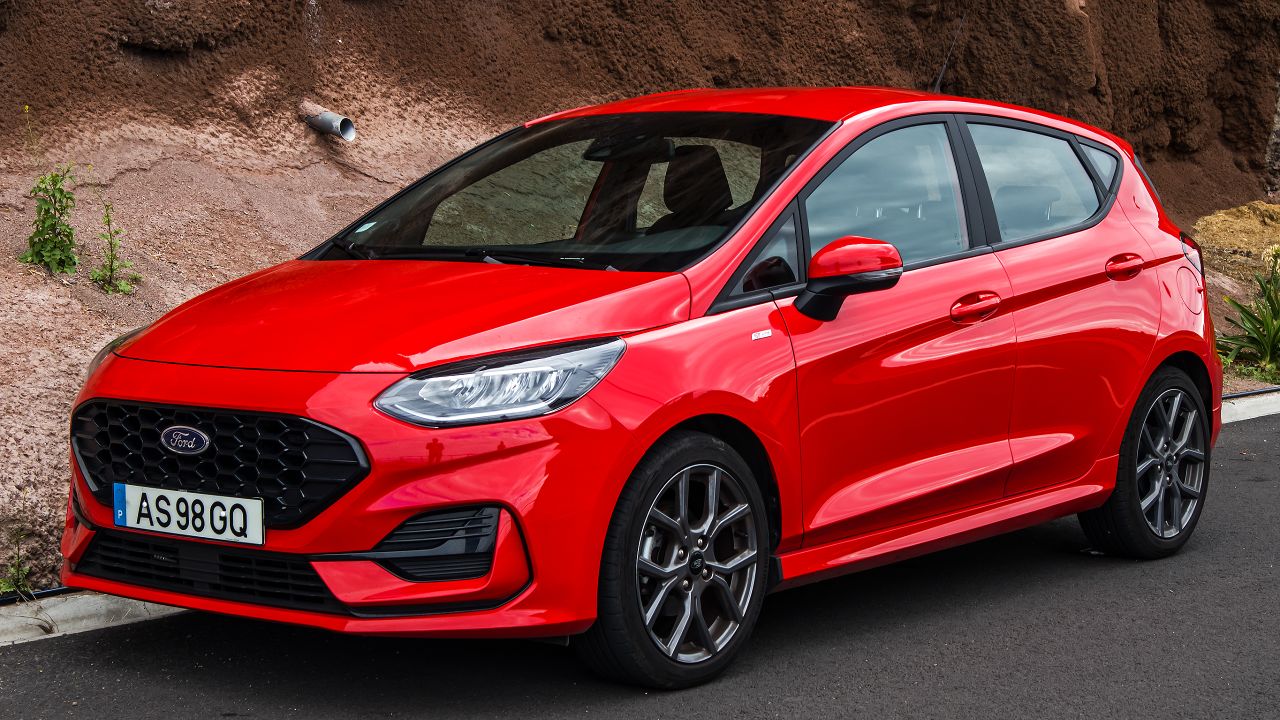
Ford is turning to a familiar European ally to revive one of its most storied badges, using a French-built electric platform as the springboard for a new generation of compact cars that could carry the Fiesta name into the battery era. The move signals a decisive shift in how the company plans to compete in Europe’s cutthroat small-car market, trading in-house hardware for a shared architecture that promises lower costs and faster development.
By aligning its next wave of affordable EVs with a partner that already has a mature small-car platform on the road, Ford is effectively betting that brand, design and driving character will matter more to buyers than who engineered the skateboard underneath. It is a pragmatic, almost ruthless calculation that reflects how much the economics of compact cars have changed since the original Fiesta helped define the segment.
Ford’s European reset and the Renault alliance
Ford has been reshaping its European business around higher-margin vehicles and electric models, a strategy that left a conspicuous gap where its traditional small hatchbacks once sat. To fill that space without shouldering the full cost of a clean-sheet EV platform, the company has entered a strategic partnership with Renault Group that it describes as the first step in the next phase of its regional plan. According to Ford, the agreement with Renault Group is designed to accelerate its European transformation by sharing development work and manufacturing capacity rather than duplicating what its partner already does well.
At the heart of the deal is Renault’s dedicated EV unit, Ampere, whose platform will underpin two Ford-branded electric cars aimed squarely at the affordable end of the market. Reporting on the arrangement notes that Ford will use the Ampere platform for a pair of compact EVs scheduled to reach European showrooms in 2028, a timeline that gives both sides room to tailor the hardware to Ford’s needs while still moving faster than a ground-up internal program could. Ford itself has framed the partnership with Renault Group as a way to speed up its European strategy, with the Ampere architecture providing the technical foundation for that push.
Why a French EV platform is Ford’s ticket back into small cars
For Ford, the appeal of Renault’s Ampere platform is straightforward: it is already engineered for the kind of small, relatively low-cost EVs that European buyers expect, and it is backed by a company that has spent years refining compact electric cars. By tapping Ampere, Ford can sidestep the most expensive and time-consuming parts of EV development, such as battery integration and crash structures, and instead focus on tuning, design and software that give its cars a distinct personality. The plan is to deliver Ford-branded models that feel like Fords to drive and live with, even if the underlying hardware traces back to a French blueprint.
The reporting on the partnership makes clear that Ford will lean on Ampere for two specific models that are meant to be “cheap EVs” in European terms, filling a gap in its lineup that opened as older small cars left production. Those vehicles, built on the Ampere platform and arriving around 2028, are positioned as the volume anchors of Ford’s electric range in Europe rather than niche halo products. By aligning with Renault and its Ampere unit, Ford is effectively outsourcing part of its small-car engineering to a specialist, a move it has publicly framed as a way to accelerate its European strategy and bring affordable EVs to market more quickly.
The Fiesta-shaped hole in Ford’s European lineup
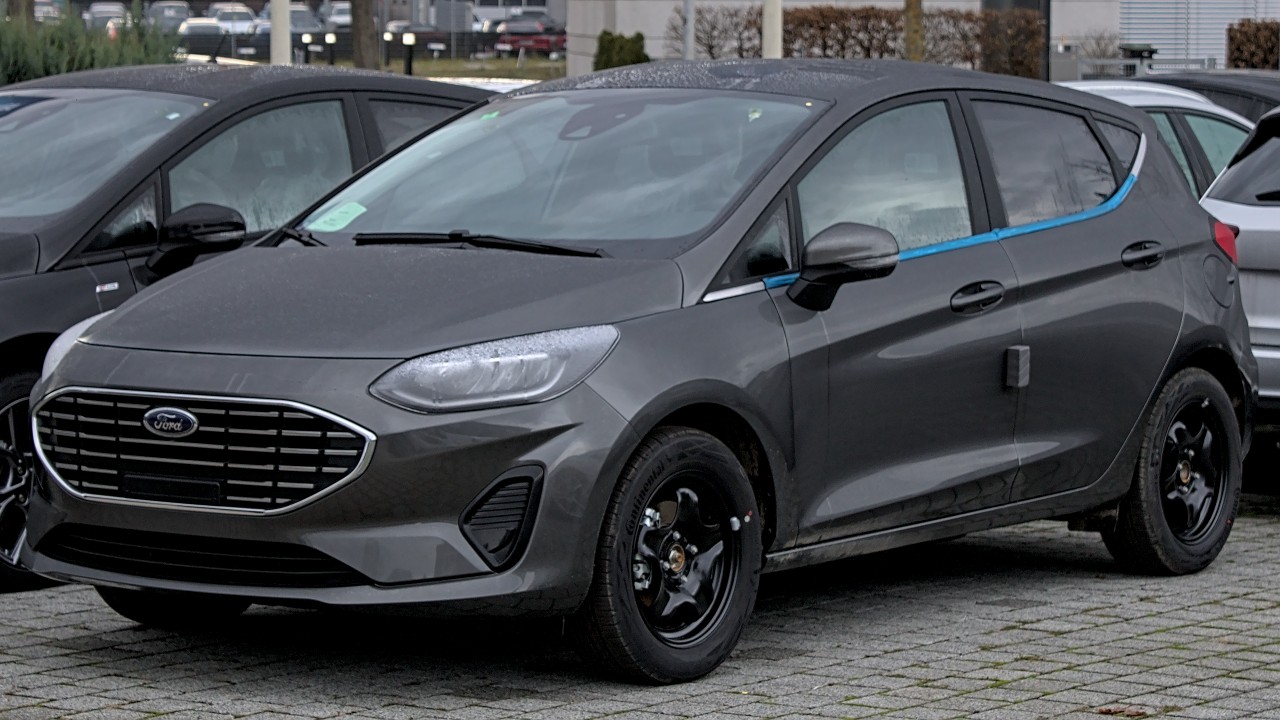
The decision to lean on a partner for compact EVs only makes sense when viewed against the backdrop of what Ford has lost. The Fiesta, once a fixture of European streets and a gateway into the brand, ended production in the summer of 2023, leaving Ford without a traditional small hatchback at the very moment when urban buyers were grappling with rising costs and tightening emissions rules. As one detailed review of the final-generation car put it, the end of Fiesta production marked “the end of an era,” a phrase that captured both the model’s long run and the uncertainty about what would replace it.
That review, looking back at the Fiesta’s history as production wound down, underscored how central the car had been to Ford’s European identity, from early generations that defined the supermini template to the later models that blended sharp handling with everyday usability. With production scheduled to end in summer 2023, Ford effectively walked away from a segment it had helped create, leaving a Fiesta-shaped hole in its lineup and in the minds of buyers who had grown up with the badge. The new partnership with Renault Group, and the decision to base two future small EVs on the Ampere platform, is Ford’s clearest signal yet that it intends to reoccupy that space, even if the next chapter looks very different under the skin.
How a reborn Fiesta could fit on Renault’s Ampere platform
If Ford chooses to revive the Fiesta name on one of its Ampere-based EVs, the logic is compelling. The platform is designed for compact, city-friendly cars, exactly the territory the Fiesta once dominated, and it supports the kind of efficient packaging that electric superminis need to remain practical and affordable. By pairing that hardware with a familiar badge, Ford could bridge the gap between nostalgia and new technology, reassuring long-time customers that the spirit of the Fiesta lives on even as the drivetrain and architecture change completely.
The reporting on Ford’s use of the Ampere platform for two Ford-branded EVs, scheduled to arrive in showrooms by 2028, suggests that at least one of those models will target the mass-market small-car segment where the Fiesta used to sit. Ford’s own description of its partnership with Renault Group as a first step in accelerating its European strategy hints at a broader plan to rebuild its compact lineup around shared EV platforms. In that context, attaching the Fiesta name to an Ampere-based hatchback would give Ford an instant brand anchor for its affordable EV push, while the second model on the same platform could explore a slightly different body style, such as a small crossover, without diluting the core Fiesta identity.
What this partnership signals about the future of European small cars
Ford’s decision to entrust its next generation of compact EVs to a French platform is more than a one-off cost-saving exercise, it is a sign of how the economics of small cars are forcing traditional rivals into pragmatic alliances. Developing a bespoke electric architecture for a low-margin supermini is hard to justify when battery costs remain high and regulatory pressure is intense, so sharing a platform with Renault Group through its Ampere unit becomes a rational way to keep affordable cars in the portfolio. For buyers, the result is likely to be a new wave of small EVs that share unseen components while competing fiercely on design, driving feel and brand story.
The specifics of the Ford and Renault arrangement, with Ford using the Ampere platform for two Ford-branded EVs due in 2028 and describing the partnership with Renault Group as the first step in its next European phase, show how quickly the old boundaries between manufacturers are eroding. If a future Fiesta does return as an EV built on French hardware, it will embody this new reality, where the badge on the grille matters more than the passport of the platform underneath. What remains unverified based on available sources is whether Ford has formally committed to using the Fiesta name on any of these upcoming models, but the combination of a clear gap in its lineup and a ready-made compact EV platform suggests that the stage is set for one of the industry’s most recognizable small-car names to make an electric comeback.