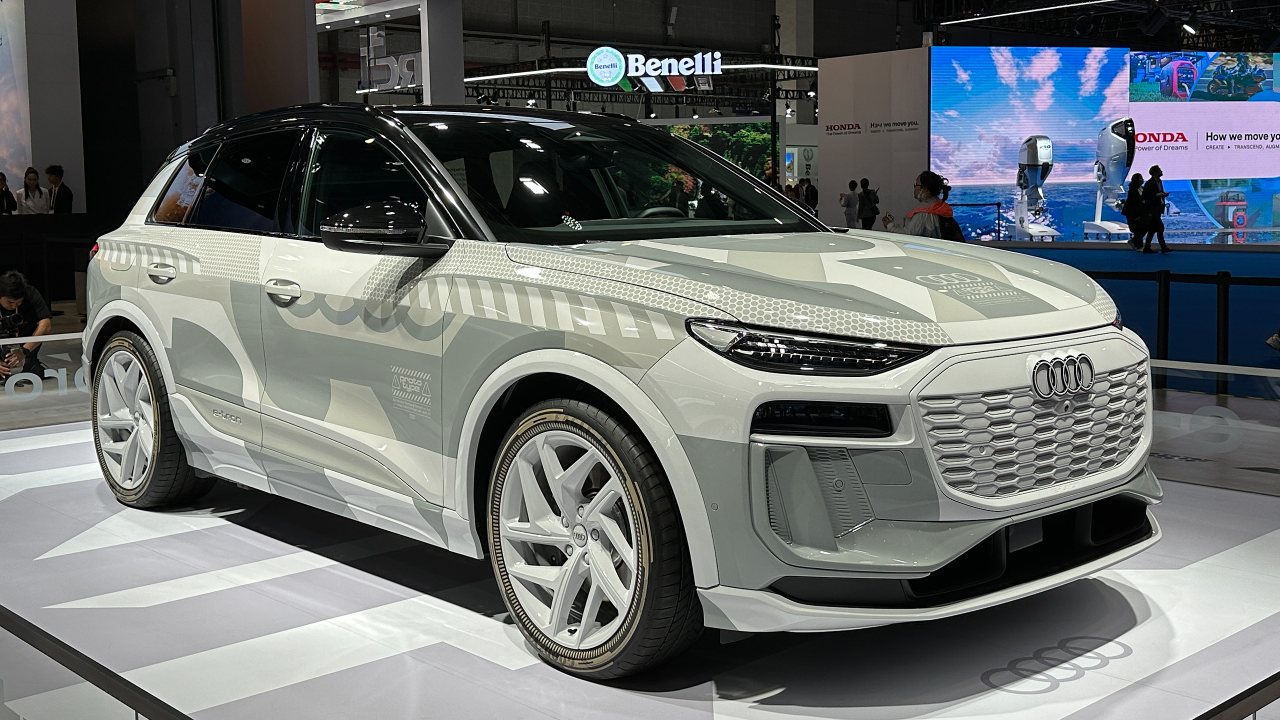
Germany has become the epicenter of Audi’s electric pivot, with battery models surging at a pace that would have seemed implausible only a few years ago. The brand’s electric deliveries to German customers have jumped by an eye‑catching 89 percent, turning a once cautious market into a proving ground for Audi’s most ambitious technology. I see this as more than a sales spike, it is a stress test of whether a legacy premium manufacturer can scale electric mobility fast enough to keep pace with policy, rivals, and its own promises.
Behind the headline figure sits a complex mix of new platforms, targeted incentives, and intensifying competition that is reshaping how Germans think about premium cars. Audi’s global numbers still show strain, but inside its home market the company has found a rare alignment of product, price support, and consumer appetite that is now radiating across Europe and beyond.
The 89 percent surge and what it really signals
When I look past the marketing gloss, the most striking element of Audi’s German performance is how concentrated the growth is in a handful of new electric models. The company’s latest generation of vehicles on the Premium Platform Electric, often shortened to PPE, has turned into a volume engine rather than a niche experiment. The Audi Q6 e‑tron alone accounted for 84,000 deliveries, a figure that would have been ambitious for an entire electric lineup only a product cycle ago, and it is this model family that anchors the reported 89 percent jump in German electric sales.
That surge matters because it arrives in a year when Audi’s broader global picture is far more mixed. Audi Car Sa data show that, despite Solid performances in Europe and Germany, overall worldwide sales slipped, underscoring how dependent the brand has become on a few strong regions to offset weakness in its most important market. In that context, Germany’s appetite for PPE‑based models is not just a local success story, it is a lifeline that helps stabilize a portfolio still dominated by combustion and plug‑in hybrids.
Germany as Audi’s electric anchor in a challenging global year
Globally, Audi delivered 1.6 m vehicles in 2025, a respectable total that nonetheless reflects a challenging environment for premium brands. Within that figure, pure electric vehicles were the clear bright spot, with EV deliveries increasing approximately 40 percent to around 113,000 units. From my perspective, the key is that a disproportionate share of those electric gains is tied to German customers, who have embraced the new models even as other regions move more cautiously.
Additional reporting on Audi’s performance shows that Sales in Europe, excluding Germany, held steady at around 464,000 vehicles, with EV deliveries in those markets up 40%. That stability contrasts with the stronger momentum at home, where German sales increased and where the Audi Q6 e‑tron and other PPE models are with German customers in far greater numbers. I read this as evidence that Germany has become Audi’s electric anchor, providing both scale and feedback for technologies that will later be exported to Europe and overseas and emerging markets once supply chains and consumer confidence catch up.
Policy tailwinds: subsidies, incentives, and a changing buyer profile
No manufacturer, however strong its brand, can generate an 89 percent electric growth rate in Germany without help from policy. The federal government has leaned back into incentives, launching a 2025/2026 program that applies retroactively from January 1, 2025 and is designed to support cleaner vehicles in both private and corporate fleets. Private individuals benefit directly from purchase support, while company car rules have been adjusted so that electric models account for a growing share of corporate car registrations, a segment that has long been critical for premium brands like Audi.
On top of that framework, Germany is preparing a new €3 billion subsidy package that targets 800,000 vehicles and focuses explicitly on low and middle income households. The initiative will allow these families to buy electric vehicles with state support of up to €6,000 per car, a level of assistance that can materially change the monthly cost calculation for a compact or midsize Audi EV. I expect that as this program rolls out, it will broaden the buyer base beyond traditional premium customers, pulling more first time EV owners into the brand’s orbit and reinforcing the domestic momentum that Audi’s current lineup has already created.
Rivals at the gate: Chinese brands and the pressure to move faster
Germany’s electric rebound is not happening in a vacuum, it is unfolding while Chinese manufacturers intensify their push into the same market segments Audi depends on. At the Munich auto show, BYD and other Chinese brands showcased a wave of competitively priced electric models that are now making inroads in Germany. Reporting from that event highlighted how these companies are leveraging scale and, according to European officials, potential unfair subsidies to undercut established players on price while matching or exceeding them on range and in‑car technology.
For Audi, this competitive backdrop turns the 89 percent surge into both an achievement and a warning. Strong domestic demand for the Q6 e‑tron and its PPE siblings buys the company time, but it does not insulate it from rivals that are willing to accept thinner margins to gain share. I see the current German boom as a window in which Audi must accelerate cost reductions, localize more of its electric supply chain, and refine its software experience, because the same customers who are now flocking to its EVs are also being courted aggressively by BYD and other Chinese brands that view Germany as a strategic beachhead.
What Audi’s German momentum means for the next phase of electrification
When I step back from the quarterly numbers, the broader pattern is clear. Audi has used Germany as a launchpad for a new generation of electric products, and German buyers have responded with a level of enthusiasm that has turned a domestic rollout into a pillar of the company’s global strategy. The combination of PPE technology, models like the Audi Q6 e‑tron, and a supportive policy environment has produced record deliveries for electric vehicles inside a brand that still sells far more combustion cars worldwide.
The question now is whether Audi can translate this home market momentum into sustainable global growth. With EV deliveries already up 40 percent to 113,000 units and Germany providing a disproportionate share of that volume, the company has proof that its electric formula can work at scale. Yet the presence of aggressive competitors such as BYD, the plateauing of Sales in parts of Europe, and the lingering drag from its most important market all suggest that the German boom is a starting point rather than a destination. If Audi can use this period to refine its products, align with evolving subsidies, and keep German customers loyal as new entrants flood the market, the current fever for its electric models may mark the moment when a legacy premium brand finally found its footing in the battery age.
More from Fast Lane Only