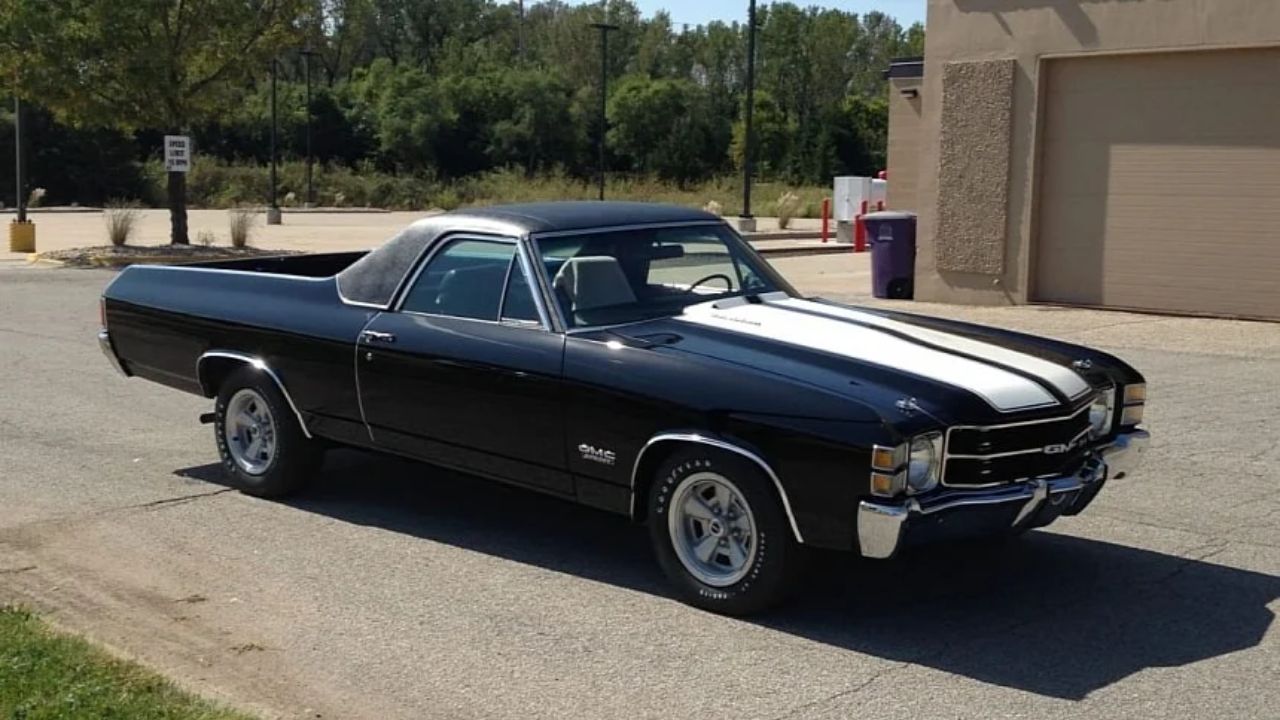
GMC built its reputation on workhorses, yet in the early 1970s the truck brand quietly fielded a machine that could run with Detroit’s muscle elite. The GMC Sprint SP, particularly the Sprint SP454, combined coupe-utility practicality with big-block power but later faded from corporate memory, leaving even dedicated enthusiasts to overlook it. Its story reveals how a serious performance effort emerged almost by accident, only to vanish as if the brand had never joined the muscle car fight at all.
Reconstructing that story shows how product planning, dealership politics, and bad timing can bury a capable car more effectively than any mechanical flaw. The Sprint line arrived just as the American muscle era was running out of road, and GMC’s own marketing treated it as a parts-hauling oddity rather than a halo model. Half a century later, the Sprint SP454 survives mostly in scattered archives and enthusiast circles, a forgotten muscle car that hints at a very different path GMC might have taken.
The coupe-utility that put GMC in the muscle conversation
GMC joined the performance discussion with the Sprint, a coupe utility that mirrored Chevrolet’s El Camino but wore truck-brand badges and a slightly different attitude. Essentially a car-based pickup, the Sprint let buyers enjoy passenger-car comfort while tossing lumber or tools into the open bed. Contemporary descriptions of the 1971 GMC Sprint emphasize that it was a coupe utility vehicle, essentially a car with a pickup truck bed, positioned as a practical alternative to a conventional two-door coupe or a full-size pickup.
Where the Sprint became interesting for muscle fans was the SP package and the big-block options that came with it. Reporting on the 1971 Sprint SP454 describes how the model effectively placed serious power into a body that still appeared suited for everyday utility. Under the skin, the Sprint shared its basic structure and mechanical layout with the Chevrolet El Camino, which meant access to the same suspension hardware and drivetrain combinations that had already proven themselves on drag strips and back roads.
Big-block power and genuine muscle credentials
The Sprint SP and Sprint SP454 earned their performance reputation through the same engines that made Chevrolet’s intermediates so feared. Coverage notes that this family of vehicles shared engines with the El Camino, including 402 and 454 cubic-inch big-blocks, and that expanded V8 options made the 454 available for these car-truck hybrids. In the Sprint SP454, that meant a burly big-block under the hood, backed by the same heavy-duty transmissions and rear axles used in more famous Chevrolet muscle cars, so the GMC-badged version could deliver comparable straight-line performance.
Period-style testing and later enthusiast analysis describe the Sprint SP454 as fully capable of keeping pace with contemporary muscle machines in a straight-line sprint. One account described the Sprint as a muscle car suited for hardware store trips, emphasizing that its utility bodywork did not compromise its acceleration. The combination of a torquey 454, rear-wheel drive, and relatively light coupe-utility shell meant the Sprint could smoke its rear tires as convincingly as any Chevelle while still swallowing a sheet of plywood.
Why GMC’s muscle experiment vanished from view
Despite those credentials, the Sprint SP454 never became a household name, and several structural choices inside General Motors help explain why. One analysis argues that GMC entered the muscle car segment inadvertently, creating the Sprint primarily to give dealers a counterpart to the El Camino rather than to launch a dedicated performance flagship. Another report notes that the Sprint SP454 was marketed through GMC truck dealerships rather than alongside Chevrolet performance models, positioning it as a performance-oriented utility vehicle instead of a pure street racer. That decision limited its exposure to the youth buyers who shopped Chevelle SS and Camaro showrooms.
Timing also worked against the Sprint. Analysis of why the GMC Sprint arrived at the worst time notes that while the popular El Camino had already established the coupe-utility formula, the broader muscle market was entering a period of insurance crackdowns, rising fuel concerns, and tightening emissions rules. The Sprint’s most potent versions appeared just as regulators and insurers were making high-compression big-blocks expensive to own and difficult to justify. As a result, the Sprint SP454 never built a long production run or a deep racing résumé, and its presence in period advertising remained muted compared with Chevrolet’s more aggressively promoted nameplates.
The forgotten legacy and what it says about GMC
Today, the Sprint SP454 survives less as a mainstream classic and more as a cult curiosity that hints at an alternate identity for GMC. Modern retrospectives describe the Sprint SP as one of the most intriguing entries in the lineup because it contradicted GMC’s work-truck stereotype. Another analysis notes that although the Sprint SP gradually disappeared from mainstream discussion, it demonstrated that GMC could package American-style performance in a vehicle other than a traditional pickup or SUV. In that sense, the Sprint foreshadowed later performance trucks and crossovers that blended speed with practicality.
More from Fast Lane Only