The secret final 455 Firebird represents a last, deliberate effort to keep the muscle era alive, balancing corporate caution with engineering ambition. Long after most rivals had surrendered to emissions regulations and insurance pressures, Pontiac kept one final big-block Firebird hidden, combining race-derived hardware with internal secrecy. Its story shows how a handful of determined insiders stretched the 455 legacy further than the public ever officially saw.
To understand that hidden car, you have to go back to the Super Duty program and to the way Pontiac treated displacement as a statement of identity rather than a mere specification. The 455 badge on a Firebird’s shaker scoop had always signaled something larger than cubic inches, and in the final years it became a symbol of resistance to detuned conformity. The discreet development of the final 455 Firebird illustrates Pontiac’s effort to preserve its performance identity even as the muscle era waned.
The 455 Firebird’s late-era context
By the early 1970s, the muscle car script was being rewritten under pressure from regulators, insurers, and fuel crises, and 1973 marked what one detailed video calls the beginning of the end of the glory days as horsepower ratings and compression ratios slid downward. In this climate, the Environmental Protection Agency loomed large over every performance program, and enthusiasts watched as formerly fierce engines were softened until they felt, in the words of one later analysis, like soggy bread. Against that backdrop, Pontiac’s insistence on keeping a 455 in the Firebird range looked almost confrontational, a refusal to follow the quiet path chosen by many competitors who simply walked away from big-inch performance.
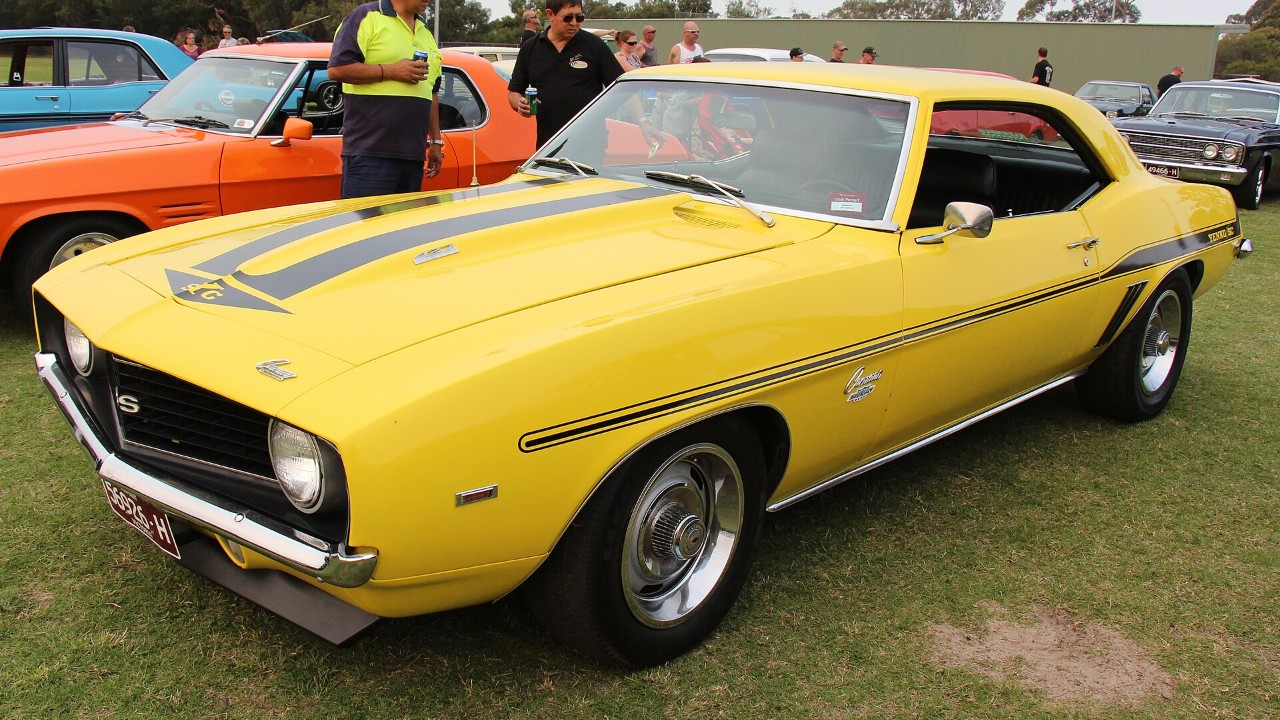
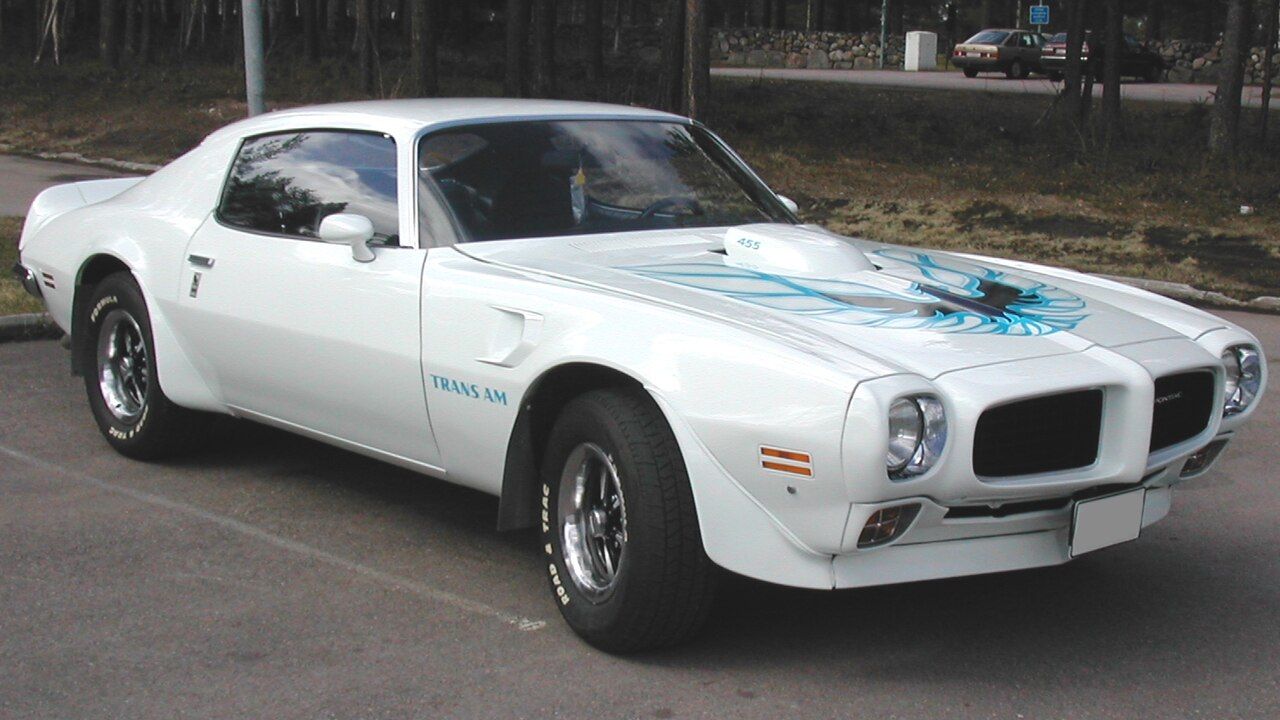
The division’s own branding reflected that tension. According to factory history, Pontiac removed the H.O. designation from its base big-block and simply decaled the now non-functioning shaker scoop with the figure 455, a visual promise that no longer matched the underlying specification. Even so, Pontiac kept offering the genuine Super Duty option in limited numbers, a contrast that made the badge itself a kind of code understood only by those who knew which cars carried real hardware. That split between appearance and substance set the stage for a final, largely hidden 455 Firebird that would carry the authentic spirit forward while the catalog versions grew tamer.
Super Duty origins and the race-bred 455
The key to the secret final car lies in the Super Duty program that had been brewing inside Pontiac’s engineering offices since the late 1960s. Reporting on the 1973 Super Duty 455 Trans Am and Formula Firebird notes that Adams and his team had developed 303 and 366 cubic-inch engines for racing, then adapted that experience into a street-capable 455. The Super Duty 455 option was the over-the-top expression of that work, with heavy-duty internals, revised oiling, and cylinder heads that owed more to pit lanes than to commuter traffic, a package that made clear these guys were very serious about keeping real performance alive even as the market shifted.
Later technical analysis reinforces that view, describing how the SD package took the familiar big-block displacement and reimagined it as a durable, high-output unit that could survive both emissions tests and high-rpm abuse. One dyno test described the 455 Super Duty as the culmination of the Ram Air programs, integrating Pontiac’s internal combustion expertise, with period road tests praising its broad torque and sophistication. Seen in that light, the secret final 455 Firebird was not an isolated oddity but the last chapter in a long-running engineering project that treated displacement, from 303 to 366 to 455, as a flexible platform for racing-derived innovation rather than a static number.
Production rarity and the shadow fleet
Even in its official form, the Super Duty Firebird was never a mass-market item, and the production figures underline how selective Pontiac had become. One exhaustive numerical breakdown notes that in the end, only a comparative handful of SD-455 cars were built, precisely 1,296 of them, a volume more in line with homologation specials than with mainstream pony cars. Another marketplace summary points out that the SD 455-equipped Firebirds were offered for just two model years, a brief window that turned surviving examples into some of the most coveted muscle machines of their era, with collectors treating each car as a rolling artifact of resistance to detuning.
That scarcity helps explain why stories of non-public 455 Firebirds carry such weight among enthusiasts. A separate investigation into Pontiac development cars describes a grey primer Trans Am that was never meant for showrooms or magazines, a machine that operated behind the scenes during a critical transition and whose work as a mule shaped the brand’s trajectory. Against this backdrop, reports of a final 455 Firebird kept off the official books illustrate Pontiac’s pattern of quietly developing hardware that exceeded regulatory and corporate limits, allowing only a fraction to reach customers.
Inside Pontiac’s secret final 455 Firebird
The most detailed modern reconstruction of the hidden final car comes from a deep dive into Pontiac’s late Super Duty years, which notes that plenty of engines wear big cubic-inch numbers and still feel like soggy bread, but the SD 455 did not, since Pontiac designed it like a street-legal race engine that could run hard without turning into scrap metal confetti. According to that investigation, the last 455 Firebird Pontiac tried to keep secret used exactly that philosophy, pairing a development version of the Super Duty hardware with understated bodywork that avoided the loudest graphics. Built as an internal test vehicle rather than a showroom model, it allowed engineers to test the limits of the 455 under tightening emissions rules without immediate regulatory or corporate pushback.
More from Fast Lane Only