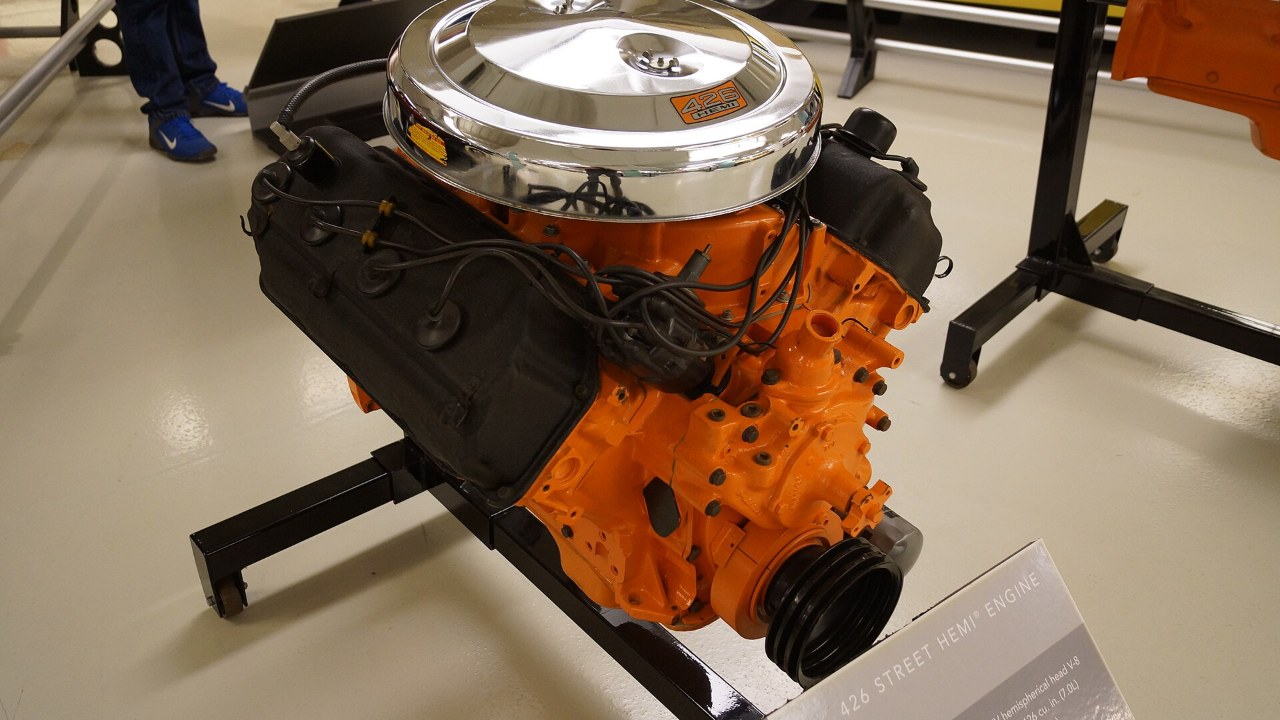
Chrysler’s first Hemi V8 weighed nearly 1,000 pounds and made 180 horsepower in 1951. Seven decades later, a supercharged Hemi made 707 horsepower in a showroom Challenger. The name has stood for big power the whole way, and it all comes from a simple idea: a dome-shaped combustion chamber with big valves set on either side.
That shape lets an engine breathe hard, which is why racers loved it. It also made the heads wide and heavy, and Chrysler dropped the design and revived it more than once. Not every Hemi was a fire-breather, either. Some were modest family-car engines with a famous name.
These 12 are our picks for the Hemi engines we’d put above everything else, including two that came from outside Detroit’s Chrysler plants. The rankings are our opinion. However, the displacements, outputs and dates behind them come from engine histories and published specifications.
1. 1951 Chrysler FirePower 331 Hemi V8
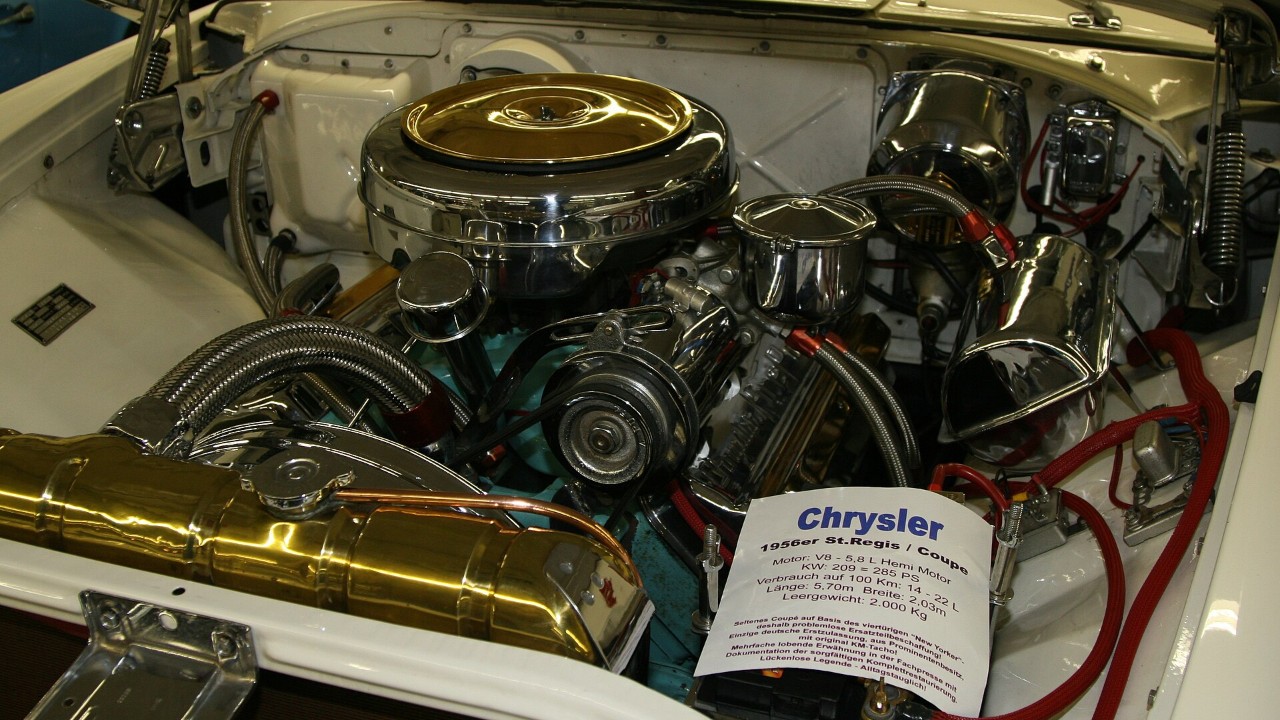
Chrysler’s FirePower displaced 331.1 cubic inches and arrived in the 1951 Chrysler New Yorker, Saratoga and Imperial. In most of those cars it made 180 horsepower. That was a big number for a passenger car of the early 1950s, and it came from heads that let air flow straight through the dome-shaped chambers.
According to EngineLabs, the 331 used a forged-steel crankshaft and big valves, 1.81 inches on the intake side. It was also heavy, partly because early blocks had the bellhousing flange cast in. Chrysler then showed how far the design could stretch. For 1955, the Chrysler C-300 ran a 331 with two Carter four-barrel carburetors rated at 300 horsepower.
Our take: this is the engine that started everything on the list, so it earns the first spot. It was overbuilt for a luxury car, and in our view that strength is why hot rodders came to prize the early Hemis. If you find a 1951 Chrysler with its original FirePower intact, you’re looking at the first chapter of the Hemi story.
2. 1952 DeSoto FireDome 276 Hemi V8
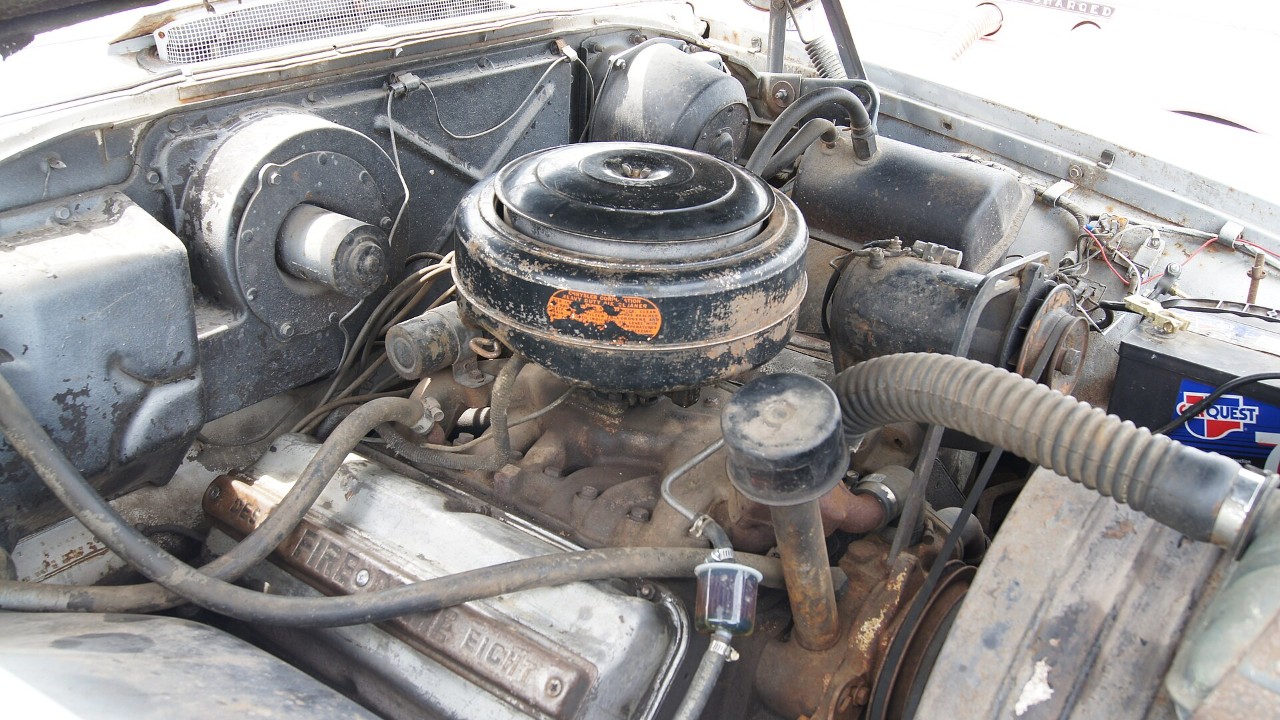
DeSoto got its own Hemi for 1952. The FireDome V8 displaced 276.1 cubic inches, with a 3.625-inch bore and a 3.344-inch stroke. It made 160 horsepower. That was less than the Chrysler version. Even so, it gave DeSoto buyers the same advanced head design in a smaller, lighter package.
The FireDome had a short career. About 50,000 vehicles used it before DeSoto replaced it in 1954. In our view, that short run is part of why so few people talk about it now. Meanwhile, the Chrysler version kept growing in size and power.
In our view, the FireDome 276 is the forgotten member of the early Hemi family. It rarely appears in hot rod stories, yet it delivered the same breathing advantage to mid-priced buyers. That makes it a more interesting engine than its size suggests. If you’re restoring a 1952 or 1953 DeSoto, keeping the original FireDome is worth the effort. After all, an original engine is what makes a DeSoto Hemi car special in the first place.
3. 1953 Dodge Red Ram 241 Hemi V8
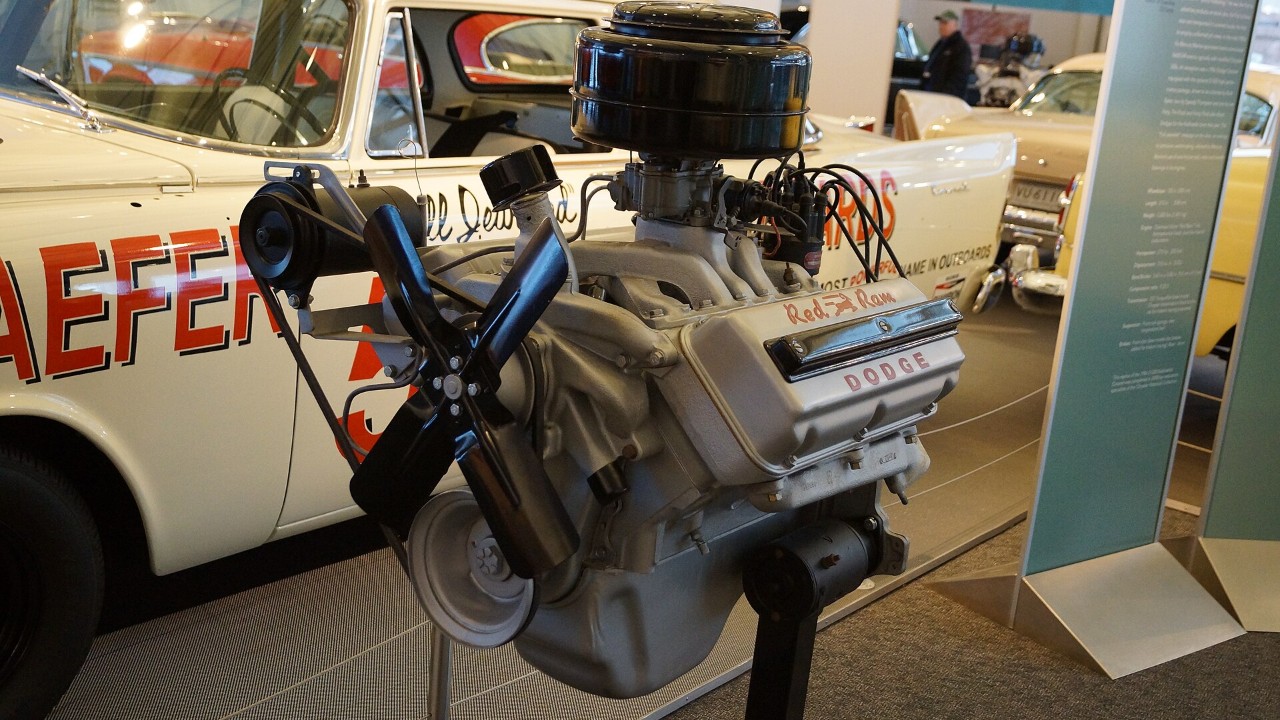
Dodge introduced its Hemi as the Red Ram for 1953. At 241.3 cubic inches, it was the smallest of the early Hemis. It made 140 horsepower on 7.0:1 compression. For 1954, senior Dodges got 150 horsepower from a 7.5:1 version, and the 270 replaced the 241 for 1955.
EngineLabs notes that Hemi power was a sales success almost immediately. The small Dodge engine played a part in that. Suddenly, a modest family Dodge offered the same basic head design as the Chrysler New Yorker.
Our take: the Red Ram is a reminder that the Hemi was never only about huge cubic inches. Instead, it was a breathing advantage, and Dodge used it to make an ordinary car feel special. For that reason alone, we’d rank it high. In fact, the Red Ram shows the design worked at any size. Buyer advice: if you want a Red Ram car, look for a 1953 or 1954 Dodge with matching engine paperwork, because the original engine is the whole point.
4. 1957 Chrysler 392 FirePower Hemi V8
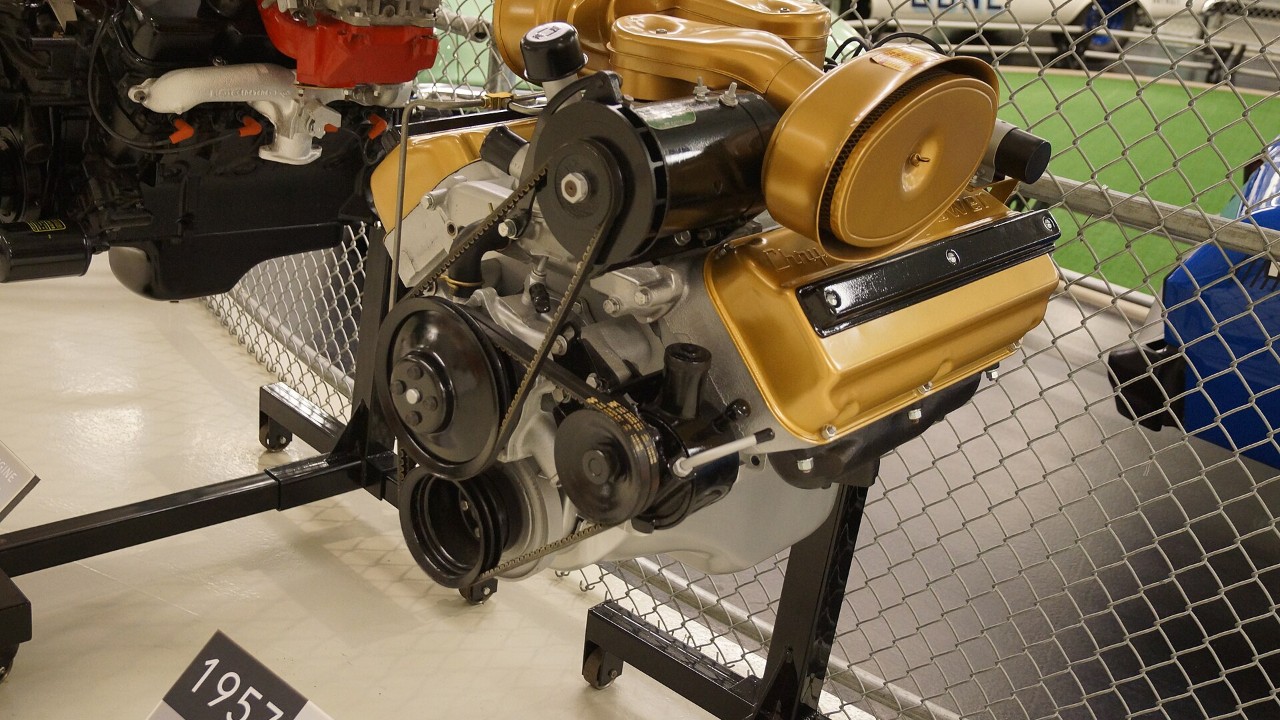
The 392 was the biggest of the early Hemis, at 392.67 cubic inches. It had a 4.00-inch bore and a 3.906-inch stroke. In the 1957 and 1958 Chrysler 300C and 300D, it ran two four-barrel carburetors and made 375 horsepower. With a single four-barrel, the 1958 version produced 325 or 345 horsepower.
Chrysler even tried fuel injection. The 1958 300D could carry Bendix “Electrojector” injection rated at 390 horsepower. But the system was a failure in service. Of 16 cars built with it, 15 went back to the factory for carburetors. Meanwhile, EngineLabs says the 392 became a drag racing and hot rodding favorite for years.
In our view, the 392 is the best-looking Hemi of the 1950s, and it was the last of the first generation, with its wide valve covers, and the strongest of its generation. It also gave the modern 6.4-liter Hemi its nickname decades later. If you’re shopping for a 300C, budget for a correct dual-quad setup, since that’s the 375-horsepower combination.
5. 1964 Chrysler 426 Race Hemi
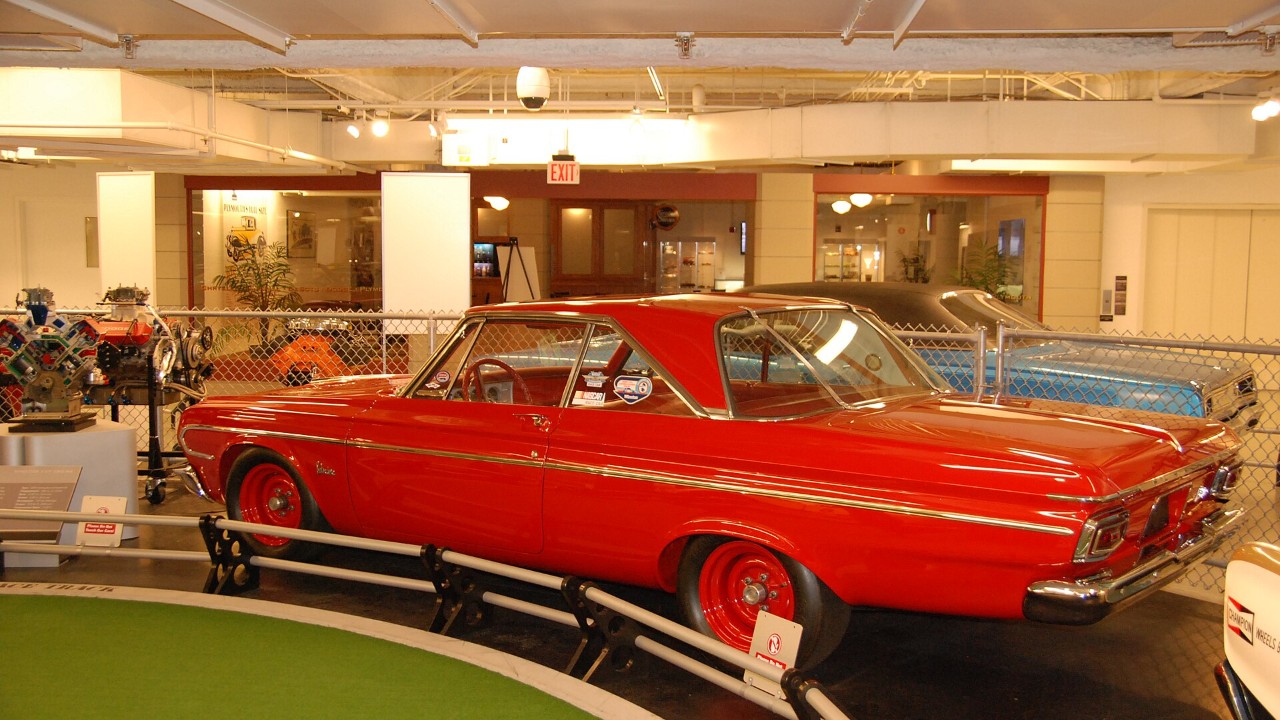
Chrysler began designing the 426 race Hemi in January 1963. The first engine ran on December 6, 1963, about two months before the Daytona 500. Then, at the 1964 Daytona 500, the engine’s first big race, Hemi cars took the top three places, and Richard Petty won by more than a lap in a Plymouth Belvedere.
That kind of win drew a quick reaction. Ford complained about the engine’s power and about the fact that nobody could buy one in a showroom. NASCAR answered by keeping the 426 out of its 1965 season until Chrysler offered a street version. Meanwhile, Chrysler built several hundred drag engines by the end of the 1964 model year. EngineLabs says Don Garlits ran 7.78 seconds at 201.34 mph in 1964 with a 426 race Hemi.
Our take: no engine on this list did more to earn the Hemi’s reputation. It won on its debut, it got itself legislated out of a series, and it became the basis for decades of drag racing power. We’d put it at the very top for pure racing impact.
6. 1966 Chrysler 426 Street Hemi
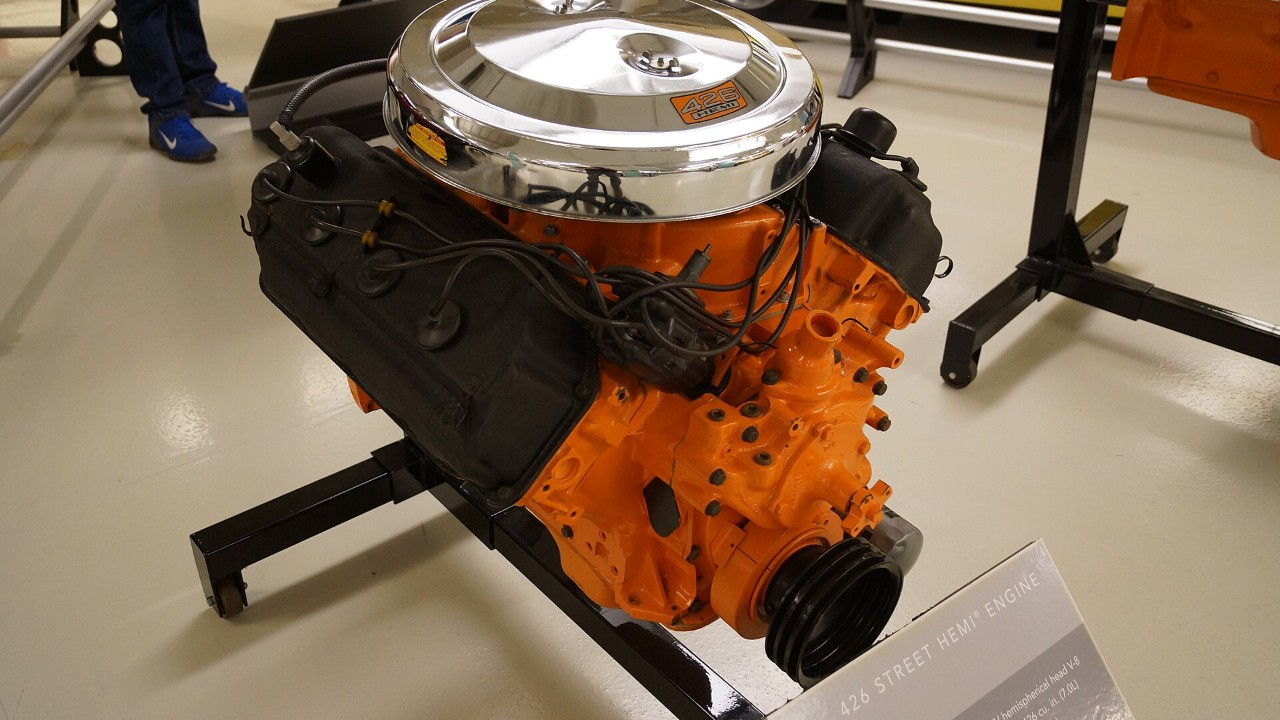
The Street Hemi was Chrysler’s answer to NASCAR’s demand for a production engine. It arrived for 1966 with compression lowered from 12.5:1 to 10.25:1. Two inline four-barrel carburetors sat on a cast-iron intake. Chrysler rated it at 425 horsepower (SAE gross) at 5,000 rpm and 490 lb-ft at 4,000 rpm.
Testing later showed the rating was close to honest, with dyno numbers of 433.5 horsepower and 472 lb-ft. By 1971, Chrysler’s own sales literature listed 350 net horsepower alongside the 425 gross figure. We’ve looked at what killed the 426 Street Hemi option after that in an earlier piece.
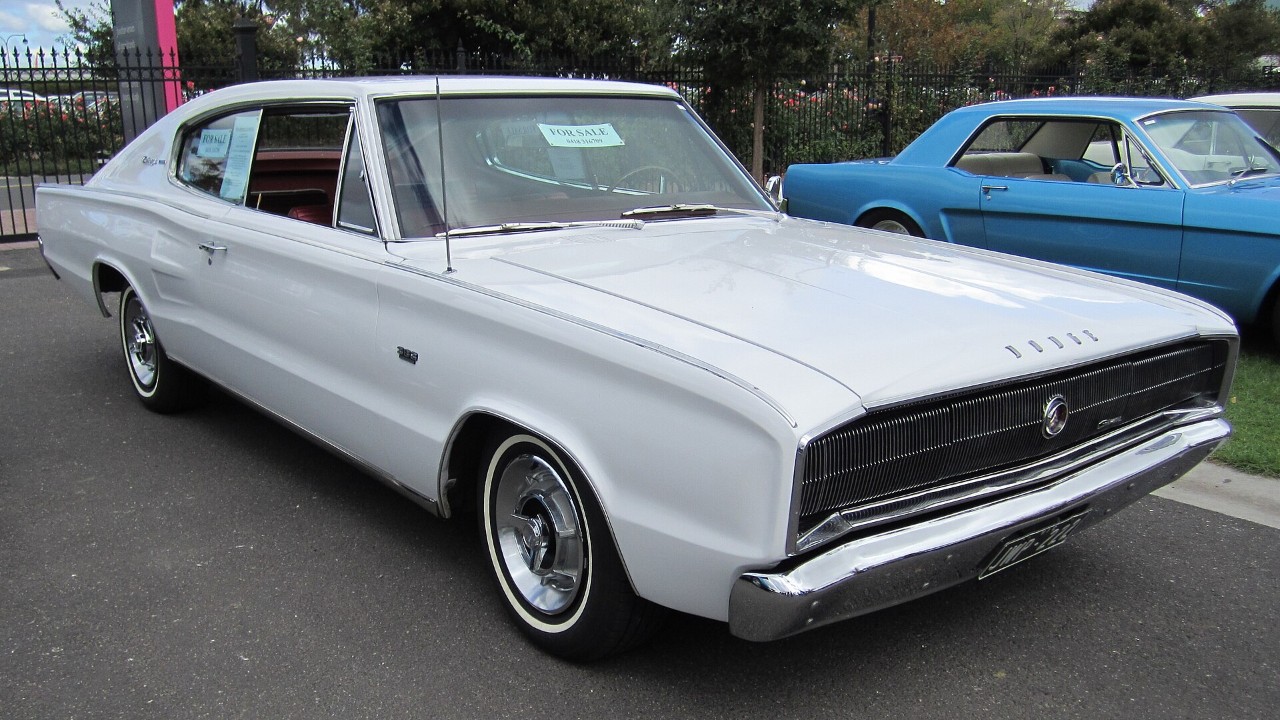
In our view, the Street Hemi is the engine that turned a race part into a street legend. Starting in 1966, it gave the Dodge Charger a top engine option that only 468 buyers took that first year. Buyer advice: on any car sold as a Hemi, pay for an expert inspection and documentation first. A real Street Hemi car is worth far more than a clone, so proof matters more here than anywhere else on this list.
7. 1971 Chrysler Hemi-6 265
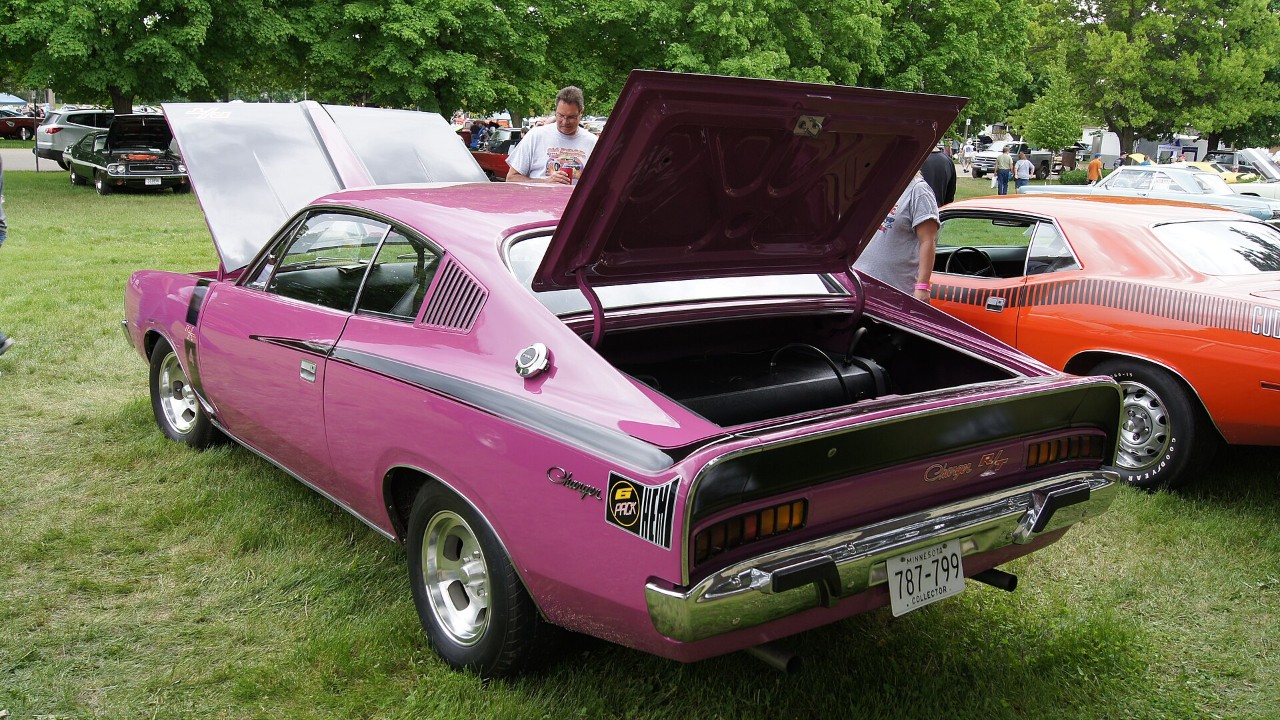
This one comes from Australia. According to Hagerty, the Hemi Six debuted in the 1970 VG Valiant at 245 cubic inches. Chrysler’s American engineers did much of the development work. A 265-cubic-inch version followed in 1971, rated at about 205 horsepower with a one-barrel carburetor.
However, the hot versions were something else. With the E38 Six Pack option and three Weber carburetors, the 265 made 280 horsepower. Then, in 1972, the E49 version reached 302 horsepower and 320 lb-ft on 10:1 compression. Period tests clocked an E49 Charger R/T at 6.1 seconds to 60 mph. Chrysler built only 150 to 200 E49s, all in 1972.
To be fair, Hagerty is honest that the head used valves at an 18-degree angle, so the chambers were only semi-hemispherical. Some argue it isn’t a true Hemi at all. Still, we’d rank it here. A six-cylinder that ran with small-block V8s deserves the name on performance alone. Production ended in 1980 along with Chrysler’s Australian operations.
8. 1964 Ford 427 SOHC Cammer V8
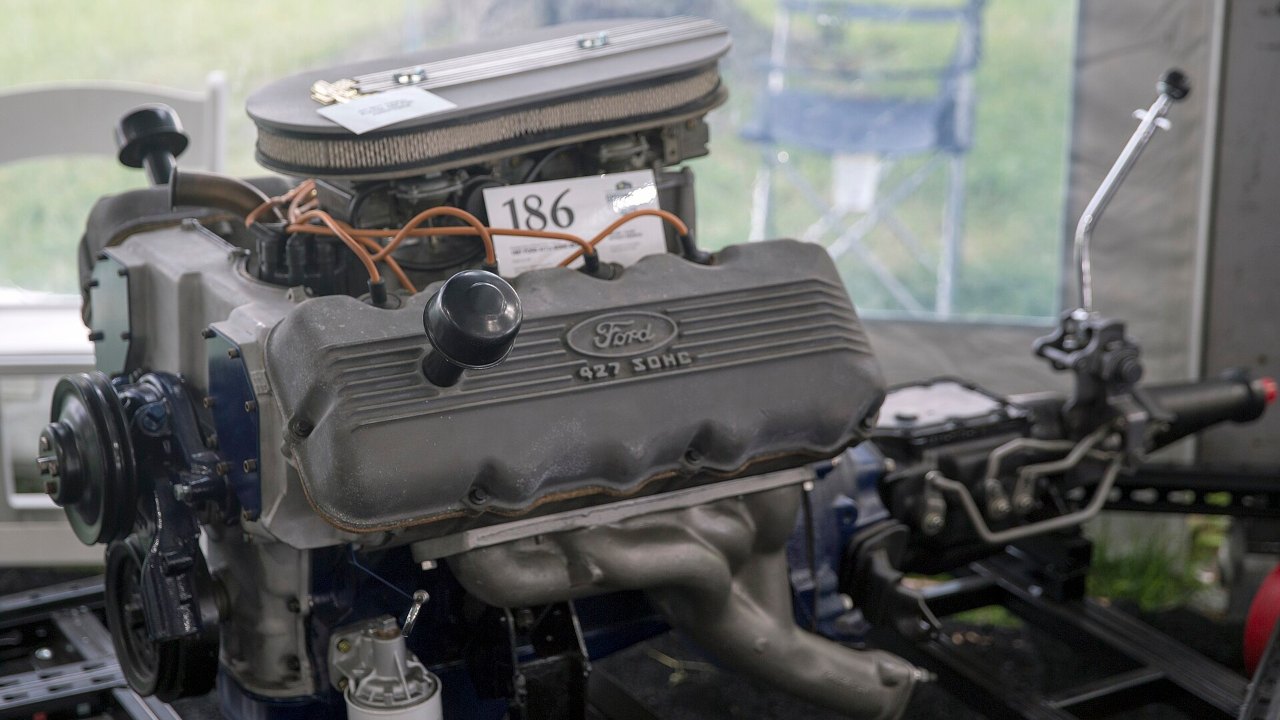
Ford built the 427 SOHC in 1964 to counter Chrysler’s Hemi in NASCAR. Its cast-iron heads had hemispherical combustion chambers, and each head carried a single overhead camshaft. A serpentine timing chain about six feet long drove both cams. That design earned it the nickname “Cammer.”
The outputs were huge. With one four-barrel, the engine made 616 horsepower at 7,000 rpm, and with two four-barrels, 657 horsepower at 7,500 rpm. However, Chrysler protested, and USAC and NASCAR announced bans on December 17, 1965. The Cammer found its home in drag racing instead, powering many altered-wheelbase A/FX Mustangs and a handful of supercharged Top Fuel dragsters.
Even after the ban, Ford sold the engines through the parts counter, listing the dual-carb version at $2,350 as of October 1968. We’ve compared the Ford 427 and Chrysler’s 426 Hemi head to head before. Our take: the Cammer is the best Hemi Ford ever made, even if Ford never called it one. It wins its spot on this list because it scared Chrysler that much.
9. 2003 Chrysler 5.7 Hemi V8
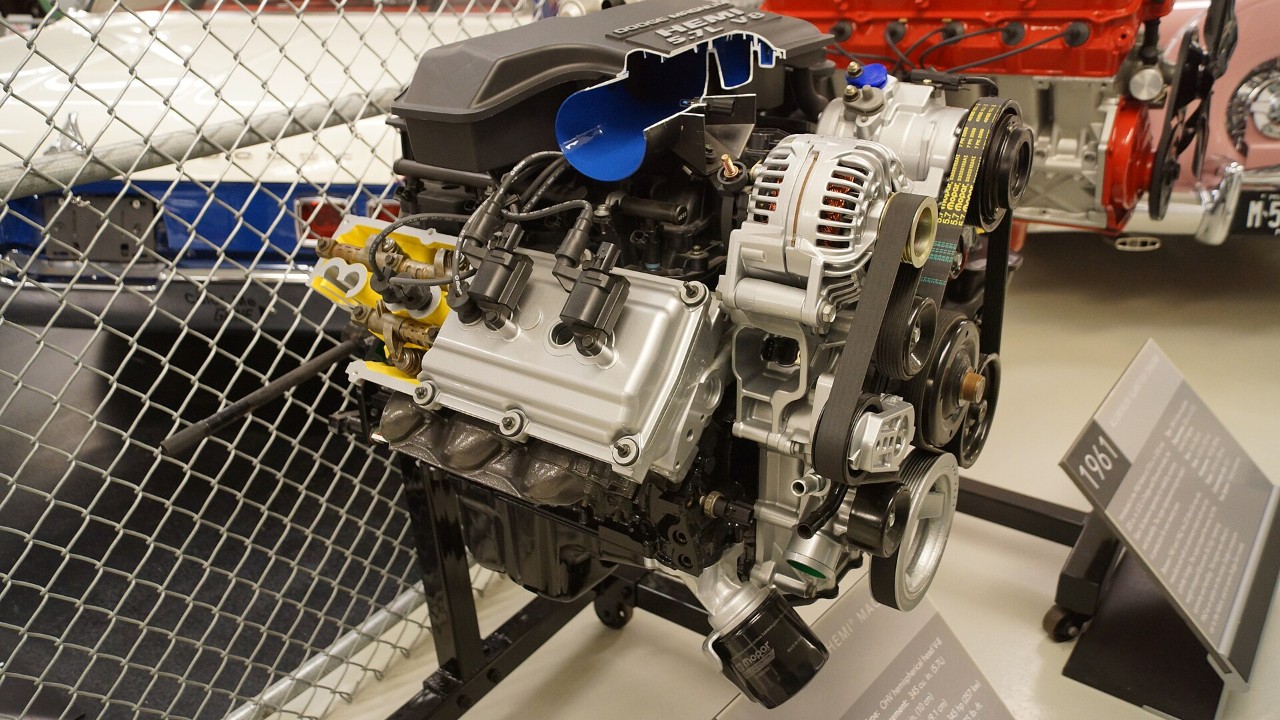
The Hemi name came back for 2003 in the Ram pickup. The new 5.7-liter V8 made 345 horsepower and 375 lb-ft of torque in the truck. Later, in the Chrysler 300C and Dodge Magnum R/T, it made 340 horsepower and 390 lb-ft. Its bore measured 3.917 inches, with a 3.578-inch stroke.
This Hemi also brought a new trick for everyday drivers. Its Multi-Displacement System shuts off two cylinders on each bank under light load to save fuel. Chrysler didn’t use MDS with the six-speed manual or in the Ram Heavy Duty. As a result, a big V8 could live in family sedans and work trucks without the full fuel penalty.
In our view, the 5.7 is the most important Hemi of the modern era, because it made the name a mass-market engine again. Demand stayed strong for years, as we covered when Ram said Hemi demand was outpacing production. Buyer advice: on a used 5.7, a clean service record with regular oil changes is the best sign of a healthy engine.
10. 2005 Chrysler 6.1 SRT Hemi V8
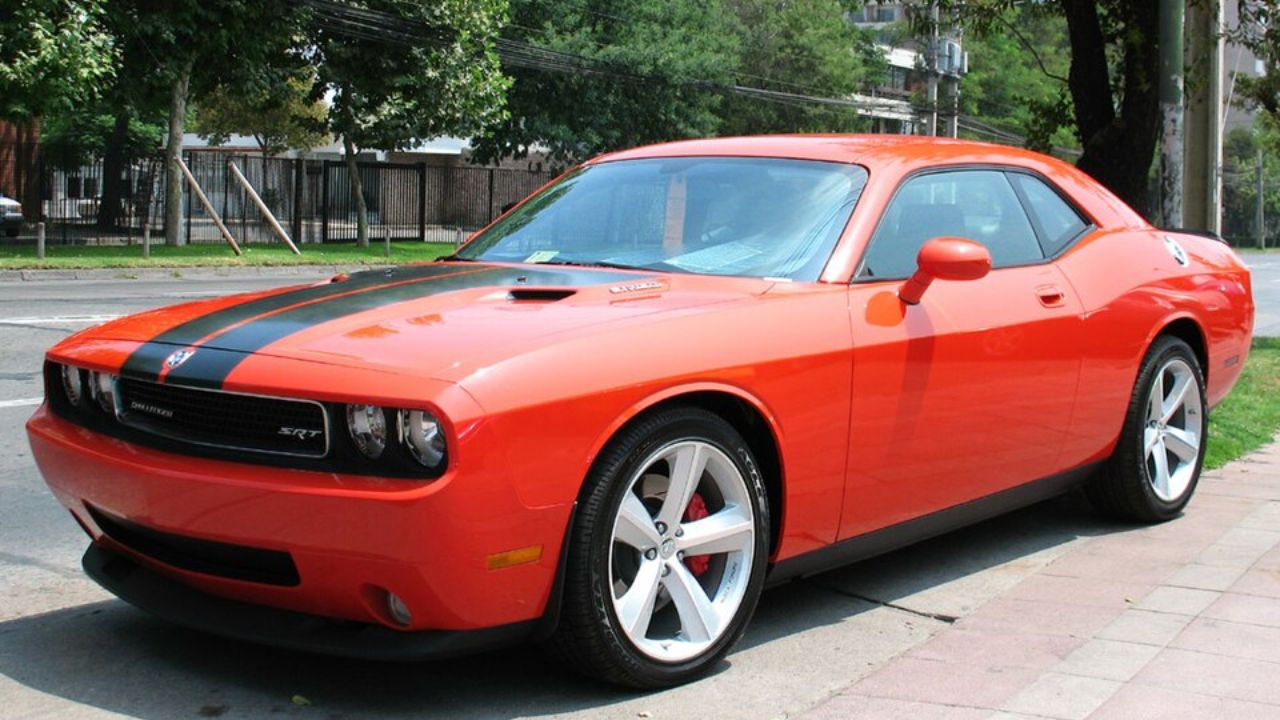
Chrysler developed the 6.1-liter Hemi in 2004 for the 2005 Chrysler 300C SRT8. Displacing 369.7 cubic inches, it made 425 horsepower at 6,200 rpm and 420 lb-ft at 4,800 rpm. That’s the same number Chrysler once quoted, in gross terms, for the 1966 Street Hemi. This time it came from a modern engine sold with a factory warranty.
Chrysler aimed the 6.1 at performance rather than economy, so it left off the cylinder-shutoff system. Its peak power came at 6,200 rpm. In other words, this was a Hemi that wanted to be revved.
Our take: the 6.1 is the bridge between the everyday 5.7 and the wild supercharged engines that followed. It proved Chrysler could build a modern Hemi that loved to rev. In our view, it gets overlooked next to the louder engines that followed, which is why we’d rank it this high. If you want one, the 2005 300C SRT8 is the car that introduced it.
11. 2011 Chrysler 6.4 392 Hemi V8
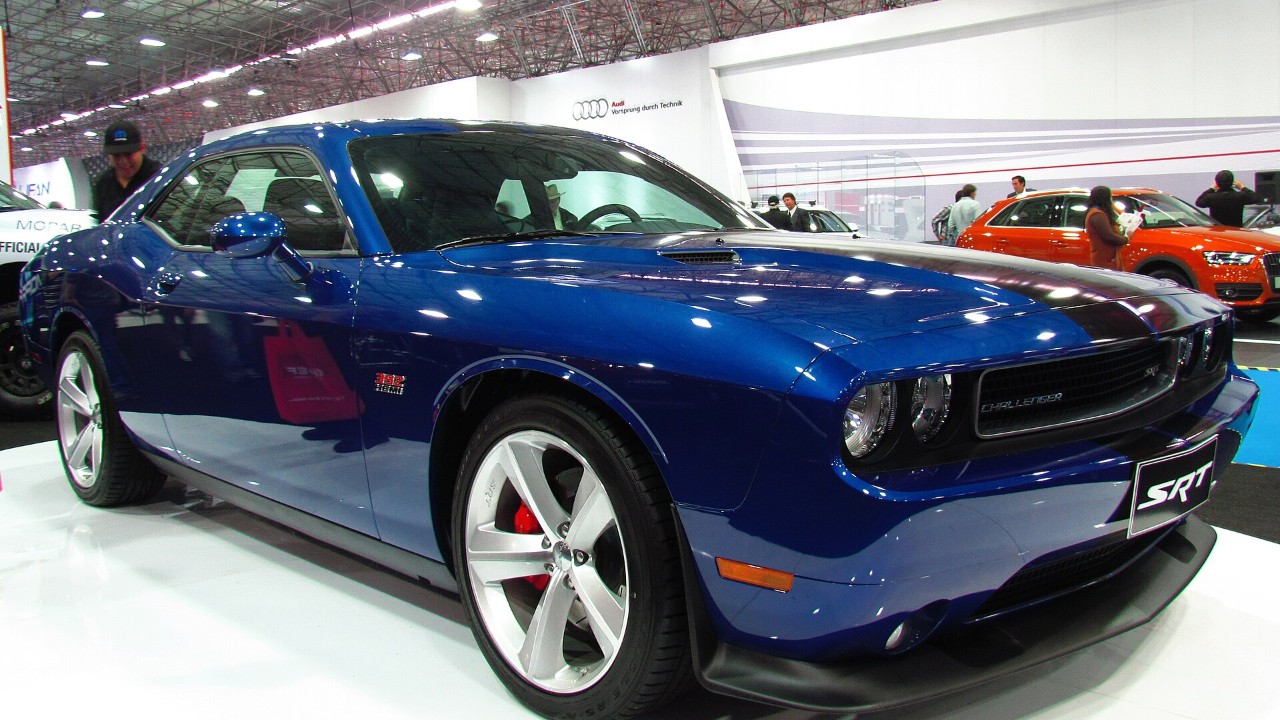
Chrysler brought back the 392 name for its 6.4-liter Hemi. In the 2011 Challenger SRT8 392, it made 470 horsepower and 470 lb-ft. For the 2015 Charger and Challenger SRT 392, output rose to 485 horsepower and 475 lb-ft. Chrysler had first shown the engine in 2005, when a demonstration version made 525 horsepower.
That 2005 engine later became a crate engine, on sale from 2007. As a result, the 392 lived two lives: one under factory hoods and one in hot rods and restomods. In both places, it delivered big torque without a supercharger, which made it easy to live with on the street.
In our view, the 6.4 is the best all-around Hemi you can buy today. It’s strong, simple and naturally aspirated. Also, it carries one of the most famous displacement numbers in Chrysler’s history. Buyer advice: in our opinion, a 392 car gives you much of the fun of the supercharged versions with fewer running costs.
12. 2015 Chrysler 6.2 Hellcat Hemi V8
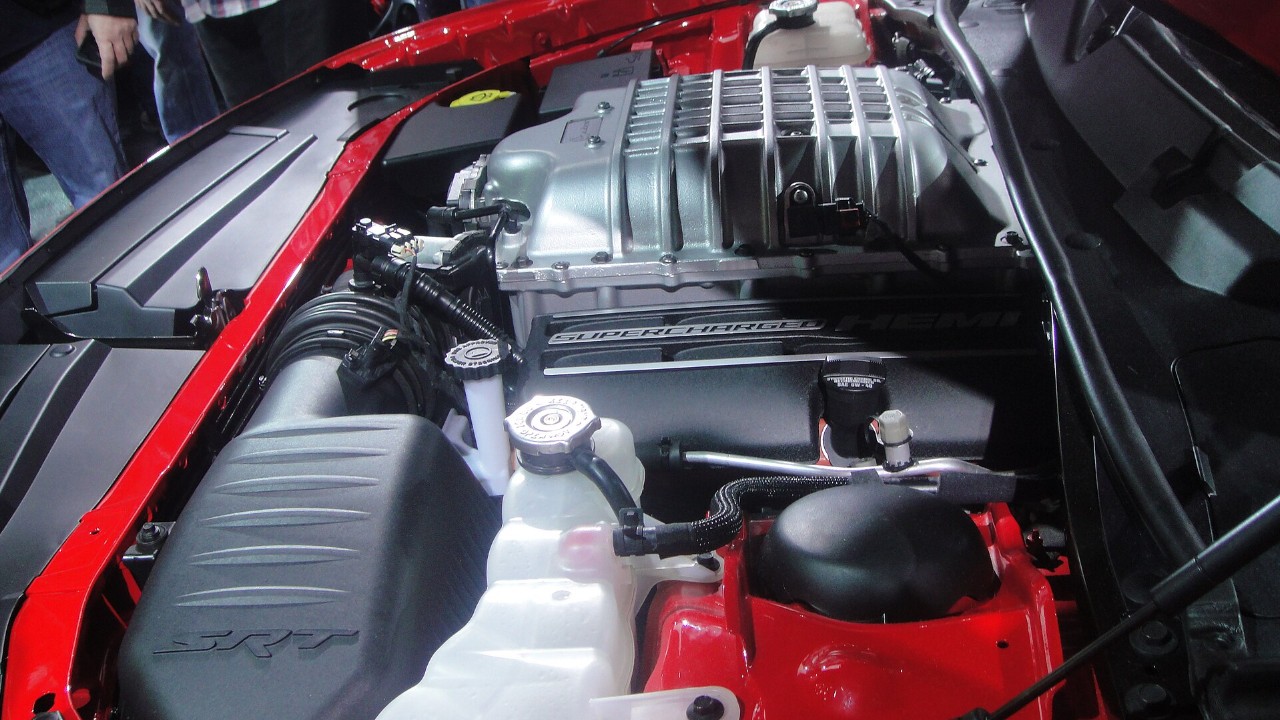
The Hellcat engine arrived for 2015 with 707 horsepower at 6,000 rpm and 650 lb-ft at 4,000 rpm. A 2,380 cc twin-screw supercharger pushed 11.6 psi of boost into a 6.2-liter Hemi with 9.5:1 compression. In our view, that set the bar for the horsepower fights that followed.
Chrysler kept turning it up. For example, the 2019 Challenger Redeye made 797 horsepower. Then the Demon reached 808 horsepower on 91-octane pump gas and 840 horsepower on 100-octane race fuel. That’s a long way from the 180-horsepower FirePower that started the story in 1951.
Our take: the Hellcat is the most powerful engine on this list, and it put supercar output in a car you could order at a Dodge dealer. It’s thirsty and loud, but that’s the point. After all, nobody buys a Hellcat for its fuel economy. If you’re shopping, keep in mind that tires, brakes and fuel all cost more at this level. For scale, the 2015 Hellcat’s 707 horsepower is almost four times the 180 horsepower of the 1951 FirePower 331.
More from Fast Lane Only