The partnership between Aston Martin and Honda was sold as the perfect blend of British ambition and Japanese engineering discipline for Formula 1’s 2026 reset. Yet as the new power unit era draws closer, voices from inside Honda are painting a far harsher picture of where the project really stands. Instead of quiet confidence, the message emerging from Sakura is that the engine destined for Aston Martin is proving far more troublesome than the marketing gloss ever suggested.
Those internal warnings matter because the 2026 rules will reshape the competitive order, and Aston Martin has tied its future to Honda at precisely the moment the manufacturer is ripping up its own playbook. When senior Honda figures concede that “not everything is going well” and that “everything is new” on the power unit, they are effectively admitting that Aston Martin’s works engine bet comes with serious short term risk as well as long term upside.
From dream partnership to pressure cooker
When Aston Martin confirmed Honda as its works engine partner from 2026, the announcement was framed as a decisive break from customer status and a route to genuine title contention. The team committed to end its supply deal with Mercedes at the close of 2025 and align fully with Honda, while the Japanese manufacturer formalised its official return to the sport with a dedicated programme for the Silverstone outfit and star driver Fernando Alons at the centre of the narrative. On paper, it looked like the missing piece for a team that had already invested heavily in facilities and personnel.
Honda, for its part, set out a clear rationale for re entering the power unit battle. The company explained that, Toward the 2026 regulations, it had agreed on May to participate under the new engine framework and to enter a works partnership with the Aston Mar project, seeing the revised hybrid rules and sustainable fuels as a fresh technological challenge aligned with its broader road car strategy. That decision reversed its earlier withdrawal trajectory and placed Aston Martin at the heart of Honda’s Formula 1 future, raising expectations that both sides would arrive in 2026 with a tightly integrated chassis and power unit package capable of challenging Red Bull and Mercedes.
Honda insiders break cover on a “difficult” engine
The optimism around that partnership has been punctured by a series of unusually candid admissions from within Honda about the state of the 2026 power unit. One senior figure has described the development process as a mixed bag, explaining that Some elements of the concept have worked while others have failed unexpectedly, and stressing that “to be honest, not everything is going well” with the new engine. That kind of language is a stark contrast to the usual corporate reassurance and suggests that key performance or reliability targets are being missed as the company adapts to the new rules.
Those concerns have been echoed in more informal channels, where Honda insiders have effectively dropped what fans have dubbed a truth bomb about the project. In one widely shared discussion, Jan voices linked to the programme concede that the 2026 F1 engine for Aston Martin is facing major challenges right now and that the development environment feels less like a smooth evolution and more like a pressurised boiler room. The same conversation stresses that some of the experimental directions being tried in Sakura are proving harder to tame than expected, reinforcing the impression that Honda is wrestling with a concept that is not yet under full control.
“Everything is new” and that is the core problem
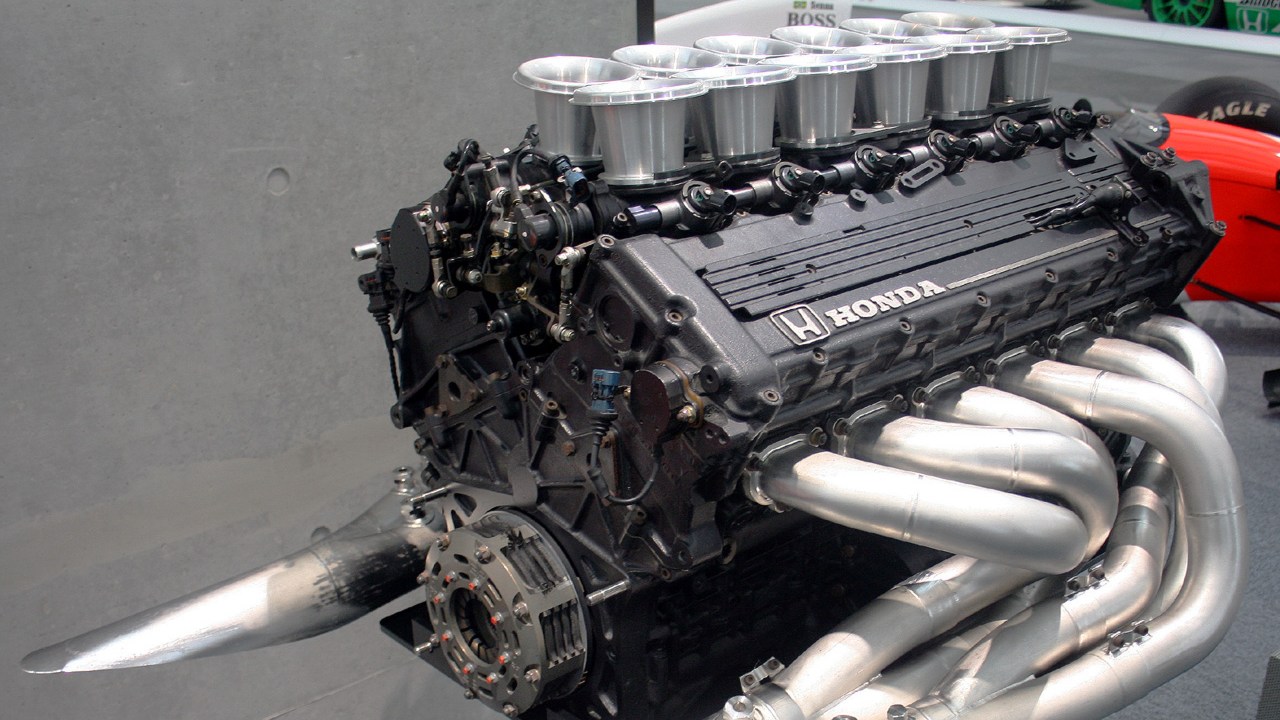
At the heart of Honda’s struggle is the sheer scale of change it has chosen to embrace for 2026. People involved with the project have been explicit that, for this power unit, Everything is new, from architecture to energy management philosophy, rather than a conservative update of the successful hybrid that powered Red Bull’s recent titles. That clean sheet approach might offer higher ultimate potential, but it also multiplies the number of ways a project can go wrong, especially under tight regulatory and calendar constraints.
The consequences of that decision are already visible in the way Honda staff describe their daily work. Internal accounts talk about components that behave unpredictably on the test bench, software strategies that look promising in simulation but collapse under real loads, and a constant cycle of redesigns as engineers chase both efficiency and durability. External observers have noted that Red Bull Racing team boss Christian Horner had previously indicated how demanding it is to develop a new power unit for 2026, and Honda’s own comments now confirm that reality from the inside. When the people building the engine admit that some failures have occurred that they “cannot overcome” in their current form, it underlines how far the project still has to travel before it can be considered race ready.
Aston Martin caught between ambition and uncertainty
For Aston Martin, these revelations turn a strategic masterstroke into a calculated gamble. The team has no fallback option once its Mercedes supply ends, so its 2026 competitiveness will be defined by how quickly Honda can turn this difficult prototype into a robust race engine. The fact that the manufacturer itself is sounding alarms about the development curve means Aston Martin’s technical group must plan a chassis around performance and packaging figures that may still be moving targets, a far less comfortable position than working with a mature, known power unit.
The financial and political stakes are equally high. Reporting around the project indicates that team owner Lawrence Stroll has personally bankrolled aspects of the development, a sign of how central the Honda alliance is to his vision of Aston Martin as a front running works operation. At the same time, analysis from The Race, voiced by Matt Beer, has highlighted that Honda have growing concerns over the 2026 engine and may have missed a trick compared with rivals that evolved existing concepts rather than starting again. When insiders in Japan describe their environment as more like a pressure chamber than a smooth R&D pipeline, it is clear that Aston Martin’s future form is being shaped in a far more volatile context than the original partnership announcement implied.
Hype, sandbagging theories, and the reality ahead
The gap between public hype and internal anxiety has inevitably fuelled speculation about Aston Martin’s true prospects in 2026. Some commentators have suggested that the team might be sandbagging expectations around its car and engine, pointing to Feb discussions that question whether Aston Martin and Honda are deliberately downplaying performance to spring a surprise once the new rules arrive. Others have revisited Mar analysis of Honda’s “difficult” 2026 engine, noting that part of the muted messaging stems from the sheer volume of other stories swirling around Aston Martin, from driver market intrigue to infrastructure expansion, which can obscure how serious the power unit challenge really is.
From my perspective, the more convincing reading is that there is very little deliberate understatement here and a great deal of genuine uncertainty. When Jan comments from Honda stress that the engine is facing major challenges, when senior figures concede that Some of their experimental paths have failed, and when the same people describe their daily reality as a pressurised boiler room in which Everything is new, it is hard to interpret that as tactical modesty. Instead, it sounds like a manufacturer that has chosen the hardest possible route into a new regulatory era and is now living with the consequences. For Aston Martin, the brutal truth is that its 2026 destiny is tied to a power unit project still fighting its own internal battles, and the team’s rise or stall will depend on whether Honda can turn that turmoil into a breakthrough in time for the lights to go out.
More from Fast Lane Only