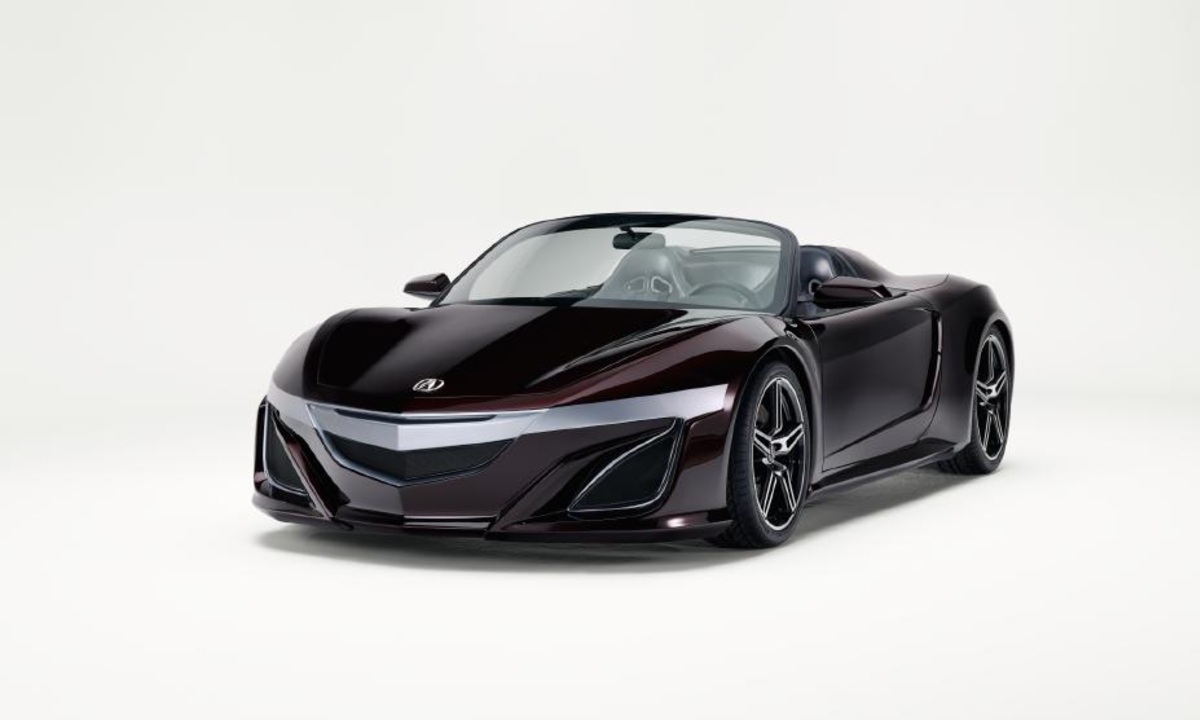
The debut of Honda’s NSX prototype at the Chicago Auto Show is remembered less for its static presence on the stand than for a single, thunderous burst of noise that cut through a rival’s carefully staged moment. While Ford prepared to bask in attention for its own performance flagship, Honda’s mid engined newcomer quite literally drowned out the script, turning a polite industry rollout into a vivid demonstration of engineering confidence. That unscripted roar did more than embarrass a competitor, it signaled that a Japanese brand was ready to challenge established supercar hierarchies on its own unapologetic terms.
What followed was a shift in how enthusiasts and rivals viewed Honda, and by extension the Acura NSX that would reach showrooms. The car’s loud interruption of Ford’s spotlight previewed a supercar that would blend racing bred technology, everyday civility, and a distinctly Japanese design philosophy, reshaping expectations for what a high performance machine from an ostensibly sensible manufacturer could be.
The moment Honda hijacked Ford’s big day
At the 81st Chicago Auto Show, a bright red Honda sports car sat on display as a prototype, officially badged as the Acura NS-X for its North American debut. While Ford orchestrated a press event for its own halo model, the atmosphere shifted when Honda president Tadashi Kume quietly slipped into the NSX concept, turned the key, and brought the mid mounted V6 to life. The sudden, unmuffled blast from the engine cut through the convention hall and, instead of the crowd focusing on Ford’s presentation, attention swung toward the unexpected commotion around Honda’s stand.
Accounts of the scene describe how Honda staff reacted with alarm as Kume kept the engine running, with team members frantically signaling for him to shut it down while Ford’s event unfolded nearby. The noisy burst was not part of any formal plan, yet it instantly drew media and public interest away from the rival stage and toward the new Japanese prototype. Observers later noted that this spontaneous display of sound and mechanical presence did more to announce Honda’s arrival in the supercar arena than any scripted speech could have achieved, turning what should have been Ford’s carefully managed showcase into a backdrop for the NSX’s unplanned star turn.
How a noisy prototype reshaped the NSX’s development
The uproar at Chicago did not end when the engine was finally switched off. Inside Honda, Kume treated the incident as a live test of how the car communicated with people, and he used the reaction to push the engineering team further. Internal recollections describe how, after the “An Engine Roars, Changes Follow” moment, Kume challenged the NSX developers to refine the car’s character so that the production model would preserve the emotional impact of that sound while improving its polish. The prototype’s raw voice had captured attention, but the president wanted the final NSX to balance drama with the kind of refinement that would distinguish it from temperamental exotics.
That directive fed directly into the NSX’s eventual positioning as a “Daily Supercar” and “An Automotive Icon” in its first generation. Engineers focused on making the mid engined chassis approachable, the cabin comfortable, and the powertrain reliable, while still delivering the kind of high revving performance that had stunned onlookers at the show. The result was a car that could be driven to work during the week and to a circuit on the weekend, a duality that would become central to the NSX identity and that traced back, in part, to the lessons drawn from that loud, slightly chaotic debut.
From show floor spectacle to daily supercar
When the production NSX arrived, it translated the drama of that first public start up into a machine that owners could live with every day. The car used an aluminum 3.0 liter V6 engine, known as the C30A, that produced around 270 horsepower and revved to approximately 8,000 rpm, combining Honda’s VTEC technology with a lightweight structure to deliver sharp responses without sacrificing civility. Contemporary descriptions emphasized that the NSX, sold as the Acura NSX in North America, was “Japan’s sophisticated sports car,” a mid engined coupe that paired exotic layout and performance with the reliability and usability expected from a Japanese manufacturer.
This balance is why the first generation NSX is often described as a “Daily Supercar.” It offered a top speed in the region of 163 mph, yet owners could commute in it, navigate city streets, and rely on it with a confidence that contrasted sharply with the reputation of many European exotics of the era. Collectors today still prize examples such as a Japan market 1991 Honda NSX finished in black, powered by a naturally aspirated 3.0 liter V6 and riding on period correct alloy wheels, as evidence that the car’s engineering has aged gracefully. The same qualities that once surprised onlookers at Chicago, a combination of sound, responsiveness, and approachability, now underpin its status as an enduring classic.
Racing pedigree and Honda’s broader performance statement
The NSX’s dramatic debut did not occur in isolation, it was framed by Honda’s broader performance record. In the years leading up to the car’s launch, Honda engines powered Formula 1 championship winning cars in 1986, 1987, 1988, 1989, 1990, and 1991, a run that demonstrated the company’s ability to compete at the highest level of motorsport. That dominance in Formula 1 gave credibility to the idea that a road going Honda supercar could offer serious performance, and it helped explain why the sound of the NSX prototype’s V6 carried such symbolic weight when it interrupted Ford’s event.
The production NSX then reinforced that message on track. The car went on to compete in series such as Super GT, where “The NSX in Racing” narrative highlighted how its mid engine layout and advanced chassis tuning translated into real world results. Its presence in racing, combined with its road manners, solidified its reputation as a “track born legend” that did not require owners to accept the compromises usually associated with high performance machines. In this context, the Chicago Auto Show incident reads less like a one off embarrassment for Ford and more like an audible declaration that Honda’s racing expertise was about to reshape expectations in the showroom.
Legacy: from JDM icon to collector favorite
Over time, the NSX’s origin story, including its loud arrival at a Ford press event, has become part of its mythology among enthusiasts. Within Japanese domestic market culture, the car is celebrated as a pure JDM icon, a mid engined coupe that showed how a Japanese brand could build a top level sports car that challenged European benchmarks. Modern commentators still describe how “great this car looks” and emphasize its status as “pure JDM,” while owners and tuners continue to modify NSX examples, underscoring the platform’s enduring appeal and flexibility.
The collector market has followed suit. Reports on Japanese classics note that the NSX, often referenced alongside the Acura NSX name, is now a “hot bet” among car collectors, praised for its aluminum 3.0 liter V6 and its reputation for reliability. Auction listings for cars such as “This Honda NSX,” a svelte all black 1991 example imported from Japan to the United Kingdom, highlight its naturally aspirated V6, mid engine layout, and original wheels as key selling points. Events like Salon Privé have welcomed Honda UK to showcase heritage displays of old and new NSX models, with figures such as David Bagley, Co Founder and Sales Director, publicly praising what Honda has achieved with the latest iterations. All of this reinforces how a car that once stole a rival’s spotlight with a single noisy start has matured into a respected, highly sought after symbol of Japanese engineering ambition.
More from Fast Lane Only