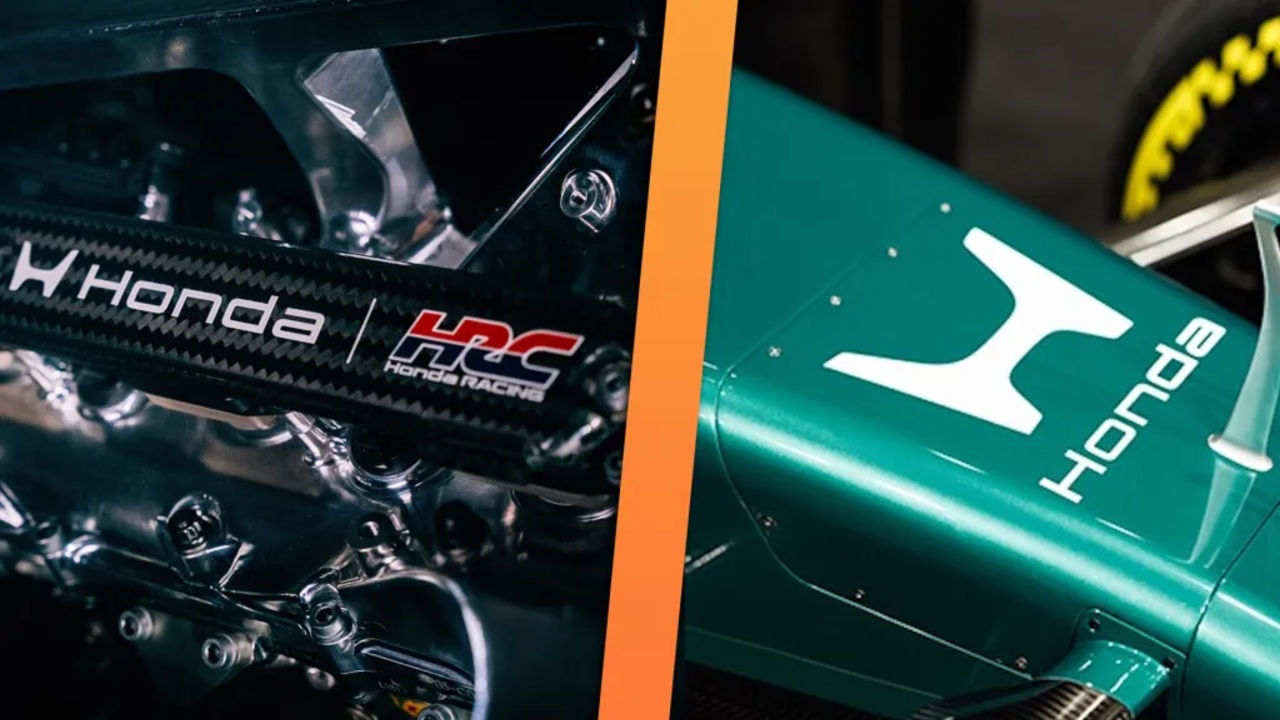
Honda has chosen a subtle but pointed way to signal its Formula 1 future, placing a redesigned corporate badge on the 2026 Aston Martin F1 car and its next-generation power unit. The new emblem, already visible on the RA626H engine and on Aston Martin’s works challenger, turns a routine branding tweak into a statement about where the company believes grand prix racing is heading. It is a visual cue that the Japanese manufacturer is not only changing teams, but also repositioning itself at the heart of Formula 1’s hybrid era.
Behind that small red logo sits a much larger strategic shift. From 2026, Honda will supply a fully works power unit to the Aston Martin Aramco Formula One Team, ending its long run with Red Bull Racing and tying its identity to a British marque that has made no secret of its ambition to fight for victories. The new badge is the first public sign of that alliance, and it arrives alongside a power unit designed for a championship that is leaning harder into electrification and lower carbon fuels.
The quiet debut of a new Honda identity
The most immediate change is visual. Honda has created a refreshed logo and applied it to the RA626H, the official name of its 2026 Formula 1 power unit, as well as to the Aston Martin chassis that will carry it. Images from the launch show the new badge already in place on the engine covers and hardware, a deliberate choice to align the updated corporate mark with the company’s latest technology rather than waiting for the car’s first race outing. The decision to introduce the logo in this context underlines how closely Honda wants its brand to be associated with the next rules cycle and with Aston Martin’s green cars.
That quiet rollout contrasts with the scale of the underlying change. Honda has ended its supply relationship with Red Bull Racing and its sister team, shifting its focus to a single works partnership with Aston Martin. The new logo, placed prominently on the RA626H and on the 2026 Aston Martin F1 car, signals that the company sees this alliance as the primary stage for its Formula 1 identity. By tying the visual refresh to the new engine designation and the Silverstone-based team’s car, Honda is effectively drawing a line between its previous era and the one that begins in 2026.
A works partnership built around RA626H
The RA626H itself sits at the center of the new relationship between Honda and Aston Martin. The power unit has been developed to meet the 2026 regulations, which increase the proportion of electrical power and mandate fully sustainable fuel. Technical briefings around the launch describe a package that significantly expands the hybrid system’s contribution while maintaining the internal combustion engine’s performance, reflecting Formula 1’s push toward what Honda has called a “next-generation motorsport” that tackles electrification and decarbonization in parallel. The RA626H name, now paired with the new logo, is intended to become shorthand for that engineering direction.
On the team side, Aston Martin has secured what it has long sought, a full works engine supply with deep integration between chassis and power unit. At the Tokyo launch event that marked the formal start of the partnership, Aston Martin and Honda executives framed the collaboration as a long-term project aimed at fighting at the front of the grid. The works status means the RA626H will be tailored to Aston Martin’s packaging and aerodynamic needs, with Honda’s Sakura operation working closely with the Silverstone factory. The new logo on the car is therefore more than decoration, it is a badge of a factory-level alliance that both parties expect to translate into performance.
Tokyo launch, global message
The choice of Tokyo for the public reveal underscored how important Formula 1 has become to Honda’s global narrative. At the launch, described as a “Launch Event for New Partnership between Honda and the Aston Martin Aramco Formula One Team for” the 2026 season, senior figures from both companies used prepared speeches to frame the program as a flagship for their shared ambitions. Honda’s leadership presented the works deal as a natural evolution of its long history in grand prix racing, while Aston Martin’s hierarchy spoke of a step that could move the team from podiums into a sustained “victory fight” in the coming years.
The event, billed as THE REVEAL of “Honda x Aston Martin F1” and streamed directly from Tokyo, was carefully staged to blend Japanese and British identities, with the new logo and RA626H designation placed at the center of the visuals. The presence of the updated badge on both the engine and the mock-up Aston Martin chassis reinforced the message that this was not a simple supply contract but a joint project. For Honda, the Tokyo setting allowed it to present the program as part of its broader domestic technology story, while for Aston Martin it offered a platform to show that its Formula 1 effort now has heavyweight backing in both engineering and branding.
Electrification, decarbonization and the road-car link
Honda has been explicit that its renewed Formula 1 push is about more than chasing silverware. In technical explanations of the RA626H, company representatives have described how the 2026 regulations align with Honda’s corporate targets on electrification and carbon neutrality. The new power unit architecture, which significantly increases the hybrid system’s role and runs on advanced sustainable fuel, is presented as a live laboratory for technologies that can filter into future road cars. Internal commentary around the engine launch has stressed that Formula 1 is evolving into a platform that tackles electrification and decarbonization challenges in real time.
That message has been echoed in more consumer-facing material, where Honda has underlined that cars running the new engine will carry a rededicated logo and that the lessons from the RA626H program will inform everything from high performance models to mainstream hybrids. Explanations of “Why this isn’t just racing” have highlighted how the power unit’s hybrid systems, control software and thermal management solutions can influence future Civic Type R based projects and other production vehicles. By placing the new logo on the Aston Martin F1 car, Honda is effectively turning the grid into a moving billboard for its electrified future, linking the spectacle of grand prix racing to the technology that will underpin its next generation of road cars.
Ambition, risk and the end of the Red Bull chapter
The new branding also marks a clean break from Honda’s recent past with Red Bull Racing. After supplying engines that powered multiple titles, Honda has chosen to step away from that partnership and instead commit fully to Aston Martin. At the Tokyo event, Aston Martin and Honda representatives acknowledged that the journey “won’t always be easy and challenges inevitably lie ahead,” but they framed the works tie up as the best route for both companies to “fight for victory” in the future. The new logo on the RA626H and on the Aston Martin car is therefore a public declaration that Honda is prepared to stake its Formula 1 reputation on a different team and a different structure.
There is risk in that decision. Red Bull Racing has been the benchmark outfit in recent seasons, while Aston Martin is still in the process of building out its facilities and converting investment into consistent front running form. Yet Honda appears to view the 2026 regulation reset as an opportunity to level the playing field and to align itself with a partner that offers full works status and prominent branding. The early appearance of the new logo on the 2026 Aston Martin F1 car and the RA626H suggests that Honda wants fans, partners and rivals to associate its next chapter with this green car, this engine code and this alliance, rather than with the blue and red machines it once powered.
More from Fast Lane Only