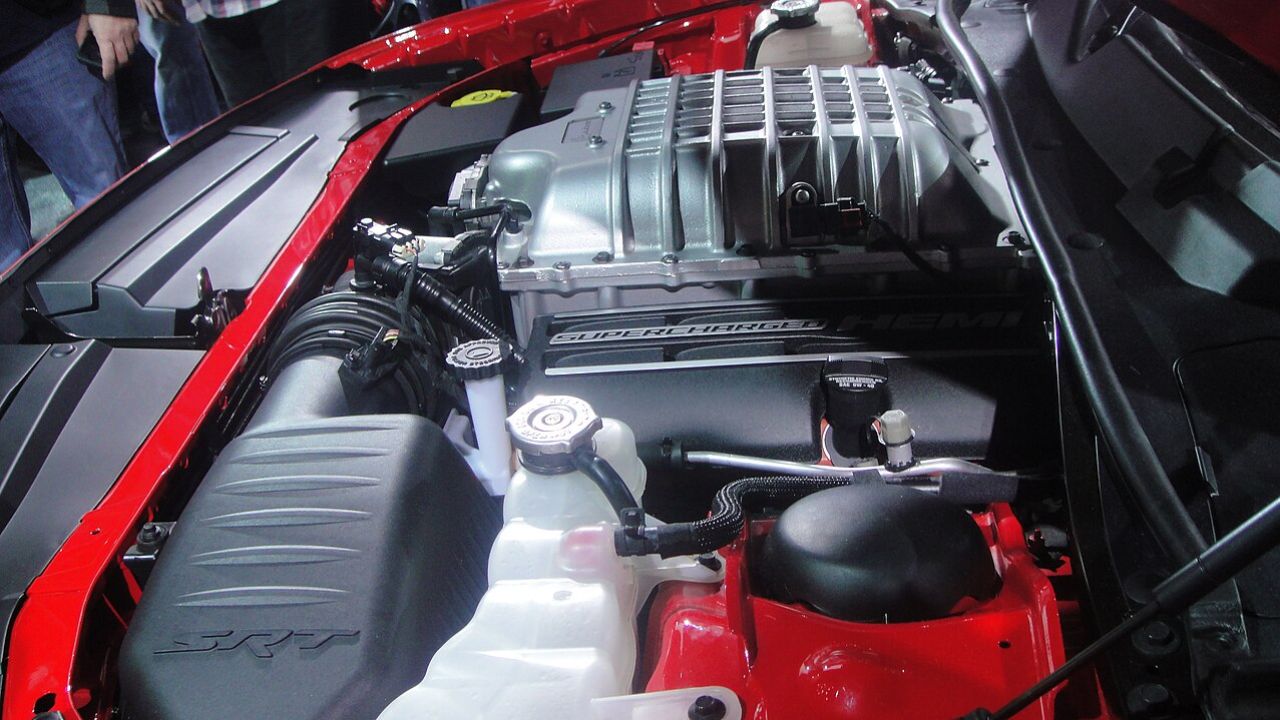
The small-block American V8 has outlived the cars it powered, the companies that built some of them, and even the fuel economy rules that were supposed to bury it. Decades after many of these engines left showrooms, they still command money, attention, and real daily use. The reasons go beyond nostalgia, touching on how these powerplants were designed, how they sound and feel, and how a whole ecosystem of parts and culture grew up around them.
From vintage motorhomes to restomod muscle cars, one classic V8 architecture keeps resurfacing in new contexts. Owners are not simply preserving old hardware; they are actively choosing it over more modern alternatives, and that choice says a lot about what drivers still value in an engine.
What happened
To understand why a decades-old V8 still has such a committed fan base, it helps to look at where these engines continue to surface. A clear example sits in the world of vintage recreational vehicles, where a 1960s Dodge-based motorhome can still draw serious interest largely because of the engine under its doghouse. One 1966 Dodge Travco motorhome, built on a Dodge chassis and fitted with a Chrysler V8, illustrates how the right combination of styling and powertrain can keep a vehicle desirable long after its contemporaries have disappeared. That particular Travco, offered with its original drivetrain and period-correct interior, is a reminder that the engine is often the anchor that makes a niche vehicle viable for modern use.
Owners and buyers of these rigs are not just chasing a retro fiberglass shell. They are looking for a powertrain that can still haul a heavy coach at highway speeds, accept modern fuels, and be serviced with parts that remain available. In the case of the 1966 Travco, the Dodge chassis and its V8 are central selling points, highlighted alongside the coachwork as reasons the vehicle can still function as a real motorhome rather than a static collector piece. The fact that such a rig can still be marketed as roadworthy, with an expectation that a new owner can maintain and upgrade it, speaks directly to the enduring appeal of the underlying V8 design, which is detailed in the listing for this 1966 Dodge Travco.
That same pattern repeats across the classic car world. Late 1960s and early 1970s muscle cars built around small-block and big-block V8s remain the backbone of many auction catalogs. Even when bodies are restored, interiors retrimmed, and suspensions modernized, sellers often emphasize that the car retains its original engine block, or at least the correct period-correct V8. Matching-numbers tags on a 1970 Chevrolet Chevelle SS or a 1969 Dodge Charger R/T can move values significantly higher than similar cars with modern crate engines. The block itself becomes part of the car’s identity.
Meanwhile, the aftermarket has turned the classic V8 into a modular platform that can be tuned and repurposed almost endlessly. Builders drop vintage-style V8s into everything from classic pickup trucks to restomod European coupes, banking on the combination of torque, sound, and parts support. In many cases, the original carburetors give way to throttle-body fuel injection, and points ignitions are replaced with electronic systems, but the core architecture remains the same. The old-school V8 becomes a bridge between analog character and modern reliability.
There is also a practical side. Many of the most beloved V8s were produced in huge numbers, which means cores are plentiful and relatively cheap. A small-block from a 1970s sedan can form the basis of a high-output build for a fraction of the cost of a modern performance engine. Machine shops know how to work on them, and the knowledge base is deep. For hobbyists who want to build power at home, a classic V8 is often the most approachable starting point.
All of this has kept demand alive for engines that, on paper, should have been outclassed long ago. They are heavier, less fuel efficient, and often less powerful per liter than contemporary turbocharged fours or sixes. Yet in garages, on forums, and at weekend cruise-ins, the old V8 still dominates the conversation.
Why it matters
The persistence of a classic V8 platform has implications that reach beyond nostalgia car culture. It shapes how automakers think about heritage, how the aftermarket invests in new products, and even how regulators approach older vehicles on the road.
There is, first, the emotional component. For many drivers, a V8 is not just an engine layout. It is a sensory experience built around a particular firing order, exhaust note, and torque delivery. The low-frequency rumble at idle and the hard-edged bark under load are part of what made American performance cars distinctive in the first place. That sound is difficult to replicate with smaller turbocharged engines, even when power output is comparable. Owners who grew up with that soundtrack often want to preserve it, and younger enthusiasts discover it at events and online, then seek it out in their own projects.
That emotional pull has real economic weight. Auction results show that classic V8 cars often outpace inflation, especially when they retain original drivetrains. Parts manufacturers respond by keeping production lines open for components that support these engines: cylinder heads, camshafts, intake manifolds, and complete rotating assemblies. Some companies even tool up new blocks that mimic the original castings but use modern metallurgy and machining. The classic V8, in effect, becomes a long-lived product category, with its own development cycles and marketing strategies.
There is also a cultural dimension. In North America in particular, the V8 has been wrapped up in ideas about freedom, long-distance travel, and mechanical self-reliance. A motorhome like the 1966 Dodge Travco sits at the intersection of those themes. It is a home on wheels built around an engine that a reasonably skilled owner can tune and repair on the side of the road with basic tools. That image still resonates with buyers who want to escape the sense that modern vehicles are sealed systems controlled by software and dealer-only diagnostics.
At the same time, the ongoing use of older V8s raises questions about emissions and fuel consumption. These engines were designed in an era with very different regulatory expectations. Even when retrofitted with catalytic converters and modern fuel systems, they rarely match the efficiency or cleanliness of current production powertrains. Policymakers in some regions have begun to carve out exemptions for low-mileage classic cars, recognizing that their overall environmental impact is small compared with daily-driven fleets. That compromise allows enthusiasts to keep classic V8s on the road while still pushing new vehicles toward stricter standards.
The aftermarket has responded with technology that helps bridge that gap. Bolt-on fuel injection kits can improve cold starts, drivability, and in many cases fuel economy, while also reducing some of the unburned hydrocarbons associated with carbureted setups. Electronic ignition systems deliver more precise spark timing, which can further clean up combustion. In some builds, owners combine these upgrades with modern transmissions that offer more gears and lower cruising rpm, which cuts fuel use on the highway. These changes do not turn a 1960s V8 into a modern hybrid, but they show how a legacy platform can be adapted to new expectations.
There is also a knowledge transfer effect. Many professional engine builders and tuners cut their teeth on classic V8s, where the relationship between mechanical changes and performance outcomes is relatively direct. That experience informs how they approach more complex modern engines. The classic V8 becomes a kind of training ground where concepts like airflow, compression ratio, and ignition timing can be explored in a tangible way. For younger enthusiasts, building a small-block in a garage can be the first step toward a career in powertrain engineering or motorsports.
Automakers themselves have leaned on this heritage. Marketing for modern performance cars often references classic V8 models, with styling cues and trim names that trace back to the late 1960s. Even when the new car uses a different engine configuration, the brand story depends on the legacy of those earlier V8s. That gives the old engines a kind of ongoing symbolic power, even as the industry moves toward electrification.
Finally, the continued relevance of a classic V8 speaks to the value of modular, serviceable engineering. These engines were designed to be rebuilt multiple times over a vehicle’s life. Main bearings, cam bearings, piston rings, and valve seats can all be replaced, and the block can be machined to accept oversized components. In an era where many components are treated as sealed and disposable, that rebuildable architecture feels almost radical. Enthusiasts see in it a kind of mechanical sustainability, where an engine can be refreshed and reused rather than scrapped.
What to watch next
The future of classic V8 loyalty will be shaped by three main forces: regulatory pressure, generational change, and the rise of electrification and alternative fuels.
On the regulatory front, emissions and noise rules continue to tighten in many regions. While most jurisdictions still allow older vehicles to operate under grandfathered standards, there is growing discussion about how to handle high-polluting vehicles in dense urban areas. Some cities have experimented with low-emission zones that restrict access for older engines during certain hours or in specific districts. If those policies expand, owners of classic V8 cars and motorhomes may face practical limits on where and when they can drive, which could influence values and usage patterns.
Generational turnover within the enthusiast community will also play a role. Many of the most passionate V8 loyalists grew up when these engines were common in family cars and trucks. As younger enthusiasts who came of age with turbocharged fours, direct injection, and factory performance compacts gain purchasing power, their tastes may shift the market. There is evidence, however, that the V8 mystique still resonates with younger buyers, especially through online content that showcases drag racing, drifting, and high-horsepower builds. The question is whether that interest translates into long-term ownership and restoration, or remains more of a spectator fascination.
Electrification presents both a challenge and an opportunity. Electric powertrains offer instant torque, low operating costs, and zero tailpipe emissions, which undercut some of the practical arguments for keeping an old V8 on the road. Yet electric conversions of classic vehicles remain expensive and technically demanding, which limits their appeal to a small subset of owners. For many enthusiasts, the mechanical interaction with a V8, from the sound to the shifting, is central to the experience they want. That suggests a long period of coexistence, where classic V8s occupy a niche alongside electric daily drivers.
There is growing interest in using alternative fuels to give older engines a longer runway. Some builders experiment with synthetic fuels or higher-ethanol blends that can reduce net carbon output. Others explore dual-fuel setups that allow a classic V8 to run on gasoline for authenticity and on cleaner fuels for longer trips. These solutions are still emerging and often expensive, but they hint at ways the classic V8 community might adapt rather than simply resist change.
More from Fast Lane Only