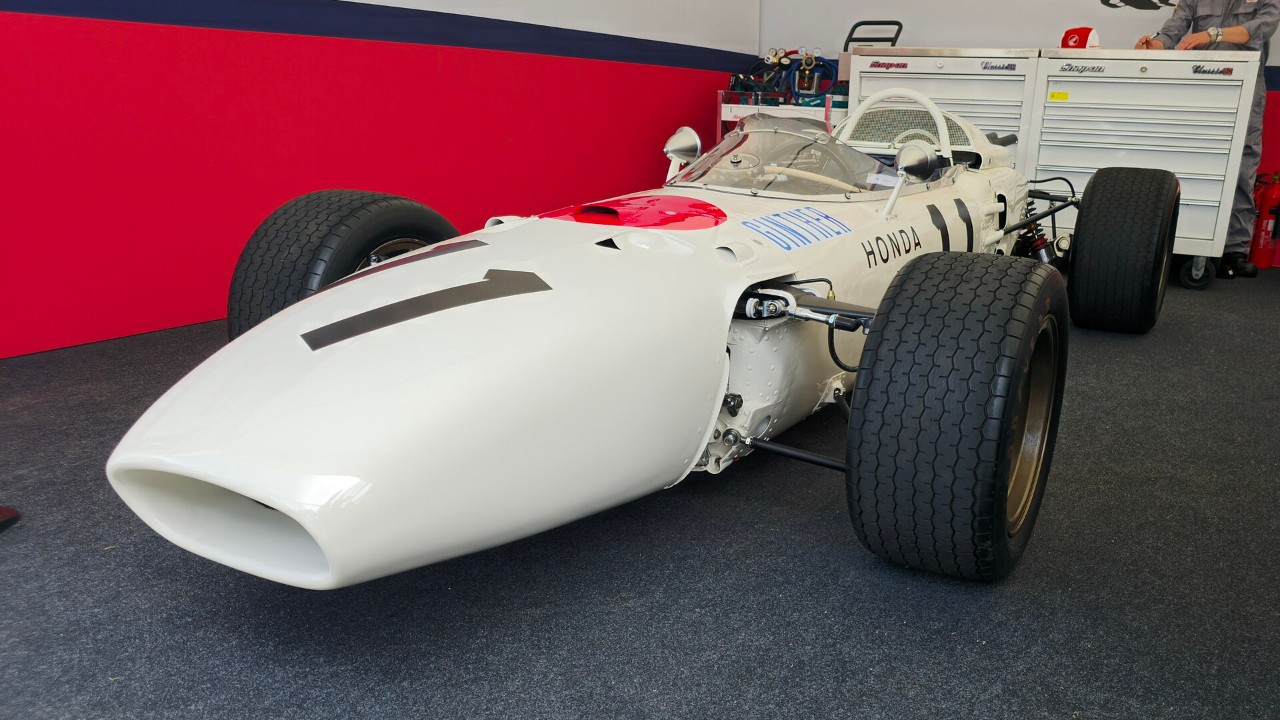
Honda won its first Formula 1 race with an engine turned sideways. The Honda RA272 carried a 1.5-liter V12 mounted across the chassis, and in 1965 Richie Ginther drove it to victory in the Mexican Grand Prix. He led that race from the drop of the flag to the finish.
Remarkably, it was only Honda’s 11th grand prix. It was also the last race of F1’s 1.5-liter formula, because bigger 3-liter engines arrived the next season. So Honda’s first win came at the very end of the rules it had built the car for.
The story has a good line at the end, too. When the race was over, team manager Yoshio Nakamura sent a telegram home to Tokyo that read, “I came, I saw, I won!”
A V12 mounted across the car
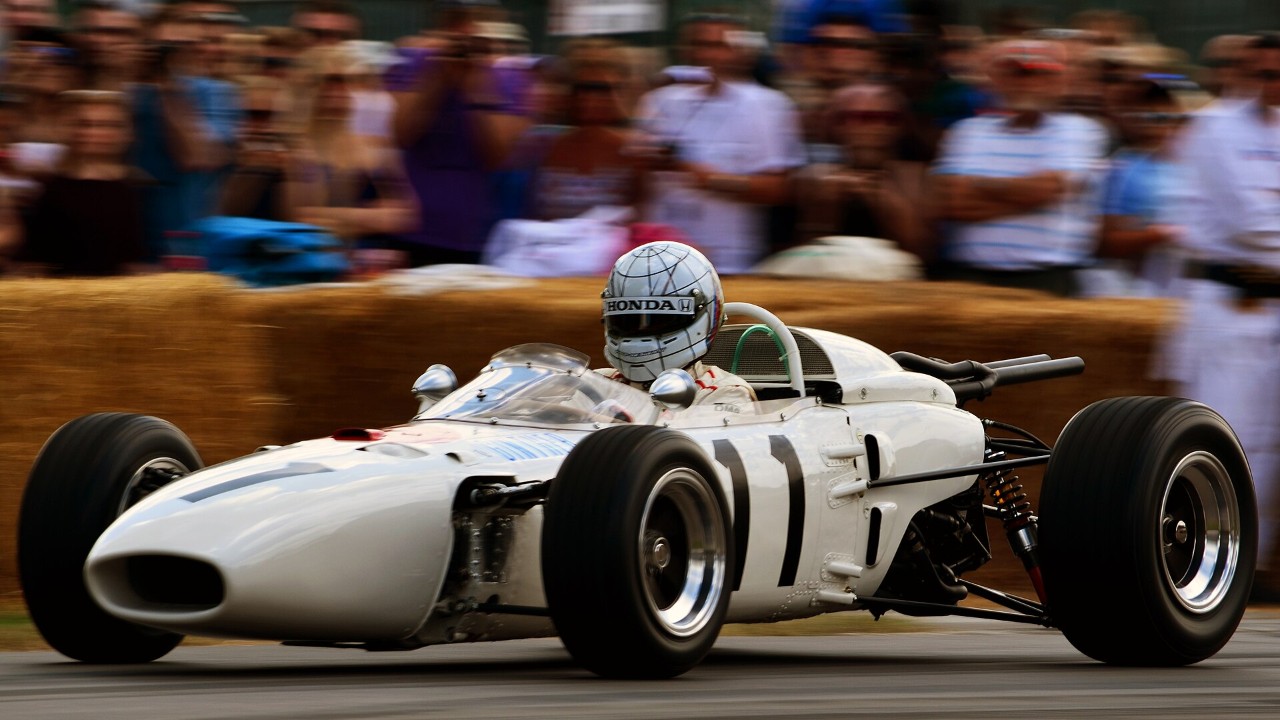
Honda mounted the engine sideways. According to Honda’s own RA272 history page, the RA272E was a water-cooled, transversely mounted 60-degree V12. It used double overhead camshafts and 48 valves, which works out to four per cylinder.
Specifically, Honda lists its displacement at 1,495 cc. In addition, a second Honda engine history gives the bore and stroke as 58.1 by 47 mm, unchanged from the 1964 RA271E. Those are tiny cylinders, so the engine had to rev hard to make its power.
And it did rev. Honda rates the RA272E at 230 hp at 12,000 rpm, while its engine page says “over 230 hp.” By comparison, the RA271E had made 220 PS when it debuted in 1964. The six-speed gearbox was part of the engine package, and the two together weighed 215 kg.
The Honda RA272 chassis
Meanwhile, the rest of the car followed the engine’s lead. Honda built the Honda RA272 around an aluminum monocoque with an aluminum body. It rode on double wishbones front and rear, on a 2,300 mm wheelbase. The fuel tank held 180 liters.
Above all, weight was the big gain over the RA271. Honda says it used more light alloys to make the monocoque about 27 kg lighter, and the finished car weighed 498 kg. The RA272 also looked much like the older car, but Honda says its aerodynamics were much better.
However, the engine was not easy to live with. Honda’s engine page says the team built its own fuel injectors instead of buying proven units from a specialist. Unfortunately, those injectors were hard to control. As a result, the revs would lag and then suddenly surge, which made the car difficult to drive.
A slow start to 1965
Ginther joined Honda for 1965 alongside Ronnie Bucknum. Honda credits the American with strong development skills, and the team needed them. Early in the season, Ginther finished sixth twice and retired from the other races, according to Honda.
Meanwhile, the car kept changing. The original RA272E ran from Monaco, the second round, through the Dutch Grand Prix. Then a revised engine arrived for the Italian Grand Prix in September and ran through the final round in Mexico. For that revised car, Honda moved the exhaust pipes out to the sides.
Ginther all the way in Mexico
Mexico City sits high, and the race track there stood at over 7,000 feet, as Motor Sport noted at the time. Thin air robs an engine of power. That’s why Nakamura, back as team manager, set the car up for the altitude. He was a former aircraft engineer, Honda notes.
In qualifying, Jim Clark took pole from Dan Gurney in the closing minutes, according to Motor Sport’s December 1965 race report. Ginther started third, from the second row. Still, by the first corner he had passed both Clark and Gurney.
After that, nobody got by him. “From the drop of the flag it was Ginther all the way,” Motor Sport wrote. Clark, by contrast, made a bad start, and his engine developed a ticking noise. He retired on lap 8.
What the win meant
Ginther beat Gurney’s Brabham by 2.89 seconds, Motor Sport reported. It was the first championship win for both Honda and Ginther. Equally, it was a breakthrough for the tires. Goodyear finished first and second, which, the magazine noted, ended Dunlop’s monopoly.
Honda’s page agrees that Mexico was the first victory for both Honda and Goodyear tires. Then the rules changed. F1 moved to 3-liter engines in 1966, and that era lasted 21 years, according to Honda.
That made the Honda RA272 the last winner of the 1.5-liter era. Today, Honda’s history page shows the No. 11 car that Ginther drove through the 1965 season.
More from Fast Lane Only