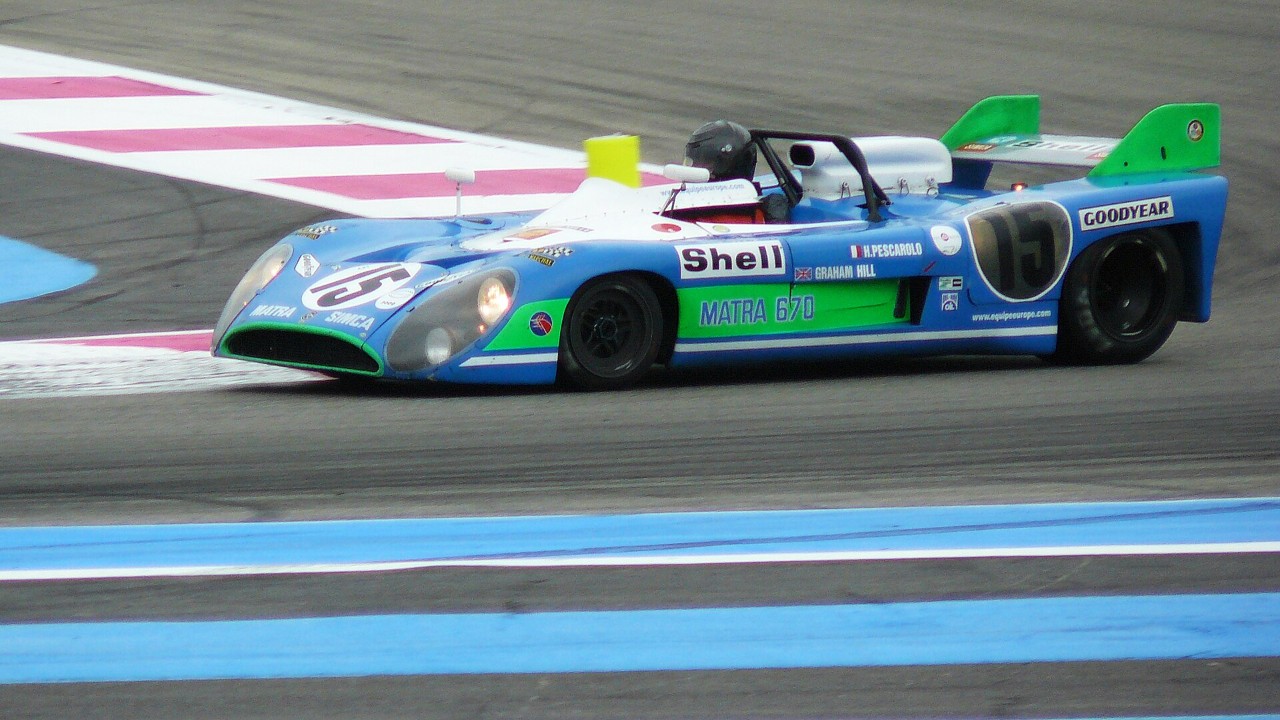
Graham Hill won the 1972 24 Hours of Le Mans with Henri Pescarolo in the No. 15 Matra MS670, a French prototype with a 3-liter V12. That win made Hill the only driver to have won the Formula 1 world championship, the Indianapolis 500 and Le Mans.
It mattered to France just as much. No French marque had won the race since Talbot-Lago in 1950. Matra also finished second, so the home crowd got a one-two.
Then Matra kept going. The team won Le Mans again in 1973 and 1974, which made it three wins in a row for the same 3-liter V12.
Hill’s missing piece
By 1972, Hill had most of the set. According to the Le Mans organizers’ own history of the 1972 race, he had won the F1 world championship in 1962 and 1968. He had also won the Indianapolis 500 in 1966.
However, Le Mans had eluded him. In fact, the organizers note that Hill had not raced there since 1966. When he and Pescarolo won on June 10–11, 1972, he became “the only driver to win an F1 world championship (1962 and 1968), the Indianapolis 500 (1966) and Le Mans,” in the organizers’ words.
Why Matra built the Matra MS670
Matra did not win by accident. According to a second history from the organizers, Matra boss Jean-Luc Lagardère chose not to enter the 1972 world championship. Instead, the team focused on Le Mans. Lagardère had also promised a home win to President Georges Pompidou, who served as the honorary starter that year.
The car for the job was the Matra MS670. Motor Sport calls it the peak of the sports-prototypes Matra had been building since the late 1960s. Its V12 had a distinctive wail, and Pescarolo said it “sounded absolutely fantastic.”
Pescarolo also called the car “quick, reliable and easy to drive.” Before the race, the team did endurance testing at Paul Ricard, he told Motor Sport. As he put it, “No effort was spared.”
Four cars, four setups
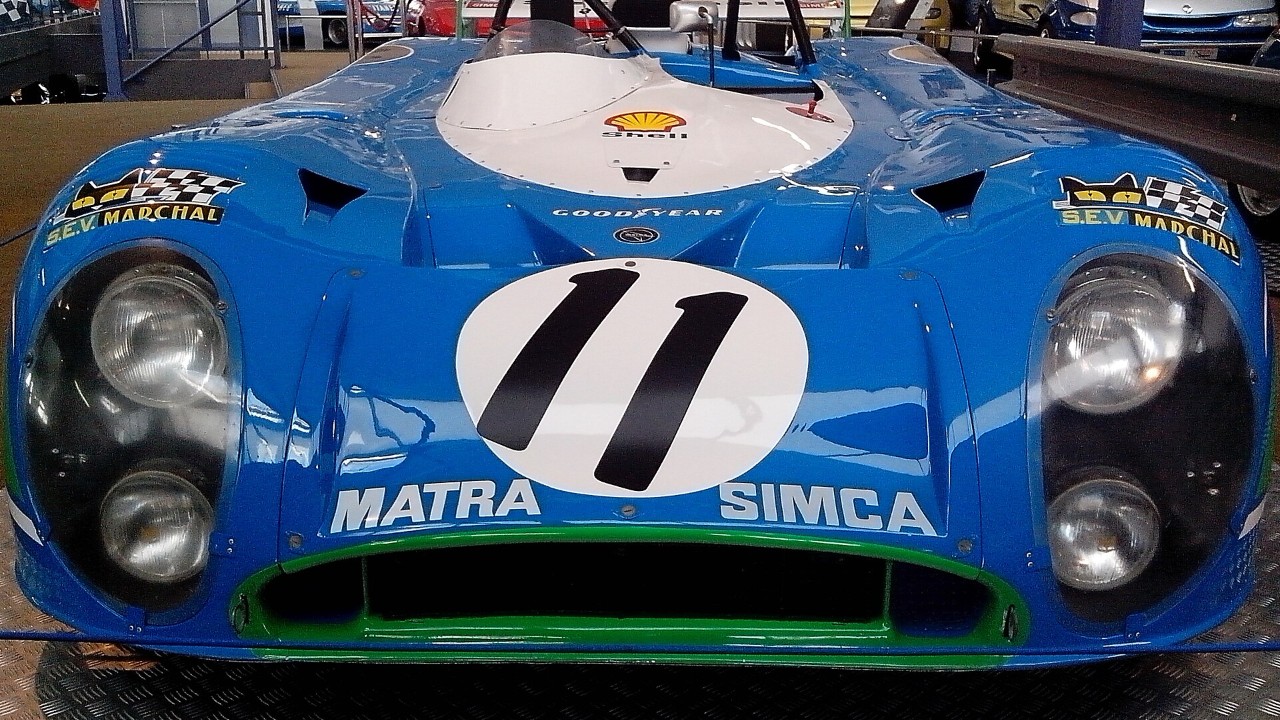
Matra entered four cars in 1972. According to the Matra Sport archive, three were the new MS670s and one was an older M660. The MS670s carried numbers including 14 and 15.
Each car was a little different. Motor Sport says the team varied the bodywork, engine power, fuel consumption, tires and gearbox ratios across the entry. In the words of the magazine’s Denis Jenkinson, that meant “whatever conditions prevailed for the race, one of the four cars would be at an advantage.”
Meanwhile, the biggest rival stayed home. The Matra Sport archive says Ferrari withdrew its 312PB a week before the race. That left three Alfa Romeo 33 TT3s and two Lola T280s as the main factory opposition.
The 1972 race
The race turned into a duel between the two leading Matras. Pescarolo and Hill fought a long battle with teammates François Cevert and Howden Ganley, according to the organizers. At one point, Ganley collided with a Corvette driven by Marie-Claude Beaumont, the Matra Sport archive notes. Even so, he and Cevert finished second.
In the end, Pescarolo and Hill covered 344 laps. That came to 4,691.343 km at an average of 195.473 km/h, per the official record. Behind the two Matras, Nino Vaccarella finished fourth for Alfa Romeo.
Ferrari still filled much of the top 10, though not with factory prototypes. Privately entered 365 GTB/4 Daytonas finished fifth through ninth. Derek Bell drove one of them to eighth. Then a Ford Capri took 10th with Gerry Birrell and Claude Bourgoignie.
Matra MS670 makes it three in a row
Matra was not done. In 1973, Pescarolo and Gérard Larrousse won Le Mans in the MS670B, an updated version of the car. The Ferrari of Jacky Ickx and Brian Redman was the main threat until its engine failed with about an hour and a half left, the organizers say. Pescarolo later called that the hardest of his three wins.
Matra also won the 1973 World Championship for Makes. Then Pescarolo and Larrousse won Le Mans again in 1974, with a Porsche Carrera second. That made three straight Le Mans wins for the 3-liter Matra V12, and it ended Matra’s Le Mans adventure. Two years later, the organizers note, Matra returned to Formula 1 as an engine supplier to Ligier.
More from Fast Lane Only