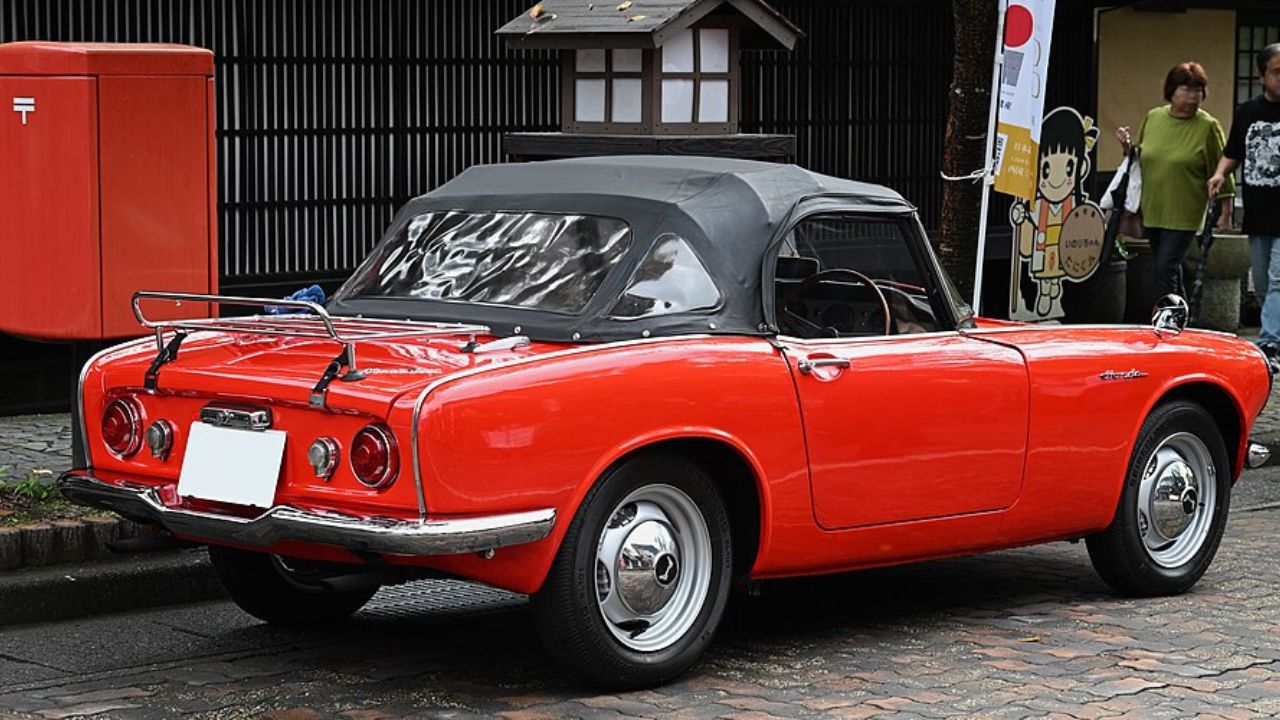
Honda’s 606cc S600 roadster made 57 horsepower in 1964, which works out to about 94 horsepower per liter. The Honda S600 showed how the company’s engineers liked to work: small engines spun hard, and unusual answers to ordinary problems.
The eight cars below run from Honda’s first sports car to a stripped-out NSX. Each one is here for a specific piece of engineering, and every figure comes from Honda or a published history.
1. 1963 Honda S500
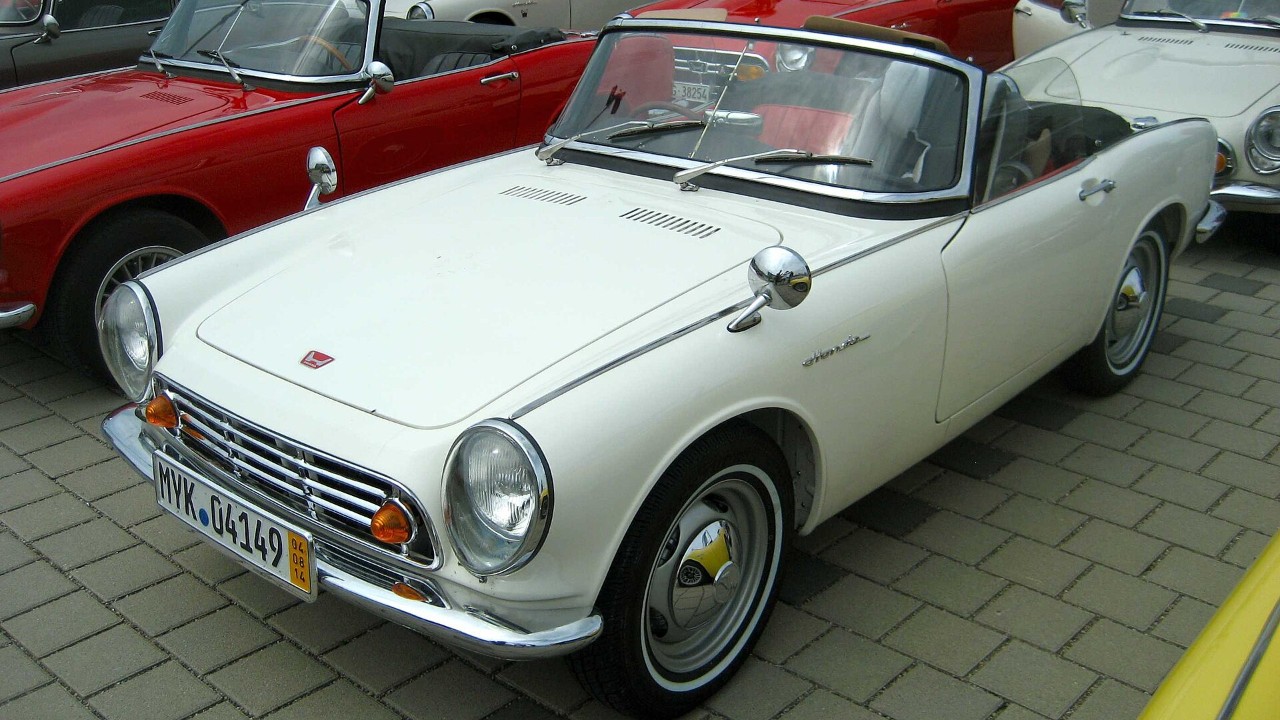
Honda’s first non-kei car made its debut at the 1963 Tokyo Motor Show. Then sales began in earnest in January 1964. The pre-production cars used a 492cc twin-cam four with 40 horsepower, but the production engine grew to 531cc and 44 horsepower.
That little four had one carburetor per cylinder, and its peak power came at 8,000 rpm, according to Curbside Classic. Meanwhile, the rear wheels took their drive through a pair of chains inside sprung, trailing-arm-like casings. Honda UK says the roadster revved to 9,500 rpm and could do 80 mph. Even its production total is uncertain, though, with English-language sources claiming over 1,300 and Japanese sources about 500.
2. 1964 Honda S600
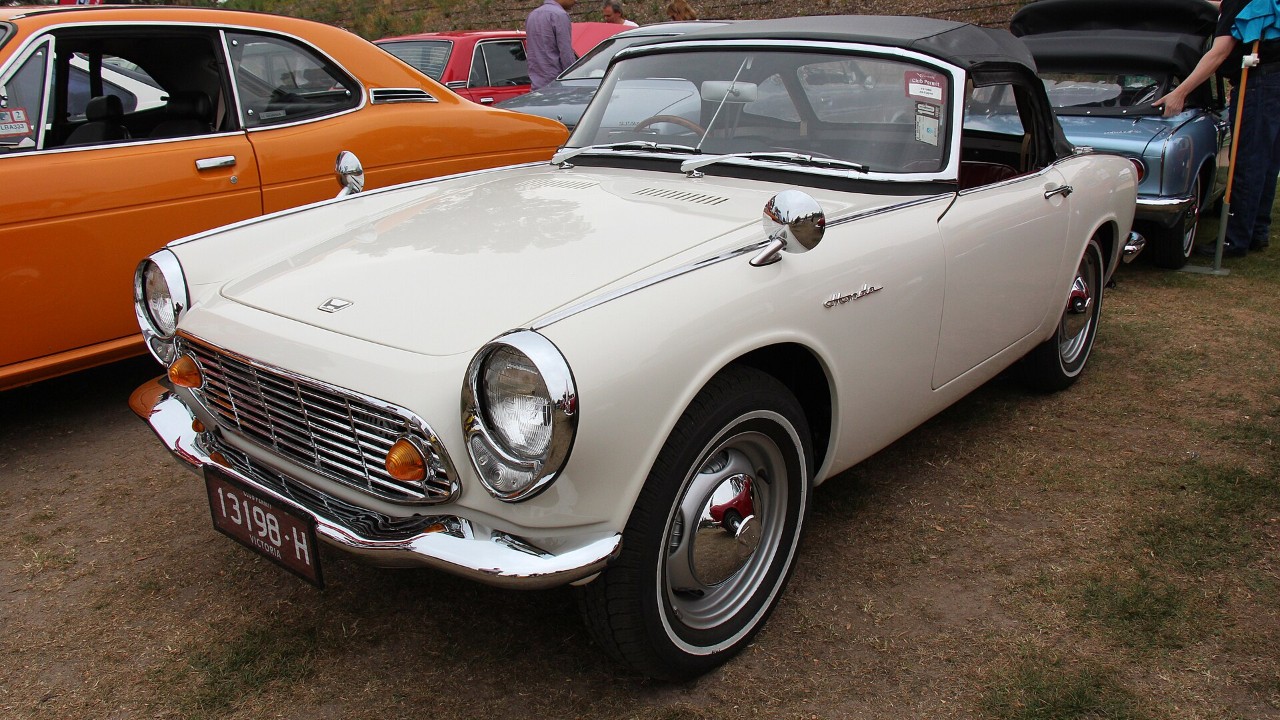
The S500 lasted only months before its bigger brother arrived. The Honda S600 kept the formula and grew the engine. Its aluminum-block, water-cooled four ran double overhead cams and full-length headers.
That 606cc engine breathed through four Keihin carburetors and made 57 horsepower on its way to a 9,500 rpm redline, Motor1 reports. Just as on the S500, a final chain drive turned each rear wheel. In other words, Honda brought motorcycle thinking straight into a roadster.
3. 1969 Honda 1300
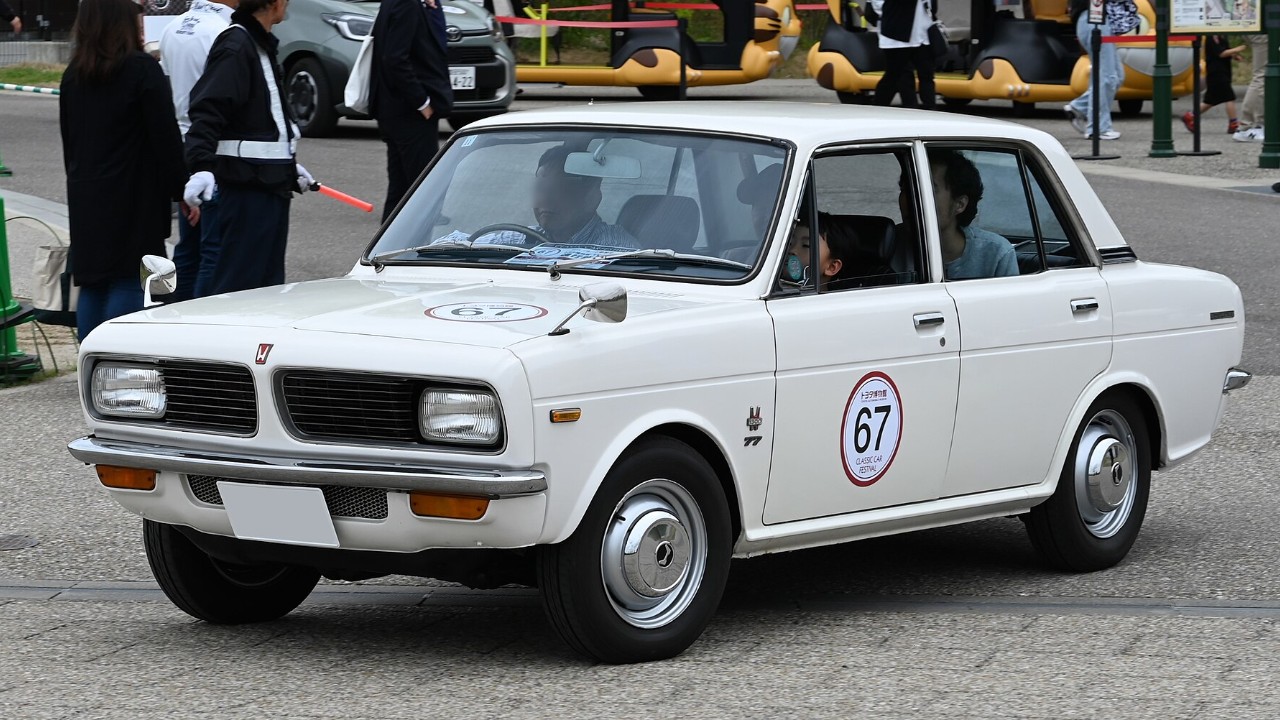
Soichiro Honda insisted on an air-cooled engine for the 1300. Honda unveiled the car on October 21, 1968, at Tokyo’s Akasaka Prince Hotel. However, Honda R&D president Kiyoshi Kawashima pushed its release back to May 1969.
Its engine was the DDAC, short for Duo Dyna Air Cooling, according to Honda’s heritage history. Later, the 77 series made 100 horsepower and the 99 series 115. Yet sales fell short of expectations despite strong reviews. Afterward, Honda turned to the water-cooled Life and Civic.
4. 1983 Honda City Turbo II
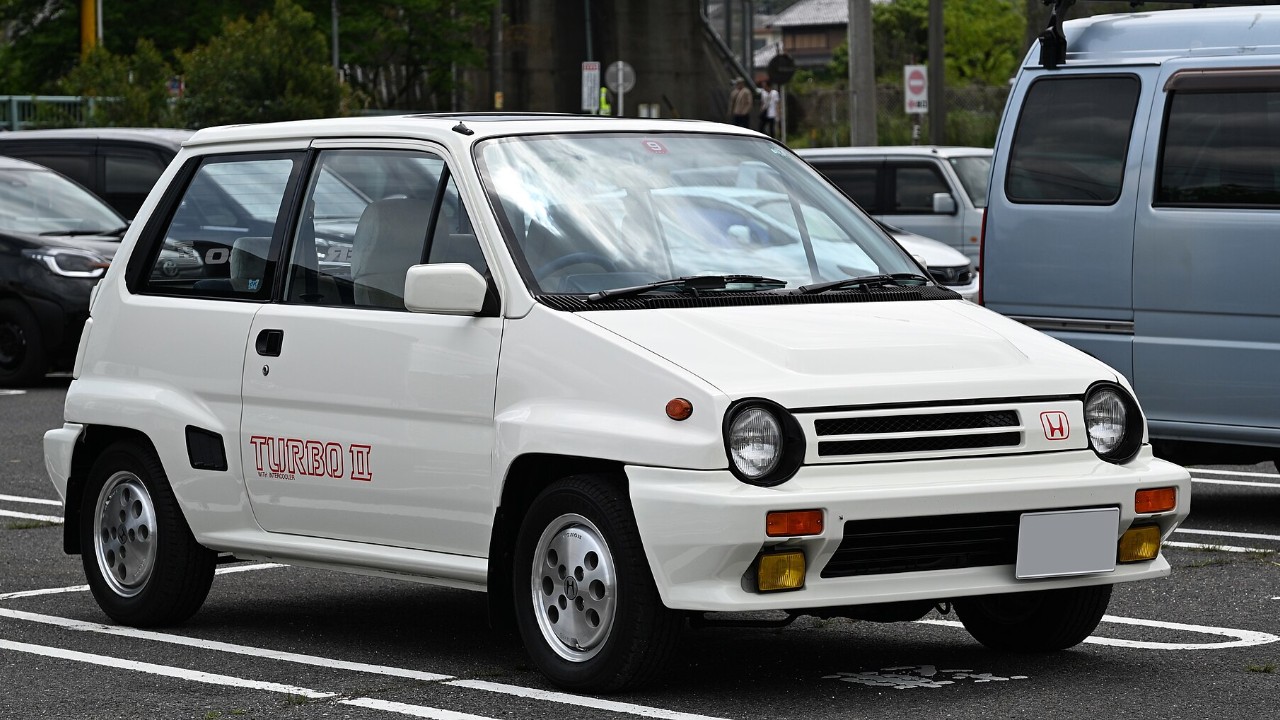
Honda gave the hottest City a party trick. The Turbo II arrived in October 1983 with an intercooler and 110 horsepower. Its squat stance and slightly wider track earned it the nickname “Bulldog.”
A standard Turbo II weighed 745 kg, Curbside Classic notes. In addition, its “scramble boost” function added 10% more turbo pressure for ten seconds. The Turbo II lasted until late 1986.
5. 1985 Honda CRX Si
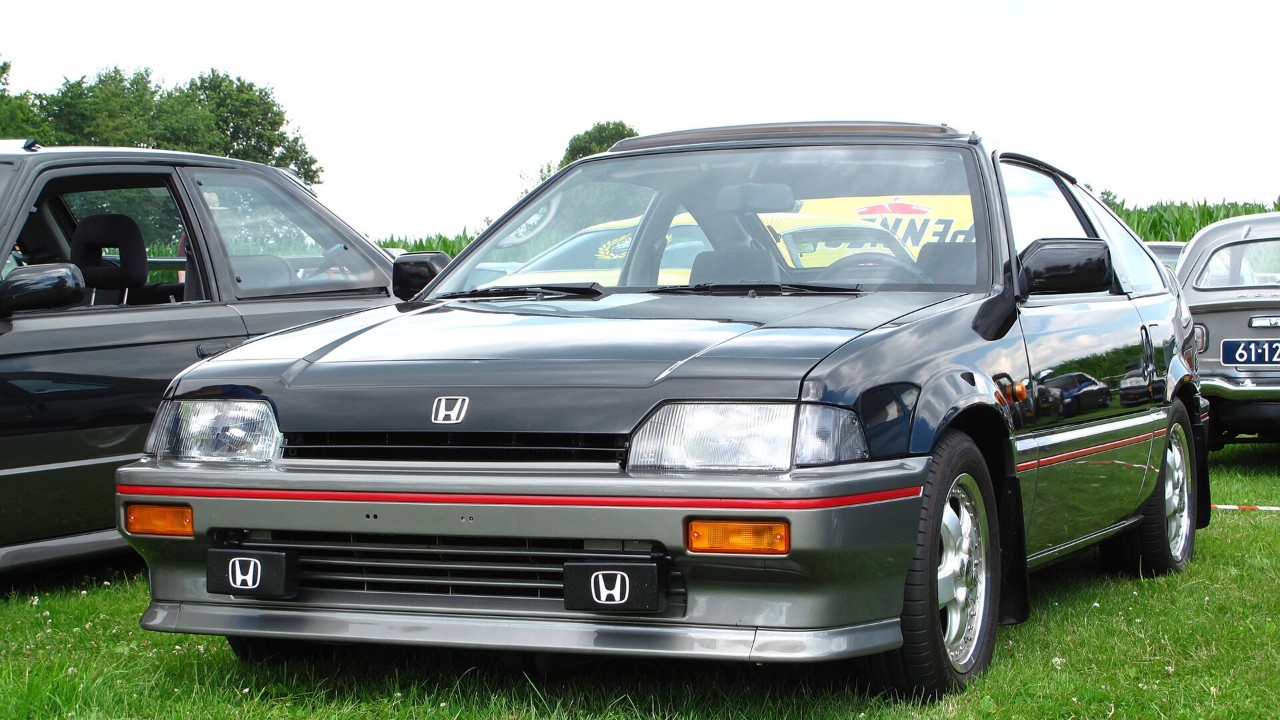
Honda’s CVCC engines were famous for their pre-combustion chambers. For the CRX Si, the engineers threw them out. Instead, larger intake valves took their place in the 1.5-liter four.
Then came sequential port fuel injection, which lifted output to 91 horsepower, Hagerty reports. Honda introduced the Si in April 1985 at $7,999, more than $1,000 above a standard CRX. Car and Driver timed it at 9.1 seconds to 60 mph.
6. 1987 Honda Prelude 4WS
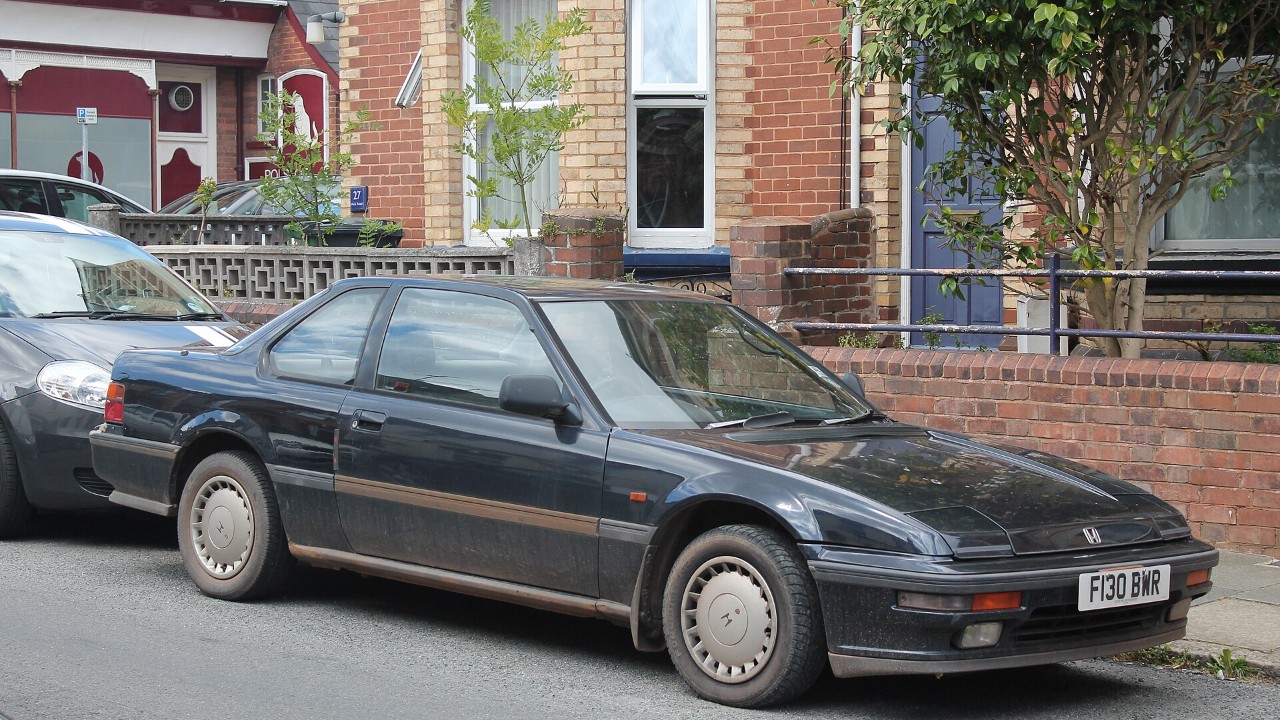
Honda’s four-wheel steering started as a patent in 1978. In April 1981, engineers ran the first drive test on the west course at Suzuka. Their test car, for example, was two Accords with the front sections cut off and welded together.
The production system debuted on the Prelude in April 1987, and Honda calls it the world’s first steering-angle-sensing 4WS. Instead of electronics, it used two cranks linked by a planetary gear. As a result, the rear wheels turned the same way as the fronts at small steering angles and the opposite way at large ones.
7. 1991 Honda Beat
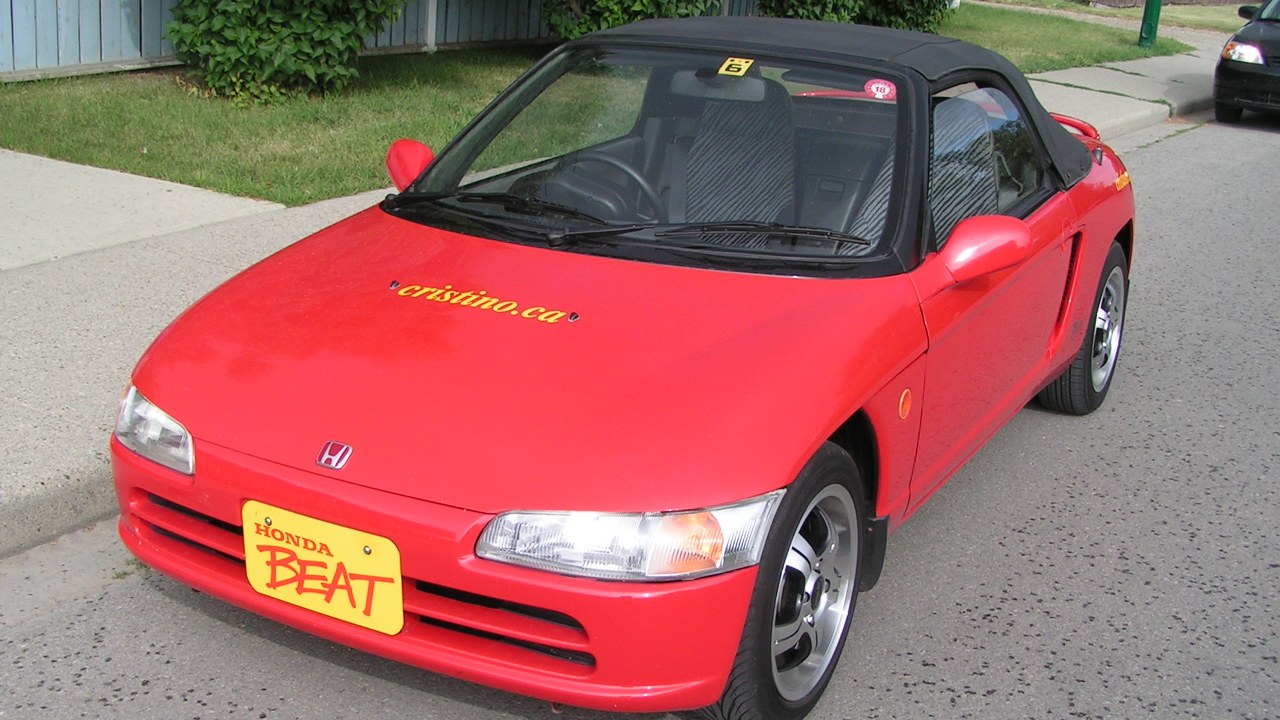
The Beat arrived in 1991, 27 years after the S600. It put a naturally aspirated 656cc three-cylinder behind the driver, with an indicated 8,500 rpm redline. Pininfarina also supplied the body lines.
A gentlemen’s agreement among Japanese makers held it to 63 horsepower, Motor1 explains. Honda sold it only as a convertible. Just over 33,000 found buyers before Honda dropped the model in 1996.
8. 1992 Honda NSX Type R
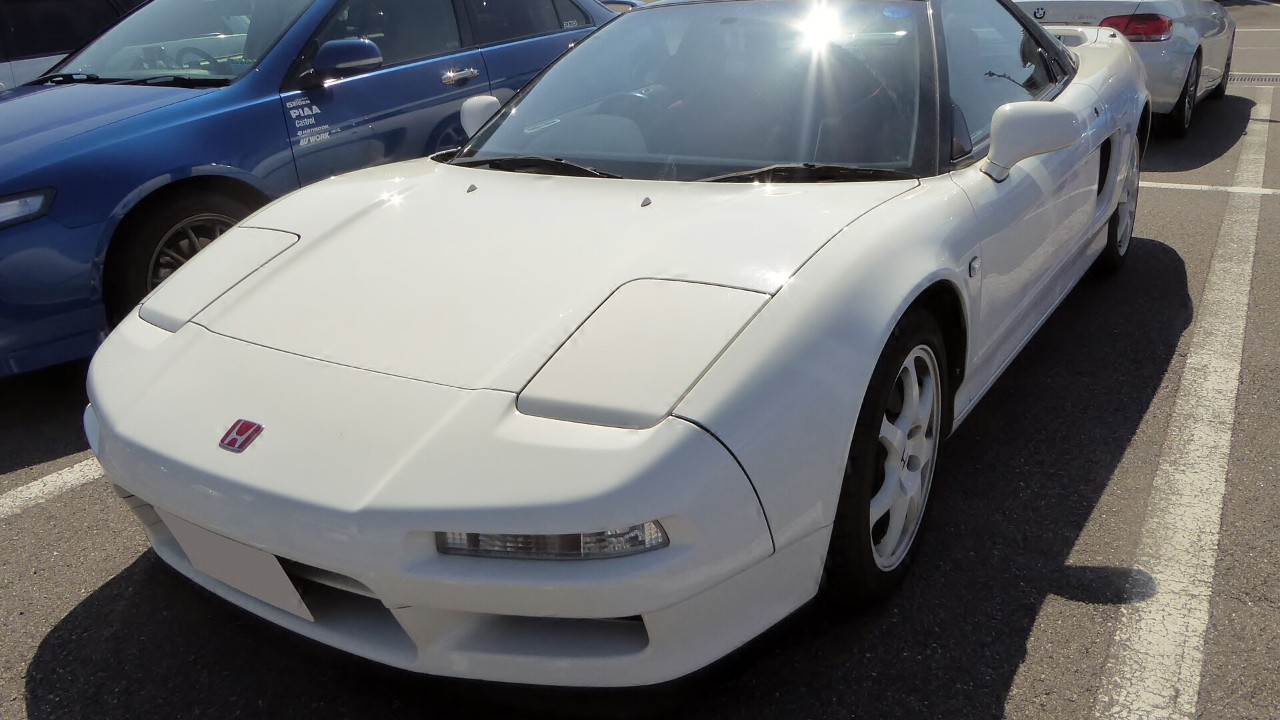
For the Type R, Honda worked by subtraction. Out went the sound deadening, power steering, audio system, spare tire and air conditioning. Lightweight carbon-Kevlar Recaro buckets also replaced the electric seats.
The result weighed 1,230 kg, 140 kg less than a standard NSX, according to Supercar Nostalgia. Its 2,977cc V6 kept the official 270 bhp rating, while the suspension got stiffer bars, bushings, springs and dampers. The car debuted at the Tokyo Motor Show in October 1992. Honda built 483, all right-hand drive for Japan, before production ended in September 1995.
More from Fast Lane Only