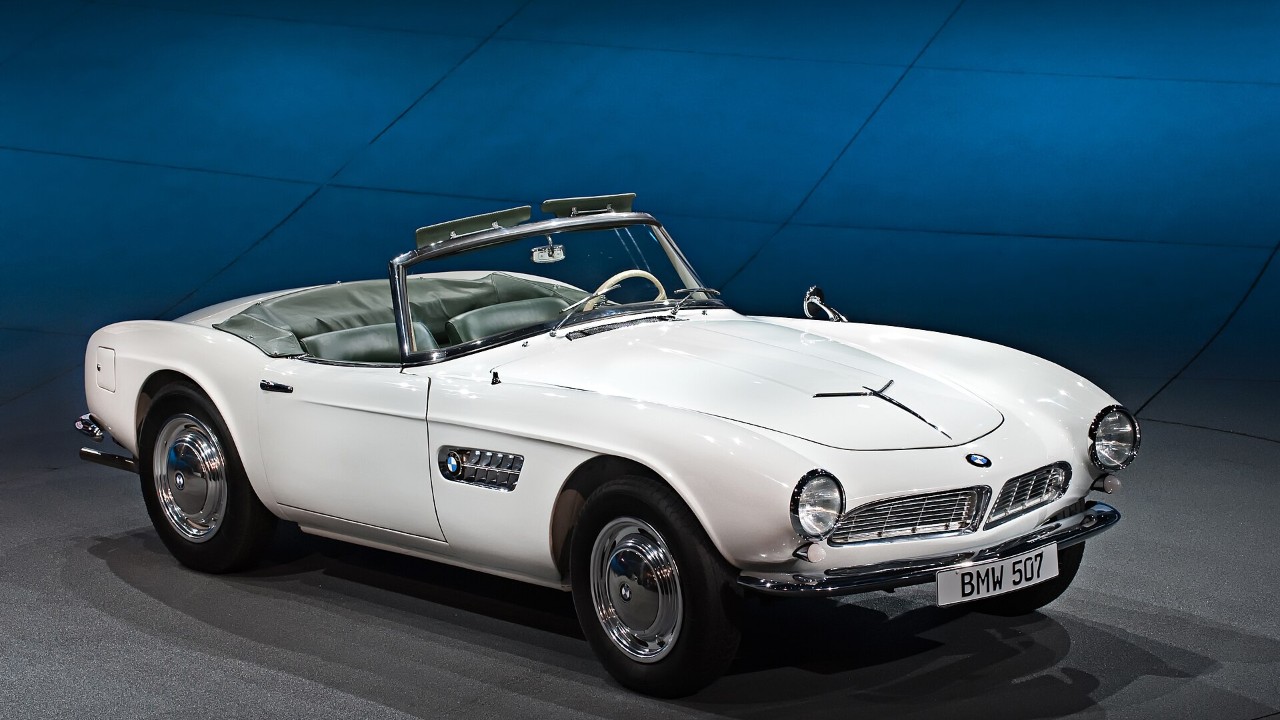
The BMW 507 roadster first started as a sales pitch from a car dealer in New York. Max Hoffman, BMW’s importer in the United States, didn’t like the early designs for a new V8 sports car. So he steered the job to a German count working as a designer in Manhattan. BMW’s own heritage arm now calls the result one of the most beautiful cars in its history. Yet BMW built only about 250 of them before the money ran out.
That combination of beauty and failure is what makes the car worth a closer look. After all, the 507 was supposed to rescue a struggling company. Instead, it barely sold.
A New York importer, a former Studebaker designer and a borrowed sedan chassis explain both halves of that story.
Why BMW wanted a V8 roadster
BMW was in a bad way in the early 1950s. According to BMW Group Classic, the company had ideas for a true sports car as early as 1953. The goal was to lift sales at a “crisis-ridden” company and reposition the brand for a fast-moving decade.
Then the first sketches came in 1954. BMW Group Classic says they took shape at the company’s research and development department at the Nürburgring, led by Ernst Loof. However, the car that reached production looks nothing like a Munich committee project, and that is down to Hoffman.
Max Hoffman sends the BMW 507 to New York
Hoffman was an Austrian-born dealer in New York and one of the biggest importers of European luxury cars in the 1950s. That description comes from a 2006 BMW Group press release. Because of that job, he knew what American buyers would pay for. Classic & Sports Car reports that in 1954 he pushed BMW to build a rival to the Mercedes-Benz 300SL and promised to sell it.
He also rejected the first drafts. BMW’s 2006 release says the company first asked Raymond Loewy to assess a V8 roadster project, and Hoffman was unimpressed with what he saw. BMW Group Classic puts it plainly: Hoffman advised taking the design work to New York. There, in turn, it landed with Albrecht Graf Goertz.
At the time, Goertz was not a big name yet. The press release says he was born on January 12, 1914, in Brunkensen, near Hanover, and moved to the United States in 1936. After the war, Loewy helped him enroll at the Pratt Institute and hired him as a junior designer at Studebaker. Then, in 1953, Goertz opened his own studio in New York.
From sketches to Frankfurt in under a year
Hoffman suggested that Goertz mail a few sports car sketches to Munich. According to the release, BMW liked them and invited him over about two weeks later. Soon after, the two sides signed contracts in January 1955.
From there, the work moved quickly. Goertz based the 507 on the chassis of the BMW 502 3.2-litre sedan, shortened by 35.5 centimeters. At the same time, he designed the 503, a coupe and convertible meant for the American market. All three body styles were running in under a year, the release says.
BMW showed the 507 at the Frankfurt motor show in 1955. Together with the 503, it drew the most attention there, the release says. BMW Group Classic says people soon called it the “Dream of the Isar.” BMWBlog adds that a production-ready car appeared at the Waldorf Astoria in New York the same year.
The numbers behind the BMW 507 roadster
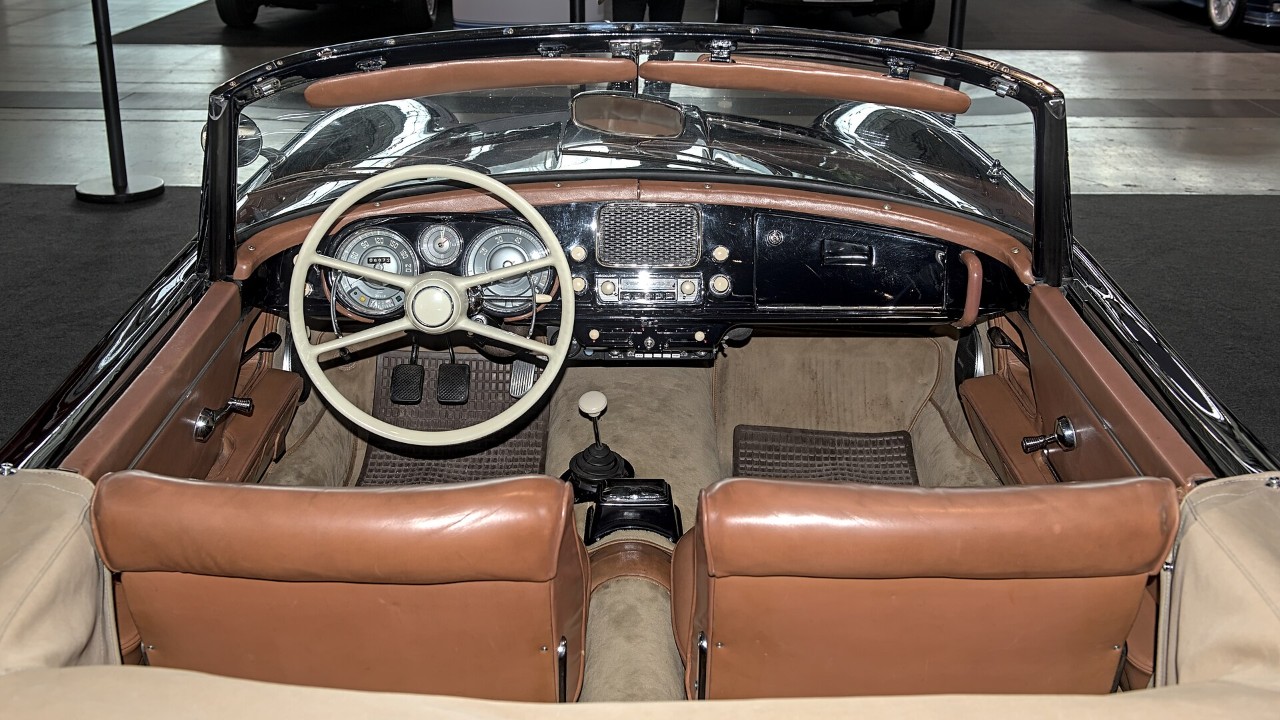
Under the hood sat a 3,168 cc V8. BMW Group Classic rates it at 150 bhp at 5,000 rpm and lists a top speed of 205 km/h, about 127 mph. By comparison, BMWBlog quotes 148 hp and a four-speed gearbox driving the rear wheels. Classic & Sports Car describes an all-alloy V8 and aluminum bodywork, with the car weighing about 1,300 kg.
The price, however, was the problem. BMW Group Classic lists DM 26,500 at home. In the United States, Classic & Sports Car gives a “sky-high” $9,000, while BMWBlog says $11,000 at launch.
BMW 507 roadster production ran from late 1956 to December 1959. In total, BMW Group Classic counts 251 cars. By contrast, BMWBlog and Classic & Sports Car both say 252. That small gap is why the count is usually given as about 250.
A beautiful car that lost money
At first, the 507 got the attention BMW wanted. Still, BMW Group Classic admits it “barely found any buyers.” The company had planned series production, but instead built the cars one at a time from 1956.
According to Classic & Sports Car, BMW lost money on every car. In fact, development and production costs roughly doubled the first estimate. As a result, the magazine says, the 507 “brought BMW to the brink of bankruptcy.” BMWBlog calls it a “financial disaster” for the company.
Goertz, by contrast, did fine. His studio went on to design cameras, pens and radios, and the BMW release credits him with the Datsun 240Z as well. He died at 92 in 2006. In that release, BMW quoted his own view of the job: “If I can touch somebody emotionally with a car, then I can do it with other products as well.”
Finally, the cars survived too. Classic & Sports Car estimates that about 200 of the 252 it counts survive, which means most of BMW’s money-losing roadsters made it to the present day.
More from Fast Lane Only