Honda is using its racing arm to signal a more aggressive future for its road-going performance cars, teasing HRC-developed hardware for the Civic Type R and the reborn Prelude after first testing the formula on Acura’s Integra. The concepts unveiled at Tokyo Auto Salon preview a catalog of track-bred components that move beyond cosmetic packages and into serious chassis, aero, and cooling upgrades. For enthusiasts, they read as a promise that Honda Racing Corporation intends to sell race-inspired parts that meaningfully alter how these cars drive.
From Acura experiment to Honda showcase
Honda’s decision to roll out HRC concepts for the Civic Type R and Prelude did not happen in a vacuum. The company had already used the Acura Integra Type S HRC Prototype to gauge interest in a factory-backed performance parts program, positioning that car as a test bed for race-derived hardware that could be adapted to customer vehicles. The new Civic and Prelude projects follow that same template, signaling that the Integra exercise was not a one-off but the opening move in a broader strategy that ties showroom models more closely to Honda’s competition efforts.
At Tokyo Auto Salon, Honda framed these cars as part of new model lines that represent what it calls “Honda Sports DNA,” with HRC Performance Parts at the center of that message. The company has stated that it is developing “HRC-equipped” versions of production models, and that the upgrades previewed on the Civic Type R and Prelude concepts are intended to evolve into parts customers can actually buy. In that context, the Integra Type S HRC Prototype looks like the pilot program, while the Civic and Prelude concepts show how the same approach can be applied under the Honda badge rather than Acura.
HRC’s skunkworks vision for the Civic Type R
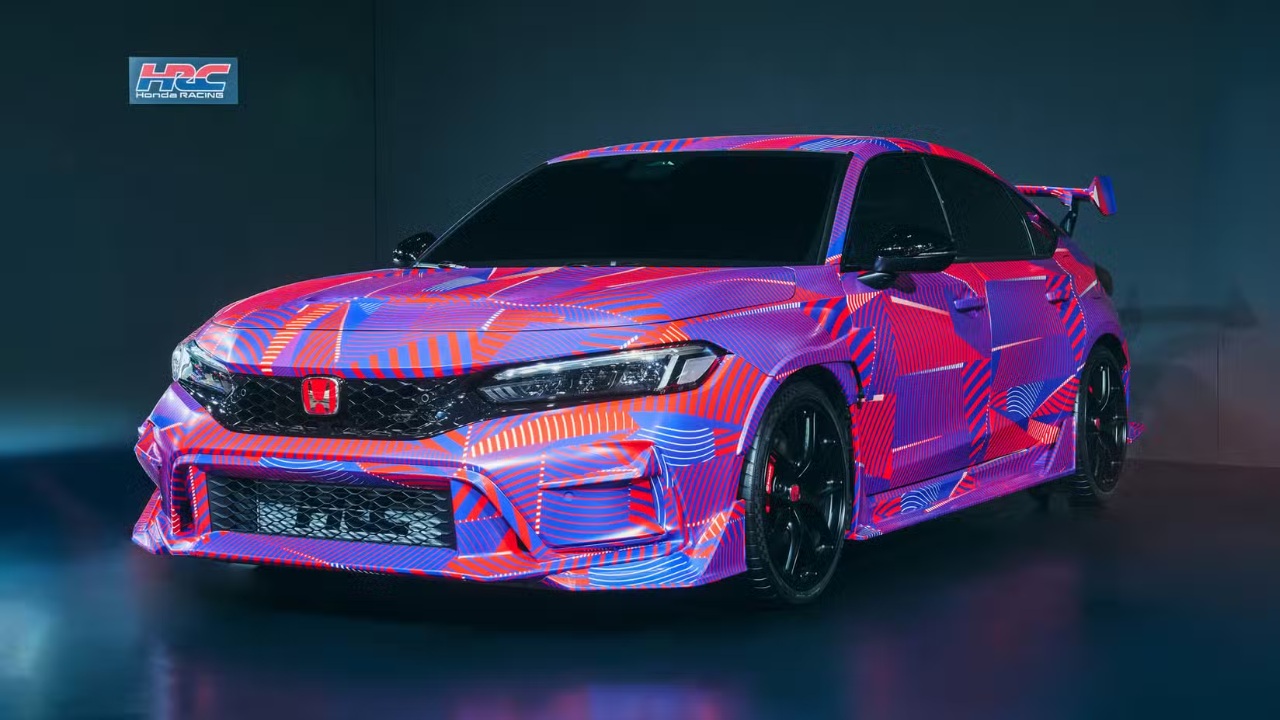
The Civic Type R HRC concept is the clearest signal yet of how far Honda is willing to push its front-drive hot hatch with factory-sanctioned tuning. The car builds on the 324-horsepower Type R, and visual changes are not just for drama but for airflow and cooling. A reworked front bumper exposes an HRC-branded intercooler through the lower grille mesh, a choice that hints at potential power gains while also underscoring the focus on thermal management during sustained hard use. The front end treatment, combined with additional vents and ducts, suggests that HRC is targeting repeatable performance on track rather than short bursts of speed.
Along the sides, front wheel arch extensions and new side sills with tall air curtains suggest a widened track and improved airflow around the body. These elements, together with a more aggressive rear treatment, indicate that HRC is using the Civic Type R as a canvas to refine high-speed stability and cornering grip through aerodynamics as much as through mechanical changes. Honda has described these upgrades as part of a performance parts program that is already in development, and has emphasized that the path from concept to customer will not be a long one, which implies that many of the visible changes on the show car are close to production intent.
Prelude HRC concept: from stylish coupe to track-capable tool
The Prelude HRC concept takes a different starting point, transforming a stylish hybrid coupe that launched in September into something that looks ready for a time attack session. HRC’s treatment lowers and visually widens the car, with more assertive bumpers, side skirts, and aero elements that align it with Honda’s motorsport aesthetic. The concept is described as using racing-derived HRC parts, which positions it as more than a styling exercise and instead as a preview of how the Prelude could serve as a platform for serious driving enthusiasts.
Honda has been explicit that it is developing HRC Performance Parts for production models, and the Prelude concept is presented as one of the first beneficiaries of that program. The company has linked these efforts to its broader “Honda Sports DNA” initiative, which aims to connect road cars more directly to the brand’s competitive heritage. By giving the Prelude the same HRC treatment as the Civic Type R, Honda is signaling that the coupe is not just a nostalgic nameplate revival but a candidate for genuine performance upgrades that go beyond wheels and spoilers.
Sport Line specials and the Instagram-era reveal
Alongside the hardcore concepts, Honda has also shown Civic Type R Sport Line and Prelude Sport Line models that serve as more accessible showcases for HRC-branded components. These variants, unveiled by Honda’s racing channels, are described as existing primarily to display HRC pieces rather than to introduce separate powertrain configurations. The Sport Line approach allows Honda to demonstrate how owners might selectively adopt certain parts, such as aero add-ons or cooling upgrades, without committing to the full, track-focused specification of the HRC concepts.
The way Honda has presented these cars underscores how central visual storytelling has become to performance branding. Official racing accounts have highlighted details like the exposed HRC intercooler and the aggressive bodywork in tightly framed images and short captions, inviting enthusiasts to scrutinize the hardware and speculate about what will reach the catalog. That social-first reveal strategy complements the physical debut at Tokyo Auto Salon, turning the show stand into the starting point for a broader conversation about factory-backed tuning that continues online long after the event.
Race parts you can actually buy
Underlying all of these show cars is a simple but significant promise: HRC will make race-inspired parts that are intended for real customers, not just for internal projects or limited competition programs. Honda has said that it is currently developing HRC Performance Parts for production models and has linked that work directly to the Civic Type R and Prelude concepts. The company has also stressed that the development timeline from these prototypes to marketable components is not expected to be long, which raises expectations that owners will soon be able to order some of the showcased hardware through official channels.
That commitment marks a shift in how Honda packages its motorsport expertise for the street. Instead of confining HRC to race cars and factory teams, the brand is positioning it as a skunkworks-style operation that feeds directly into enthusiast offerings. The Civic Type R and Prelude concepts, along with the earlier Acura Integra Type S HRC Prototype, collectively outline a future in which Honda’s most passionate customers can buy parts that share design intent and development philosophy with the company’s competition machinery, installed on cars that still carry full factory backing and support.
More from Fast Lane Only