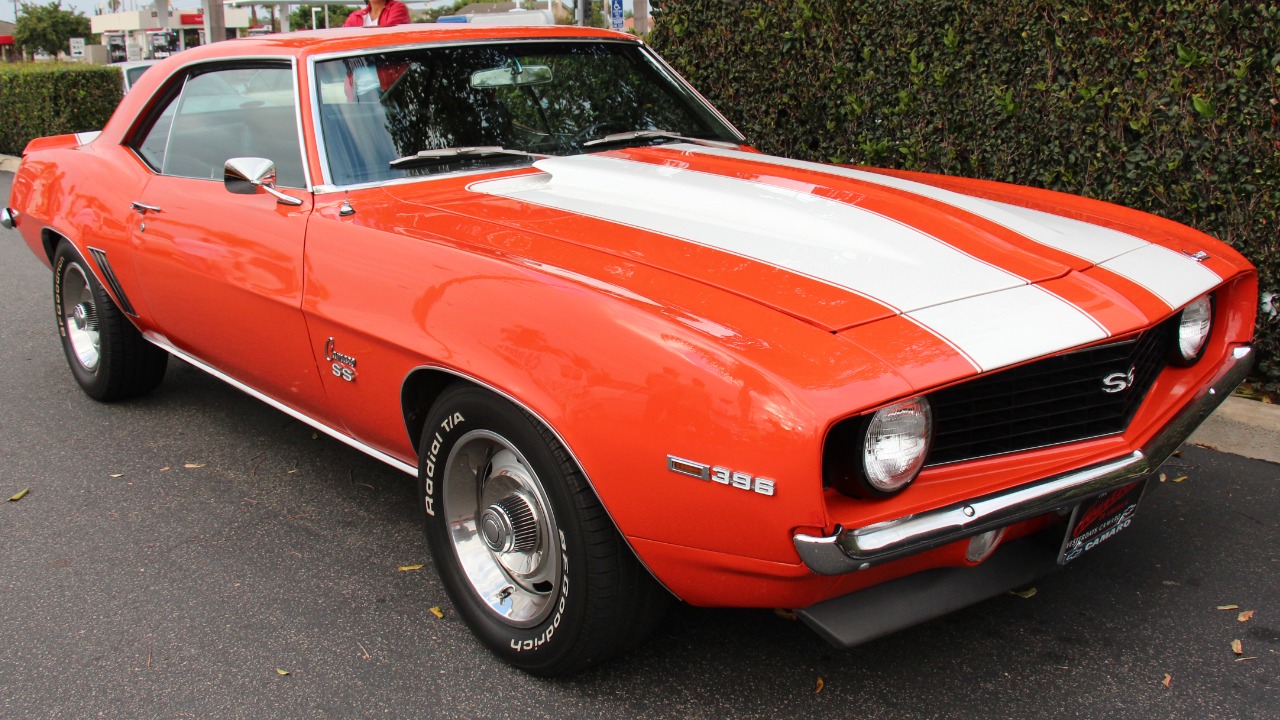
The 1969 Camaro SS 396 sits at the crossroads of big-block muscle, motorsport credibility, and modern collector money, which is why its performance, rarity, and current values draw such intense scrutiny. As the final year of the first-generation Camaro, it wrapped peak late‑sixties horsepower in a body style that has become shorthand for the era’s street and strip wars. Today, the same traits that made the SS 396 a terror at the drag strip are driving a sharp divide between ordinary big‑block cars and the rarest factory combinations.
How the SS 396 fit into the 1969 Camaro lineup
To understand why the SS 396 matters now, I start with where it sat in the 1969 Camaro hierarchy. Chevrolet positioned the Super Sport package as the step up from small‑block performance, visually separating it from base and Rally Sport cars with unique badging and trim. Contemporary documentation notes that “SS” letters appeared on the front fenders and that an “SS 350” emblem sat in the center of the grille, a reminder that the Super Sport identity originally grew out of the 350 small‑block before the big‑block option took over the legend. That visual continuity meant an SS 396 could look deceptively similar to a lesser car unless buyers knew what to check under the hood.
The broader Camaro story also helps explain demand. The Camaro gained momentum year after year, with Chevrolet leaning into performance‑oriented versions to keep pace with rivals. By 1969, the SS 396 sat alongside small‑block SS and RS/SS combinations, plus specialty packages, as part of a crowded performance menu. That variety is part of the car’s modern appeal: collectors can chase everything from relatively attainable big‑block drivers to ultra‑rare option codes, all within the same model year and body shell.
Big‑block performance and quarter‑mile credibility
On paper and on pavement, the SS 396 delivered the kind of numbers that still resonate with muscle‑car buyers. A detailed period specification sheet for the 1969 Chevrolet Camaro SS 396 lists a wheelbase of 108.1 inches and a curb weight of 3,790 pounds, with 13,970 examples built. In instrumented testing, that combination translated into a quarter‑mile time of 14.7 seconds at 98.7 mph, performance that put the car squarely in the thick of late‑sixties street racing. Those figures also underscore why the big‑block mattered: it had to haul a heavier chassis than small‑block SS models yet still post competitive elapsed times.
The engine options behind those numbers ranged from stout to ferocious. Enthusiast discussions of the SS 396 highlight the top L78 version, described as a 396, 375 horsepower package that came alive above 3,500 rpm when hooked to either an M21 or M22 close‑ratio 4‑speed or a TH400 automatic. A related big‑block in the Chevelle lineup, the L78 396, carried a 375 hp rating at 5,600 rpm and peak torque of 415 lb‑ft at 3,600 rpm, according to a detailed breakdown published on Mar 9, 2008, which shows how Chevrolet tuned the same basic 396 architecture for serious output. While that Chevelle data is not Camaro‑specific, it reinforces the mechanical reality behind the SS 396 badge: this was a big‑block engineered to pull hard in the midrange and keep pulling through the top of the tach.
How the SS 396 stacked up against other 1969 muscle cars
Performance only matters in context, and the SS 396 earned its reputation in a crowded 1969 field. Coverage of the quickest muscle cars of that model year notes that the 1969 Chevrolet Camaro SS 396 L89 was among the standouts over the quarter mile, even in a season dominated by big names from Detroit. The same reporting points out that the first‑generation Camaro entered its last year of production in 1969, which added urgency for buyers who wanted a factory big‑block before the second‑generation redesign. That final‑year status now feeds into collectability, since shoppers can point to 1969 as the culmination of the original Camaro formula.
Not every SS buyer stepped up to the big‑block, which sharpens the contrast between small‑block and 396 cars today. A detailed spec sheet for RS/SS models notes that the 350 cubic inch V8 produced around 300 horsepower and 380 lb‑ft of torque. Those numbers made the 350 a robust performer in its own right, especially given the lighter weight of small‑block cars. Yet the existence of a stronger, more exclusive big‑block option is exactly what pushes collectors toward SS 396 cars when they want the top of the mainstream performance ladder without jumping into ultra‑limited specialty models.
Rarity: from regular SS 396s to the L89 elite
Production volume is where the SS 396 story splits into two very different narratives. On one side, the standard SS 396 was built in meaningful numbers. That figure makes a big‑block SS far less common than a base V8 Camaro but still attainable enough that drivers can find cars to enjoy on the road. On the other side sit the optioned‑up big‑blocks, where production shrinks to triple digits and rarity becomes a central part of the value story.
The clearest example is the aluminum‑headed L89. A detailed breakdown of this package explains that there was only 311 L89 Camaros built, describing it as one of the rarest 1969 Camaro options and emphasizing that the L89 big‑block carried a significant price premium in 69 that limited take‑rate. When only 311 cars exist, even small shifts in collector interest can move prices quickly, which is exactly what the market has seen as more buyers chase documented L89 cars.
Collector values and how the market treats SS 396 variants
Modern pricing data confirms how sharply the market distinguishes between a typical SS 396 and the rarest configurations. A valuation guide for the 1969 Camaro SS shows a spread of condition‑based prices for big‑block Super Sports, reflecting the usual factors of originality, documentation, and restoration quality. Within that broader picture, a separate pricing breakdown for the 1969 Chevrolet Camaro Super Sport 2 Door Coupe L89 (396) lists specific low, average, and high retail figures, with the top end reaching into six‑figure territory. Those “Prices” illustrate how documentation of the L89 option can multiply a car’s value compared with a visually similar SS 396 that left the factory with iron heads.
Broader Camaro history also feeds into those numbers. A detailed overview of sales trends notes that Popularity and Sales Figures for The Camaro climbed through the late sixties as Chevrolet leaned into performance‑oriented vehicles. That sustained enthusiasm means there is a deep pool of buyers today, from enthusiasts who grew up with the cars to younger collectors who discovered them through media and motorsport history. Within that pool, the SS 396 occupies a sweet spot: more exclusive and powerful than small‑block SS cars, but still more attainable than the rarest COPO and L89 builds that now trade at the very top of the market.
Heritage, pace‑car prestige, and why demand stays strong
Beyond raw numbers, the 1969 SS 396 benefits from the broader cultural halo around that model year. Coverage of the car’s motorsport ties points out that the 69 Chevy Camaro SS was the Official Pace Car for Indianapolis 500, a role that cemented the shape and stripes of the 1969 Camaro in front of a national audience. That exposure helped turn the car into a pop‑culture fixture, which in turn supports long‑term demand for all high‑spec 1969 Camaros, including SS 396 variants. Even buyers who are not chasing a specific pace‑car replica often cite that race connection as part of the model’s appeal.
When I look across the available reporting, a consistent pattern emerges. The SS 396 pairs credible factory performance with production numbers that are low enough to feel special but high enough to keep the car visible at shows and auctions. At the same time, ultra‑rare options like the L89, limited to 311 cars, create a clear hierarchy inside the SS 396 universe, with documented examples commanding the strongest “Prices” in current guides. Add in the final‑year status of the first‑generation Camaro, the 108.1‑inch wheelbase and 3,790‑pound heft that give the car its distinctive stance, and the enduring image of a big‑block Camaro pacing the Indianapolis 500, and it is easy to see why the 1969 SS 396 remains one of the most closely watched muscle cars in today’s collector market.
More from Fast Lane Only: