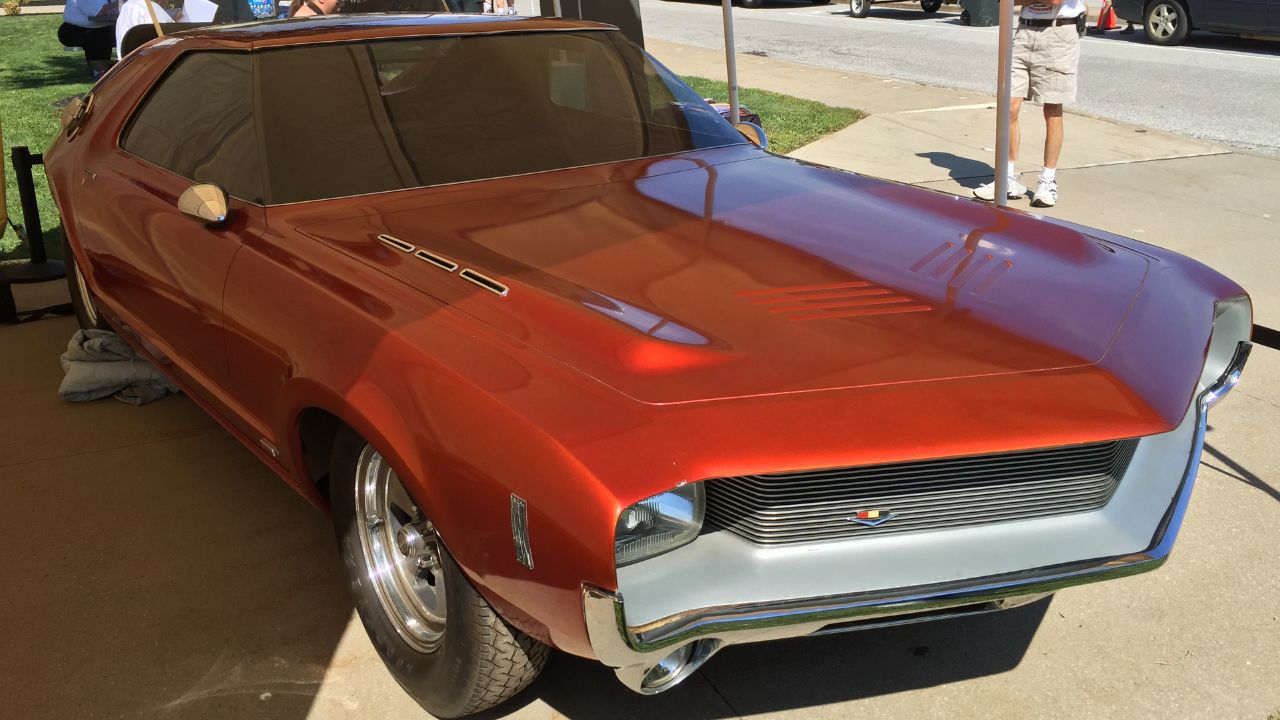
In the mid-1960s, American Motors seriously explored building a two-seater sports car that could compete with the Chevrolet Corvette. The project was never greenlit for full production, but AMC went further than most people realize. They developed prototypes, discussed drivetrain configurations, and even flirted with fiberglass bodies. It was a bold move for a company known more for economy cars than performance. Here’s how close AMC came to building a legitimate Corvette rival—and why it never happened.
The AMX concept started as a show car
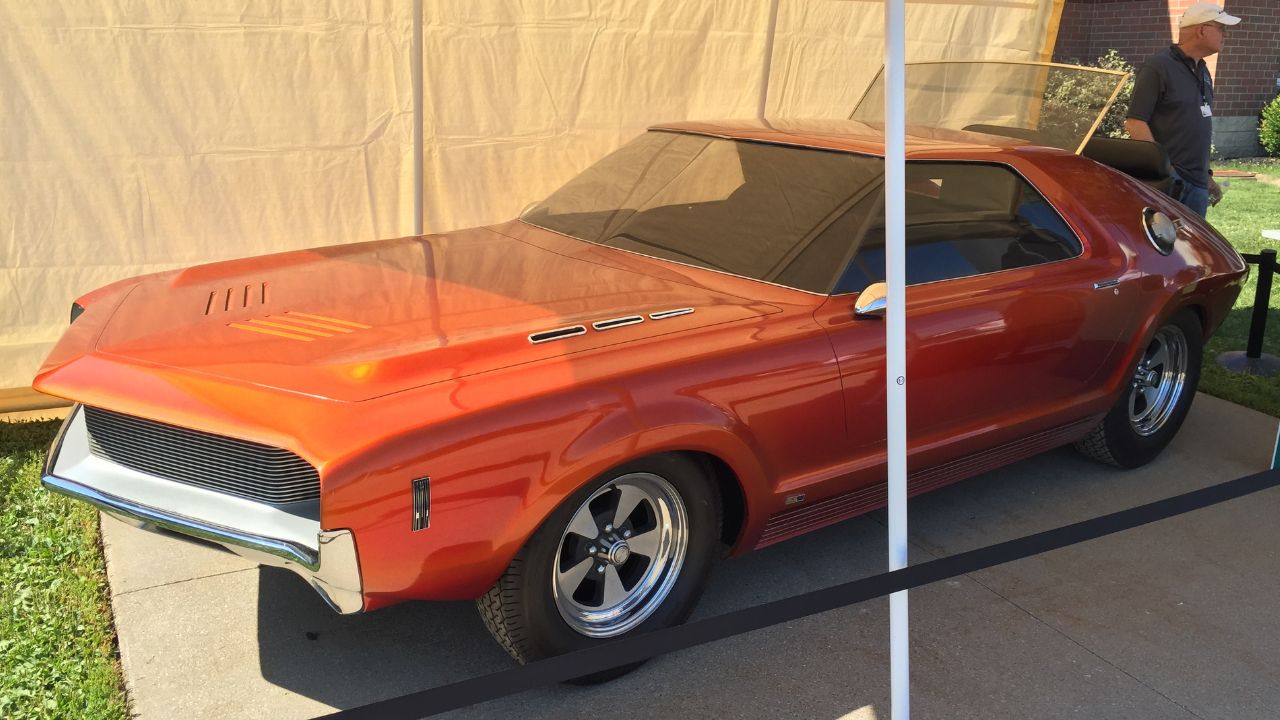
In 1966, AMC revealed the Project IV AMX concept—a two-seat fastback built to grab attention at auto shows. It featured a fiberglass body, wild styling, and a short 97-inch wheelbase. The idea was to show that AMC could do more than practical sedans. It caught on quickly with the press and public, leading AMC to explore a production version that would bring the concept’s performance focus to the street.
AMC built actual running prototypes
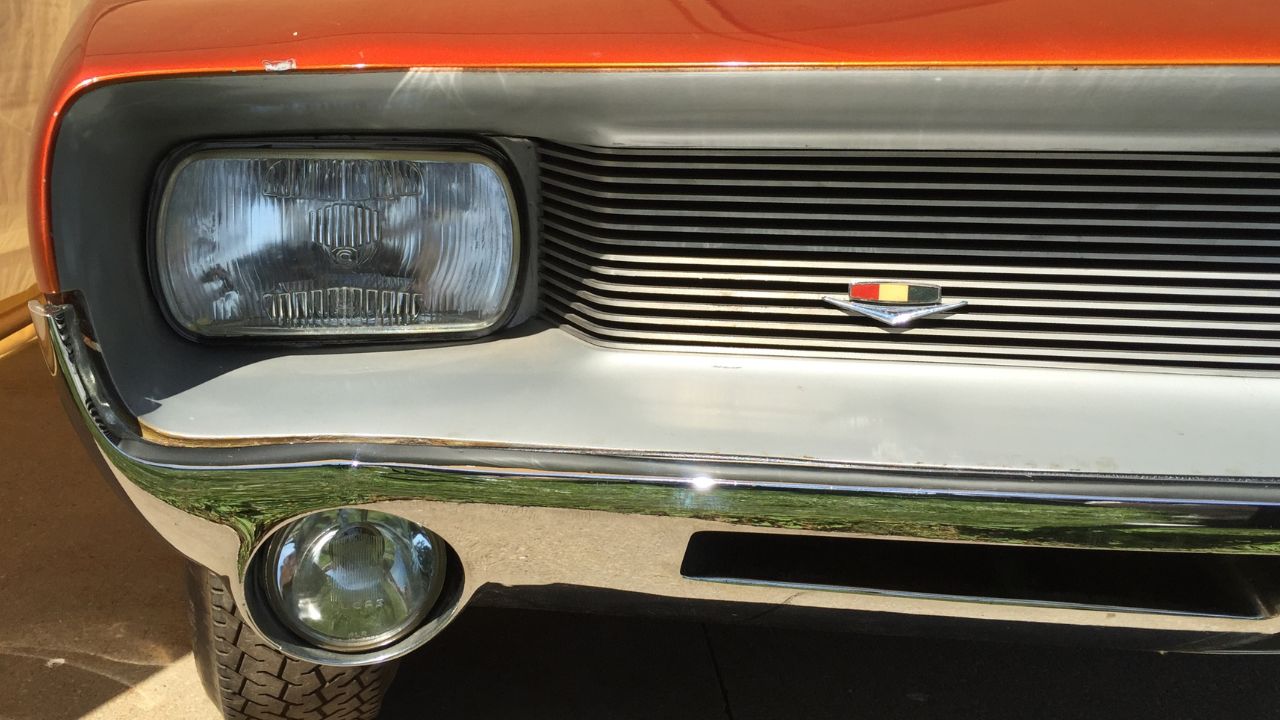
Unlike many concepts, the AMX wasn’t just for show. AMC built a handful of functional prototypes that could be driven and tested. They experimented with materials, including fiberglass and steel, and explored various powertrains. Some early test mules used 343- and 390-cubic-inch V8s, which were still under development at the time. AMC’s engineering team was serious about building something that could run with the best sports coupes of the era.
It was originally intended as a two-seater
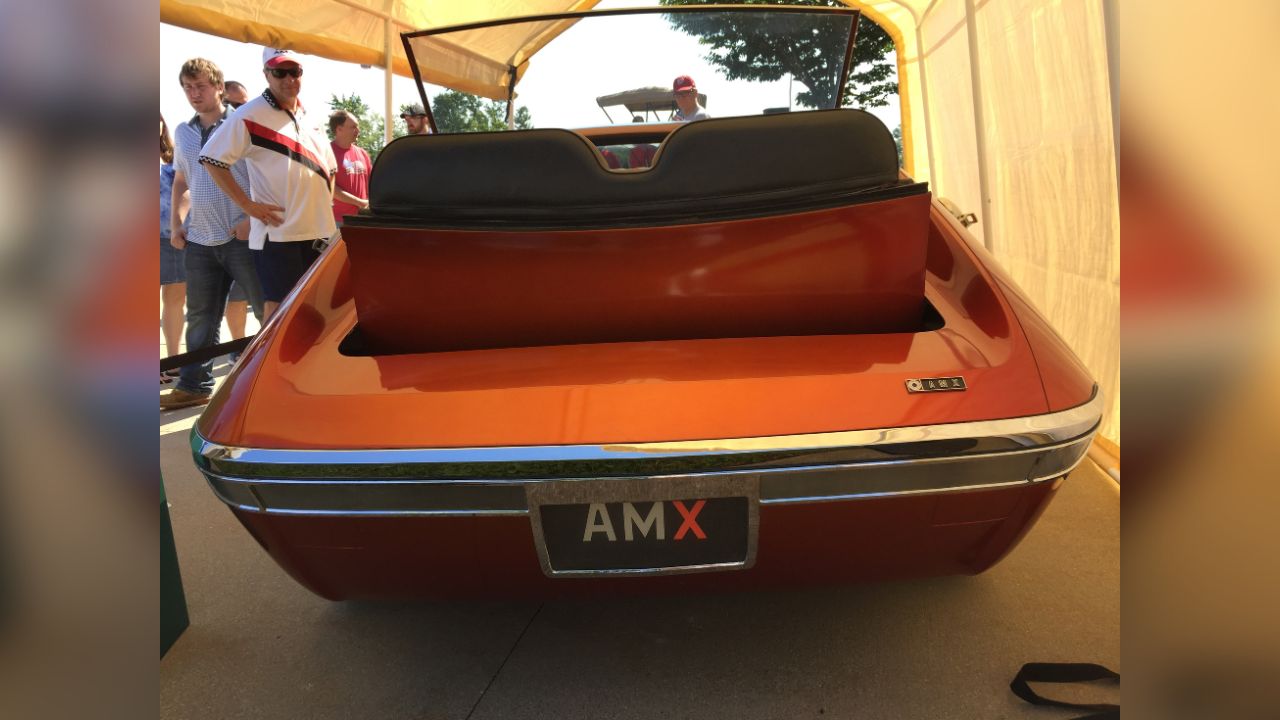
AMC’s internal plan was to make the production AMX a true two-seater, like the Corvette. The short wheelbase and compact dimensions were designed specifically to make it a focused performance car. Engineers believed that a smaller, lighter platform would help compensate for AMC’s limited high-performance parts bin. But market research eventually pushed the company to consider adding a rear seat for broader appeal, which would change the direction of the project.
AMC pitched it as America’s affordable exotic
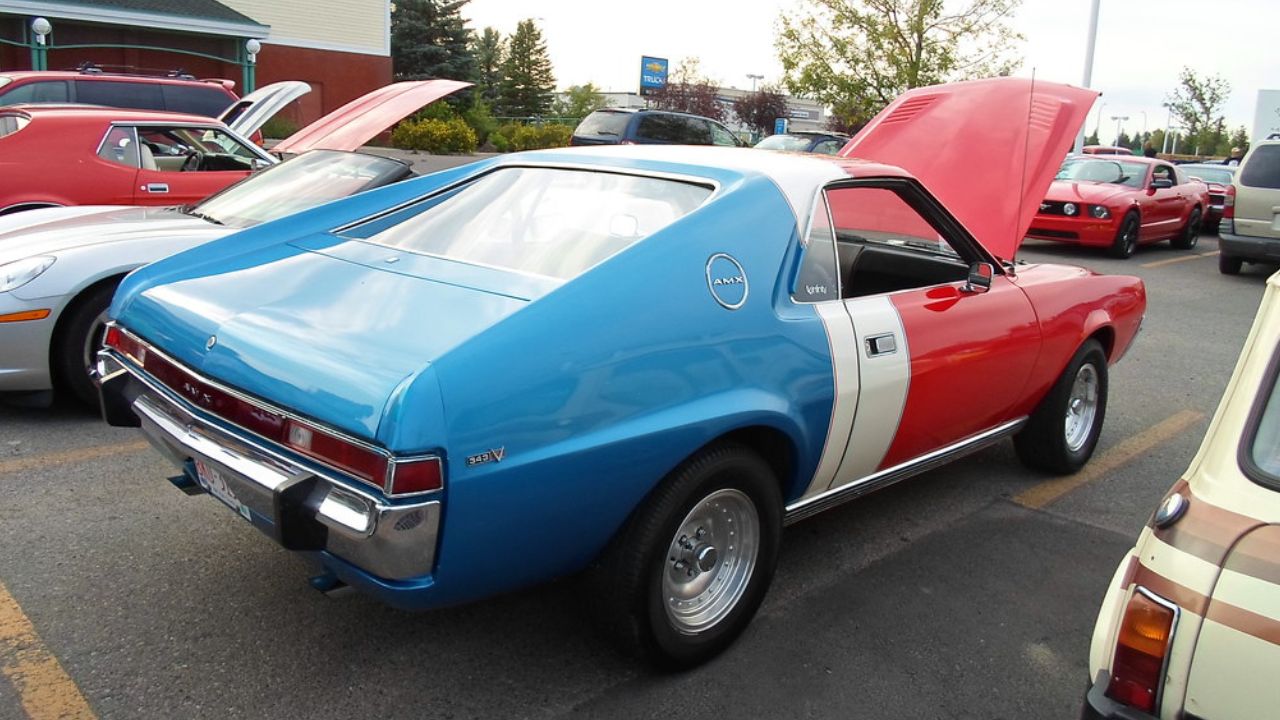
AMC never pretended the AMX would dethrone the Corvette in outright speed, but they saw a niche in delivering serious style and V8 power for thousands less. The expected price was under $3,500—compared to nearly $5,000 for a Corvette in the late ’60s. AMC emphasized performance-per-dollar and even planned factory support for racing. With the right trim and powertrain, it would’ve been a legitimate threat in SCCA and street circles alike.
Fiberglass was on the table but later dropped
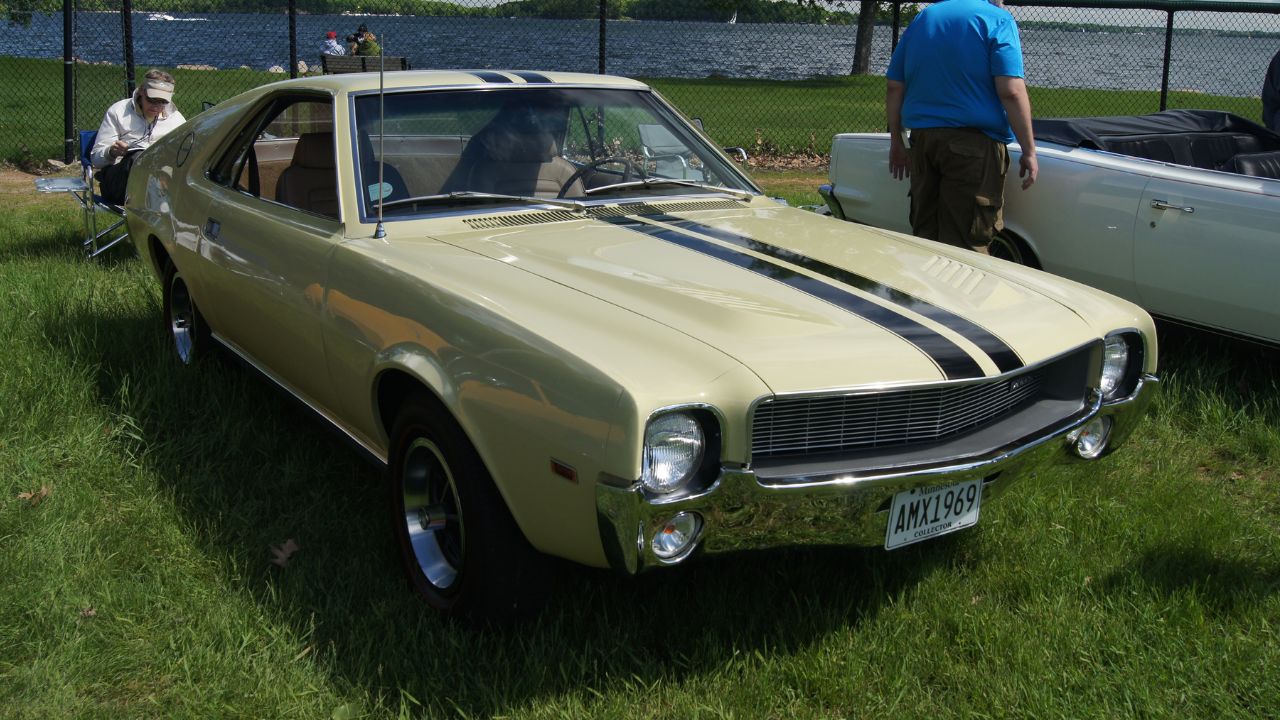
Early versions of the AMX concept used fiberglass, a material already proven by Chevrolet for the Corvette. Fiberglass was lightweight and good for unique shapes, but AMC lacked the mass-production tooling. Cost concerns eventually pushed the production version toward stamped steel. That change increased production feasibility but also added weight. Still, the final car stayed under 3,200 pounds, which kept it competitive with rivals in the muscle coupe segment.
The two-seat design was scrapped after 1970
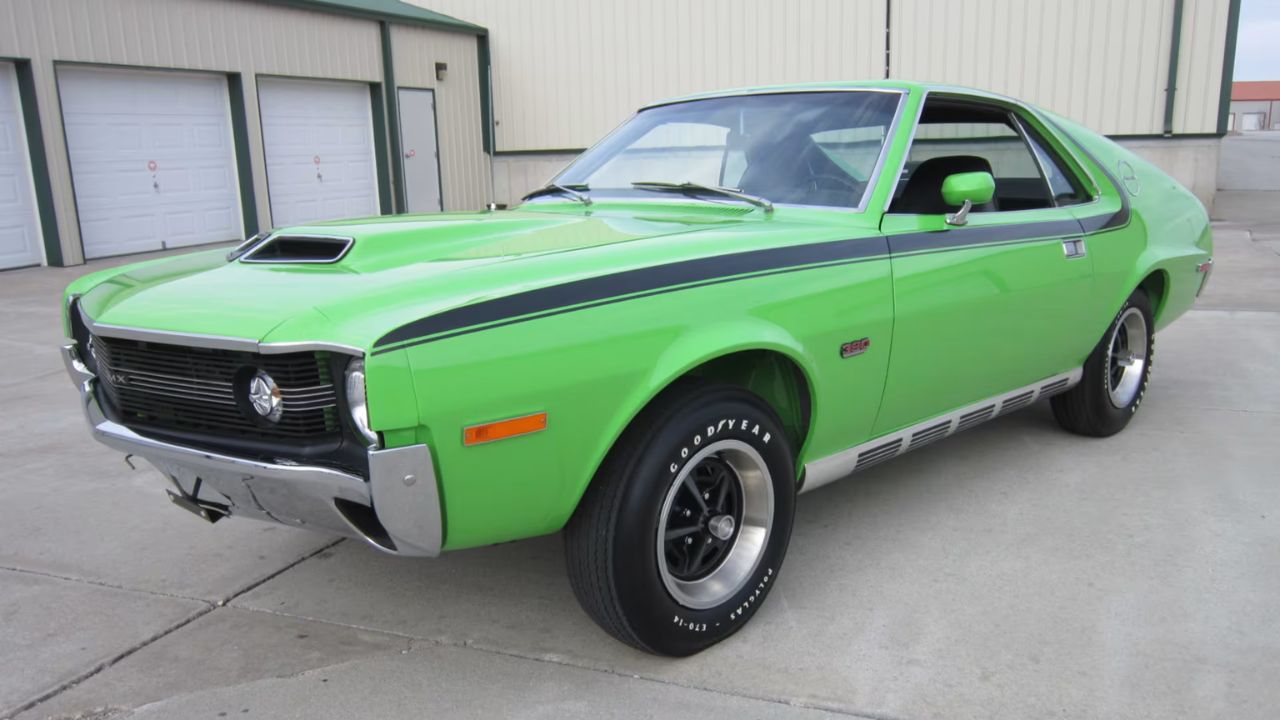
AMC built the AMX as a two-seater from 1968 through 1970. After that, it was folded into the Javelin line and became just a performance trim on a four-seater coupe. The decision came down to sales: buyers preferred the practicality of a 2+2. While the original two-seater was closer to a Corvette rival, AMC shifted focus to compete with pony cars like the Mustang and Camaro, where volume was higher and margins were safer.
Performance was stronger than expected
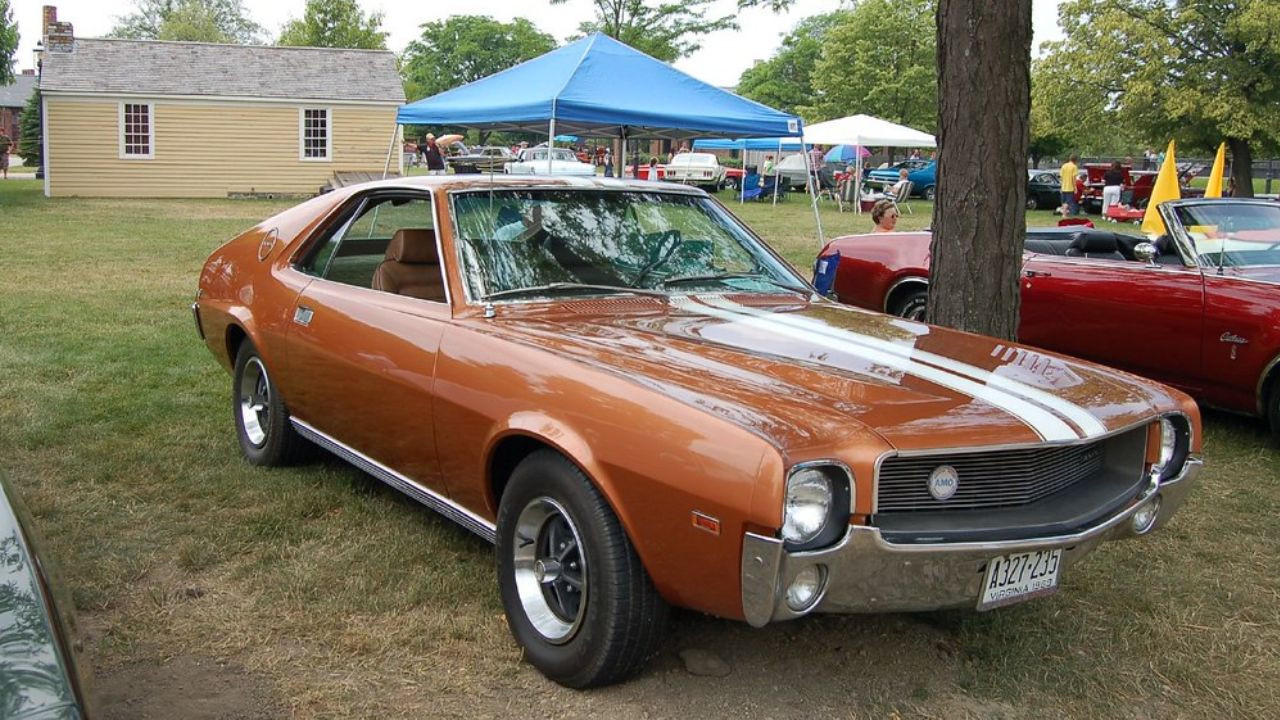
The production AMX launched with optional 343 and 390 V8s making up to 325 hp. With the four-speed manual, it could run 0–60 in under 7 seconds. AMC used lighter unibody construction and kept wheelbase short for better agility. It didn’t beat the Corvette in raw numbers, but it held its own—and often undercut competitors on price. The AMX proved AMC could engineer a legitimate high-performance car, even if it didn’t always get the credit.
The idea faded—but never disappeared
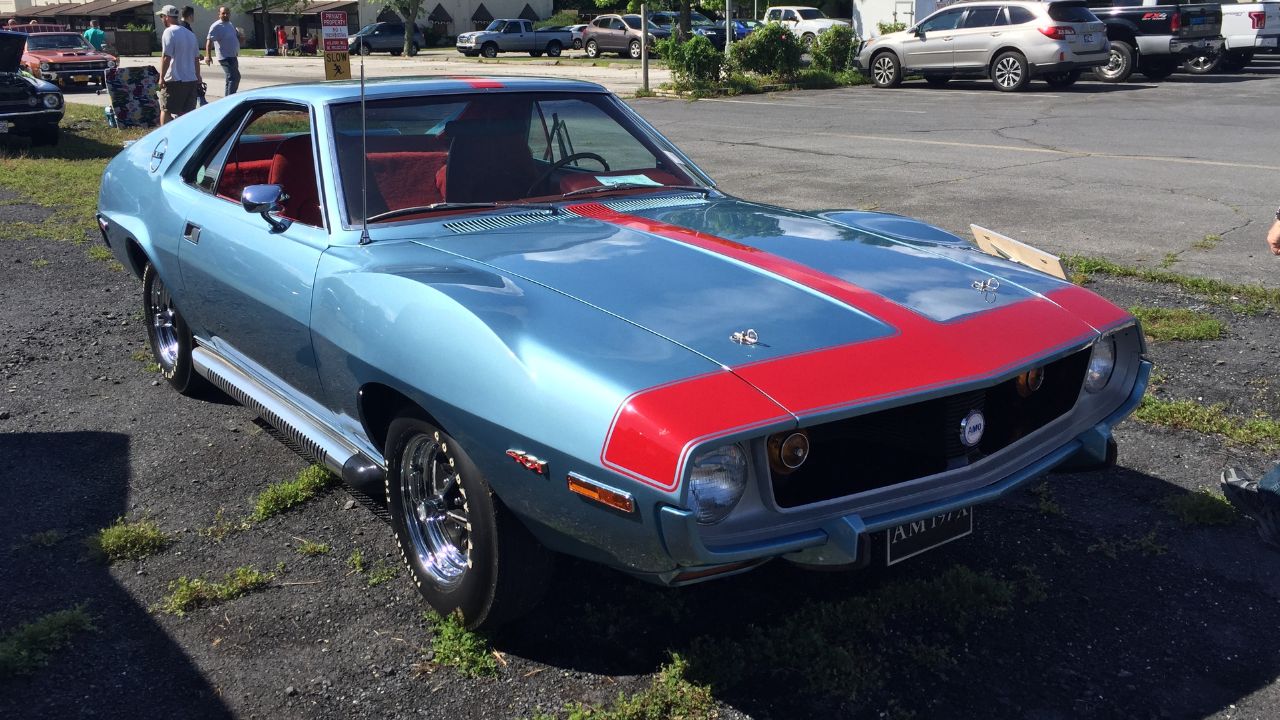
After 1970, the dream of a dedicated two-seat sports car quietly faded at AMC. The company’s financial struggles and focus on more profitable models like the Gremlin, Hornet, and Matador left little room for niche sports cars. Still, the original AMX remains a unique footnote in American car history—a car that almost took on the Corvette head-on, and for a brief moment, looked like it just might pull it off.
Like Fast Lane Only’s content? Be sure to follow us.
Here’s more from us:
*Created with AI assistance and editor review.