You live in a world where flying cars are still a promise, not a product, yet nearly a century ago Henry Ford tried to put you in the pilot’s seat for your daily commute. His tiny Ford Flivver was supposed to be the Model T of the skies, a personal aircraft you could operate as casually as a car. Instead, a single fatal crash ended the program and turned that dream of air commuting into a cautionary tale about ambition, safety, and the limits of technology.
Look closely at how the Flying Flivver rose and fell and you see more than an eccentric side project from an auto magnate. You see how one charismatic idea, sold as inevitable progress, can skip past the hard questions about training, infrastructure, and risk that you still face whenever someone pitches you a flying car today.
How Henry Ford tried to make you a pilot
When you picture Henry Ford, you probably think of assembly lines and the Model T, not small airplanes. Yet by the mid 1920s, Ford wanted you to see the sky as an extension of the road, with a personal aircraft that felt as accessible as his cars. In that era, he was already backing larger all metal passenger aircraft such as the Tri Motor, using it to connect cities like Detroit and Chicago, and he saw a chance to shrink that vision down to a single seat machine for ordinary people.
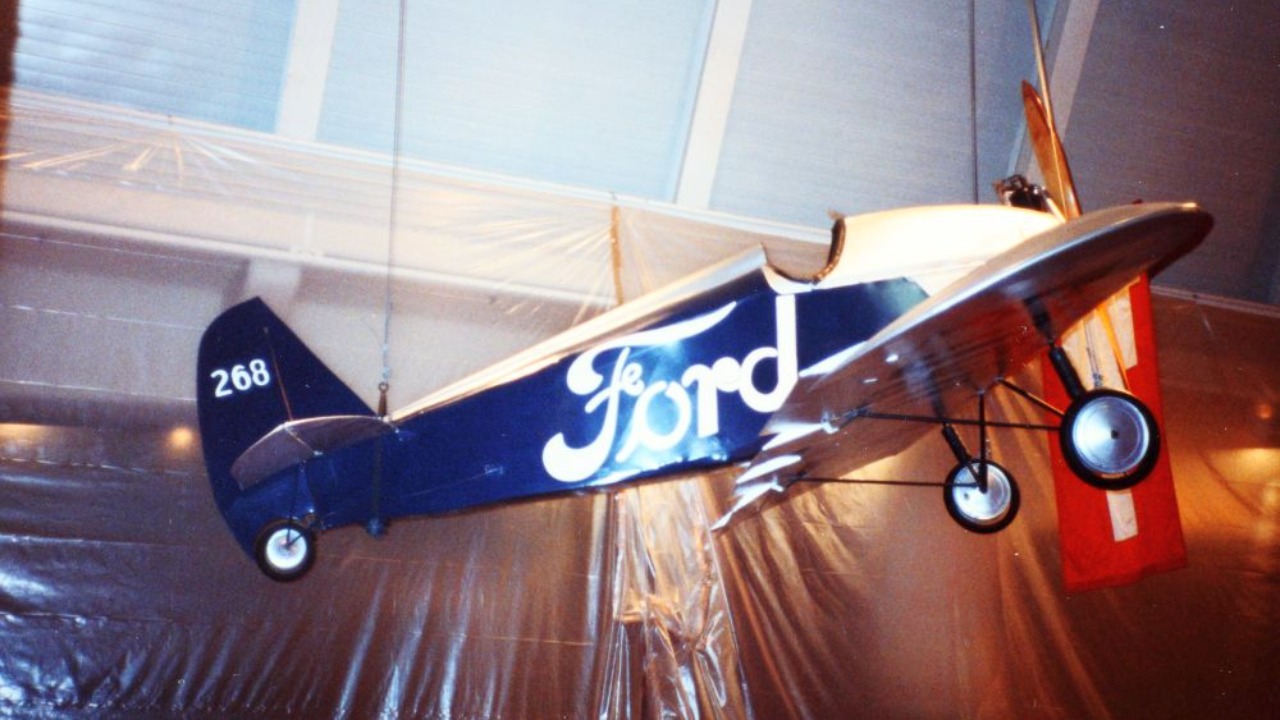
Ford even embraced the slang of the day by calling his little airplane the Flivver, a nod to the cheap, no frills cars that had put so many Americans on wheels. He talked about a future where young people would fly around in a Model T of planes, where you would treat a short hop across a state line the way you now treat a cross town drive. As later accounts of Ford’s aviation projects explain, his hope that you would casually own and operate such a machine never materialized, and the Flivver became a symbol of that gap between vision and reality.
The tiny airplane built for everyday commutes
If you had walked up to the Ford Flivver on a grass strip, you would have seen something closer to a motorized kite than a family car. The aircraft was extremely compact, with a single seat and a narrow fuselage that wrapped tightly around the pilot. Ford assigned talented engineers like Otto Koppen to work on his aviation projects, and as later histories recount, Koppen was given the task of designing a tail wheel for a revised version of the Trimotor, a detail that shows how Ford’s team thought carefully about landing gear and control even on larger aircraft.
On the Flivver, Ford’s dislike of simple tail skids led to a steerable rear wheel that carried the aircraft’s own brake and acted as a rudimentary suspension system. That kind of detail hints at what your day to day experience might have been if the aircraft had gone into mass production, with taxiing and ground handling designed to feel intuitive to a driver. Yet the same compactness that made the Flivver look friendly also left little margin for error in structure, fuel capacity, or engine reliability, all of which would matter greatly if you were trying to use it as a commuter craft.
Harry Joseph Brooks and the promise of safe personal flight
To convince you that a tiny airplane was safe enough for ordinary people, Ford leaned on the skills and charisma of Harry Joseph Brooks, a young American test pilot who became both a trusted employee and a close friend. According to biographical records of Harry J. Brooks, he was an American test pilot whose work for Ford included flying experimental aircraft and supporting high profile aviation efforts such as Richard Evelyn Byrd’s expeditions. That kind of résumé gave Ford a persuasive human face for his claim that aviation could be tamed for everyday use.
Brooks did not just test prototypes around the factory. He also flew public relations flights that linked Ford’s aviation interests with the broader excitement of the era. One account notes that Brooks flew Charles Lindbergh’s mother on a national tour while Charles Lindbergh flew his Spirit of Saint Louis, a pairing that put Ford’s aviation projects in the same emotional frame as the most famous transatlantic flight of the decade. If you had been watching from the ground, you would have seen a narrative in which skilled pilots like Brooks were proving that flight could be routine, friendly, and ready for you.
The Florida crash that ended the Flying Flivver dream
The turning point that grounded Ford’s dream came when Brooks took a Flivver on a long distance trip that was meant to showcase its reliability. As one detailed account of Henry Ford’s attempt to make you a pilot explains, Brooks’ trip to Florida turned out to be the tragic end for the Flivver project, with his return leg over water ending in disaster. Earlier in the journey he had already faced mechanical trouble and had to make stops that showed how fragile the little airplane could be outside controlled test conditions.
On the final flight, Brooks departed the Florida coast and never arrived at his destination. Contemporary investigations and later summaries describe how the Flivver eventually washed ashore in pieces and how searchers later recovered parts of the wreckage. A later recollection of the event notes that Brooks and Henry Ford were great friends, and that upon learning of Brooks’ crash and death, Henry Ford was so bereft he ordered the light aviation project shut down entirely. If you imagine yourself as a potential customer watching that story unfold, the message is unmistakable: the machine that was supposed to make flying feel as safe as driving had just killed the very pilot who knew it best.
What the investigation revealed about everyday risk
If you are trying to understand why the Flivver never became your commuter aircraft, you have to look at what investigators found in the wreckage. A detailed aviation accident summary for the Ford Flivver, cataloged under Accident Ford Flivver 2A 3218 on a safety database, explains that examination of the aircraft revealed structural and mechanical issues that likely contributed to the crash. That report describes how the small airframe and its systems left little tolerance for fatigue or error, a serious problem if you imagine thousands of such machines flown by non expert pilots.
Biographical records of Harry J. Brooks add another critical detail, noting that investigation of the wreckage disclosed problems with the fuel system that could have caused an engine stoppage. Combined with later technical histories of the Ford Flivver that highlight its prototype status and limited testing, you see a pattern that any modern safety engineer would recognize. The aircraft was still very much an experimental machine, yet Ford’s rhetoric invited you to think of it as a finished product that would behave like a car.
More from Fast Lane Only