You watch NASCAR for high speed and high drama, but you rarely see a driver plucked from a spotter stand and dropped into a top-tier car with the race already in motion. At Circuit of The Americas, that is exactly what unfolded when Myatt Snider climbed into the No. 48 Chevrolet after Alex Bowman fell ill, forcing NASCAR to decide in real time whether to clear a driver with no prior Cup Series start. In a handful of laps, a sanctioning body, a powerhouse team, and a journeyman racer compressed what is usually a weeks-long approval process.
To understand how that happened, you have to look at the emergency unfolding inside the car, the quiet résumé that made Snider a viable option, and the procedural scramble in the NASCAR hauler as officials weighed risk against practicality. It also helps to see how the track itself, the team’s preparation, and fan scrutiny shaped the decision to let a first-time Cup driver finish a race in one of the sport’s most visible seats.
The moment Alex Bowman could not continue
Signs of trouble surfaced when Alex Bowman began sounding distressed on the radio, telling his Hendrick Motorsports crew that he did not know if he was going to make it to the end of the race at COTA. According to detailed accounts, Bowman was eventually carted to the infield care center with roughly two dozen laps remaining, a clear indication this was not a minor discomfort a driver could simply push through in a 500-horsepower stock car. His medical removal left the No. 48 parked on pit road with laps still on the board and a field circulating at speed.
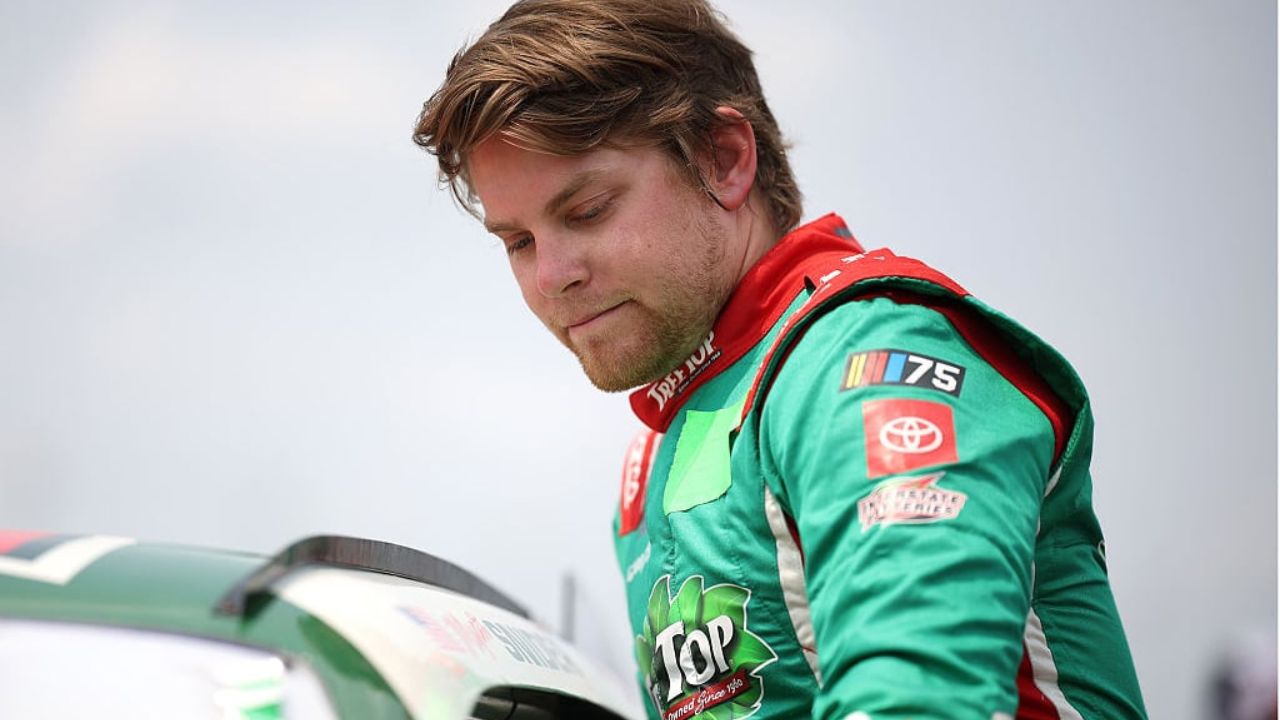
From your vantage point as a viewer, the cameras soon cut to an unexpected solution. Myatt Snider, who had been working as a pit spotter for Fox earlier that day, suddenly became the name in the frame. A clip widely shared by race alerts showed him climbing into the cockpit with 21 laps to go, strapping in as crews hurried to adjust the seat and belts to fit a different driver. Within minutes, the No. 48 went from a sick regular to a relief driver who had never turned a competitive Cup Series lap.
Why Myatt Snider was even on NASCAR’s radar
If you only knew Myatt Snider as a television voice or a spotter, the idea of him jumping into a Hendrick Motorsports car might have felt like a stunt. Once you dig into his background, you see why NASCAR officials and the team quickly viewed him as a credible emergency option. Snider has deep stock car experience, including 112 starts in NASCAR’s O’Reilly Auto Parts Series and Craftsman Truck competition, a body of work that gave him a foundation in heavy vehicles, race craft, and the demands of national touring series racing. That résumé, laid out in detail in a technical breakdown, helped answer the first question NASCAR always asks: can this driver handle the car and the traffic.
Beyond those American series, Snider has also spent time in the ARCA Menards Series and the Whelen Euro Series, so you are looking at a driver comfortable with diverse tracks and formats rather than a short-oval specialist. That variety matters when the venue is Circuit of The Americas, a 3.41-mile road course that already hosts top-level events and is profiled extensively on the official COTA site. Combine Snider’s road course exposure with his live presence at the track as a Fox pit spotter for Jamie Little earlier that Sunday, and you see how he became the rare candidate who was licensed in other NASCAR divisions, physically present, and mentally up to speed on the race as it unfolded.
Inside NASCAR’s on-the-fly approval process
From your couch, the driver swap looked simple: Bowman climbs out, Snider climbs in, the No. 48 rolls back onto the track. Inside the NASCAR hauler, the process was far more structured, even if it had to move at sprint pace. Officials needed to confirm that Snider held the appropriate competition credentials, that he met the standard experience thresholds, and that he could be safely cleared for Cup Series competition despite having no prior Cup start. Reporting from the garage describes how NASCAR effectively compressed its usual approval review into a handful of minutes, treating Snider’s extensive national series record as evidence that he could handle a Cup car in traffic at COTA.
Fan reaction later fixated on whether Snider held what some called a “Cup license,” and whether NASCAR had bent its own rules. A widely shared post framed the issue in those exact terms, noting that Fan questions arose about Snider’s lack of prior Cup starts and the specifics of his eligibility. NASCAR’s answer, reflected in detailed accounts of the decision, was that the sanctioning body has discretion to clear drivers for Cup based on their performance in other divisions, and that Snider’s background in the O’Reilly Auto Parts Series and Craftsman Truck garage met that standard. In other words, you watched policy interpreted in real time rather than rewritten on the fly.
How Hendrick Motorsports and Bowman framed the swap
While NASCAR handled the regulatory side, Hendrick Motorsports had to manage the competitive and public relations angles. The organization issued a formal statement explaining the driver change between Alex Bowman and Myatt Snider at COTA, making clear that Bowman’s health was the trigger and that the team had to prioritize his condition over track position. That message, recapped in detail in a driver swap summary, underscored that this was not a tactical gamble so much as a medical necessity that forced the team to look for the best available substitute.
From Bowman’s side, you heard about the discomfort in stark terms. Radio traffic captured him saying he did not know if he would make it, and subsequent reporting on Bowman’s exit detailed how he was transported to the infield care center as the race continued. For you as a fan, that transparency matters, because it frames Snider’s appearance in the car not as a demotion for Bowman or a stunt for exposure, but as a health-driven contingency plan that any team might need when a driver hits a physical limit mid race.
Snider’s performance and what it tells you about NASCAR’s system
Once Snider rolled out of pit road, the story shifted from paperwork to performance. You watched a driver who had never previously competed in the Cup Series try to keep the No. 48 on the lead lap at a technical road course with minimal time to adjust his seating position or feel for the car. NASCAR’s own recap of the event notes that Snider had never in the Cup Series, yet he still managed to bring the car home and maintain a respectable pace relative to the field. That outcome validated the sanctioning body’s calculation that his prior experience would translate under pressure.
Fans watching from home and at the track responded with a mix of surprise and respect. One widely shared post summed up the moment with the line that you should always be prepared for anything, praising how Myatt Snider stepped and finished the race for Alex Bowman. For you, that reaction highlights a broader point about NASCAR’s licensing and approval structure. The system is built to evaluate drivers across multiple series, so when an emergency strikes, officials can quickly identify someone like Snider who might not have Cup starts on his record but has logged hundreds of national series laps in similar machinery.
More from Fast Lane Only