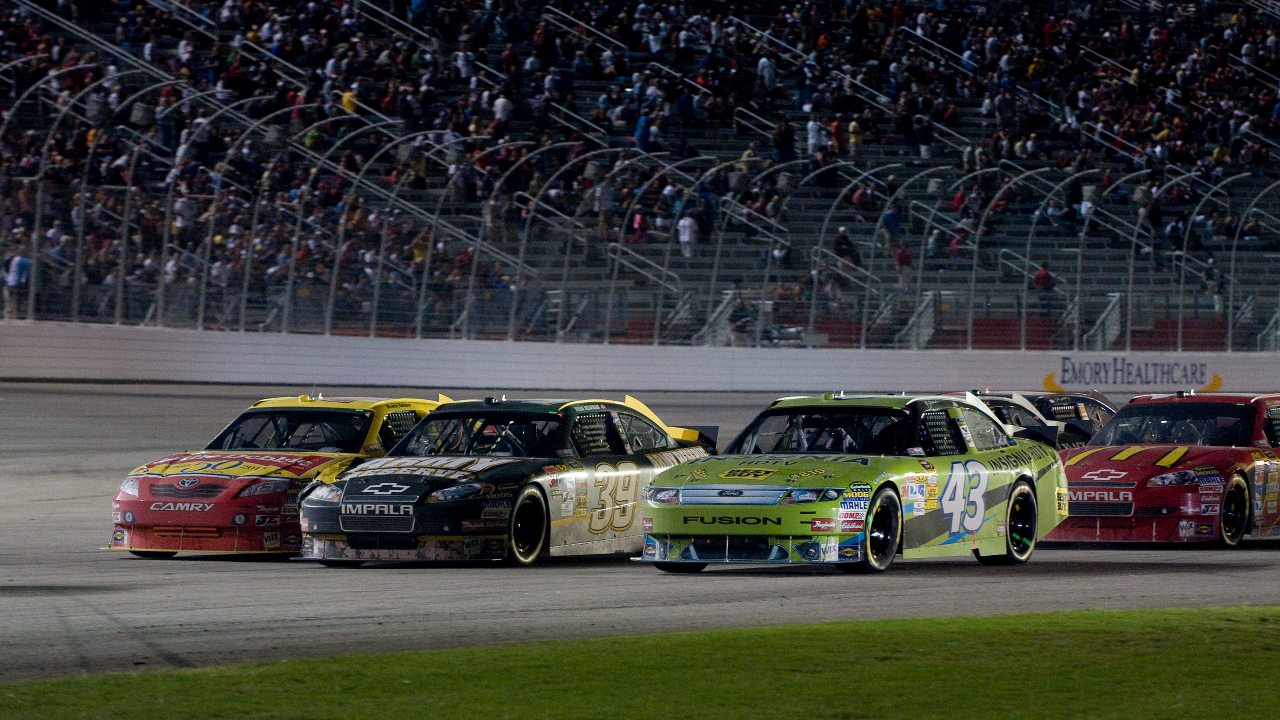
NASCAR’s championship used to be a slow burn, a season-long grind that rewarded relentless consistency more than one perfect afternoon. That logic shifted when the sport embraced a playoff model, turning the final stretch into a compressed, high-stakes sprint that has altered how drivers, teams, and fans experience the title fight. I see that transformation not as a single rule change, but as a series of calculated experiments that have reshaped what it means to be a champion in stock car racing.
Over two decades, the playoff format has layered eliminations, stage points, and a winner-take-all finale on top of the traditional points race, creating a hybrid system that tries to honor the full season while manufacturing a “Game 7” moment at the end. The result is a championship that feels more like other American playoffs, yet still carries the quirks and controversies that make NASCAR distinct.
From season-long grind to the “Chase” revolution
For more than half a century, every NASCAR champion emerged from a straightforward marathon: whoever scored the most points over the full schedule took the crown. Reporting on the sport’s history notes that from 1949 into the 21st century, titles were decided by a season-long points race, a structure that rewarded drivers who could avoid disaster over months of travel and 500-mile tests of patience and equipment. That model produced champions like Matt Kenseth, whose 2003 title came under a 36-race championship without any playoff reset, a season defined more by accumulation than climax.
That approach, however, left the sport vulnerable when a dominant driver effectively ended the title suspense weeks before the finale. In 2004, in an effort to inject more drama into the closing stretch, NASCAR introduced what it called the Chase format, a playoff-style reset that grouped the top contenders and tightened the points battle late in the year. I view that decision as the foundational pivot: it signaled that the sanctioning body was willing to trade some of the old grind-it-out purity for a more television-friendly, suspense-driven finish, aligning stock car racing more closely with the elimination arcs that define other major sports.
How the modern playoff architecture changed the race itself
What began as the Chase has evolved into a detailed architecture that dictates how drivers approach every lap from February through the finale. The current structure, outlined in official explanations of The Format, starts with 16 Drivers and 10 Races in the postseason, with the field trimmed through elimination rounds until only four remain to contest the championship in a single event. Entry into that 16-driver field is determined by regular-season wins and points, which means that every checkered flag and every stage finish carries playoff implications long before the bracket is set.
Layered on top of that structure is a scoring system that uses stages and Bonus points to reward aggression. At the end of each stage, the first-place driver receives a playoff point, and at the end of the race, the winner collects additional playoff points that carry into the postseason. I see that as a deliberate push to make every segment of every event matter, discouraging the old habit of riding conservatively until the final run. The Playoffs themselves then become a high-wire act, where the difference between elimination and glory can hinge on a single stage win or a handful of extra points banked months earlier.
The winner-take-all finale and the “Game 7” effect

The most radical element of NASCAR’s modern championship is the single-race showdown that decides the title. Under the current system, four drivers reach the final event on equal footing, and the highest finisher among them leaves as champion, regardless of where they stand in the broader points picture. That winner-take-all structure has turned the finale, recently held in Phoenix, into a made-for-television climax that mirrors the decisive contests in other sports. Coverage of the Phoenix race has underscored that this format is a sharp break from the decades when the champion was crowned by cumulative points, not by one afternoon’s result.
Supporters of the system argue that it delivers exactly what the sport set out to create: a Game 7 moment that concentrates attention and pressure in a single, easily understood showdown. I acknowledge the power of that spectacle, particularly for casual viewers who may only tune in for the finale. Yet the same winner-take-all design has fueled criticism from veteran drivers and long-time fans who see it as too dependent on one race’s chaos. Reporting on potential changes notes that many in the garage have questioned whether a full season of excellence should be so vulnerable to a late-race caution or a mechanical failure in the last event, a tension that sits at the heart of the current debate.
Inside the push to tweak, not scrap, the playoff era
Despite the noise around the format, the people charged with shaping NASCAR’s future appear more interested in refinement than revolution. Accounts from inside the playoff committee describe a group that accepts the basic premise of a postseason, but is wrestling with how to make it feel fairer and easier to follow. Some members, described simply as Some on that panel, have floated ideas that would allow drivers who excel in the early rounds to retain more of their points advantage when the next round begins, rather than resetting the field so aggressively.
I read those discussions as an acknowledgment that the current system can feel opaque, especially to newer fans trying to track who is safe and who is vulnerable after each race. Proposals under consideration aim to keep the structure simple enough to explain in a few sentences while still preserving the importance of every event on the schedule. That includes weighing how many playoff points should carry over, how eliminations are triggered, and whether the balance between regular-season performance and postseason drama is calibrated correctly. The underlying message is clear: the playoff era is here to stay, but its exact shape is not fixed.
Debating the next overhaul: from Phoenix to Darlington and beyond
The most dramatic potential change on the horizon involves the finale itself. Reporting on internal deliberations has highlighted that a Major Playoff Overhaul Looms As NASCAR Considers Ending Winner, Take, All Finale, a phrase that captures how seriously officials are weighing alternatives to the current one-race decider. Veteran voices in the sport have been frank about their discomfort with a championship hinging entirely on a single event, and those concerns have gained traction as the sanctioning body studies options for 2026 and beyond. The Phoenix championship race, once seen as the perfect stage for the modern format, is now being discussed as possibly the last of its kind.
At the same time, the schedule itself is being tuned to support whatever playoff structure emerges. Plans for the 2026 postseason already include a return to Darlington Raceway for the playoffs, a nod to the track’s historic significance and its reputation for punishing mistakes. I see that move as part of a broader effort to ensure that the venues themselves reinforce the stakes of the format, whether the finale remains winner-take-all or shifts toward a multi-race championship round. The debate is not simply about math and brackets; it is about which tracks, and which styles of racing, should define the sport’s ultimate test.
Balancing heritage and spectacle in the next chapter
As I weigh all of these threads, I keep coming back to the tension between NASCAR’s roots and its modern ambitions. The old full-season model, exemplified by Kenseth’s 2003 run under a 36-race championship, rewarded a particular kind of excellence: avoiding trouble, banking points, and letting the math work over time. The playoff era, with its 16-driver bracket, 10-race sprint, and stage-based Bonus points, asks drivers to be both consistent and opportunistic, to seize moments rather than simply survive them. That shift has undeniably reshaped how championships are won, even as the sport continues to debate where the balance should lie.
Looking ahead, the likely path is not a return to the past, but a refinement of the playoff concept that tries to honor both impulses. The committee’s internal discussions, the scrutiny of the Phoenix finale, and the move to bring Darlington Raceway for the playoffs all point toward a willingness to adjust the knobs rather than rip out the wiring. In that sense, the story of NASCAR’s playoff format is still being written, but its impact is already clear: it has turned the championship from a slow accumulation of points into a layered, high-pressure contest where every stage, every restart, and every strategic gamble can echo all the way to the title.
More from Fast Lane Only: