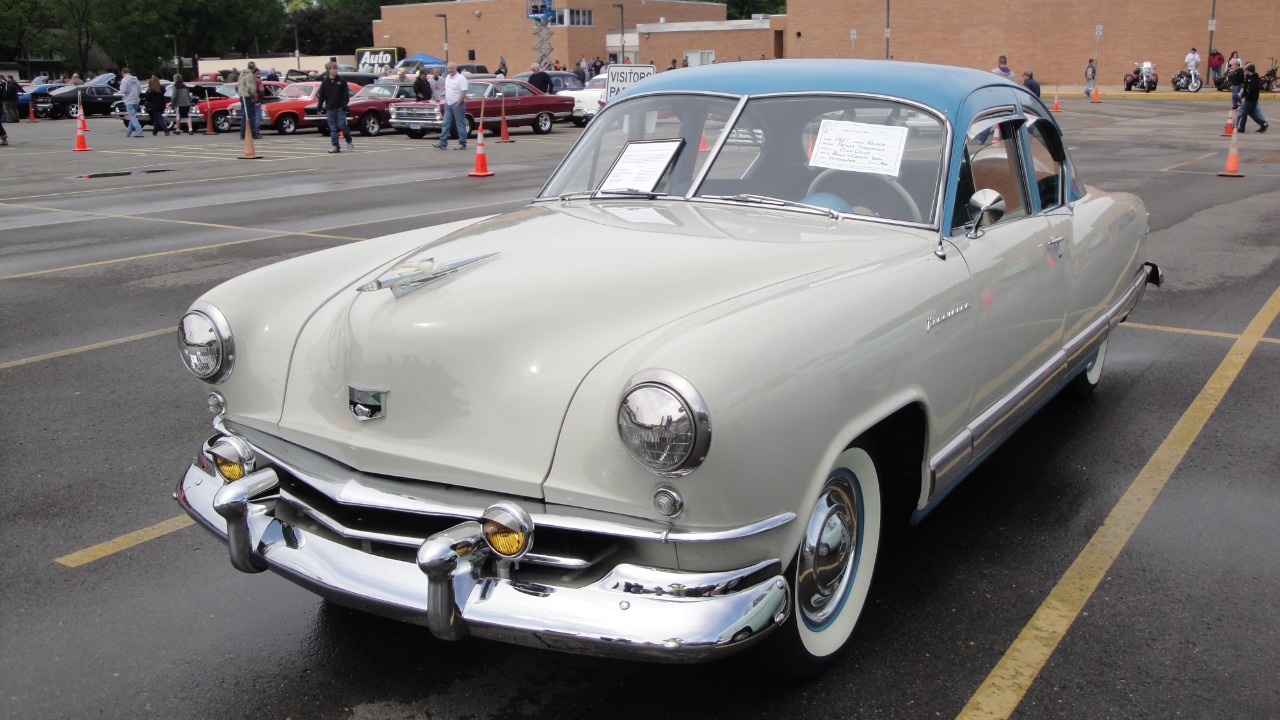
The 1951 Kaiser Deluxe arrived in showrooms at a moment when Detroit looked untouchable, yet this sleek independent sedan quietly proved that the Big Three did not have a monopoly on fresh ideas. By pairing daring styling with practical innovations, it showed how a smaller company could punch above its weight and force Ford, General Motors and Chrysler to pay attention. I see the 1951 Kaiser not just as a handsome orphan brand, but as a rolling argument that imagination could still rattle the industry’s biggest players.
The outsider who dared to take on Detroit
To understand why the 1951 Kaiser Deluxe mattered, I start with the man behind it. If any one person was positioned to challenge the might of the Big Three, it was industrialist Henry, who had already built a fortune in shipbuilding and construction before turning to cars. He looked at Ford, General Motors and Chrysler and decided there was still room for a new kind of family sedan, even though the established giants had dominated the market for decades, a leap that contemporaries described by noting that, if any one man could challenge the Big Three, it was Henry J. That sense of audacity framed the entire Kaiser-Frazer experiment, and it is what gives the 1951 Kaiser Deluxe its underdog charge.
Henry did not stumble into the car business on a whim. Initially he planned to leverage wartime manufacturing capacity and a fresh design to carve out a niche that the big companies were too slow or too cautious to fill, betting that postwar buyers wanted something more modern than warmed-over prewar bodies. That ambition set the stage for a line of cars that included the Kaiser Vagabond, the Frazer Manhattan, the Kaiser Manhattan and the Dragon, a family of models that showed how seriously the company took style and packaging. When I look at the 1951 Kaiser Deluxe in that context, it feels less like a one-off curiosity and more like the centerpiece of a broader push by a newcomer that believed it could stand shoulder to shoulder with Detroit’s entrenched leaders.
Design that made the Big Three look conservative
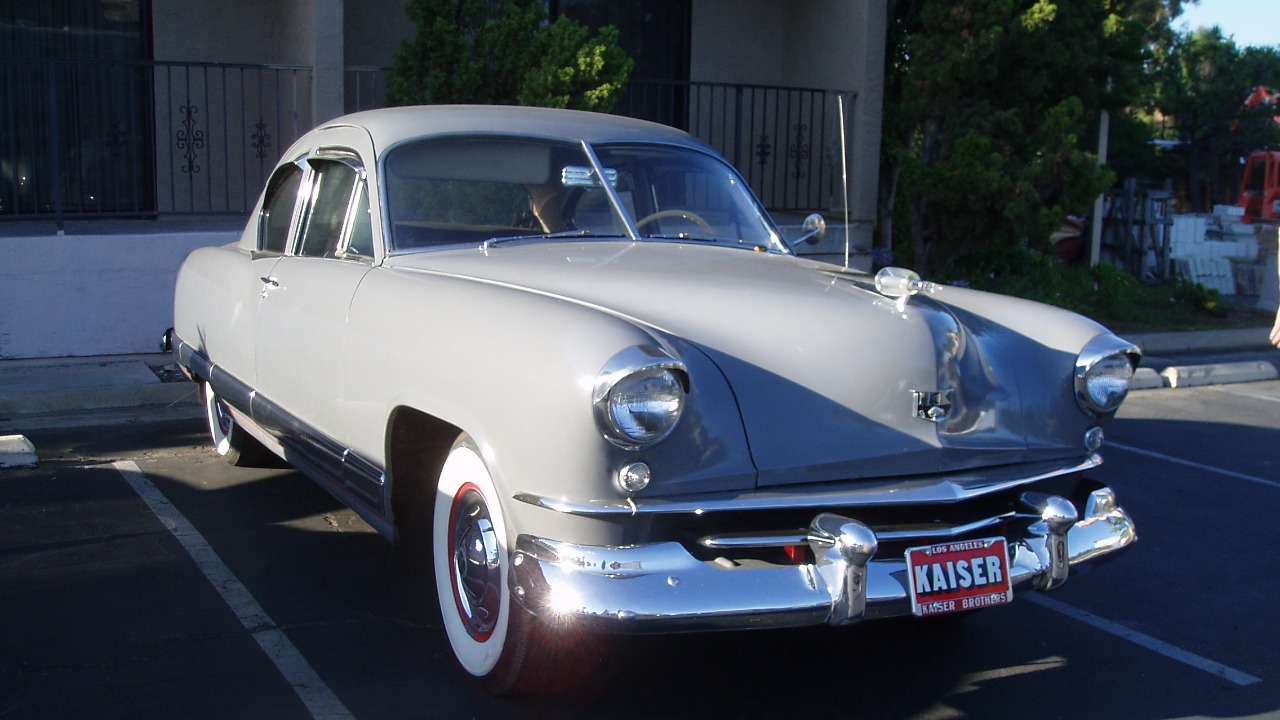
What really let the 1951 Kaiser Deluxe challenge its rivals was the way it looked. The car grew out of a bold proposal by stylist Howard Darrin and engineer Bob McRae, and although Darrin and McRae’s original concept was inevitably watered down somewhat for production, the finished sedan still had a low beltline, a sweeping greenhouse and a clean, almost European profile that made contemporary Chevrolets and Fords seem boxy. In period photos of THE 1951 KAISER, the long hood and short rear deck give it a stance that feels closer to a later 1960s car than an early fifties family four door, which is exactly the kind of visual leap an outsider needed to get noticed.
That design was not just about looking pretty in brochures. The body was carefully packaged so the car could be a few inches shorter overall while still offering generous interior space, a trick that made parking easier without asking families to sacrifice comfort. When I compare it with the more upright sedans from the Big Three, I see how the Kaiser’s flowing fenders and integrated trunk line hinted at the fastback and hardtop shapes that would soon sweep the industry. The fact that this came from a company that had only been building cars for a few years, rather than from Ford, General Motors or Chrysler, underscores how the 1951 Kaiser Deluxe turned styling into a form of quiet rebellion.
Driving manners and features that felt a class above
Looks alone would not have been enough if the 1951 Kaiser Deluxe had driven like an afterthought, and this is where the car’s road manners helped it stand apart. Enthusiasts who have spent time with surviving examples describe the 1951 to 1955 Kaisers as genuinely pleasant to drive, with relatively light steering and good brakes that made them feel more agile than their size suggested. One owner went so far as to note that, even decades later, the car did not feel like a relic, a perspective that sticks with me whenever I picture a Deluxe threading through traffic that was mostly made up of heavier, more ponderous Detroit iron.
Under the skin, the company also pushed for features that buyers were starting to expect from the big brands. The new Kaiser did at least offer an automatic transmission, and after four years of negotiations, Edgar Kaiser finally persuaded General Motors to sell the company the Hydra-Matic unit, which became a popular $159 option on the car. That decision meant a Kaiser customer could enjoy the same kind of easy, two pedal driving that Chevrolet and Oldsmobile owners were bragging about, without giving up the independent styling that set the Deluxe apart. In my view, that mix of refined driving feel and competitive equipment is exactly how a smaller player could make Detroit’s mainstream offerings look a little less inevitable.
The Traveler and the original hatchback idea
The 1951 Kaiser Deluxe did not exist in isolation, and its most intriguing sibling was a variant that pushed practicality in a way the Big Three had largely ignored. The Kaiser Traveler was marketed as The Kaiser Traveler, America, First Utility Vehicle, a car based on the same basic body that added a wide opening rear and fold flat interior to blur the line between sedan and cargo hauler. Period Sales material introducing the Kaiser Traveler leaned hard on the idea that a family could use one vehicle for commuting, vacations and light commercial work, a concept that sounds uncannily like the crossover pitch that dominates showrooms today.
That practicality has led some historians and owners to call the 1951 Kaiser the original hatchback, a nod to the way the Traveler’s rear opening and flexible interior anticipated later compact hatches by decades. When I think about how long it took for Detroit’s biggest brands to fully embrace that body style, it is striking that a relatively small company was already experimenting with it in the early fifties. The Traveler’s blend of style and utility did not topple Ford, General Motors or Chrysler, but it did show that Kaiser was willing to rethink what a family car could be at a time when most sedans still treated cargo flexibility as an afterthought.
Legacy in museums and among enthusiasts
Today, the 1951 Kaiser Deluxe and its siblings live on less in traffic and more in collections, where they quietly rewrite visitors’ assumptions about postwar American cars. At the Martin Auto Museum, for example, a guide walking past a row of classics points out a compact Kaiser and notes that the evolution of design is on display among more than 170 cars that tell a broader story of innovation. Seeing a Deluxe in that context, surrounded by muscle cars and chrome laden cruisers, drives home how advanced its proportions and detailing were for an early fifties sedan, and I find that museum setting gives the car a second life as a teaching tool.
Other collections and exhibits highlight the broader Kaiser-Frazer lineup, reminding visitors that They produced cars like the 1949 Kaiser Vagabond, the 1948 Frazer Manhattan, the 1953 Kaiser Manhattan two door sedan and the Dragon as the 50’s wore on, each one a different attempt to chip away at the Big Three’s dominance. Enthusiast writers still return to these cars, with one observer noting that the 1951 to 1955 Kaisers were supposedly nice cars to drive and that a surviving example drew a crowd of 55 K views and comments when it was featured online, a small but telling sign of lingering fascination. When I put all of that together, from the bold vision of Jan and Kaiser captured in period footage to the detailed histories that revisit THE KAISER story, I see the 1951 Deluxe not as a failed rival, but as proof that even in Detroit’s golden age, an independent could still challenge the script.