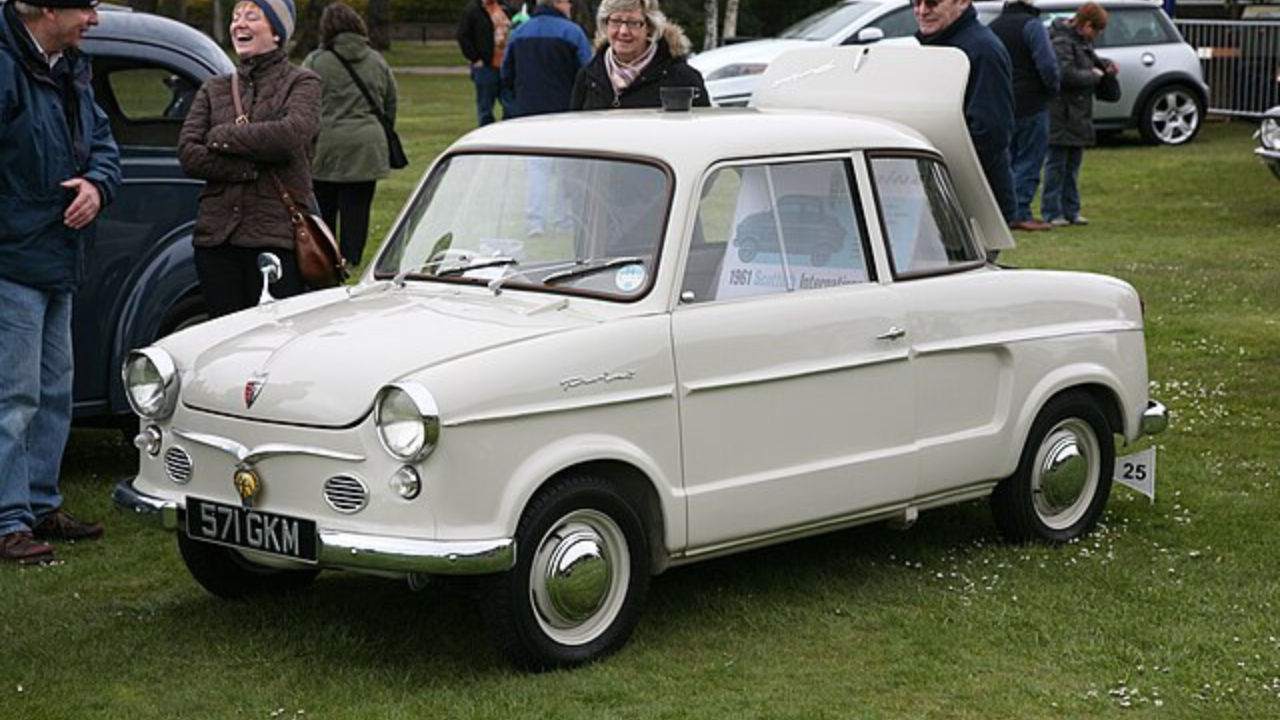
The NSU Prinz arrived in the late 1950s as a tiny rear‑engined sedan aimed squarely at Europe’s booming market for microcars and scooters. It was not the very smallest machine on the road, but it was compact, frugal and cleverly engineered enough to elbow into a crowded field of bubble cars and city runabouts. When I look back at how that first Prinz shaped the company’s future, I see a car that turned a motorcycle specialist into a serious small‑car player and quietly reset expectations for what a microcar could be.
From bicycles to a bold return to cars
To understand why the Prinz mattered, I start with the company that built it. NSU Motorenwerke AG began life in the nineteenth century as a maker of bicycles and then motorcycles, and by the early twentieth century it had already experimented with cars before retreating from that side of the business. According to the company’s own history, car production stopped in the late 1920s while NSU prospered with two‑wheelers, a focus that continued even after its factories were destroyed during the Second World War and later rebuilt in West Germany as NSU Motorenwerke. That background matters, because the Prinz was not a first attempt, it was a carefully calculated comeback.
After the war, NSU’s motorcycles rebounded quickly, becoming global market leaders and dominant racers, which gave the firm both cash and confidence to think about cars again. As small, inexpensive transport took off across Europe, the company saw an opening to move from two wheels back to four, but it had to do so without overreaching its resources. Contemporary accounts describe how NSU used its motorcycle expertise and compact engines to design a tiny rear‑engined sedan that could be built in a modernized two‑wheeler plant, a strategy summed up in one report that notes how expanding a two‑wheeler into an automobile plant was a major organizational and financial feat. The Prinz was the product of that gamble.
Launching a microcar with big ambitions
NSU chose its moment carefully. The first production version, known as The NSU Prinz, was introduced in the late 1950s as an automobile produced in West Germany by NSU Motorenwerke AG, explicitly aimed at the lower end of the car market where scooters and microcars were thriving. The initial model was a tiny two‑door sedan with a rear engine and a footprint that made it easy to park in dense European cities, and it slotted into a segment that included bubble cars and minimalist runabouts but offered a more conventional car layout. One period description notes that The NSU Prinz was part of a broader shift as the company moved away from motorcycles and then towards affordable cars, and that strategic pivot is visible in every detail of the launch model.
The technical heart of the first Prinz was a compact twin‑cylinder engine mounted at the back, a layout that kept the nose short and maximized cabin space within a very small footprint. A contemporary description of the early car notes that its two‑cylinder 600 cc 20 PS engine was located in the rear and could push the car to a top speed of 105 km/h, figures that made it competitive with other microcars while still feeling like a “real” car on the autobahn. That same account explains that two‑cylinder 600 cc was central to the Prinz identity, giving buyers a blend of thrift and usable performance that many bubble cars could not match. In other words, NSU was not just building a toy, it was building a compact family car scaled down to microcar dimensions.
Designing a tiny car people actually wanted
What strikes me when I look at period photos is how determined NSU was to make the Prinz feel like a proper automobile rather than a compromise. The body was a simple two‑door box, but it had real bumpers, a defined hood and trunk line, and seating for four, even if the rear bench was tight. A preserved example at a European collection shows how the early Prinz used a rear‑mounted air‑cooled twin and minimalist trim to keep weight and cost down, while still offering doors, windows and controls that would not intimidate a driver moving up from a motorcycle. That museum car, a 1959 sedan, is described as an economical city machine that made financial sense for a company returning to car production, and the curators note that Car production had been absent from NSU’s lineup for decades before this model.
Under the skin, NSU leaned heavily on its motorcycle know‑how. The engine was air‑cooled, compact and simple to service, and later versions such as the Prinz III used a power‑plant that displaced 598cc, a figure that just squeezed the car into some definitions of the microcar class. One enthusiast account of a 1960 NSU Prinz III notes that the NSU Company began its life as a bicycle and motorcycle business and that the air‑cooled power‑plant displaced 598cc, a detail that underlines how the firm scaled up its existing engineering rather than starting from scratch. That same description of the Prinz III The shows how the car sat right at the edge of microcar territory, small enough to be frugal but substantial enough to feel stable at speed.
Fighting for space in a shrinking microcar market
By the time the Prinz reached showrooms, the microcar boom was already starting to evolve, and NSU had to fight for buyers who were beginning to expect more comfort and performance from small cars. One detailed history of the model points out that car production stopped in the late 1920s while the company prospered with motorcycles, and that returning to cars with a small, economical Prinz made financial sense because it could be built cheaply and sold to cost‑conscious drivers. That same account of the 1959 sedan notes that the economical Prinz was timed to catch a wave of demand for basic transport, but it also arrived just as larger, more refined small cars were starting to appear.
NSU’s answer was to keep refining the formula and to broaden the range. A narrative of the company’s comeback describes how, after the war, NSU’s motorcycles quickly rebounded and became global market leaders and dominant racers, and how that success kindled the idea of a small car that could be shown at Frankfurt in late 1957. That same account explains that WW2, however, NSU used its racing reputation to market the Prinz as a modern, technically advanced microcar, not just a cheap stopgap. In practice, that meant incremental improvements to power and trim, and a steady push to present the car as something a young family could be proud to own.
From humble sedan to Sport Prinz and racing TT
Where the story gets really interesting for me is in how the Prinz platform evolved beyond basic transport. NSU realized that the market for scooters and microcars was dwindling, so it decided to develop more sophisticated small cars that could appeal to style‑conscious buyers. One key step was the Sport Prinz, a sleek coupe that used the same basic mechanical package but wrapped it in a low, elegant body. A detailed history of that model notes that it was soon realized that the market for so‑called scooters and microcars was dwindling and that it was therefore decided to develop a small sports coupe capable of a top speed of 120 kph (65 mph), a description that captures how the However, it was moment pushed NSU to move upmarket.
More from Fast Lane Only: