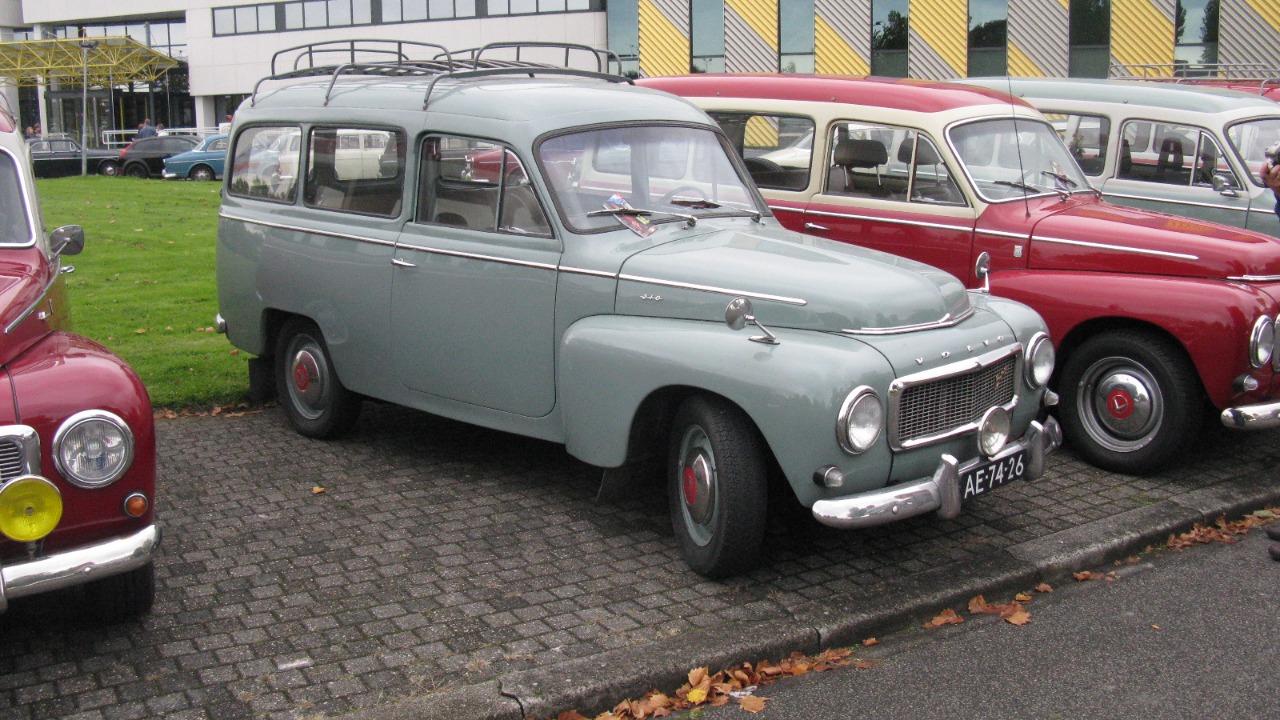
The 1959 Volvo Duett did something deceptively simple yet quietly radical: it treated a working vehicle as a partner in everyday life, not just a tool for the job. By fusing the toughness of a commercial van with the comfort and image of a family estate, it showed how one car could carry ladders on Friday and camping gear on Saturday without feeling like a compromise. I see that blend of work and travel as the real reason the Duett still resonates with people who care about practical, honest design.
From ladder frame to lifestyle idea
When I look at the Duett, I see more than a charming old wagon, I see a turning point in how a carmaker thought about people’s time. The basic story is straightforward: the Volvo 445 Duett grew out of a sturdy ladder-frame platform that had already proved itself in tough conditions, and it kept that robust structure even as it morphed into a wagon that could carry families as easily as freight. According to Volvo Duett documentation, the model was built on a separate chassis rather than a monocoque shell, which made it feel closer to a light truck than a delicate passenger car. That choice might sound old fashioned now, but in the late 1950s it meant owners could bolt on racks, boxes, and custom bodies without worrying about twisting the shell, a quiet invitation to use the car hard during the week and still trust it on a long holiday drive.
What fascinates me is how that conservative engineering underpinned a very modern lifestyle pitch. Official heritage material from Volvo describes how the company’s estate story begins with the Duett, and it is clear that the car was never meant to be just another delivery van. The marketing line “two cars in one” captured a simple promise: you did not need a separate workhorse and a separate family car if one vehicle could be rugged, roomy, and civilised enough to do both. In an era when car ownership was still a stretch for many households, that proposition made the Duett feel like a smart, almost frugal way to unlock both earning power and leisure time.
“Two cars in one” made literal
For me, the genius of the Duett lies in how literally it delivered on that “two cars in one” idea. Internal material notes that Duett The Volvo was launched as a vehicle that could serve both work and leisure, and that duality was baked into its body styles. Buyers could choose a panel van with blanked rear sides for tradespeople, or a wagon with side windows and extra seating for families, yet both versions shared the same basic underpinnings. That meant a plumber and a schoolteacher were effectively driving the same car, just trimmed differently, which helped the Duett feel like a common sight in town rather than a niche commercial oddity.
Corporate history makes the point even more clearly by explaining that Duett, Volvo was able to offer both commercial vans and slightly more luxurious versions for family use under the same name. I read that as an early form of platform sharing that was honest with customers: instead of hiding the work roots of the car, Volvo leaned into them and argued that durability was a virtue in a family wagon too. The name itself, Duett, meaning “two cars in one”, turned that engineering pragmatism into a simple story about getting more life out of a single purchase, which is exactly what many owners in 1959 needed.
Powertrain built for city streets and country roads
Under the hood, the Duett was not about bragging rights, it was about getting the job done in real traffic and on rougher roads. Technical material notes that the small 1.4 litre OHV four with its 40 hp had power enough to propel the car efficiently in urban traffic, and its low gearing provided useful pull when loaded. I see that combination as a deliberate choice: the engine was modest, but the gearing and torque curve were tuned so that a fully laden Duett could crawl through city streets, climb out of town, and still feel composed on a weekend run to a lakeside cabin. It was not a fast car, but it was a faithful one, and that matters more when you are carrying tools or children.
Contemporary accounts also highlight how the Duett borrowed the front suspension from the PV444, which used a coil spring setup that balanced comfort with control. That detail, mentioned in the same technical overview of the Apr discussion of early estates, helps explain why owners could tolerate long hours behind the wheel despite the car’s commercial roots. I picture a driver finishing a delivery route on Friday afternoon, then pointing the same Duett toward a holiday cottage without dreading the ride. The mechanical package was not glamorous, but it was thoughtfully matched to the car’s double life.
How owners actually used the Duett
The real proof that the Duett blended work and travel comes from how people used it, not just how Volvo described it. Period imagery collected by enthusiasts shows The Volvo 445 Duett in service with carpenters, electricians, and small shop owners, often with ladders on the roof and signage on the sides. The same sets of photos also depict wagons with roof racks loaded with suitcases and children peering out of the rear windows, a visual reminder that the line between weekday and weekend was thin. When I look at those images, I see a car that did not change character when the cargo did, which is exactly what a blended work and travel vehicle should do.
Surviving examples reinforce that impression. A detailed listing for a 1959 Volvo 445 panel truck describes how The Virginia based owner says his Duett is “smooth running,” with a new mechanical fuel pump and a 12-volt Interstate battery, yet the interior remains plain, befitting its commercial use. I read that as a snapshot of the Duett’s character: mechanically updated enough to stay on the road, cosmetically honest about its working past. Even in retirement, these cars tend to be driven, not just displayed, which fits the original promise of a vehicle that was always meant to earn its keep and then carry its owners away for a break.
A regressive design that aged into a classic
Not everyone at the time saw the Duett as forward looking. Some critics argued that the ladder-frame construction and upright styling were a step backward compared with more modern unibody cars. Archival commentary notes that While the Duett has been criticised as a regressive design by those who point out that the ladder-frame car was based on Volvo’s earlier PV444, it has also become a popular base for hot rods and A-tractor conversions. I find that tension revealing: what looked old fashioned in the 1960s turned into a virtue decades later, because the same sturdy frame that made the Duett feel dated also made it endlessly adaptable.
Enthusiast groups today treat the Duett as a key chapter in Volvo history. One detailed discussion of a 1956 Volvo Duett notes that it was Designed as a versatile workhorse that also helped cement the brand’s reputation for innovation and durability, and that dual mission is exactly what modern fans celebrate. When I read owners describing long trips in lovingly restored Duetts, I sense that they are not just preserving a shape, they are preserving an idea: that a car can be honest about its working-class roots and still feel like a trusted companion on a long journey.
More from Fast Lane Only: