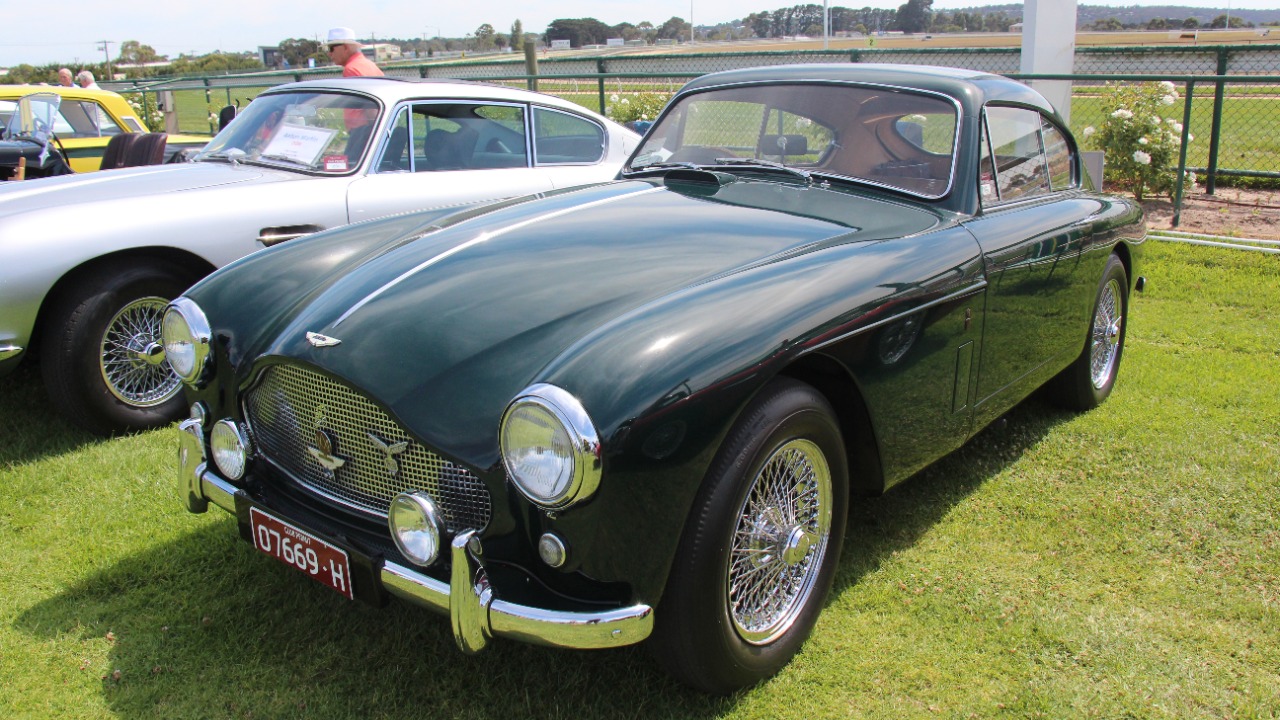
The 1957 Aston Martin DB Mark III arrived at a moment when British sports cars were expected to be both fast and impeccably mannered, and it managed to satisfy both demands without losing its composure. It refined the earlier DB2/4 formula into something sleeker, more powerful, and more usable, turning a handsome grand tourer into a car that could genuinely balance elegance with serious performance. I see it as the point where Aston Martin learned to wear a dinner jacket and racing overalls at the same time, and make both look natural.
From DB2/4 roots to a more mature grand tourer
The DB Mark III did not appear out of thin air, it was the carefully judged evolution of the DB2/4 line that had carried Aston Martin through the early 1950s. Two years after the introduction of the DB2/4 Mark II, the company rolled out the new model, and only 551 examples were built, mainly in saloon form, which immediately gave it an air of rarity. That limited production run meant the car could be tailored more carefully, and it also ensured that the DB Mark III would feel more like a bespoke piece of industrial design than a mass market product.
What fascinates me is how deliberately Aston Martin used continuity to make the DB Mark III feel familiar while still moving the game on. The company kept the basic 2+2 layout and the long bonnet, short tail proportions of the DB2/4 Mark II, but it sharpened the details and improved the engineering so the car felt like a more mature grand tourer rather than a lightly disguised racer. By building only those 551 cars and focusing on saloons, Aston Martin signaled that this was a machine for drivers who wanted long distance comfort as much as they wanted speed, a balance that would define the brand for decades.
Styling that softened aggression without losing presence
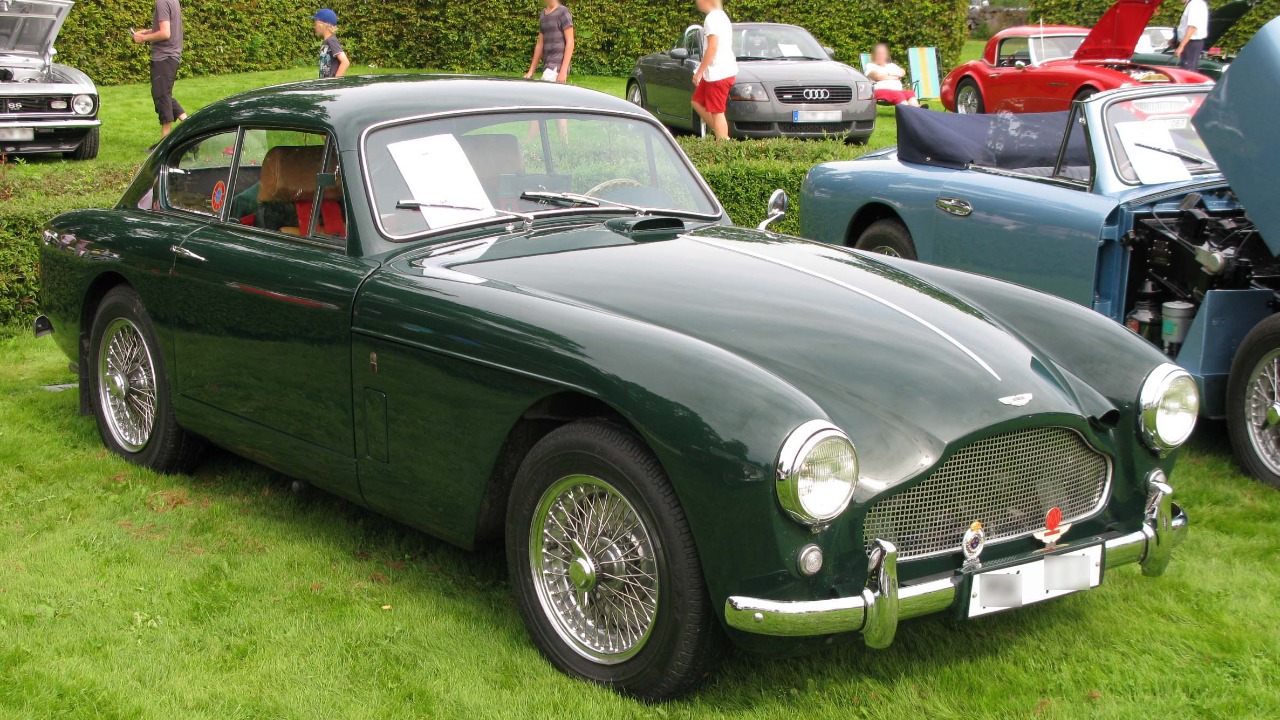
Visually, the DB Mark III walked a careful line between aggression and restraint, and that balance started right at its public debut. The car was first launched at the Geneva Motor Show, where the updated front end immediately set it apart from its predecessors. The new grille had a more pronounced curvature, softening the face of the car and hinting at the later Aston Martin “family” shape without looking derivative or overdone. To my eye, that single change did a lot of the heavy lifting in making the DB Mark III look elegant rather than merely purposeful.
The rest of the bodywork followed the same philosophy, smoothing out the earlier DB2/4 lines without erasing their character. The roofline and rear quarters still suggested a practical 2+2, but the surfacing was cleaner and the stance a touch more planted, which gave the car presence without resorting to flares or fins. When I picture a DB Mark III in profile, I see a car that could slip into a hotel driveway or a pit lane and look equally at home, and that duality is exactly what made its styling so enduring.
Engineering finesse under a gentlemanly skin
Underneath that polished exterior, the DB Mark III was more than just a styling exercise, it was a serious piece of engineering that built on Aston Martin’s racing experience. The Mk III, described as “one of the world’s outstanding sports models” by The Autocar, incorporated lessons learned on the track into a package that still felt civilized on the road. That kind of praise did not come lightly, and it reflected how thoroughly the company had reworked the car’s dynamics and braking to keep pace with its more powerful engine.
The heart of the transformation was the straight six that Aston Martin had acquired with Lagonda, originally designed by W.O. Bentley and further refined for this model. His main task was to enhance that engine for the DB Mark III, and the result was a powerplant that delivered stronger performance without sacrificing the smoothness expected of a high end grand tourer. I like how this mechanical story mirrors the styling story, the engineers did not rip everything up and start again, they took something already respected and made it more sophisticated, which is exactly what a car like this needed.
Options that let owners dial in comfort or competition
One of the clever ways the DB Mark III balanced elegance with performance was by giving buyers a menu of serious mechanical options, while keeping the base car refined enough for everyday use. A close ratio four speed gearbox was available for drivers who wanted to keep the engine on the boil, and they could pair it with an engine oil cooler, a competition clutch, and competition suspension, along with an optional overdrive unit that made high speed cruising more relaxed, all of which are detailed in period valuation tools. That list reads like a racer’s wish sheet, yet it was offered on a car that still had proper seats, luggage space, and a cabin trimmed in leather and wood.
From my perspective, those options turned the DB Mark III into a kind of sliding scale between boulevardier and competition car. An owner could specify the softer suspension and standard gearbox and end up with a relaxed long distance machine, or tick the boxes for the close ratio transmission and competition parts and have something that would not feel out of place at a club race. The key is that Aston Martin did not force a choice between civility and speed, it allowed the same basic car to lean in either direction while keeping the underlying character intact.
Legacy of a quietly influential Aston
For all its technical and stylistic achievements, the DB Mark III has always struck me as a quietly influential car rather than a shouty icon, and that subtlety is part of its charm. The Mk III, again praised by The Autocar, helped define what an Aston Martin road car should feel like, fast but never frantic, luxurious but never soft. By the time production ended, hundreds of Mk IIIs had been built, and their influence could be seen in the grille shape, cabin ambiance, and mechanical layout of the DB4 and the later DB series that would cement the brand’s reputation.
That legacy also lives on in the way enthusiasts and collectors talk about the model today, often highlighting how it bridges early postwar Astons and the more famous 1960s cars. When I look back at the DB Mark III, I see a car that solved a tricky equation: how to wrap serious engineering and race bred know how in a body and interior that felt genuinely elegant. It did not shout about its capabilities, it simply delivered them with a kind of quiet confidence, and that, more than any single statistic, is why it still feels so balanced and so modern in spirit.