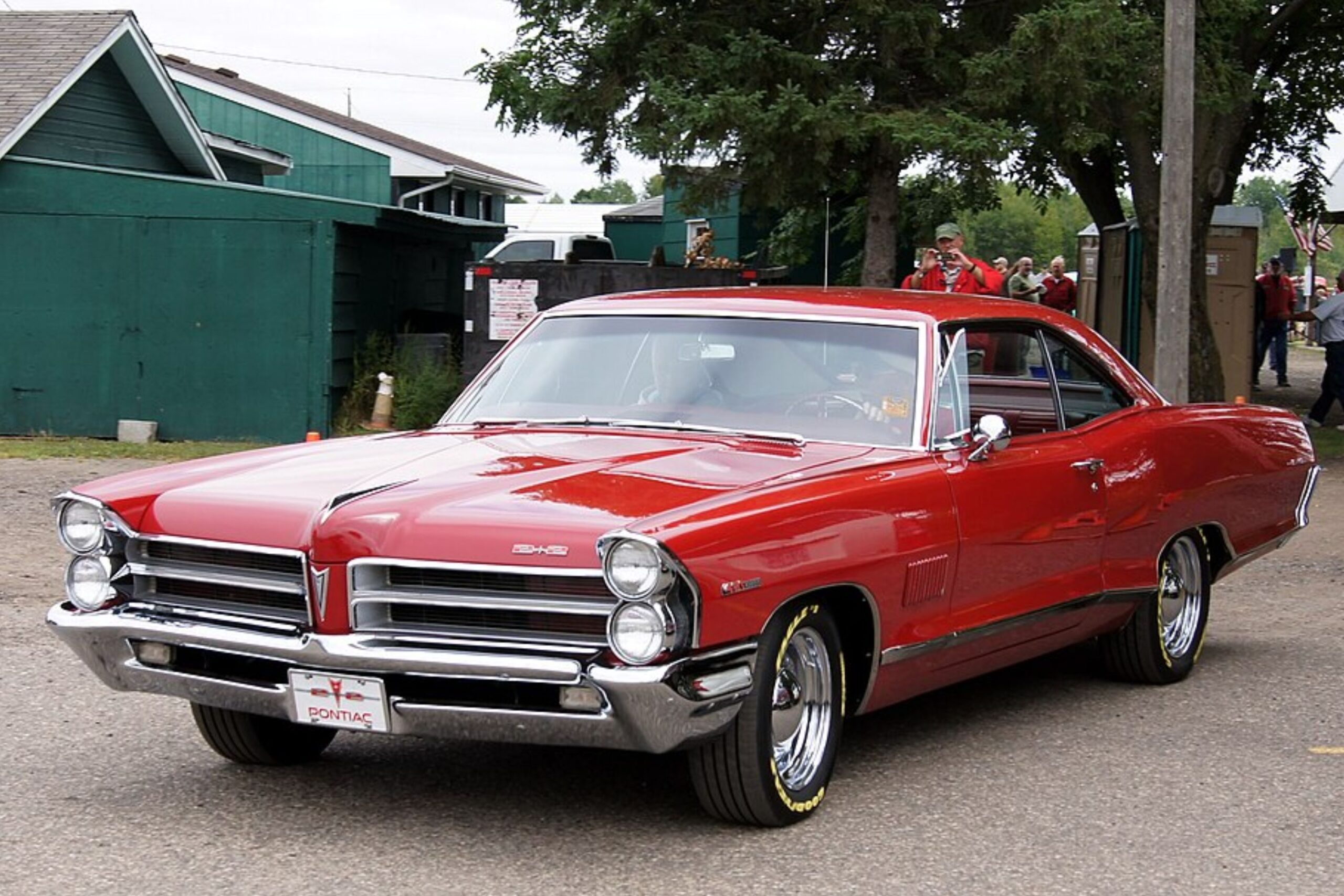
By the mid-1960s, American performance was often packaged as a compact, edgy coupe with loud stripes and a bigger engine. Pontiac already had that covered with the GTO, but the brand also saw room for something else: a fast car that didn’t have to feel small or compromised. The Pontiac 2+2 aimed at drivers who wanted serious V8 thrust and room to stretch out, wrapped in full-size comfort.
It wasn’t trying to be a delicate sports car, and it wasn’t chasing the “smallest, lightest” formula either. Instead, it blended big-car manners with the kind of hardware that could back up the badge. That mix made it a different kind of performance car—one built for real roads, real passengers, and long distances.
A full-size platform with a performance mission
The 2+2 was based on Pontiac’s full-size Catalina, which meant generous interior space and a substantial footprint. That mattered, because many performance cars of the era were becoming tighter and more youth-oriented. Pontiac’s approach said you could have speed without giving up a usable back seat and a trunk that could handle a weekend away.
That choice also shaped the driving experience. A full-size Pontiac rides differently than a smaller intermediate, and it doesn’t hide its mass. The 2+2’s point wasn’t to pretend it was a lightweight—it was to make the most of a big chassis with the power and equipment to match.
What “2+2” signaled in the mid-’60s
In car-speak, “2+2” often hints at a coupe with rear seating that’s more “there if you need it” than truly roomy. Pontiac used the name on a model that could be ordered as a two-door hardtop, and it leaned into a sporty image without abandoning practicality. The message was clear: this was the full-size car for someone who still cared about performance.
It also reflected how Pontiac marketed excitement in that era. The division wasn’t shy about performance credentials, but it didn’t limit that attitude to one product line. The 2+2 was part of a broader philosophy: make the entire showroom feel more athletic.
Big-engine muscle, but aimed at effortless speed
The 2+2’s identity centered on big V8 power, the kind of output that delivered strong passing acceleration and high-speed confidence. In a full-size car, that sort of power doesn’t just feel quick off the line—it feels relaxed at speed. You don’t have to wring it out to make it move.
That’s the key difference in the experience it offered. Where smaller muscle cars often feel eager and a little rowdy, a big-engine full-size car can feel like it’s barely trying. The 2+2’s performance character was less about frantic drama and more about easy, repeatable strength.
The importance of gearing and driveline choices
Raw horsepower is only part of a performance story, especially in a heavier car. The way the drivetrain is set up—transmission options and rear gearing—has a huge impact on how responsive the car feels. Pontiac buyers could spec combinations that emphasized quick acceleration or more relaxed cruising, depending on how the car was going to be used.
That flexibility helped the 2+2 serve multiple roles. It could be a confident highway runner, a fast boulevard car, or a long-distance machine that didn’t feel strained. In other words, it brought “performance” into the everyday choices owners actually made.
Handling and ride: not a track toy, but not a floaty cruiser
Full-size American cars of the era had a reputation for soft ride quality, and some earned it. The 2+2’s mission nudged it toward a firmer, more controlled feel than a typical family-spec sedan, while still keeping the comfort that made the platform appealing. The result was a car that could cover rough pavement without beating you up.
It’s worth keeping expectations realistic, though. This wasn’t designed to be a nimble canyon carver, and it wouldn’t shrink around you like a smaller coupe. Its “different kind of performance” came from balance: enough control to feel confident, enough comfort to want to keep driving.
Styling that hinted at speed without leaning on gimmicks
Performance models in the 1960s sometimes wore their intent with loud graphics and obvious add-ons. The 2+2 could look assertive, but it generally didn’t have to rely on flashy tricks to get attention—its proportions did a lot of the work. Long hood, substantial stance, and a clean hardtop profile gave it a naturally powerful presence.
That visual attitude fit the car’s real personality. It wasn’t begging to be noticed as an underdog; it looked like a big, capable Pontiac because that’s exactly what it was. The appeal was a little more grown-up, even if the performance was still very much part of the sales pitch.
Interior comfort as part of the performance equation
One reason the 2+2 stood apart is that its performance story included comfort. A supportive driving position, usable rear seating, and the overall sense of space changed what “fast” felt like. You could bring people along and still enjoy the power, instead of treating passengers as an afterthought.
That mattered in the real world, where the best performance car is often the one you’ll actually drive. The 2+2 made speed compatible with errands, commuting, and road trips. It wasn’t just quick; it was livable.
Where it sat in Pontiac’s own performance lineup
Pontiac didn’t position the 2+2 to replace the GTO or compete head-on with smaller muscle cars in spirit. It complemented them by offering performance to buyers who preferred a full-size car’s ride and room. That broadened the idea of what a performance Pontiac could be.
It also showed how performance was spreading beyond a single niche. In the 1960s, speed stopped being confined to stripped-down specials and started showing up across model ranges. The 2+2 is a good example of that shift: muscle, but with a different set of priorities.
Why its formula still makes sense today
Modern enthusiasts often talk about “grand touring” as a distinct flavor of performance—powerful, comfortable, and stable at speed. The 2+2 fits that mindset better than the traditional stoplight-to-stoplight stereotype of muscle cars. Its strengths weren’t about proving a point in a quarter-mile; they were about making miles feel easy.
That’s why it’s remembered as something slightly off the beaten path. It offered performance without forcing you to accept a cramped cabin or a harsher ride. For drivers who wanted their speed served with comfort and confidence, Pontiac’s full-size approach created its own kind of performance car.
More from Fast Lane Only
- Unboxing the WWII Jeep in a Crate
- 15 rare Chevys collectors are quietly buying
- 10 underrated V8s still worth hunting down
- Police notice this before you even roll window down
*Research for this article included AI assistance, with all final content reviewed by human editors.