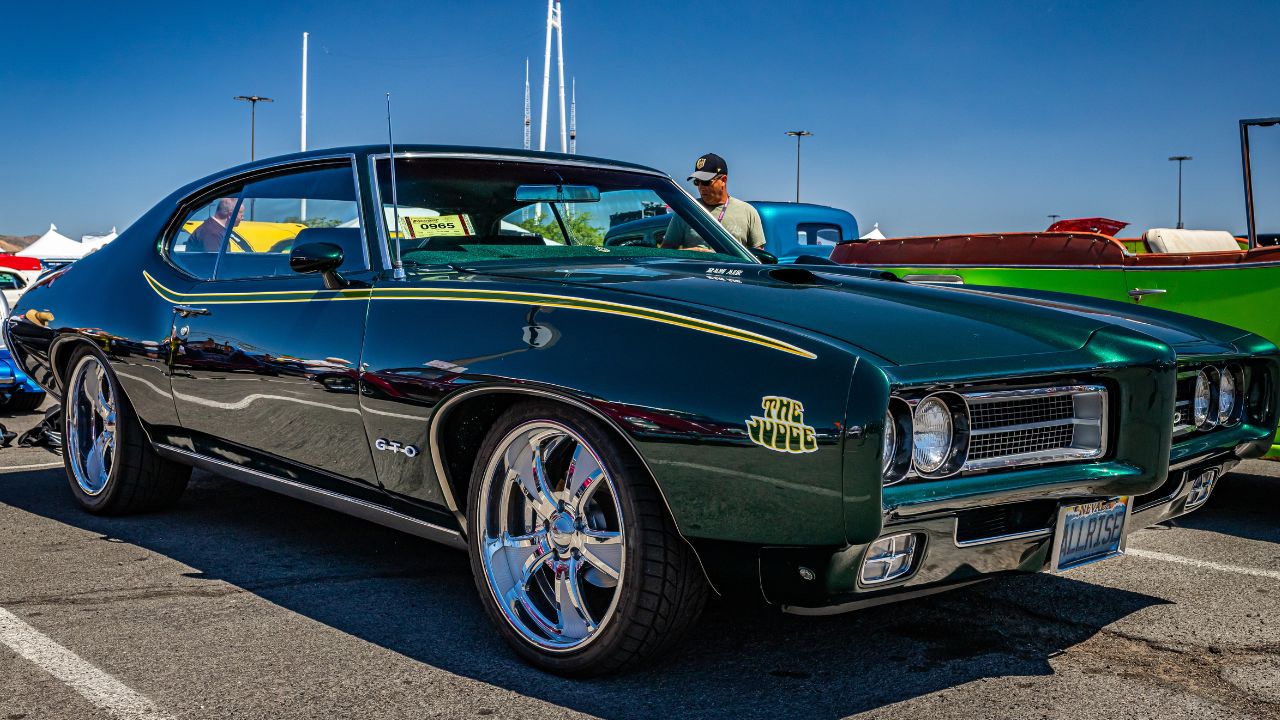
Car names usually come from boardrooms, focus groups, and marketing decks. But every so often, a badge gets its identity from something a lot more human: whatever everyone’s quoting at the time. That’s exactly how the 1969 Pontiac GTO “Judge” ended up with one of the most memorable names in muscle-car history.
It wasn’t named for a courthouse vibe or a stern persona meant to scare stoplight rivals into behaving. The name was pulled straight from pop culture, and not the highbrow kind. Think punchlines, catchphrases, and the kind of TV you’d hear blaring in the background while people argued about who had the quickest car on the block.
A muscle car that needed a new hook
By the late 1960s, the muscle-car scene was getting crowded. The GTO had helped light the fuse earlier in the decade, but suddenly it had serious company, and speed alone wasn’t enough to stand out. Pontiac wanted a package that felt fresh, loud, and a little rebellious—something that would read like a dare on the dealership window sticker.
The idea was to create a value-minded performance option that still looked and felt special. That’s where the Judge package came in: bold stripes, a rear spoiler, and a personality that didn’t whisper. It was meant to be the GTO that showed up wearing sunglasses at night and somehow pulled it off.
The pop-culture spark: “Here come da Judge”
The name “Judge” didn’t come from a legal drama or a crime show. It traced back to a popular comedy bit that had people repeating one specific line: “Here come da Judge.” That catchphrase hit big on TV variety programming in the late ’60s and quickly became part of the everyday joke vocabulary.
If someone was acting cocky, you’d say it. If somebody got caught in a silly argument, you’d say it. It was playful, a little ridiculous, and instantly recognizable—exactly the kind of energy Pontiac wanted attached to a performance car aimed at younger buyers.
Why a comedy catchphrase made sense on a quarter-mile bruiser
On paper, naming a high-performance package after a comedy routine sounds like a weird gamble. In practice, it was sharp. Muscle cars were as much about attitude as acceleration, and a name with built-in cultural recognition gave the car an immediate identity.
“Judge” also carried a second meaning that fit the era’s street-racing mythology. In the informal world of bragging rights, the “judge” is the one who decides who’s for real. Put that on the fender, and it’s basically a rolling claim that your car gets the final word.
Marketing that winked instead of shouting
Pontiac’s performance image had always been a blend of serious engineering and showmanship. The Judge name let the brand wink at the audience while still delivering something legitimately fast. It said, “Yeah, we know this is a little over the top,” and then it backed it up with tire smoke.
That mix mattered because the late ’60s were peak era for bold, playful car culture. Bright colors were in, decals were basically mandatory, and if your car didn’t have a story, you were missing half the fun. The Judge came preloaded with a story people already recognized from their living rooms.
From TV humor to driveway legend
The best part about pop-culture names is how quickly they travel. A neighbor didn’t need to know horsepower ratings to understand what “Judge” was supposed to mean. The name was sticky, and it turned casual conversations into instant marketing: “Did you see the new Judge?” sounds a lot more intriguing than “Did you see the new option package?”
And it didn’t hurt that the Judge package leaned hard into visual drama. The big stripes and the spoiler made the car look like it had already won an argument before the engine even started. When you pair that look with a name that came from a punchline, you end up with something that feels larger than the sum of its parts.
What the name said about the moment
The Judge name is also a little time capsule of how culture worked then. TV was becoming the shared campfire, and a catchphrase could go national fast because so many people were watching the same shows at the same time. A car brand borrowing a line like that wasn’t random—it was a sign that pop culture had become the common language.
Today, brands still chase that kind of relevance, but it’s harder because attention is scattered everywhere. Back then, a phrase could unite a huge audience, and a car could tap into that wave without needing a complicated explanation. If you got the reference, you felt in on the joke.
The Judge identity: performance with personality
Under the fun name and graphics, the Judge wasn’t just decoration. It was built to be a real performance package, the kind that could run hard and still be street friendly. That mattered because the name alone would’ve fallen flat if the car didn’t have the bite to match the bark.
Instead, the Judge delivered a balance that made it easy to love. It looked loud, sounded right, and carried a badge that made people grin. Even folks who weren’t deep into Pontiac history could remember the name, which is kind of the whole point of great branding.
How a pop reference became a permanent badge
Most pop-culture references fade, but “Judge” stuck because it worked on multiple levels. It was a timely nod to a catchphrase, but it also felt like a permanent piece of car-world vocabulary. The name didn’t rely on you remembering the exact TV moment; it still made sense as a statement of confidence.
That’s why, decades later, “1969 Pontiac Judge” still lands with impact. It’s not just a model year and a trim package—it’s a whole vibe. A little comedy, a little swagger, and a lot of muscle, all wrapped up in two words that never really stopped being fun to say.
More from Fast Lane Only
- Unboxing the WWII Jeep in a Crate
- 15 rare Chevys collectors are quietly buying
- 10 underrated V8s still worth hunting down
- Police notice this before you even roll window down
*Research for this article included AI assistance, with all final content reviewed by human editors.