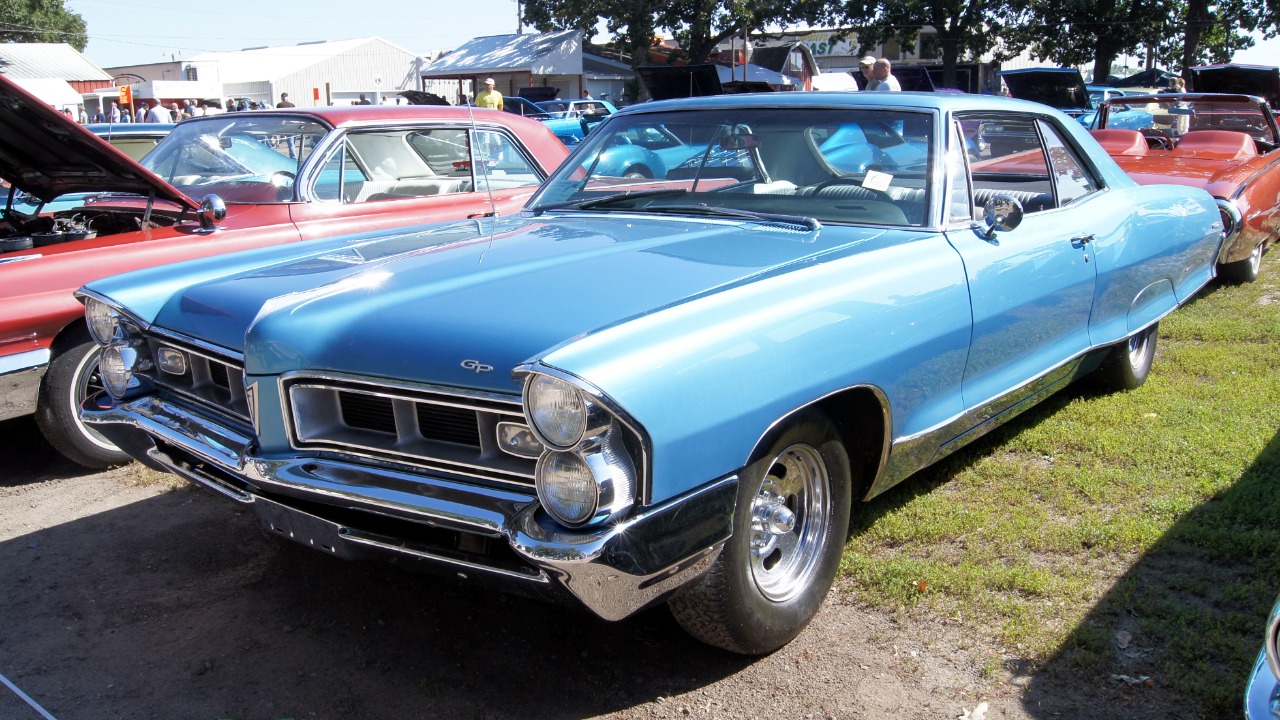
The 1965 Pontiac Grand Prix arrived at a moment when American buyers wanted more than raw speed. It took the muscle of Pontiac’s big V8s and wrapped it in a quieter, more tailored package that felt as comfortable at a country club as it did at a drag strip. In doing so, it helped push performance luxury from a niche experiment into a fully formed segment that other brands would spend years trying to match.
Rather than chasing the stripped‑down aggression of the GTO, the 1965 Grand Prix matured the idea of a personal coupe into something longer, lower, and more sophisticated. It showed that a car could be fast, imposing, and genuinely plush at the same time, and that balance is what still makes it feel modern today.
From muscle upstart to mature personal luxury
When I look at the 1965 Pontiac Grand Prix, I see a car that deliberately stepped away from bare‑knuckle muscle toward a more nuanced identity. Described as a personal luxury coupe that combined performance and comfort, the Grand Prix targeted drivers who wanted power without giving up refinement, a shift that marked a clear evolution from Pontiac’s earlier, more youth‑oriented image linked to the GTO. Contemporary descriptions of the Pontiac Grand Prix emphasize how it blended sharp styling with upscale appointments, positioning it as a statement car rather than just a fast one.
That positioning paid off in the broader full‑size market. The 1965 Pontiac Grand Prix is repeatedly singled out as a standout in the full‑size luxury and performance space, praised for mixing comfort, style, and muscle in a way that felt cohesive rather than compromised. Accounts of the period note that the Pontiac Grand Prix held its own among big coupes by offering genuine muscle‑car thrust alongside a cabin and ride that felt closer to a luxury sedan, a combination that helped define what personal luxury would mean for the rest of the decade.
Design that signaled grown‑up performance
The second‑generation Grand Prix, which began with the 1965 model, represented Pontiac’s full‑size performance image at what one detailed overview calls its mature peak, muscular but restrained and built to turn heads without shouting. That assessment of the Grand Prix captures how the car’s long, clean body sides and crisp character lines projected power through proportion rather than bolt‑on aggression. Pontiac restyled the second generation to appear more luxurious, and fact sheets on Pontiac Factoids highlight a semi‑fastback roofline that visually stretched the car, giving it a grand‑touring stance that felt more European than Detroit.
That sense of maturity carried through in the details. Enthusiast write‑ups describe the 1965 Pontiac Grand Prix Sports Coupe as a bold expression of personal luxury and muscle performance, with crisp body lines and stacked headlights that framed Pontiac’s signature split grille. The way the Pontiac Grand Prix sat on the road, low and wide, reinforced that this was not just a dressed‑up sedan but a purpose‑built coupe. Later reflections on the model note that it embodied Pontiac’s blend of luxury and performance, with the Pontiac Grand Prix frequently cited as a classic example of mid‑sixties style that still feels cohesive today.
Long‑legged proportions and a more refined mission
Underneath that styling, the 1965 Grand Prix used its size strategically to separate itself from smaller performance cars. It rode on a longer wheelbase than the GTO, a point that enthusiasts underline when they describe how the Riding Grand Prix delivered a smoother, more composed ride while still feeling low‑slung and purposeful. That extra length, combined with the long hood and short rear deck, gave the car the classic grand‑tourer profile that owners still celebrate in photos and restorations.
Later commentary on the 1965 Pontiac Grand Prix Sports highlights how this full‑size B‑body platform was tuned for style and comfort as much as speed. Enthusiast groups describe the Pontiac Grand Prix as a stylish and luxurious coupe, a vintage ride that balanced highway composure with the kind of presence that made it a favorite at cruise nights decades later. Another detailed description of the 1965 Pontiac Grand Prix underscores that it was a sleek and powerful personal luxury coupe, showcasing Pontiac’s focus on both bold styling and serious performance, which is exactly the balance that defines mature performance luxury.
Engines, options, and the luxury‑muscle balance
Powertrain choices are where the Grand Prix’s dual mission becomes clearest. Technical overviews of the 1965 to 1968 models note that engine choices still comprised a quartet of 389s and a trio of big‑block 421s, with power ratings increased across the board and optional Tri‑Power carburetion available for those who wanted maximum thrust. That range of Engine options meant buyers could tailor the car from brisk to genuinely ferocious while still enjoying the same plush interior and refined ride. Enthusiast descriptions of the 1965 Pontiac Grand Prix repeatedly call it a bold blend of luxury and performance, noting that beneath the hood, the 389 cubic inch V8 delivered up to 333 horsepower, a figure that made the Beneath the Grand Prix a serious straight‑line performer.
Luxury equipment kept pace with that power. Option lists for the 1965 model year show that Additional new options included an automatic air conditioning system that had been introduced earlier by Cadillac, joining the regular Circ‑L‑Aire setup and pushing the Grand Prix deeper into premium territory. That detail about Additional comfort features shows how Pontiac was willing to borrow top‑shelf technology to keep its big coupe competitive with more established luxury names. At the same time, enthusiasts recall that the 1965 Pontiac Grand Prix used its 389ci V8 and assertive stance to satisfy any V8 fix while still commanding attention as a refined, stylish presence on the road, a balance that defined the car’s appeal.
Legacy, collectability, and the path it opened
The way enthusiasts talk about the 1965 Grand Prix today underlines how successfully it matured the performance‑luxury formula. Recent retrospectives describe the 1965 Pontiac Grand Prix as a bold and stylish full‑size two‑door that blended luxury and muscle in a way that perfectly captured Pontiac’s performance image. Another enthusiast account calls the 1965 Pontiac Grand Prix a bold and luxurious personal coupe that combined muscle‑car performance with upscale comfort, a description that could just as easily apply to later luxury‑performance flagships from other brands. Even model‑car builders celebrate this heritage, with hobbyists highlighting the Pontiac Grand Prix as a showcase of mid‑sixties elegance and heritage that still inspires collectors.
That legacy is reinforced every time a restored example rolls across a showroom or auction block. A detailed walk‑around video from a dealer features Nyla and Allan presenting a beautifully preserved 1965 Pontiac, lingering on the interior trim and exterior lines that made the car feel special when new. Restoration notes on another car highlight a Butler‑built 389 ci V‑8 with Tri‑Power, aluminum heads, dual exhaust, a 4‑speed manual, power windows, a factory tachometer, 8‑lug wheels, and whitewall tires, a specification that shows how far owners will go to preserve the Highlights of the original package. Enthusiast groups also point out that the 1965 Pontiac Grand Prix Sports Coupe rode on GM’s full‑size B‑body platform, with later commentary on the Pontiac Grand Prix noting how subsequent model years built on that foundation of American innovation and flair, a path that started in earnest with the mature, confident 1965 car.
More from Fast Lane Only: