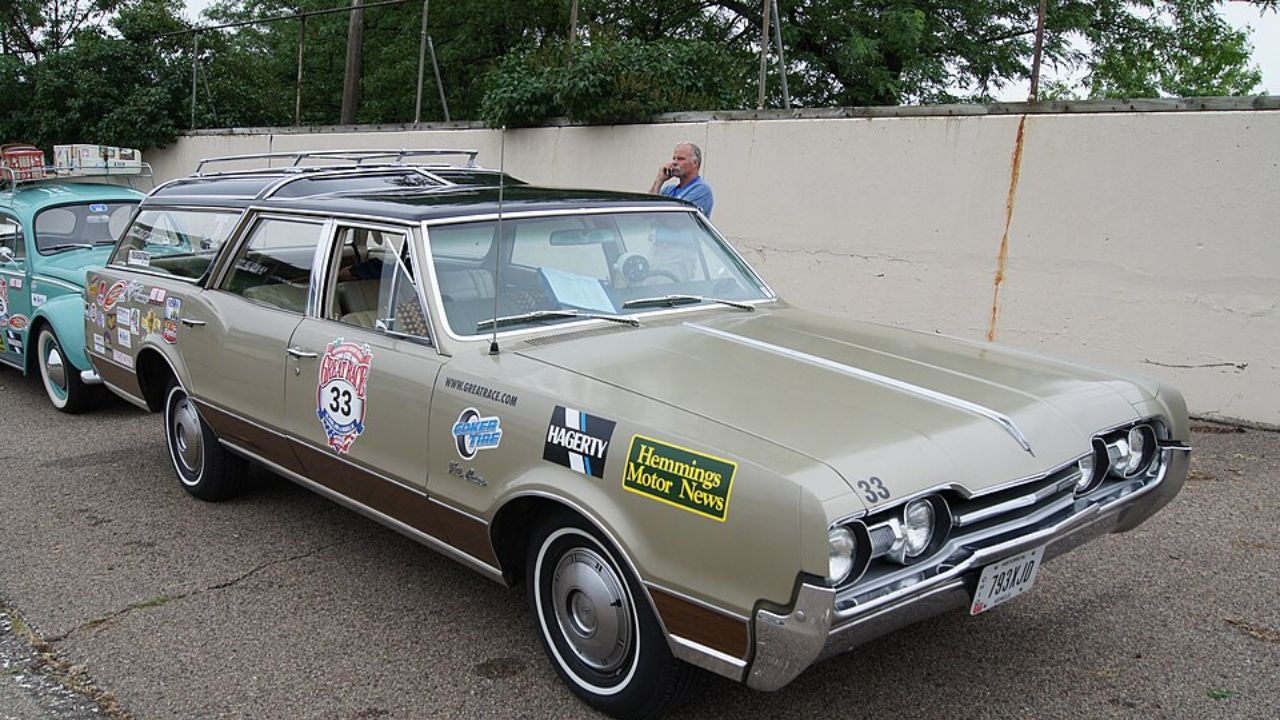
The 1967 1967 Oldsmobile Vista Cruiser is often recognized for its distinctive elevated glass roof design, but its influence extends well beyond styling. It became a defining example of how American station wagons could merge comfort, performance, and family utility during the late 1960s, helping reshape expectations for practical yet expressive automotive design.
Design Innovations
The most recognizable feature of the 1967 1967 Oldsmobile Vista Cruiser was its elevated panoramic glass roof, engineered to improve cabin visibility and create a brighter, more open interior environment. This design element enhanced the passenger experience by increasing natural light and reducing the enclosed feel typical of traditional station wagons.
Beyond the roof design, the Vista Cruiser offered a highly functional interior layout tailored for family use. It provided seating for up to eight passengers, with flexible configurations that supported both passenger comfort and cargo versatility. Practical additions such as integrated armrests, thoughtful storage spaces, and multiple trim options reinforced its positioning as a premium family wagon with customization appeal.
Performance Capabilities
The 1967 1967 Oldsmobile Vista Cruiser was engineered to deliver performance that exceeded typical station wagon expectations. Buyers had access to a range of V8 engine options, including displacement configurations designed to balance everyday drivability with strong highway capability.
Compared to many utility-focused competitors, the Vista Cruiser benefited from Oldsmobile’s performance-oriented engineering philosophy. Its responsive steering and stable road handling gave it a more dynamic driving character than many rival wagons, aligning it more closely with the brand’s broader performance identity rather than purely utilitarian design.
Cultural Significance in the 1960s
During the late 1960s, the 1967 1967 Oldsmobile Vista Cruiser became closely associated with the American family road trip experience. It reflected the growing suburban lifestyle, where multi-passenger vehicles played a central role in mobility, recreation, and daily life.
Its cultural visibility was reinforced through media representation, where station wagons like the Vista Cruiser were frequently portrayed as the standard family vehicle. This association strengthened its identity as a symbol of practicality, freedom, and mid-century American automotive culture.
Market Positioning and Sales Success
Oldsmobile positioned the Vista Cruiser strategically within the competitive station wagon segment by emphasizing its unique design and family-oriented functionality. Marketing efforts highlighted its panoramic roof, spacious interior, and performance capability, differentiating it from more conventional wagons.
In the marketplace, the 1967 1967 Oldsmobile Vista Cruiser competed effectively against established rivals such as the Ford Country Squire and Chevrolet Kingswood. Its combination of distinctive styling and strong feature set contributed to solid demand among families seeking both practicality and identity in their vehicle choice.
Technological Advancements
The Vista Cruiser incorporated safety and comfort-focused advancements that reflected evolving automotive standards of the era. Seatbelt integration and structural safety improvements aligned with increasing regulatory and consumer awareness around passenger protection.
Engineering refinements also targeted ride quality and efficiency, supporting a smoother driving experience while maintaining the performance expectations associated with Oldsmobile vehicles. These incremental improvements helped position the Vista Cruiser as a forward-looking option within its segment.
Legacy and Collectibility
Today, the 1967 1967 Oldsmobile Vista Cruiser is regarded as a desirable classic among vintage wagon enthusiasts. Its distinctive glass roof design and cultural relevance contribute significantly to its collector appeal, particularly for well-preserved or accurately restored examples.
Enthusiast communities continue to preserve and celebrate the model, sharing restoration knowledge and historical insights. This sustained interest reinforces its legacy as one of the more recognizable and influential American station wagons of the 1960s.
Comparative Analysis with Other Station Wagons
When compared to contemporaries such as the Ford Country Squire and Chevrolet Kingswood, the Vista Cruiser distinguished itself through its innovative roof design and more expressive styling approach. While competitors often prioritized traditional luxury cues or basic utility, the Vista Cruiser integrated design innovation with functional versatility.
This balance of aesthetics, comfort, and performance helped influence later station wagon designs, encouraging manufacturers to explore more distinctive styling and enhanced passenger experience features in family-oriented vehicles.
More from Fast Lane Only