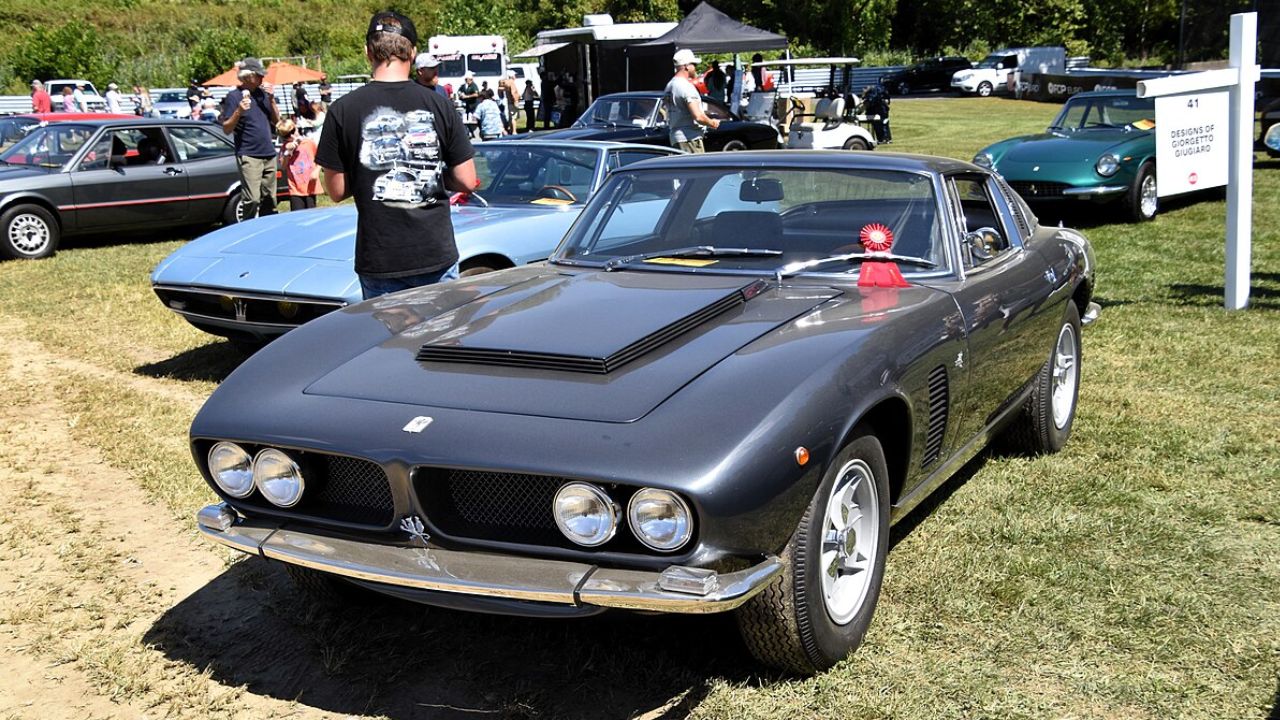
The 1970 Iso Grifo stands as a remarkable fusion of Italian aesthetics and American engineering, representing a unique chapter in automotive history. This exploration delves into the design philosophy, engineering feats, and cultural impact that defined the Iso Grifo, illustrating how it expertly combined the best of both worlds.
Background of Iso Automobili
Iso Automobili was founded in 1939 by Renzo Rivolta in Bresso, Italy. Initially, the company focused on manufacturing scooters and small vehicles, capitalizing on the post-war boom in personal transportation. However, as the automotive landscape evolved, Rivolta recognized the potential for high-performance sports cars and pivoted the company’s direction. This strategic shift laid the groundwork for the Iso Grifo, a car that would become synonymous with luxury and power.
Key to this transformation was Giotto Bizzarrini, a former Ferrari engineer who played a crucial role in the development of the Grifo. Bizzarrini’s expertise in performance and design was instrumental in shaping the car’s character. Under his guidance, Iso Automobili transitioned from a manufacturer of utilitarian vehicles to a creator of sophisticated sports cars that could compete on the international stage. The collaboration between Rivolta and Bizzarrini became a defining moment in the company’s history, setting the stage for the Grifo’s emergence in the late 1960s and early 1970s.
The Design Philosophy
The design philosophy behind the Iso Grifo is a captivating blend of Italian styling and American muscle aesthetics. Influenced by the sleek lines of contemporary Italian sports cars, the Grifo features an elongated nose, a low stance, and a fastback profile that exudes speed and elegance. Bizzarrini’s vision for the Grifo was to create a vehicle that not only performed exceptionally but also turned heads with its aesthetic appeal. The combination of form and function is evident in every detail, from the distinctive front grille to the carefully sculpted curves of the body.
One of the unique design elements that sets the Grifo apart from other sports cars of its time is its integration of American power with Italian finesse. The car’s body was crafted using high-quality materials, ensuring that it not only looked good but also had the structural integrity necessary for high-performance driving. This attention to detail reflects the artistry of Italian craftsmanship, which was paramount during the assembly process. The collaboration between Italian designers and American engineers resulted in a car that was as much a work of art as it was a mechanical marvel.
Powertrain and Performance
At the heart of the Iso Grifo lies its impressive powertrain, featuring American V8 engines, particularly the Chevrolet big block. This choice was significant, as it allowed the Grifo to harness the immense power of American engineering while maintaining the lightweight design that Italian sports cars are known for. The V8 engine options provided an impressive range of horsepower, with the most notable variant producing around 400 horsepower, propelling the Grifo to exhilarating speeds.
Performance specifications for the Grifo were impressive, with a 0-60 mph time of approximately 5.5 seconds and a top speed that exceeded 150 mph. This performance not only positioned the Grifo favorably against its contemporaneous European counterparts but also showcased the potential of combining Italian design with American muscle. The Grifo quickly gained a reputation among enthusiasts and collectors for its speed, agility, and overall driving experience, making it a sought-after model in the sports car market.
Cultural Impact and Reception
The Iso Grifo’s reception at major auto shows, particularly the 1970 Frankfurt Auto Show, was overwhelmingly positive. The car garnered attention for its striking design and impressive performance, capturing the imagination of automotive journalists and enthusiasts alike. The Grifo’s presence at such a prestigious event helped solidify Iso Automobili’s reputation on the global stage. Its unique blend of Italian artistry and American power resonated with a wide audience, leading to increased interest in high-performance vehicles during a time when the automotive industry was rapidly evolving.
The cultural impact of the Grifo extended beyond its immediate reception. It influenced the automotive market, inspiring subsequent designs in both Europe and America. The fusion of styles and engineering philosophies demonstrated by the Grifo encouraged other manufacturers to explore similar paths, resulting in a new wave of sports cars that showcased the best of both worlds. Media coverage during its production years highlighted the Grifo as a symbol of innovation and performance, further cementing its status within the automotive community.
Legacy and Collectibility
Today, the Iso Grifo holds a revered status in the classic car market, representing a unique chapter in automotive history. Collectors and enthusiasts cherish the Grifo for its distinctive design, powerful performance, and the exceptional craftsmanship that went into its creation. Factors contributing to its desirability include its limited production numbers, unique styling, and the story behind its development, which combines Italian artistry with American engineering prowess.
Notable sales and auction results have highlighted the enduring value of the Grifo, with some models fetching impressive prices at auctions. For example, recent sales have seen Grifo models sell for upwards of $500,000, reflecting their status as sought-after collectibles. The combination of rarity, performance, and historical significance ensures that the Iso Grifo remains a coveted piece of automotive history.
Challenges Faced by Iso Automobili
Despite its success, Iso Automobili faced numerous challenges that ultimately led to the company’s decline. Financial struggles plagued the manufacturer throughout the 1970s, compounded by changing consumer preferences that shifted away from high-performance sports cars. The oil crisis of the early 1970s also played a significant role in reshaping the automotive landscape, as buyers increasingly favored fuel-efficient vehicles over powerful sports cars.
The impact of these challenges was profound, affecting the production and legacy of the Grifo. As demand waned, Iso Automobili was forced to scale back production, ultimately ceasing operations in 1974. The decline of the company marked the end of an era for the Grifo, but its legacy endured as a testament to the innovative spirit of its creators and the remarkable fusion of Italian design with American power.
Comparative Analysis with Other Iconic Models
When comparing the Iso Grifo to other Italian-American hybrids, such as the De Tomaso Pantera, it becomes evident that the Grifo occupies a unique niche within the pantheon of muscle cars and sports cars. The Pantera, while also a blend of Italian design and American power, took a different approach with its styling and engineering. The Grifo’s smooth lines and elegant proportions contrast with the more aggressive stance of the Pantera, showcasing the diverse interpretations of the hybrid concept.
The lessons learned from the Grifo’s development have influenced later automotive designs, encouraging manufacturers to explore the synergies between different engineering philosophies. The Grifo serves as a reminder of the potential for collaboration between cultures, inspiring a new generation of vehicles that continue to push the boundaries of performance and design. Its unparalleled blend of aesthetics and power has left an indelible mark on the automotive world, making it a reference point for future innovations.
The 1970 Iso Grifo symbolizes a successful blend of cultures and engineering philosophies, showcasing the potential of collaboration between different automotive traditions. Its relevance in today’s automotive landscape is evident, as manufacturers continue to seek inspiration from the past while innovating for the future. The Grifo’s enduring legacy serves as a testament to the spirit of innovation and style that continues to drive the industry forward.
More from Fast Lane Only