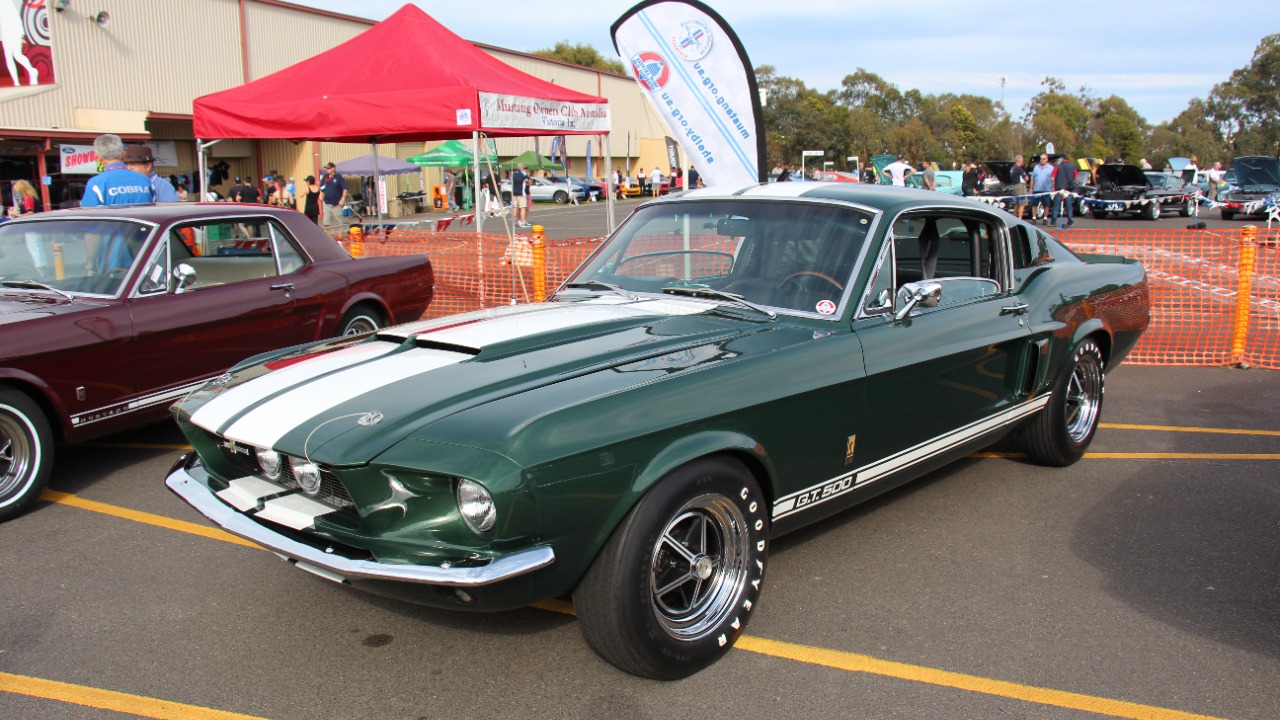
When most people hear the name Shelby GT500, they immediately think of performance.
That’s understandable. The GT500 arrived with a massive big-block V8, aggressive styling, and the backing of one of America’s most famous performance figures, Carroll Shelby. It was faster, more powerful, and more intimidating than nearly every Mustang that Ford offered through its regular dealer network.
Yet reducing the 1967 Shelby GT500 to simply a faster Mustang misses what made the car truly important.
By 1967, the Shelby Mustang program had evolved beyond its original mission. Earlier GT350 models were heavily influenced by racing, featuring stripped-down interiors, stiff suspensions, and a singular focus on performance. They appealed primarily to enthusiasts who wanted a street-legal car with serious competition credentials.
The GT500 took a different approach.
It retained impressive performance capabilities, but it also introduced greater comfort, stronger visual identity, and a level of exclusivity that transformed the Shelby from a modified Mustang into a distinct automotive brand. The car became something larger than the sum of its parts.
More than fifty years later, the 1967 GT500 remains one of the most recognizable American performance cars ever built because it represented more than speed alone.
It represented the moment when Shelby automobiles developed an identity all their own.
Shelby and Ford Were Already a Powerful Partnership
The story of the GT500 begins several years before its debut.
In 1965, Ford enlisted the help of Carroll Shelby to transform the Mustang into a more serious performance machine. Shelby had already established a formidable reputation through racing success and the creation of the legendary Shelby Cobra.
The original GT350 reflected Shelby’s competition-oriented philosophy. It was lighter, sharper, and more focused than a standard Mustang. The car quickly established credibility among enthusiasts and racers alike, helping strengthen the Mustang’s performance image.
As successful as the GT350 was, however, the market was changing. Buyers increasingly wanted performance cars that combined speed with comfort, style, and prestige. Ford and Shelby recognized the opportunity.
The next evolution of the Shelby Mustang would target a broader audience.
The Mustang Itself Had Grown Up
Ford’s redesign of the Mustang for 1967 played a major role in the creation of the GT500.
Compared to earlier versions, the new Mustang was larger and more substantial. Engineers expanded the engine bay, allowing the car to accommodate larger powerplants. Designers also gave the body a more muscular appearance that reflected the escalating horsepower war taking place across Detroit.
The bigger platform opened new possibilities.
Previous Shelby models had relied on small-block engines, but the 1967 redesign made it possible to install Ford’s powerful big-block V8s. This development dramatically altered the character of the Shelby lineup.
The GT500 emerged as the flagship of this new approach.
It wasn’t merely a continuation of the GT350 formula.
It represented an entirely different philosophy.
The Big-Block Engine Changed Everything
At the heart of the GT500 sat Ford’s formidable 428-cubic-inch V8.
Known as the Police Interceptor engine, the big-block delivered abundant torque and strong overall performance. Official ratings never fully captured the engine’s real-world capabilities, but drivers immediately recognized its impressive power.
Unlike some high-revving small-block engines, the 428 emphasized effortless acceleration. The GT500 surged forward with remarkable authority, making highway passing and straight-line acceleration feel almost effortless.
The engine also changed how buyers perceived the car.
The GT500 wasn’t just another sporty Mustang.
It entered the conversation alongside the most powerful muscle cars of the era, competing directly with big-block offerings from Chevrolet, Dodge, Plymouth, and Pontiac.
Its presence alone commanded respect.
Shelby Styling Created a Unique Identity
One reason the GT500 became more than a faster Mustang was its appearance.
Although the car shared its basic structure with the Mustang, Shelby’s modifications dramatically altered its personality. The front end featured a distinctive fiberglass nose with integrated driving lights. A functional hood scoop emphasized performance while helping create a more aggressive look.
The rear of the car received equally significant attention.
Unique taillight treatments, special trim elements, and Shelby-specific details distinguished the GT500 from ordinary Mustangs. Even casual observers could immediately recognize that this was something different.
The styling wasn’t simply decorative.
It established a separate identity.
The GT500 looked like a Shelby first and a Mustang second.
That distinction became increasingly important.
Luxury Began Sharing Space With Performance
Earlier Shelby models often prioritized performance above all else.
The GT500 expanded the formula.
By 1967, buyers increasingly expected high-performance cars to offer comfort and convenience alongside speed. Shelby responded by creating a more refined driving environment than previous models had provided.
The interior featured upgraded materials, improved appointments, and a generally more sophisticated atmosphere. While the GT500 remained focused on performance, it also acknowledged that many customers wanted a car they could comfortably drive every day.
This combination broadened the model’s appeal considerably.
The GT500 wasn’t just for racers anymore.
It appealed to executives, professionals, and enthusiasts who appreciated performance but also valued refinement.
Exclusivity Became Part of the Appeal
Another factor separating the GT500 from ordinary Mustangs was exclusivity.
Ford produced Mustangs in enormous numbers, making them a common sight on American roads. Shelby production remained comparatively limited.
That scarcity mattered.
Owning a GT500 meant possessing something special. Buyers weren’t simply purchasing a high-performance version of a popular car. They were joining a relatively small group of enthusiasts who had access to a unique product.
The Shelby name itself carried prestige.
Carroll Shelby’s racing achievements and performance reputation enhanced the car’s desirability. The badge on the fender represented far more than a trim package.
It represented credibility.
The GT500 Became a Halo Car
Ford benefited enormously from the existence of the GT500.
Even buyers who never intended to purchase a Shelby often visited dealerships to see one in person. The car generated excitement and strengthened the Mustang’s overall image.
This halo effect helped Ford position the Mustang as America’s performance leader.
The GT500 served as proof that the platform could compete with the best performance machines available anywhere in Detroit.
Its influence extended far beyond actual sales numbers.
The car elevated the entire Mustang lineup.
Few vehicles perform this role as effectively.
The GT500 became one of Ford’s most valuable image builders.
Popular Culture Helped Cement Its Legacy
Over time, the GT500 developed a reputation that extended beyond automotive circles.
Its aggressive styling and powerful presence made it a natural fit for magazines, television appearances, and later films. The car’s visual impact helped ensure lasting recognition among enthusiasts and casual observers alike.
Many muscle cars were fast.
Far fewer became instantly recognizable cultural symbols.
The GT500 accomplished both.
Its growing visibility reinforced the idea that Shelby vehicles occupied a special place within the automotive landscape.
The car transcended simple performance statistics.
It became an icon.
Collectors View It Differently Than a Mustang
Today, collectors often discuss the 1967 GT500 differently than they discuss ordinary Mustangs.
Even though the two vehicles share fundamental architecture, the market frequently treats them as distinct entities.
Part of that difference comes from rarity.
Part comes from performance.
Most importantly, however, it comes from identity.
The GT500 established itself as something unique.
It wasn’t merely a Mustang with additional horsepower.
It was a Shelby.
That distinction remains meaningful decades later.
Carroll Shelby’s Vision Had Expanded
The GT500 also reflected the evolution of Carroll Shelby’s own thinking.
Early Shelby Mustangs focused heavily on competition-inspired performance. By 1967, Shelby recognized that performance buyers wanted more than raw speed.
They wanted style.
They wanted exclusivity.
They wanted personality.
The GT500 delivered all three.
It demonstrated that a performance car could be powerful without sacrificing comfort, visual appeal, or prestige.
That broader vision helped define future generations of Shelby automobiles.
The Car That Became Its Own Brand
Looking back, the 1967 Shelby GT500 succeeded because it evolved beyond its origins.
The car certainly delivered impressive performance. Its 428 V8, aggressive styling, and strong road manners ensured it remained one of the most capable muscle cars of its era.
Yet performance alone doesn’t explain its lasting significance.
The GT500 created an identity independent of the Mustang itself.
It established Shelby as a brand rather than merely a modifier of existing vehicles.
More Than Just a Faster Mustang
The 1967 Shelby GT500 became more than a faster Mustang because it combined performance, exclusivity, styling, and prestige into a package that stood apart from the car on which it was based.
Its powerful big-block engine attracted attention, but its unique identity secured its place in history.
The GT500 represented the moment when Shelby automobiles stopped being viewed merely as modified Fords and started being viewed as something entirely distinct.
More than half a century later, that distinction remains one of the reasons the car continues to captivate collectors and enthusiasts around the world.
It wasn’t simply a faster Mustang.
It became something bigger.
More from Fast Lane Only