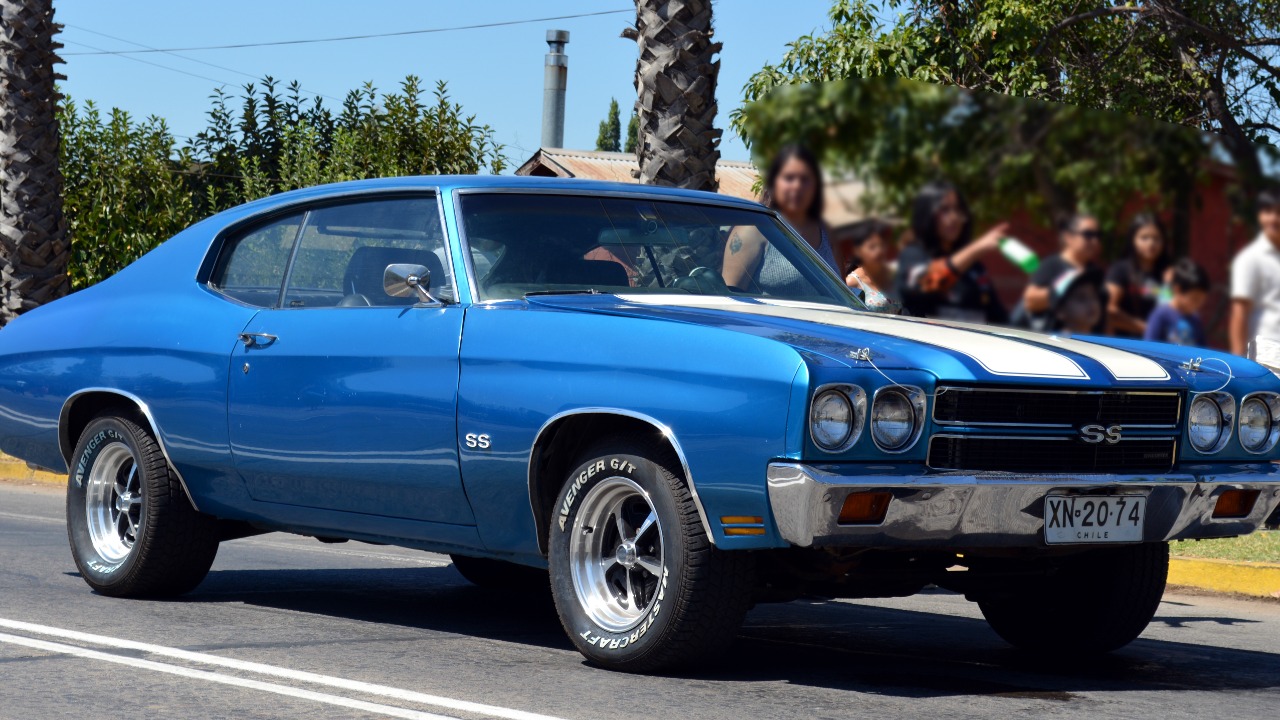
In many ways, the 1970 Chevrolet Chevelle SS arrived at exactly the right moment.
The American muscle car movement had spent the previous six years growing from a niche performance trend into a full-scale horsepower war. Manufacturers competed aggressively for headlines, quarter-mile times, and showroom traffic. Every year seemed to bring larger engines, higher horsepower ratings, and bolder styling. Consumers embraced the competition, and automakers responded by pushing performance further than anyone could have imagined at the start of the decade.
The 1970 Chevelle SS became one of the clearest expressions of that era. It wasn’t merely another muscle car entering a crowded market. It represented the moment when Chevrolet—and much of Detroit—believed the future belonged to bigger engines, greater power, and limitless consumer demand. Looking back today, the car feels like a snapshot of American automotive confidence at its absolute peak.
The Muscle Car Wars Had Reached Full Strength
By 1970, performance was no longer a specialty market. Muscle cars had become one of the industry’s biggest attractions, and nearly every manufacturer wanted a piece of the action. Buyers could walk into dealerships and choose from an astonishing range of high-performance machines equipped with engines that would have seemed outrageous only a few years earlier.
Competition fueled constant escalation. Pontiac offered increasingly potent versions of the GTO. Plymouth continued building powerful Road Runners and GTX models. Ford expanded its performance offerings, while Buick and Oldsmobile proved they could compete with the best of them. Every company wanted to claim superiority, and every new model year became another round in the horsepower battle.
Chevrolet entered this environment with tremendous momentum. The Chevelle had already established itself as one of the most successful intermediate cars in America. It combined attractive styling, practical dimensions, and broad market appeal. For 1970, Chevrolet intended to make the car even more impressive, creating a performance flagship that could compete with anything Detroit had to offer.
Chevrolet Completely Redesigned the Chevelle
The 1970 model brought one of the most memorable redesigns in Chevelle history. Chevrolet gave the car a more muscular appearance with sculpted body sides, aggressive front-end styling, and proportions that emphasized strength without appearing excessive. The design looked athletic and purposeful from every angle.
The new body arrived at the perfect time. Muscle cars were increasingly becoming image statements as much as performance machines. Buyers wanted cars that looked fast before the engine even started. The redesigned Chevelle delivered exactly that impression, with broad shoulders, flowing lines, and a stance that hinted at the power available underneath.
Unlike some competitors that relied heavily on stripes and graphics, the Chevelle’s shape did much of the work. The styling felt mature and confident. Even decades later, many enthusiasts consider the 1970 Chevelle one of the best-looking muscle cars ever built.
The SS Package Added Serious Presence
Ordering the Super Sport package transformed the Chevelle’s personality. The SS package introduced performance-oriented styling cues, unique badging, and other visual enhancements that separated the car from ordinary Chevelles. Buyers immediately understood they were looking at something special.
Chevrolet managed to strike a balance between aggression and sophistication. The SS looked intimidating without becoming cartoonish. Functional hood designs, bold front-end treatments, and carefully chosen trim elements reinforced the car’s performance credentials while preserving the elegance of the overall design.
This balance helped broaden the Chevelle’s appeal. It attracted hardcore enthusiasts looking for speed while also appealing to buyers who wanted a stylish and prestigious performance car. The SS became one of the most recognizable badges in the muscle car world.
The Arrival of the LS6 Changed Everything
While the styling attracted attention, the engine options created headlines.
The most famous was the legendary LS6 version of Chevrolet’s 454-cubic-inch big-block V8. Officially rated at 450 horsepower, the LS6 immediately became one of the most powerful production engines available in any American automobile. Even today, those numbers command respect.
Many enthusiasts believe the engine’s actual output exceeded its published rating. Whether or not that was true, real-world performance left little doubt about its capabilities. The LS6 transformed the Chevelle into one of the quickest muscle cars of its generation, capable of producing acceleration figures that rivaled far more exotic machinery.
The existence of the LS6 reflected Detroit’s confidence perfectly. Chevrolet wasn’t building the engine because customers needed that much power. The company built it because it could, and because the market seemed eager to embrace ever-greater performance.
Big-Block Performance Became a Statement
The 454 wasn’t simply an engine. It became a symbol of the era.
Detroit’s engineers and executives believed buyers wanted maximum displacement and maximum power. The LS6 embodied that philosophy better than almost any production engine of the period. Massive torque figures gave the car explosive acceleration, while the big-block’s character made every drive feel dramatic.
Owners appreciated the engine’s flexibility as much as its outright performance. The enormous torque meant the Chevelle accelerated effortlessly in almost any situation. Highway passing required minimal effort, and stoplight launches could be genuinely startling.
This abundance of power reflected an industry operating with remarkable freedom. Fuel economy concerns remained relatively minor for many consumers, emissions regulations were still evolving, and insurance companies had not yet fully reshaped the marketplace. For a brief moment, it seemed like the horsepower race might continue indefinitely.
Chevrolet Believed the Good Times Would Continue
One reason the 1970 Chevelle SS feels so significant today is that it arrived before major changes swept through the industry.
Within only a few years, tightening emissions regulations, rising insurance costs, and changing consumer priorities would dramatically alter the performance landscape. Horsepower ratings would decline, compression ratios would fall, and many legendary muscle cars would lose much of their former performance.
None of that seemed inevitable in 1970.
At the time, Chevrolet and its competitors were still operating with enormous optimism. Manufacturers continued investing heavily in performance development because they believed demand would remain strong. The Chevelle SS reflected that optimism in every aspect of its design.
The car wasn’t built cautiously. It wasn’t designed around compromise. It was designed around possibility.
Buyers Responded Enthusiastically
Consumers embraced the Chevelle SS almost immediately. The combination of aggressive styling, strong brand recognition, and incredible engine choices made it one of the most desirable performance cars on the market.
The car appealed to a wide audience. Some buyers chose small-block versions that balanced performance and affordability. Others pursued the most powerful big-block configurations available. Chevrolet’s broad range of options allowed customers to tailor the car to their specific priorities.
This flexibility helped make the Chevelle one of the defining muscle cars of its era. It wasn’t an exotic specialty vehicle. It was a mainstream success that happened to offer extraordinary performance.
The Peak Before the Shift
Today, the 1970 Chevelle SS occupies a special place in automotive history because it represents the high-water mark of the muscle car era.
It arrived when manufacturers possessed maximum confidence, when performance development remained a top priority, and when consumers still enthusiastically embraced increasingly powerful automobiles. The car captured the spirit of an industry convinced that bigger engines and faster acceleration were the future.
Within only a few years, circumstances would change dramatically. Yet the 1970 Chevelle SS remains as evidence of what Detroit could achieve when performance became the primary objective.
More than fifty years later, enthusiasts continue celebrating the car because it embodies a remarkable moment in American automotive history. It wasn’t simply one of Chevrolet’s greatest muscle cars.
It was one of the clearest expressions of Detroit’s confidence, ambition, and optimism at the very peak of the horsepower era.
More from Fast Lane Only