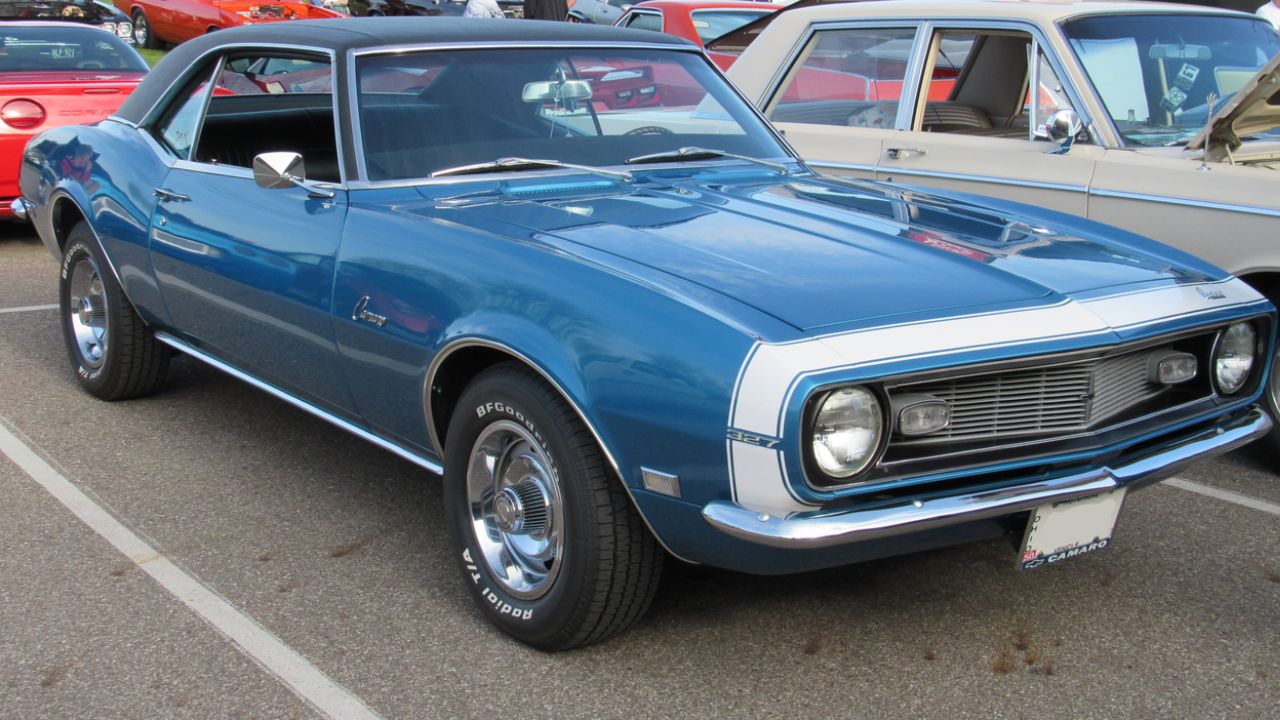
The 1968 Chevrolet Camaro emerged as a game-changer in the automotive industry, redefining the pony car segment and putting immense pressure on its rival, Ford. Its arrival not only showcased Chevrolet’s engineering prowess but also marked the beginning of a fierce rivalry that would shape the American muscle car landscape for decades to come.
The Birth of the Camaro
The Chevrolet Camaro was conceived as a direct response to the Ford Mustang, which had rapidly gained popularity since its debut in 1964. Recognizing the success of the Mustang, Chevrolet’s management sought to create a vehicle that would capture the same youthful spirit and performance. Key figures in this project included Ed Cole, the chief engineer at Chevrolet, and designer Bill Mitchell, who played pivotal roles in shaping the Camaro’s identity. Their vision was clear: to develop a car that was not only fast but also affordable and stylish.
Initial marketing strategies for the Camaro relied heavily on its positioning as a performance-oriented vehicle. Chevrolet aimed to attract a younger demographic, leveraging the excitement surrounding the pony car segment. The marketing campaign emphasized the Camaro’s sporty design and performance capabilities, successfully capturing consumer interest and generating buzz even before its official release. The tagline “The Camaro: A New Kind of Muscle Car” resonated well, setting the stage for its future success.
The Competitive Landscape of the 1960s
Before the Camaro’s introduction, the pony car market was primarily dominated by the Ford Mustang, which had established a strong foothold with its blend of performance and style. The Mustang’s success was due in part to its innovative marketing strategies, which emphasized personalization and the thrill of driving. Other competitors, such as the Pontiac Firebird and Dodge Challenger, were also vying for a share of the growing muscle car market, but none had yet achieved the same level of consumer enthusiasm.
Ford’s Mustang had ignited a cultural phenomenon that Chevrolet could not ignore. The Mustang’s success not only forced Chevrolet to expedite the Camaro’s development but also influenced its design and marketing strategies. The competitive landscape of the 1960s was marked by a race to deliver powerful, stylish, and affordable vehicles that appealed to the youth, and the arrival of the Camaro added a new dynamic to this heated rivalry.
Design and Features of the 1968 Camaro
The design of the 1968 Camaro was a pivotal factor in its appeal. With its long hood, short rear deck, and aggressive stance, the Camaro exuded a sense of power and performance. The design, crafted by the talented team at Chevrolet, was both modern and muscular, attracting buyers who wanted a car that looked as good as it performed. The availability of various trim levels and options allowed buyers to customize their Camaros, further enhancing its allure.
Performance specifications were another defining feature of the Camaro. It offered a range of engine options, from the base 250 cubic-inch inline-six to the more powerful 396 cubic-inch V8, catering to a wide variety of performance enthusiasts. The Camaro’s handling and performance were frequently praised in automotive reviews, setting it apart from competitors and solidifying its status as a serious contender in the muscle car arena. The combination of style and performance made the Camaro an attractive option for consumers looking for the complete package.
Marketing Strategies that Made an Impact
Chevrolet’s marketing strategies played a crucial role in the Camaro’s initial success. The company employed a multi-faceted approach that included print ads, television commercials, and participation in motorsports. The advertising campaigns highlighted the Camaro’s performance capabilities and stylish design, using catchy slogans and imagery that appealed to a younger audience. The commercials often featured the Camaro in dynamic driving scenarios, reinforcing the message that it was the car for those who valued speed and excitement.
Motorsports also contributed significantly to enhancing the Camaro’s reputation. Chevrolet entered the Camaro into various racing events, showcasing its capabilities on the track. The car quickly gained recognition in the racing community, further solidifying its image as a performance-oriented vehicle. This connection to motorsports allowed Chevrolet to tap into the growing car enthusiast culture of the late 1960s, attracting consumers who wanted to be part of the excitement. The competition between Chevrolet and Ford extended beyond showrooms and into racetracks, adding another layer to their rivalry and intensifying the consumer interest.
Consumer Reaction and Sales Performance
Upon its release, the Camaro was met with enthusiastic consumer reactions. Buyers were drawn to its stylish design, performance options, and competitive pricing, which made it an attractive alternative to the Ford Mustang. Reports from automotive publications lauded the Camaro for its handling and overall driving experience, contributing to its growing popularity among car enthusiasts. The positive reception translated into impressive sales figures, with Chevrolet selling over 100,000 units in its first year alone, a significant achievement in the muscle car market.
When compared to the Ford Mustang, the Camaro’s sales performance was impressive. Although the Mustang had a head start and established a loyal customer base, the arrival of the Camaro disrupted the market dynamics. The competition intensified, and consumers began to take notice of Chevrolet’s offering, leading to a shift in preference for some buyers. The cultural significance of the Camaro also played a role in its popularity, as it became a symbol of freedom and youthful rebellion, resonating with a generation eager for change.
Ford’s Response: The Challenge of Competing
In response to the Camaro’s success, Ford was compelled to reassess its strategies. The company recognized that it needed to innovate and adapt to the changing landscape of the pony car market. One of the key responses was the launch of the Ford Mercury Cougar, which aimed to compete directly with the Camaro and other muscle cars. Positioned as a more upscale alternative, the Cougar offered similar performance but with a focus on comfort and luxury.
Ford’s decisions were heavily influenced by the Camaro’s growing popularity. The company introduced new engine options and performance packages for the Mustang to retain its competitive edge. This included the introduction of the Mustang GT, which featured enhanced performance specifications. Additionally, Ford ramped up its marketing efforts, emphasizing the Mustang’s legacy while attempting to appeal to a broader audience. The rivalry between Ford and Chevrolet intensified as both companies sought to outdo each other, leading to innovations and improvements that would benefit consumers in the long run.
The Camaro’s Influence on Automotive Culture
The impact of the Camaro extended far beyond its sales figures; it played a pivotal role in shaping the muscle car culture of the late 1960s. Car enthusiasts embraced the Camaro’s performance and style, leading to a vibrant aftermarket industry that offered a range of modifications and customization options. The car became a canvas for personal expression, with many owners modifying their vehicles to reflect their unique tastes and preferences.
Furthermore, the Camaro’s influence can be seen in its portrayal in popular culture. Movies, television shows, and music of the era often featured the Camaro, cementing its status as an icon of American automotive culture. It became synonymous with the spirit of freedom and rebellion, appealing to a generation eager for self-expression. The long-term effects of the Camaro on the muscle car segment are evident today, as it continues to inspire new generations of vehicles and remains a beloved choice among car enthusiasts.
Legacy of the 1968 Camaro
The legacy of the 1968 Camaro is marked by its enduring status as a symbol of American automotive innovation. Over the years, the Camaro has evolved through various generations, adapting to changing consumer preferences while retaining its core identity as a performance-oriented vehicle. Each iteration has brought new advancements in technology and design, ensuring that the Camaro remains relevant in a competitive marketplace.
Throughout its history, the Camaro has received numerous accolades and awards, recognizing its contributions to the automotive industry. Its presence in popular culture, coupled with its performance pedigree, has solidified its status as a classic American muscle car. As the rivalry between Chevrolet and Ford continues, the 1968 Camaro serves as a reminder of how competition can drive innovation and create vehicles that capture the hearts of consumers.
More from Fast Lane Only